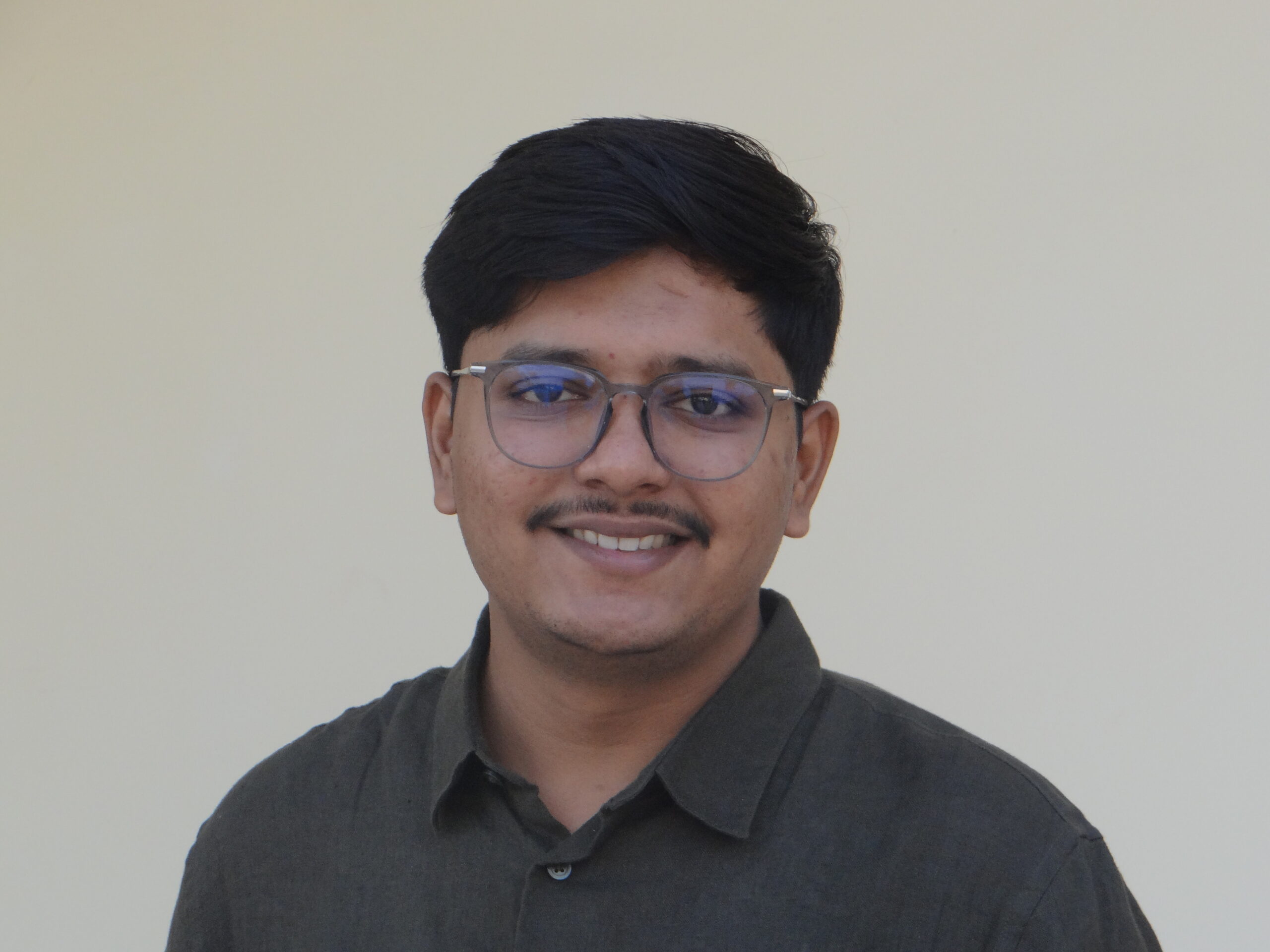
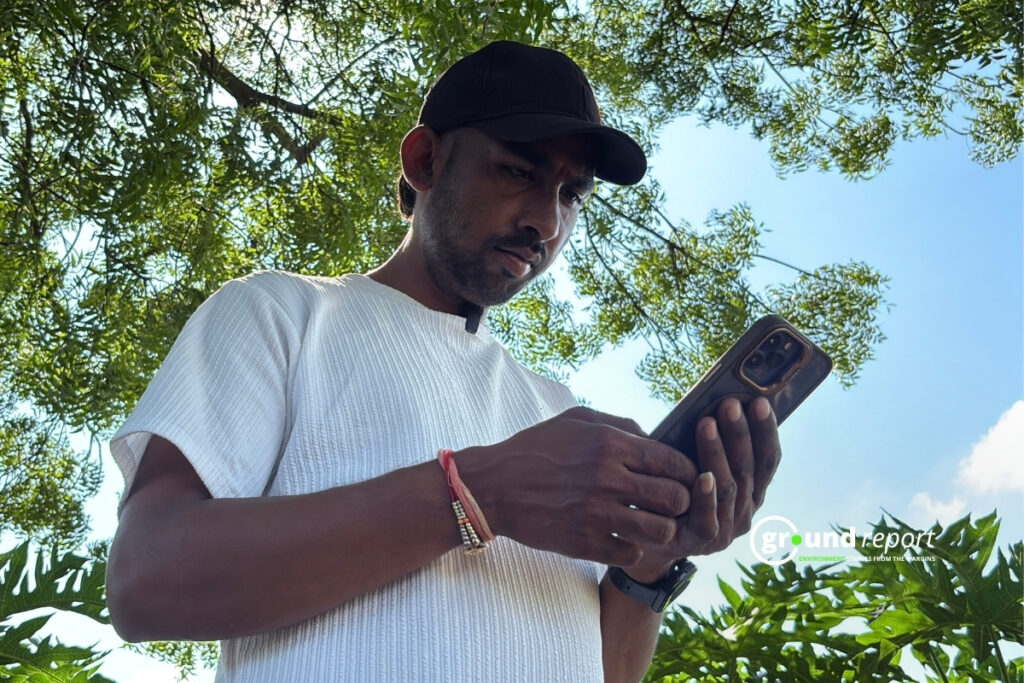
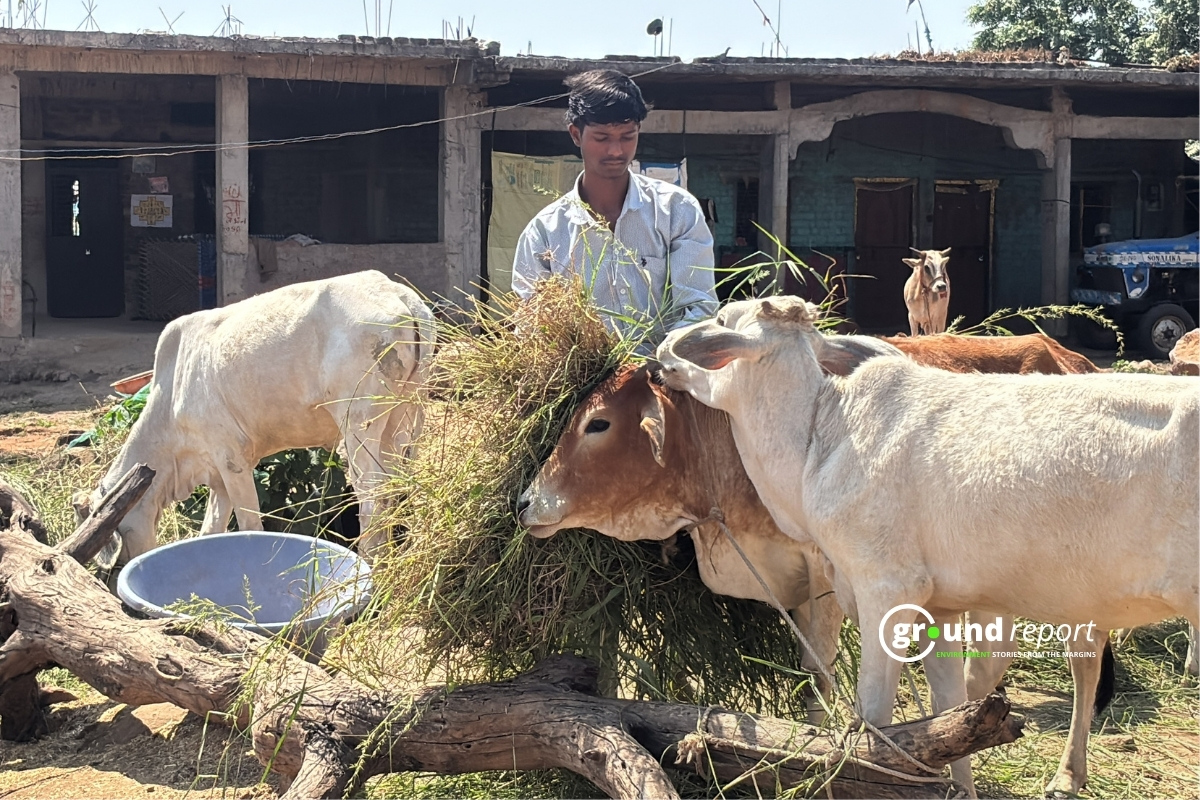
Ravi Nayak farms 24 acres in Ojhra village, Kasrawad tehsil, in Madhya Pradesh’s Khargone district. Alongside the region’s traditional cotton and maize crops, he also grows papaya. But he is more than a farmer. Nayak is also a content creator who shares farming videos on Instagram.
What began as a hobby has become a source of information for other farmers. Conversations with some of his followers showed that farmers in his village and nearby areas learned new practices by watching his videos.
Mahendra Patidar, a farmer from Kasrawad, was one such viewer. He cultivates lemons, guavas, and oranges on six acres. Like his father, he initially grew wheat, gram, and soybean but suffered losses between 2012 and 2015. He then received horticulture training at the Krishi Vigyan Kendra (KVK) in Khargone. After planting lemon trees, he turned to YouTube to learn about guava and sindoor cultivation. Mahesh Patidar, a turmeric farmer, had a similar experience.
Across the Nimar region, several farmers are moving away from traditional crops and adopting new farming practices. They increasingly turned to Instagram and YouTube videos for ideas. Creators such as Nayak helped them choose suitable pesticides and avoid counterfeit products.
Experts say India has not paid enough attention to agricultural extension services. As a result, government institutions often take a long time to share new farming practices with farmers. YouTube creators help bridge this gap. Some experts also point out that government research institutions struggle to adapt to new video production techniques and understand social media algorithms. They suggest that these institutions should work with content creators, as the Ministry of Tourism does to promote tourism.
From Hobby to Helping Farmers
After graduating from a local college, Nayak devoted himself entirely to farming. In his free time, he enjoyed watching videos on Instagram and YouTube. He applied papaya cultivation techniques he learnt on YouTube to his own fields and made a profit. He then began making short videos from his farm.
What started as a hobby gradually took on a larger purpose. Nayak noticed that many farmers continued growing only cotton and soybean despite suffering losses. He began making videos to help them explore other options.
“Farmers often fail to spend money where they should, and they fall for counterfeit products,” Nayak said. “I want farmers to earn good profits and avoid being cheated by such products.”
During the last kharif season, Nayak heard about the 5G variety of cotton, a herbicide-tolerant variety whose illegal sale we have investigated earlier. He sowed six packets of its seeds on his farm, but the crop yielded almost nothing. He then made a video warning other farmers about the variety.
Nayak said he made videos only about practices he had tested on his own farm. He also said he never promoted any company. “My experience in farming has helped me earn good profits. I want other farmers to benefit in the same way; that’s why I create content for them. I do not make videos on any other subject,” he said.
YouTube for Farming Decisions
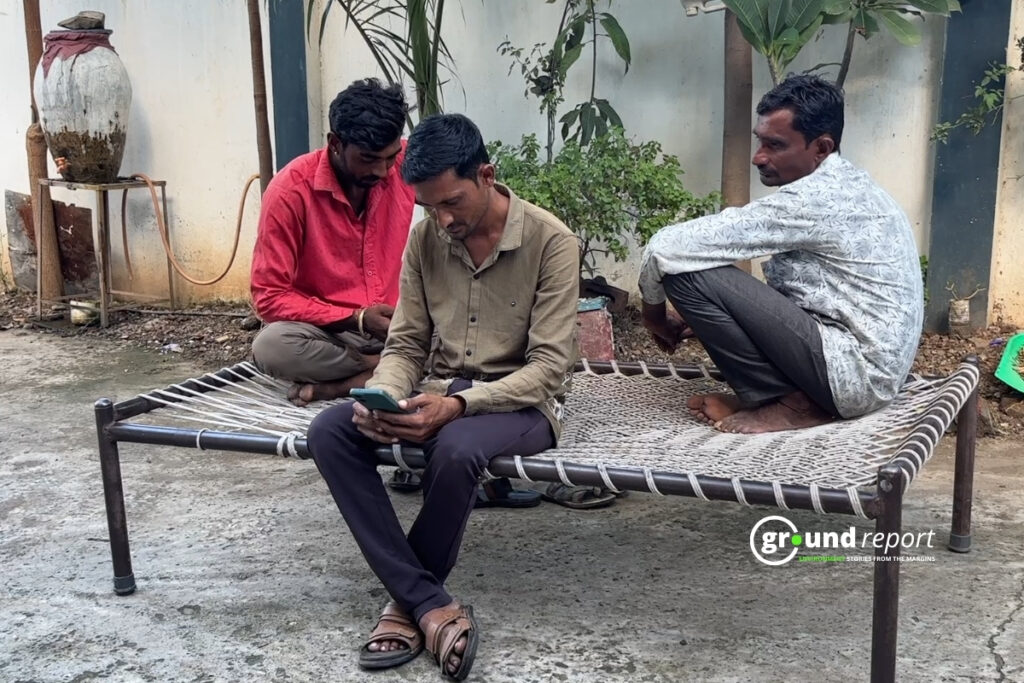
Like Mahendra Patidar, Mahesh Patidar and his wife, Sangeeta Patidar, from Rajur village, about 25 kilometres from the district headquarters, also suffered losses from cotton and chilli cultivation. For more than four years, they have been growing organic turmeric.
Mahesh Patidar said they depended heavily on labourers for everything, from sowing cotton to picking it. “But finding labourers was very difficult. We also realised that the returns from cotton were low compared with the cost of cultivation,” he said. The couple then decided to take up organic farming and began watching videos about it on their phones.
“We watched several videos on mushroom cultivation, turmeric, ginger and pigeon pea,” Mahesh Patidar said. “But turmeric and ginger seemed like the best options.”
initially grew only one lemon variety on his farm. After watching YouTube videos, he ordered different varieties of lemon and guava from nurseries across the country. He said YouTube made it easy to connect with other farmers and find planting material.
“Many farmers who share their experiments in videos also provide their phone numbers. They explain not just the farming techniques but also where to source the plants,” Mahendra Patidar said. “Sometimes nursery owners themselves make these videos, so we do not have to look elsewhere for planting material.”
Ravindra Nayak, another farmer from Ojhra, also relies on online videos when choosing pesticides. He said watching other farmers use expensive products often influenced his own purchases. While he rarely watched such videos earlier, he now checks them before buying pesticides.
His neighbour, Bhim Nayak, primarily rears livestock. Earlier, he did not know where to buy buffaloes. Videos helped him connect with sellers at the livestock market in Mandsaur. He now also uses YouTube to find information about government schemes and animal diseases.
Videos and Agricultural Extension
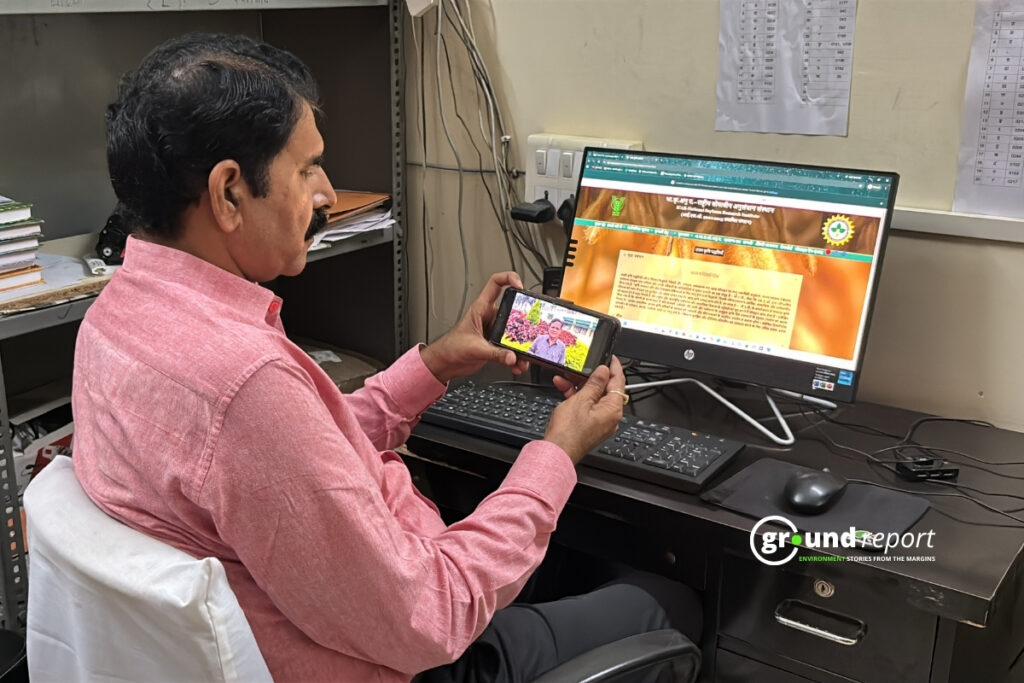
Arvind Shukla, a journalist who covers agriculture and founder of News Potli, believes India has not done enough to strengthen agricultural extension services. “We did not establish the kind of demonstration plots that KVKs were supposed to develop. Even when newspapers were at their peak, rural India received very little space, except on the front pages,” he said.
The 2017 Indian Readership Survey (IRS) found that television reached only 20% of rural households, while newspapers reached 33%.
Shukla said social media had done a good job of introducing farmers to new agricultural models and practices.
“I saw a farmer on Facebook who had started growing Kakrol (Momordica dioica Roxb.), a wild plant, in his field and was selling it for Rs 100 per kilogram. He may have earned Rs 500 or Rs 1,000 from it, but it makes me wonder: could I do something like that?” he said, explaining how farmers might respond to such examples.
A report by the Internet and Mobile Association of India found that rural India used the internet more than urban India.
A study of KVK Solapur’s YouTube channel, ‘LRT Farm Advice’, found that 95.10% of its subscribers were aged 25–34. Over 28 days, 2,362 viewers watched more than 3,633 minutes of video content. Since it began uploading videos, the channel has accumulated over 525,600 minutes of watch time.
The researchers said the findings demonstrated YouTube’s potential to improve access to agricultural information, encourage innovation and promote the adoption of better technologies to increase farm productivity and incomes.
Rohin Kumar, Network Lead at Hands of Transition, an organisation that works with farmers, policymakers and storytellers, said farmers had already chosen where they wanted to get their information.
“Farmers have chosen their channels. People have decided where they want to consume content,” he said.
However, Dr R.K. Singh, an extension scientist at KVK Khargone, cautioned that some creators shared scientifically inaccurate information to attract likes and views. He advised farmers to rely on videos produced by agricultural institutions or scientists for accurate information.
Government Institutions Lag Behind
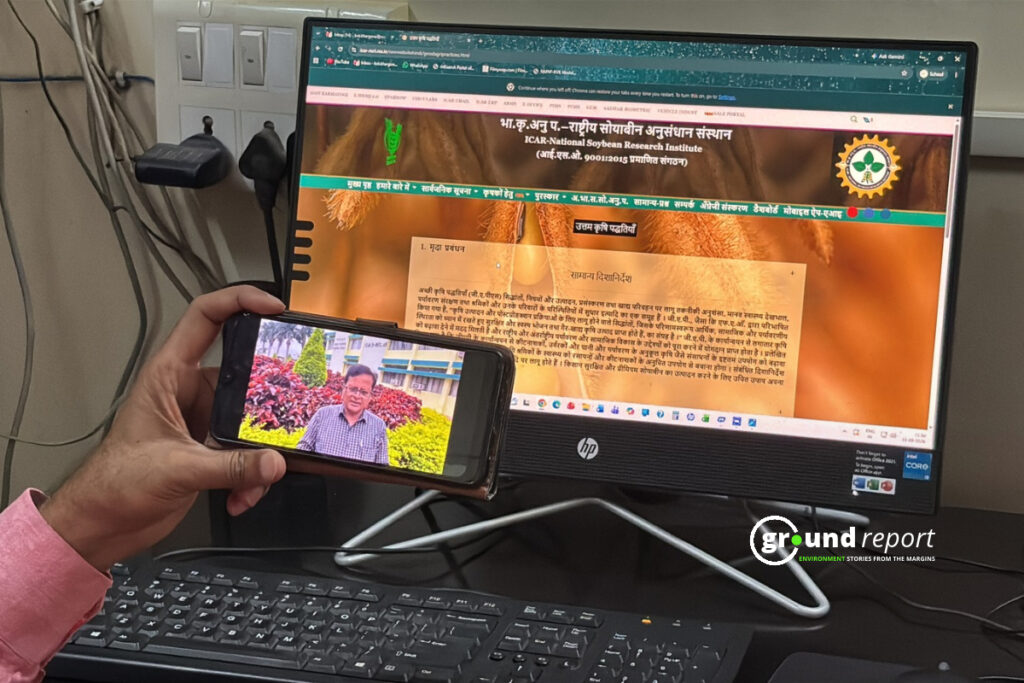
Ravi Nayak watches several farming videos but has never watched content produced by a government institution.
Prachur Goyal, CEO of Momentum Shifts, an organisation that works with social media creators on issues such as the environment, climate change and organic farming, said government institutions and non-governmental organisations (NGOs) struggled to adapt to new production methods, social media platforms and their algorithms.
Goyal said these institutions could build a dedicated audience by regularly publishing videos that offer reliable information from credible sources. He cited Arabinda Sahoo, who worked in Odisha’s agriculture department and began making videos independently. His YouTube channel now has more than 200,000 subscribers.
Kumar suggested that government institutions could take a cue from the tourism sector, where several governments have engaged content creators to promote destinations. A similar approach could help spread agricultural information, he said. He added that some research institutions were already working with journalists and content creators to find better ways of communicating scientific information to the public.
Nayak said he would continue making videos to help more farmers. Sitting beside him, Bhim Nayak was glad to find many videos in Nimadi, his local language. He no longer had to struggle with difficult Hindi words. These videos are not only helping farmers access information but also making it easier for them to understand and use it in their own language.
Support Us To Sustain Independent Environmental Journalism In India.
More Ground Reports
Madhya Pradesh’s e-Vikas 2.0 Fertiliser System: Why Are Farmers Still Queuing?
Smart Meter Consumers May Save on Electricity Bills With Time-of-Day Tariffs
Stay Connected With Ground Report For Underreported
Author
Support Ground Report to keep independent environmental journalism alive in India
We believe climate change should be the basis of current discourse, and our stories attempt to reflect the same.
Connect With Us
Send your feedback at greport2018@gmail.com
Newsletter
Subscribe our weekly free newsletter on Substack to get tailored content directly to your inbox.
When you pay, you ensure that we are able to produce on-ground underreported environmental stories and keep them free-to-read for those who can’t pay. In exchange, you get exclusive benefits.
Your support amplifies voices too often overlooked, thank you for being part of the movement.
EXPLORE MORE
LATEST
mORE GROUND REPORTS