
On September 5, Jhabua district officials, including Jhabua District Collector Dr Yogesh Tukaram Bharsat and Superintendent of Police Devendra Patidar, met to discuss pollution from the Meghnagar Industrial Area and ways to address it.
Representatives of the Madhya Pradesh Pollution Control Board (MPPCB) told Bharsat that inspections had revealed irregularities in compliance with prescribed standards at Madhya Bharat Industry, Rathore Industry, Siddhivinayak Industry and Sheetal Industry. In response, Bharsat directed officials to seal all four industrial units immediately.
Along with ordering the closure of four factories, Bharsat directed officials to prepare short- and long-term action plans to address pollution in Meghnagar. The short-term plan would focus on immediate relief and pollution control, while the long-term plan would establish lasting measures for water and air quality, waste management, safe drinking water and environmental protection.
However, residents held another anti-pollution rally three days later. Organiser Raj Muniya said preparations had begun on September 1, before the Collector’s intervention. He said villagers needed to remain united to ensure the action led to a lasting solution.
An Industrial Area Plagued by Pollution
Established in 1984, the 223.75-hectare Meghnagar Industrial Area has a long history of pollution complaints and official action against industries. This time, however, campaigners are using sustained protests and social media to push for a lasting solution. While they hope the administration will act on their demands, many residents remain sceptical that anything will change.
As in a similar incident nearly two years ago, the local administration has not publicly disclosed the specific violations that led to the factories being sealed. The MPPCB has also not released the results of water samples it collected during inspections, leaving residents uncertain about the extent of the pollution.
Based on information obtained through a Right to Information (RTI) application in 2024, nine agrochemical factories operated in Meghnagar at the time. Field reporting in September 2026 indicated that the number had risen to at least 21 agrochemical —chemical substances used in agriculture— manufacturing units.
Residents of Fatehpura, which falls within the industrial area, allege that chemical-laden wastewater and smoke from factories are damaging their crops.
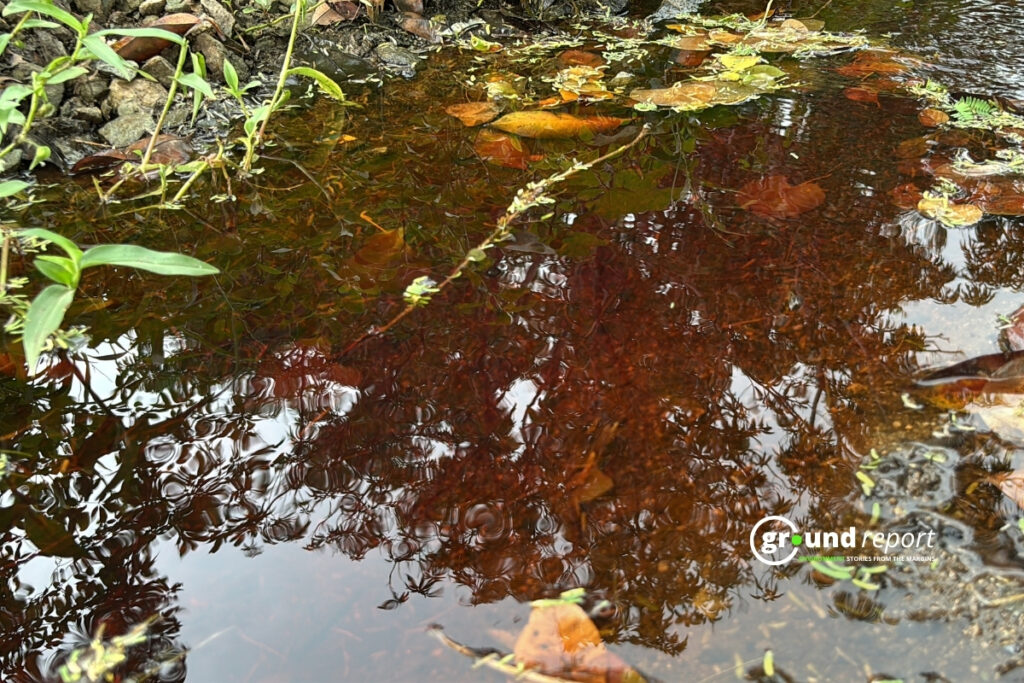
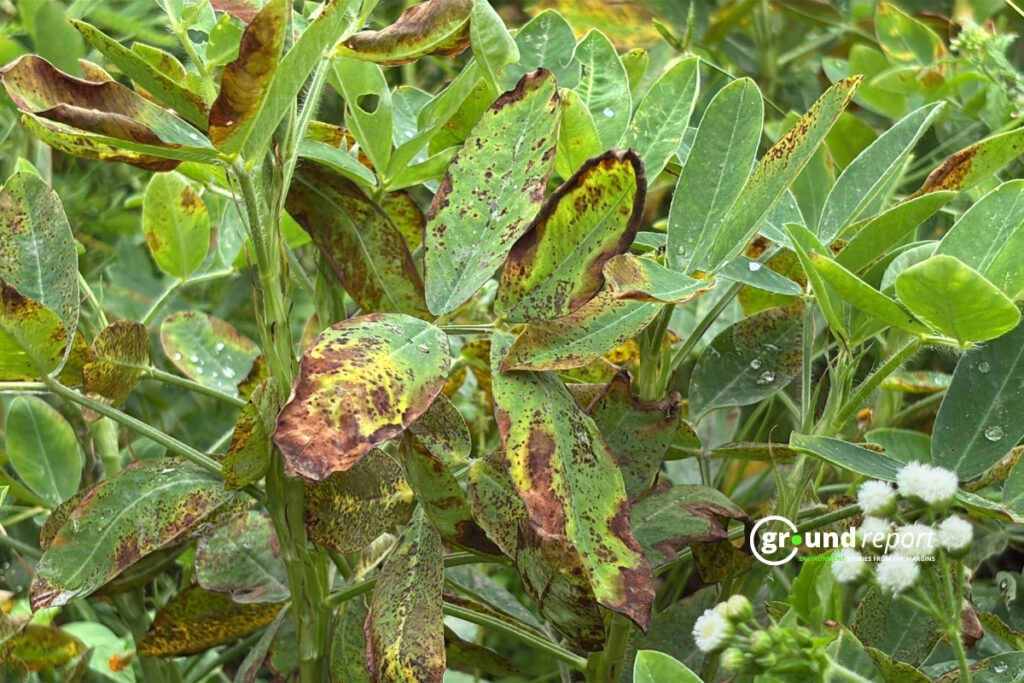
Arvind Muniya, a resident of Fatehpura, showed us his groundnut, cotton, pigeon pea and maize crops. He said factory smoke had scorched the leaves. Another resident, Ramsingh Muniya, said the chemical runoff has turned the village’s only pond red. He alleged that irrigating fields with this water was damaging crops.
The Gariya Nala runs from the Meghnagar Industrial Area through agricultural fields and a forest before joining the Anas River, a tributary of the Mahi, about six kilometres away. The drain is visible along the road from Jhabua to Meghnagar. Villagers living nearby allege that cattle and wild animals die after drinking water from the drain.
According to Jhabua’s District Environment Plan 2025 (DEP 2025), the industrial area contributes to pollution in the Mahi River, affecting parameters such as dissolved oxygen (DO), total dissolved solids (TDS) and pH levels.
Under the Environment (Protection) Act, 1986, industries must treat their wastewater before discharging it, either through their own treatment plants or a Common Effluent Treatment Plant (CETP), where applicable. Only one CETP is reportedly operational in the district. However, Jhabua’s District Environment Plan 2025 does not specify its location or treatment capacity.
“Industries that generate liquid waste must install their own treatment plants and treat the waste. They cannot discharge it outside,” said Dr Neeraj Verma of the Madhya Pradesh Pollution Control Board. “We grant environmental consent to an industry only when it either installs its own effluent treatment plant or arranges for its waste to be treated through a common CETP in the industrial area.”
In response to the complaints, Collector Bharsat directed the Agriculture Department to survey the impact of pollution on crops and farmland. He also asked the Animal Husbandry Department to assess its effects on livestock in affected areas. To prevent polluted water from entering natural water sources, the Collector directed officials to complete the pending work on common effluent collection sumps. These would help channel contaminated wastewater to the Common Effluent Treatment Plant (CETP) for treatment.
A Decade-Old Problem
Media reports suggest that Meghnagar has faced pollution problems for nearly a decade. In 2015, the Industrial Centre Development Corporation decided to assess the industrial area’s environmental impact, but it has yet to make the report public.
Arvind Muniya showed sores that had developed on his daughter’s leg. He claimed she had developed the condition after bathing in a nearby pond while playing. Several other residents made similar claims.
At a meeting held on March 16, 2018, the State Environment Impact Assessment Authority was informed that hazardous waste and polluted water had been found across an area of 4,047 square metres at Plot No. 193.
Raj Muniya, a local teacher and one of the people leading the movement against industrial pollution, believes factory waste is also contaminating groundwater. However, this claim has not been officially confirmed. A study of the Dombivli industrial belt in Mumbai, which faces similar pollution concerns, found elevated levels of copper, nickel, chromium and lead in groundwater near industrial units.
Collector Bharsat also called for regular testing of water sources and drinking water in areas where contamination is suspected, along with alternative supplies of safe drinking water for residents.

How Much Has Changed?
In 2016, the then district Collector ordered eight industrial units to suspend production for 14 days, a move similar to the action taken in September 2026. A woman from Fatehpura said authorities routinely take such action after protests, but conditions on the ground remain largely unchanged.
This time, Madhya Bharat Private Limited’s factory reopened just 18 days after authorities sealed it. A report by The Free Press Journal said inspectors found no polluted water being discharged from the facility. However, when we tried to access the unit’s online monitoring report, we found that either its treatment system, its Online Continuous Effluent Monitoring System (OCEMS), or both were not functioning.
Local journalist and social media creator Anil Muniya helped mobilise residents against industrial pollution. He was disappointed and angry when authorities allowed the factories to reopen. When I first spoke to Anil Muniya after the September 5 action, he repeatedly said he hoped the situation would improve because the Collector had visited the area. Raj Muniya, who joined the campaign, shared his optimism.
However, both now say that all the factories have reopened and pollution levels remain unchanged. Anil continues to post about local pollution on social media to rally residents and sustain the campaign.
Arvind Muniya said that even after a month, no official other than the Collector had visited his farm to conduct the promised survey. Meanwhile, the MPPCB collected another set of water samples from the Gariya Nala.
Arvind believes that only sustained protests will compel the administration to take concrete action. Raj Muniya said villagers would soon meet again to discuss another demonstration, after which a date would be announced.
Support Us To Sustain Independent Environmental Journalism In India.
More Ground Reports
Jhabua’s Livestock Farmers Face an Impending Fodder Crisis
Kundla Agar Ethanol Factory: Questions Raised Over Drains, Water and Online Data
Stay Connected With Ground Report For Underreported
Author
Support Ground Report to keep independent environmental journalism alive in India
We believe climate change should be the basis of current discourse, and our stories attempt to reflect the same.
Connect With Us
Send your feedback at greport2018@gmail.com
Newsletter
Subscribe our weekly free newsletter on Substack to get tailored content directly to your inbox.
When you pay, you ensure that we are able to produce on-ground underreported environmental stories and keep them free-to-read for those who can’t pay. In exchange, you get exclusive benefits.
Your support amplifies voices too often overlooked, thank you for being part of the movement.