
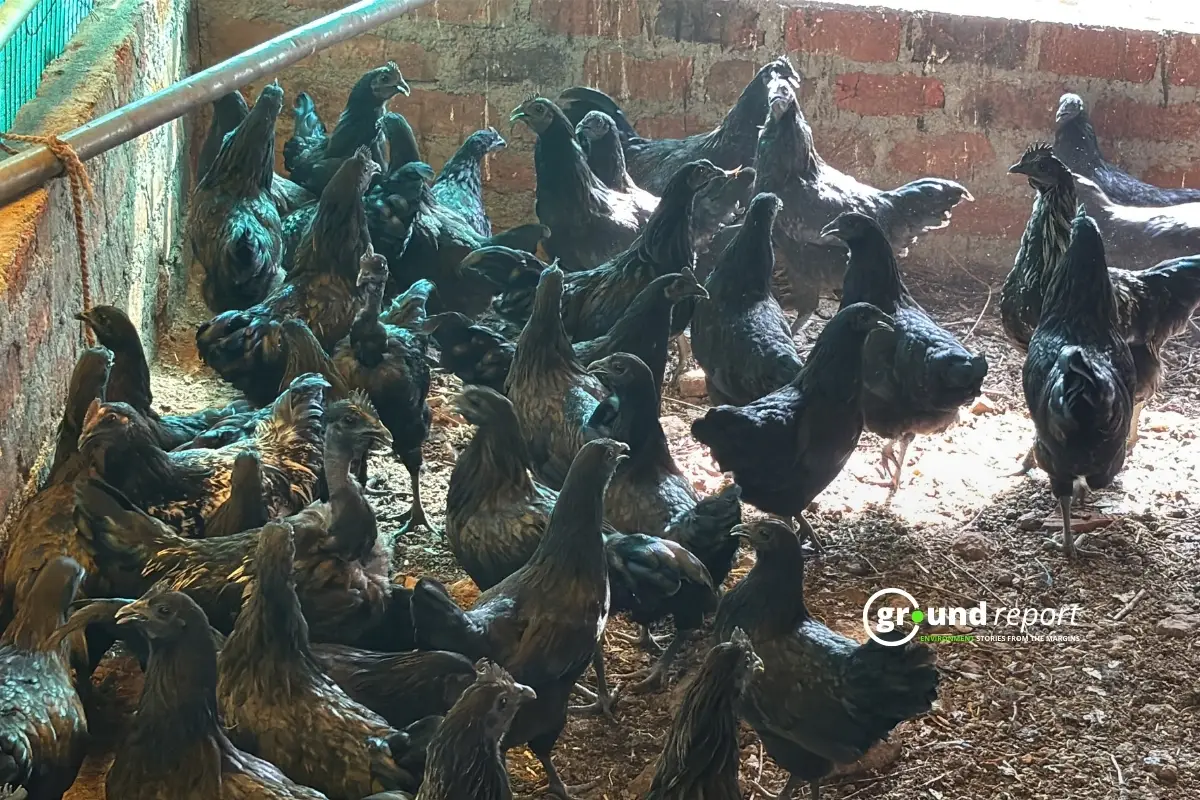
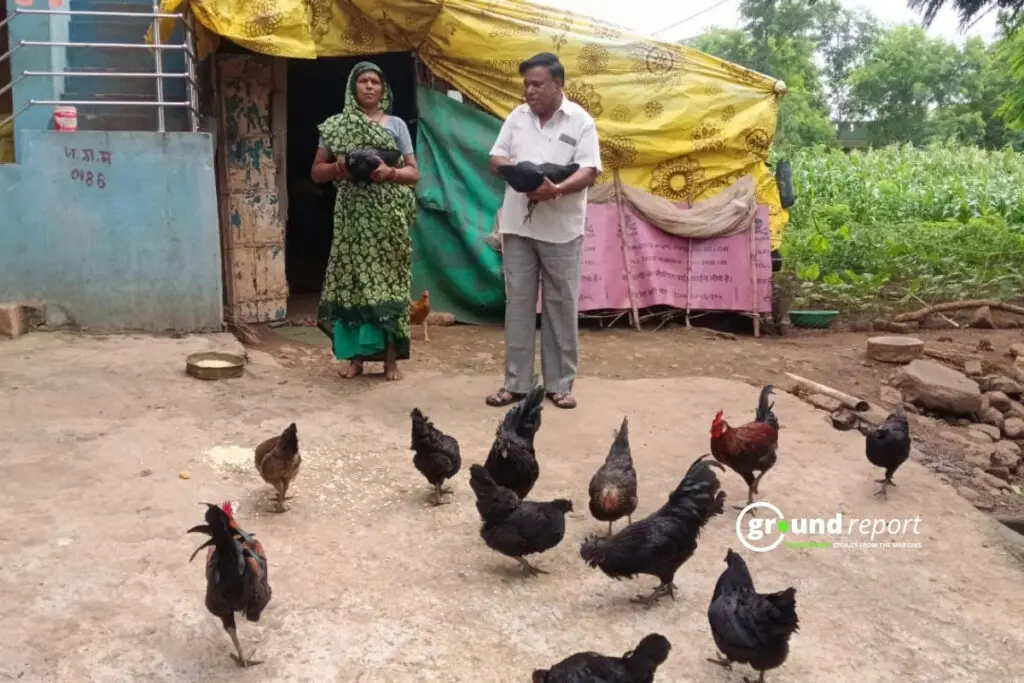
In Dhanpura village in Petlawad, about 50 kilometres from Jhabua, a square metal enclosure covered in green mesh stood outside Hurr Singh Bhabhar’s house. Inside were around 100 black Kadaknath chickens. Shortly before we arrived, a local restaurant owner had bought 20 birds for more than ₹10,000.
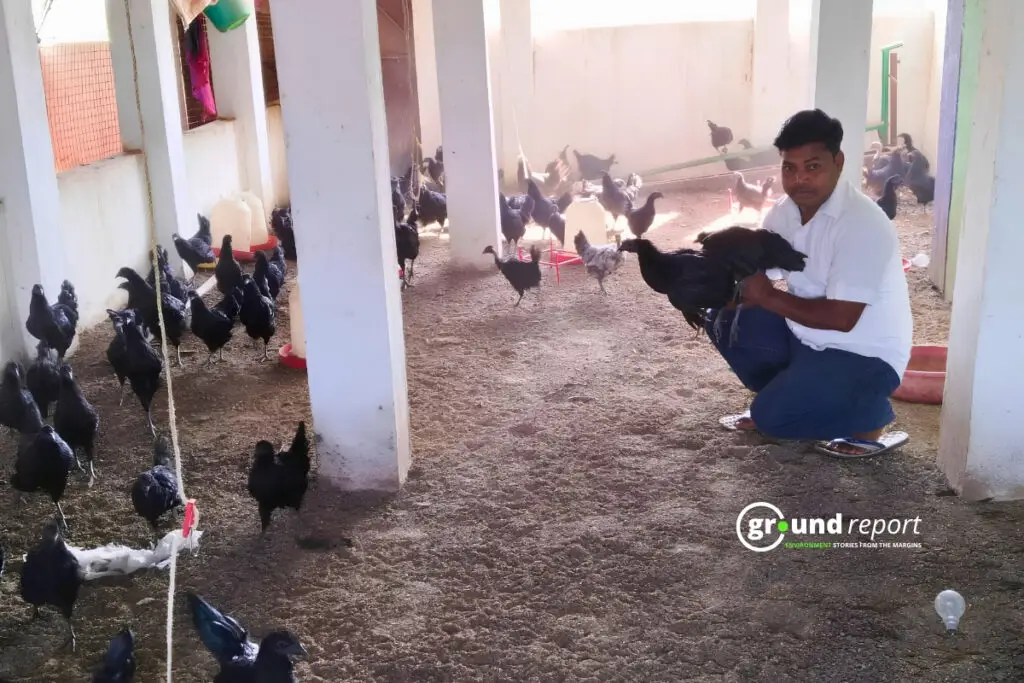
Thirty kilometres away in Thandla, Vinod Meda also raises Kadaknath chickens. Until 2017, he worked as a driver for a municipal garbage collection vehicle. After training in Kadaknath poultry farming with support from the Agriculture Department, he started his own farm. He now raises more than 2,000 Kadaknath chickens and sells them to buyers across India, including in Andhra Pradesh, Punjab and the Andaman Islands.
Kadaknath is an indigenous chicken breed that originated in Jhabua district. Its black chicken meat received a Geographical Indication (GI) tag on 30 July 2018. However, efforts to conserve the breed and promote poultry farming date back to 1978.
Since Kadaknath received the Geographical Indication (GI) tag, poultry farming in the region has changed considerably. However, small-scale farmers have yet to fully benefit from the breed’s recognition, while larger farmers are also seeking subsidies to expand their operations. Experts working to conserve the breed say researchers need to study its characteristics and potential further.
What is Kadaknath?
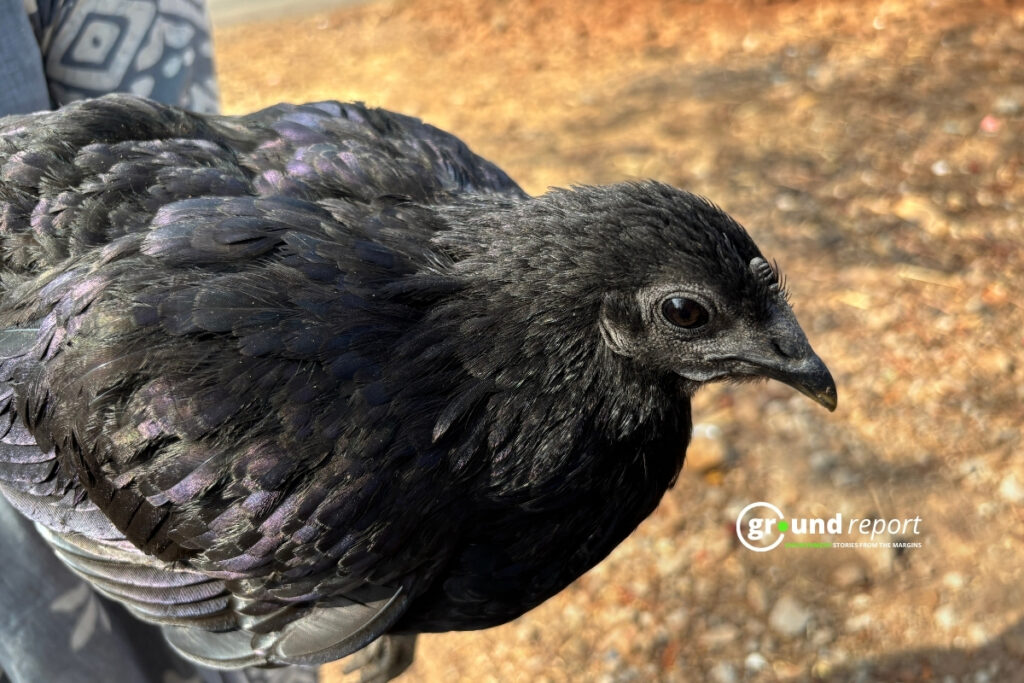
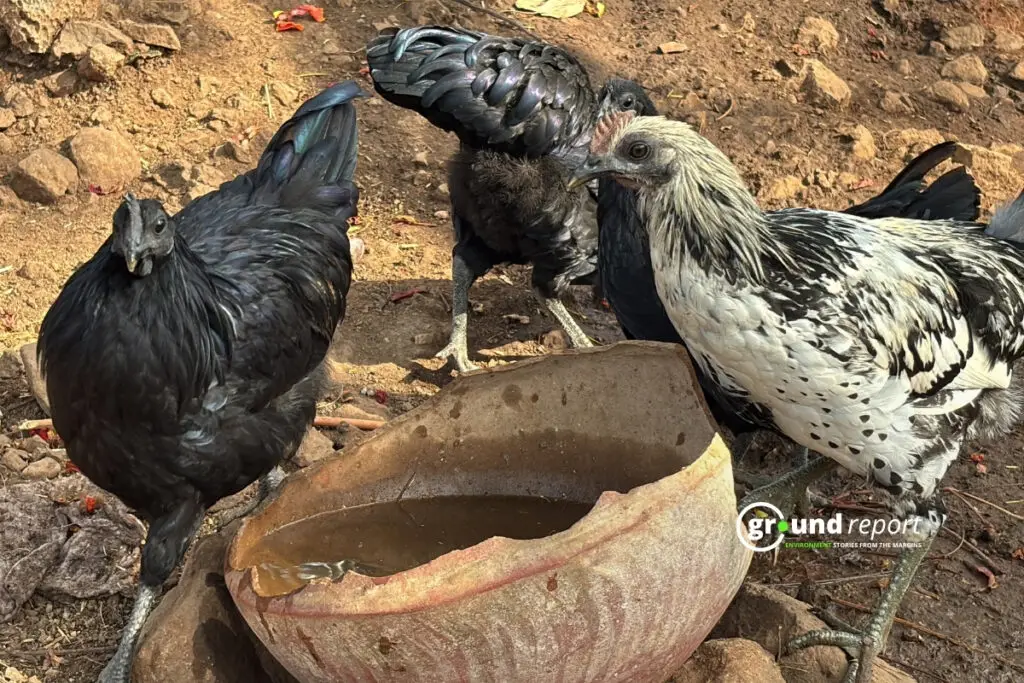
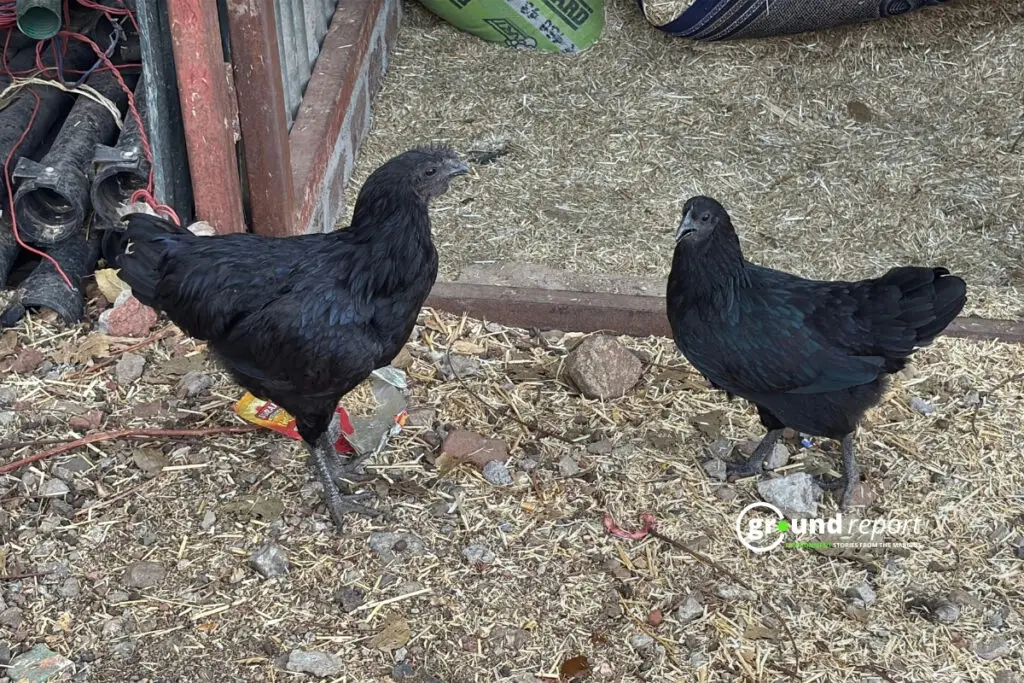
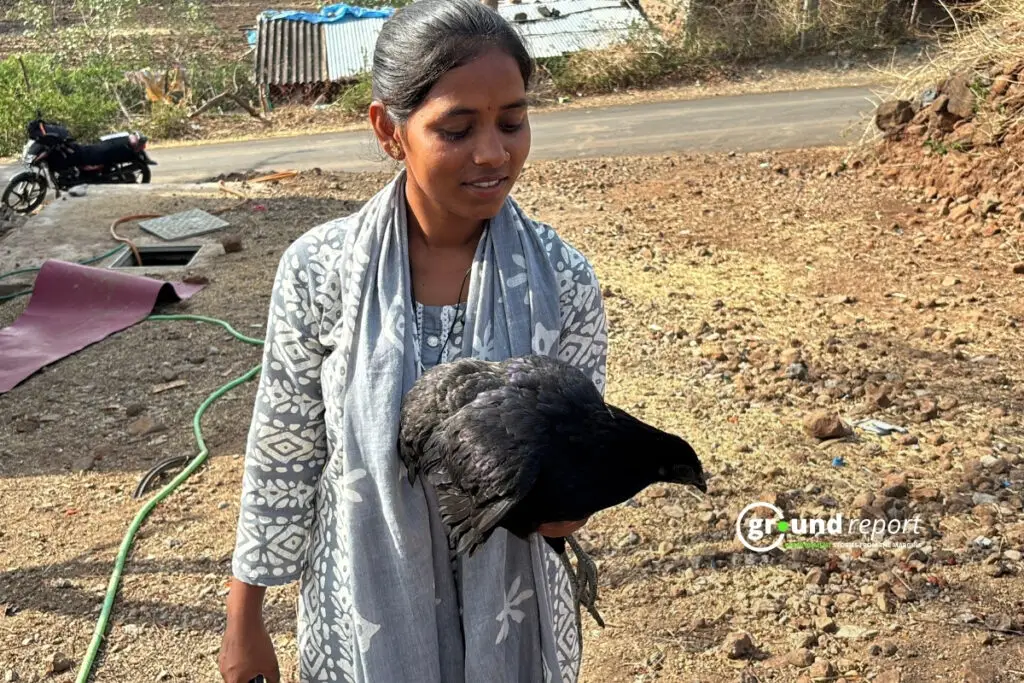
Kadaknath is an Indian chicken breed locally known as Kali Masi because of its black skin, feathers, legs, meat and blood. The breed has three commonly recognised varieties, Jet Black, Pencilled and Golden, all found in Jhabua district, which is considered its primary centre of origin.
Dr Chandan Kumar, an associate professor at Mathura Veterinary College, has worked on Kadaknath conservation at the Krishi Vigyan Kendra (KVK) in Jhabua.
“Kadaknath is not significantly affected by extreme heat or cold. This is why it is being raised in places with different climatic conditions, including Ladakh and Meghalaya,” he said.
More than 70% of Jhabua’s population is directly dependent on agriculture. Over 80% of its farmers are small and marginal farmers, with less than two hectares of land. According to the Indian government’s National Innovations in Climate Resilient Agriculture (NICRA) programme, Jhabua is one of the two most climate-vulnerable districts in Madhya Pradesh.
Amid changing weather patterns and increasingly uncertain rainfall, Kadaknath farming offers farmers an alternative income source.
Hurr Singh had sown three packets of cotton seeds and approximately 10 kilograms of maize on his eight-bigha farm. But without access to irrigation, his investment of around ₹15,000 was at risk. He said farming becomes riskier when rainfall is low, while income from Kadaknath poultry farming is relatively more stable. This prompted him to rear Kadaknath two years ago.
Comparing Kadaknath with broiler chickens, Kumar said, “Broilers need to be kept in cool, well-ventilated conditions. Temperatures in Jhabua exceed 40°C. When broilers are kept outdoors, the risk of heat stress increases, which can reduce meat quality.”
Broiler chickens, bred for uniform size and rapid meat production, are developed using genetic lines that include Cornish and White Plymouth Rock. Cornish chickens were developed in England, while White Plymouth Rock originated in the United States.
Kumar said Kadaknath can survive in semi-arid climates with temperatures ranging from 12°C to 42°C. The birds do not require elaborate housing, intensive maintenance or specialised feed.
Kadaknath meat has around 24 grams of protein per 100 grams, compared with 18–20 grams in regular broiler chicken. Its fat content is reported to be 1.94–2.6%, compared with 13–25% in broiler chicken. Kadaknath meat also reportedly contains 59–60 milligrams of cholesterol per 100 grams, compared with 218.12 milligrams in broiler meat.
However, broiler chickens gain weight and are market-ready much faster than Kadaknath.
The Hatchery Problem
Hurr Singh said Kadaknath hens do not consistently sit on their eggs after laying them. A study on the breed’s growth and reproductive performance in Meghalaya also mentions this behaviour.
Kumar said, “Kadaknath hens do brood their eggs, but less frequently than other breeds.” He suggested that the breed may have undergone genetic changes through mutations over the years, but emphasised that further research is needed to understand this.
For Hurr Singh, hatching chicks has become difficult. As a workaround, he places Kadaknath eggs under hens of other indigenous breeds. However, this approach is not practical for Vinod Meda, who operates on a much larger scale.
He uses a 1,000-egg incubator to maintain the temperature, humidity, and ventilation needed for eggs to develop and hatch without a mother hen. Under suitable conditions, the machine can hatch chicks from the eggs in approximately 21 days. But even Meda’s incubator is too small for his business requirements. So, customers sometimes have to wait up to three months for their orders.
“Quite often, if a competitor offers a lower price during this waiting period, we lose the order,” he said.
No Government Scheme for Hatcheries
Dr Amar Singh Diwakar, deputy director of the Animal Husbandry and Dairy Department in Jhabua district, said no government scheme currently provides specific support for setting up hatcheries.
Earlier, the Entrepreneurship Development Programme under the National Livestock Mission (NLM-EDP) provided capital subsidies of up to ₹50 lakh, covering 50% of the project cost, for establishing rural poultry breeding farms. The programme was open to individuals, Farmer Producer Organisations (FPOs), self-help groups (SHGs), joint liability groups (JLGs), farmer cooperative organisations and Section 8 companies.
Pushpa Dohre, who raises Kadaknath and other chicken breeds in Antarveliya village in Jhabua block, got a ₹34 lakh loan under the scheme. She used the funds to install a hatchery with a capacity of 15,000 eggs and construct three poultry sheds.
Diwakar said the scheme was discontinued last year and may resume around September or October.
What Government Schemes are Currently Available?
According to figures presented in Parliament, 207 rural poultry farming projects across India had received subsidies worth ₹49.86 crore by December 2025.
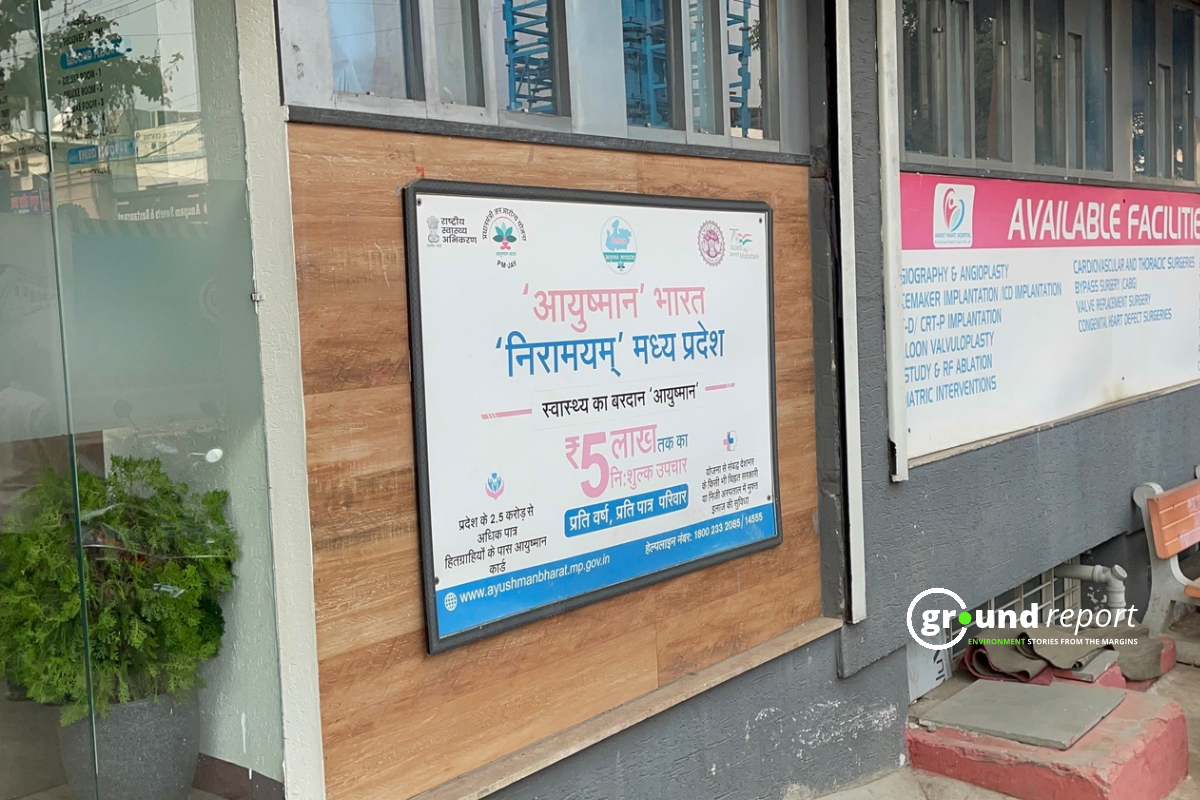
Diwakar said the Madhya Pradesh government is running a scheme called Anudan Par Kadaknath Chuje Praday (Subsidised Distribution of Kadaknath Chicks). Under the scheme, farmers receive 40 chicks aged 28 days, regardless of sex. The government also assists with feed, vaccination, and transportation. Each unit of 40 chicks costs ₹4,400, of which the government covers 75%.
In 2025, the state government allocated ₹397.71 lakh for the scheme and spent ₹237.60 lakh. The expenditure was 17.39 times higher than the ₹13.66 lakh spent in 2024.
Another scheme, Anudan Par Kukut Ikai Ka Praday (Subsidised Distribution of Poultry Units), provides 40 chicks aged 28 days from other poultry breeds as well as Kadaknath.
Meda regularly seeks advice from scientists at the Krishi Vigyan Kendra on vaccination and feed. Hurr Singh, who lives in a remote village, does not have the same access to technical guidance. However, he too received 40 chicks under the subsidised distribution scheme two years ago.
He now relies on animal health workers, known as Pashu Mitras and Pashu Sakhis, associated with the local voluntary organisation Sampark Samaj Sevi Sanstha for vaccination support.
Radheyshyam Patidar of the organisation said most poultry farmers remain unaware of the importance of vaccinating their birds. Like Hurr Singh, many Kadaknath farmers in remote villages lack awareness of vaccination practices.
Diwakar said poultry farmers must take the initiative to learn about vaccination. The department has not introduced a separate scheme for vaccination or appointed dedicated staff to vaccinate poultry.
Challenge of Market Access
Kumar said he is researching whether Kadaknath eggs have properties that could help control type 2 diabetes. He added that more research is needed into the breed’s other characteristics, particularly its purported medicinal properties, to help expand its market.
Hurr Singh’s business remains smaller than those of Dohre and Meda. He mainly supplies local roadside eateries and restaurants. He also sells his birds at the weekly rural market, or haat, where broiler chickens are in greater demand.
He lacks access to larger markets that could help him expand his business. When asked whether he wanted to increase his Kadaknath farming operations, he said, “We simply do not know whom else we can sell to.”
Meda said he would like the government to provide him with a shop in Thandla at an affordable rent. This would allow him to sell his birds locally when he does not have large orders.
The Madhya Pradesh government runs the Udyam Kranti Yojana, which offers loans with interest subsidies to support businesses in manufacturing and services. However, there is no comparable scheme specifically to help poultry farmers purchase or rent shops for selling their birds.
Kadaknath farmers believe the breed’s GI tag means it does not need extensive branding. Nevertheless, they say government policies and schemes need to address gaps in local market access, vaccination support, and hatchery infrastructure to help the breed and the livelihoods dependent on it grow.
Support Us To Sustain Independent Environmental Journalism In India.
More Ground Reports
Jhabua’s Livestock Farmers Face an Impending Fodder Crisis
Why Has India Failed to Keep Banned Thai Mangur Off Its Markets
Stay Connected With Ground Report For Underreported
Author
Support Ground Report to keep independent environmental journalism alive in India
We believe climate change should be the basis of current discourse, and our stories attempt to reflect the same.
Connect With Us
Send your feedback at greport2018@gmail.com
Newsletter
Subscribe our weekly free newsletter on Substack to get tailored content directly to your inbox.
When you pay, you ensure that we are able to produce on-ground underreported environmental stories and keep them free-to-read for those who can’t pay. In exchange, you get exclusive benefits.
Your support amplifies voices too often overlooked, thank you for being part of the movement.