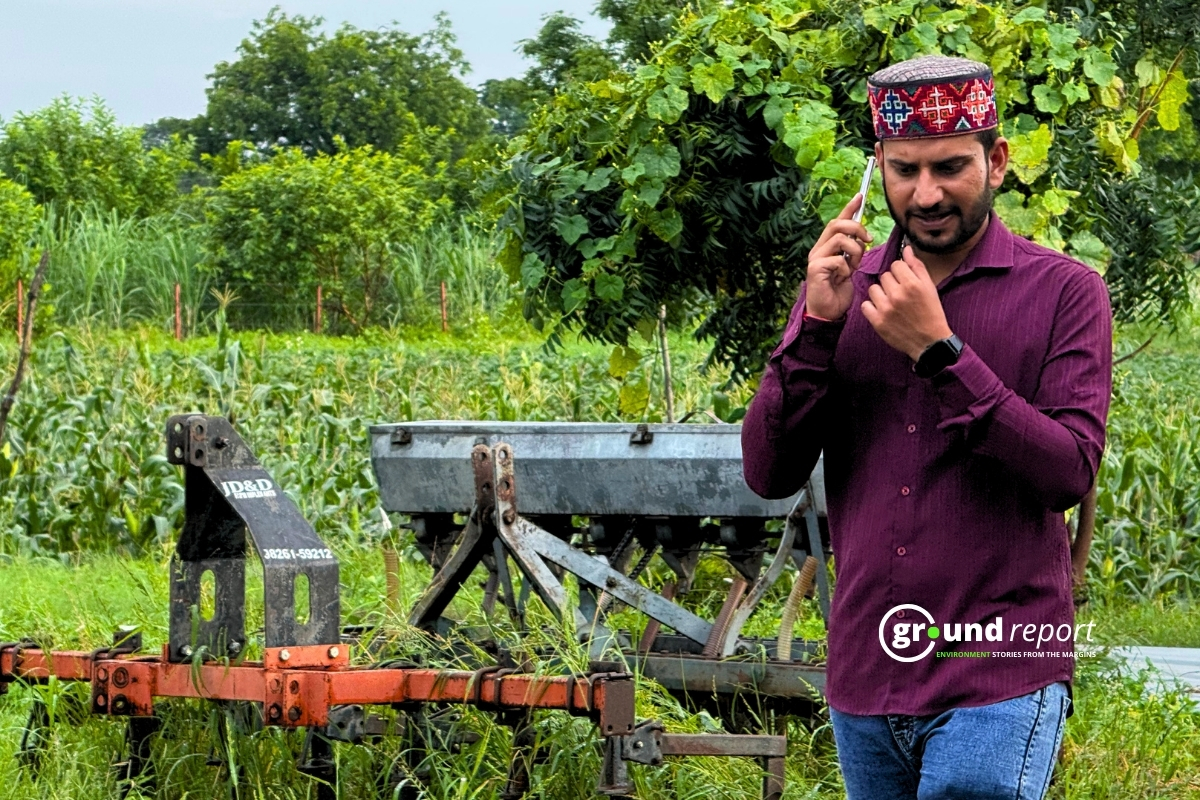

हिंदी में पढ़ें। The rabi sowing season has begun, and fields need fertilisers. At 9 am on Tuesday, 27 October, Dashrath Singh Rajput, a farmer from Berasia in Bhopal district, travelled 60 kilometres to a PACS, Primary Agricultural Credit Society, in Sehore to buy fertiliser. When he registered for an e-token to purchase fertiliser, the e-Vikas portal showed zero availability in Berasia. So, he selected Sehore as an alternative.
“My tractor is standing in the field, and irrigation is underway. I need to sow the crop. I have travelled so far to buy fertiliser, but there is no guarantee that I will get it today,” he says.
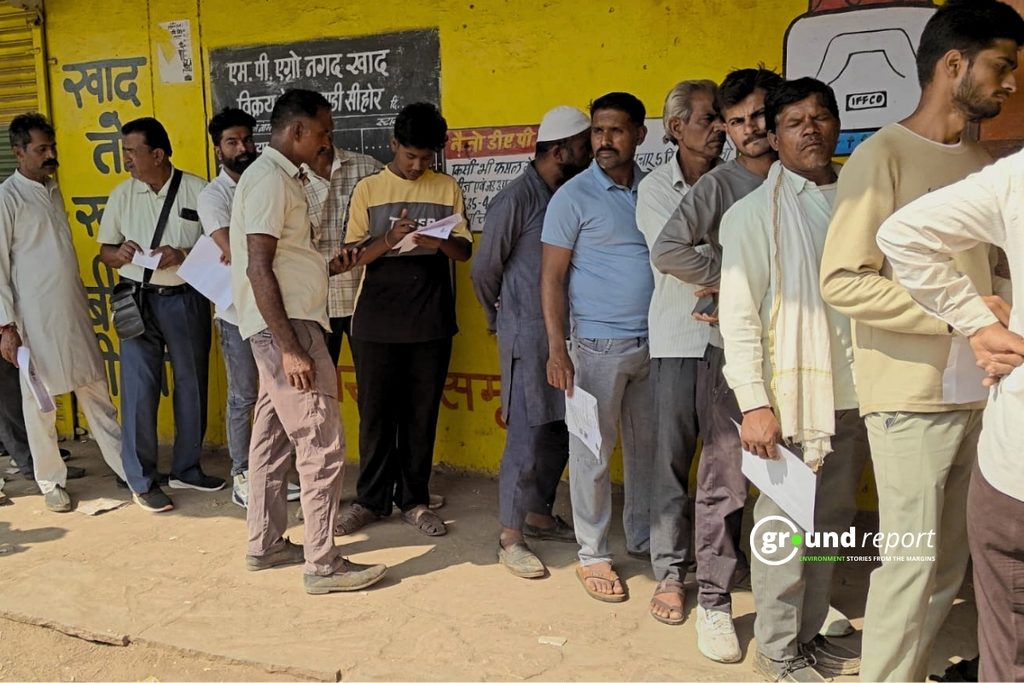
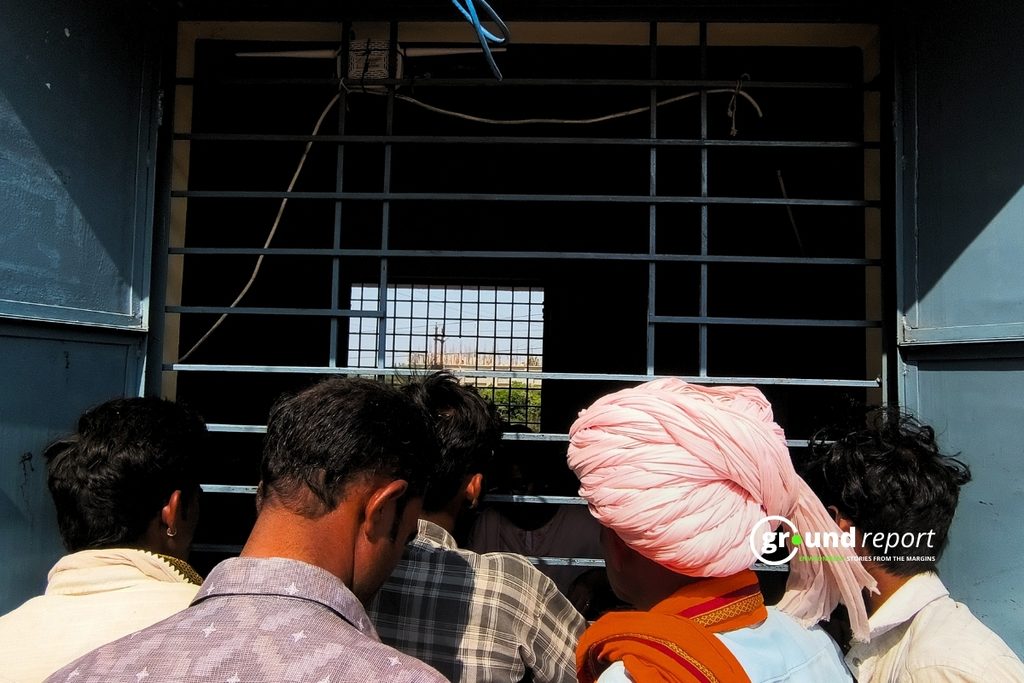
Rajput says this as farmers stand in a long queue outside the cooperative society. Despite adequate fertiliser stocks, several technical glitches are forcing farmers to wait for hours. This is happening even after the government suspended the e-token system in July following protests by farmers and introduced an improved version, e-Vikas 2.0, in August.
The government promised that the revised system would make fertiliser distribution easier for farmers. It is therefore important to understand what has changed under e-Vikas 2.0 compared with the earlier distribution system, and what shortcomings remain that continue to make it difficult for farmers to obtain fertilisers.
Waiting in the queue
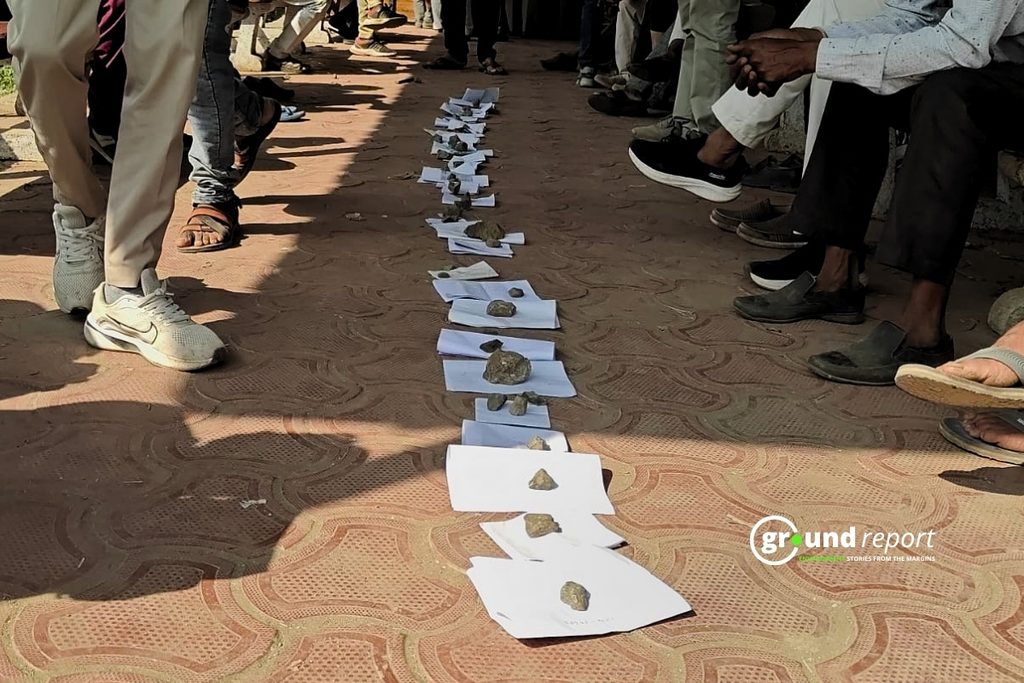
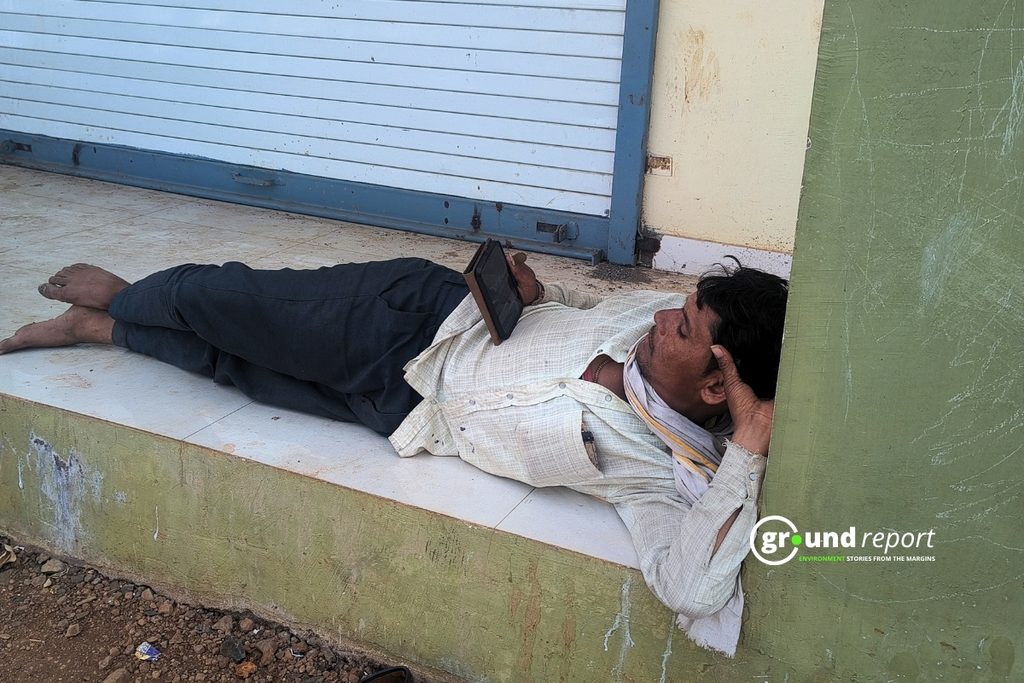
Several farmers have been standing in a queue outside the Sehore cooperative society since 6 am. Tired of waiting, some have placed stones on their token slips to mark their spots in the queue. This way, they can leave without losing their place and return when fertiliser distribution begins. Similar scenes are being reported from different districts across the state.
Deepak Verma, a farmer who came to collect fertiliser in Rajgarh, said the first hurdle is registering for an e-token, a process often disrupted by server issues. Online service kiosks charge ₹50 to help farmers register. The token is valid for 72 hours. If a farmer fails to collect fertiliser within that period, they must generate a new token and pay another ₹50.
“After obtaining the token, farmers must get it verified at the fertiliser distribution centre, where an OTP is sent to their mobile phones,” Verma says.
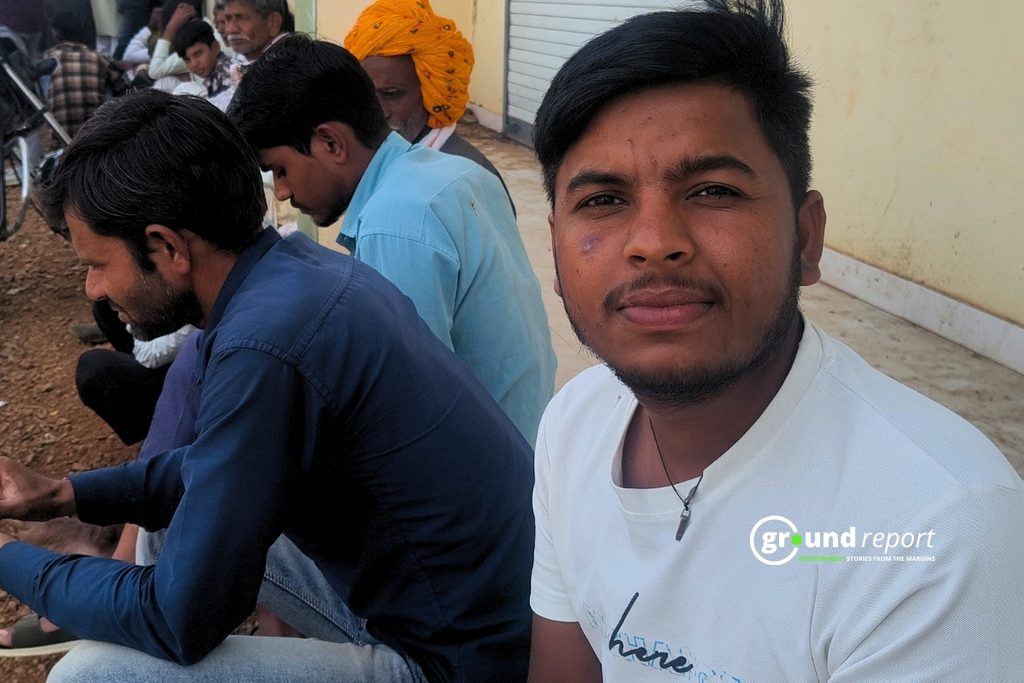
“Many face problems with their documents, and the verification process takes a long time for each farmer. Sometimes, their turn does not come even by evening. I have been struggling with this myself for the past five days,” he added.
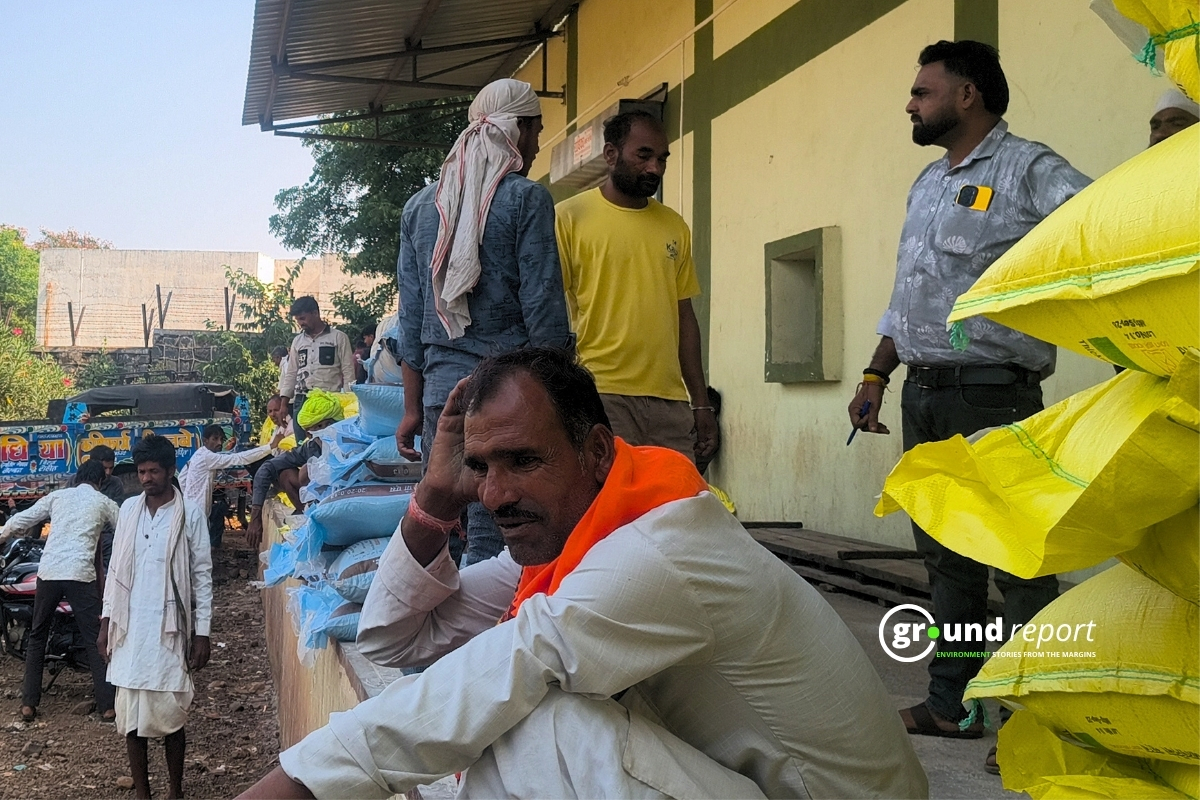
Prahlad Singh Barela, assistant director in the Rajgarh agriculture department, acknowledges these problems. He attributes the delays to technical glitches, poor internet connectivity, OTP-related difficulties and portal issues.
Farmers forced to pay more per bag
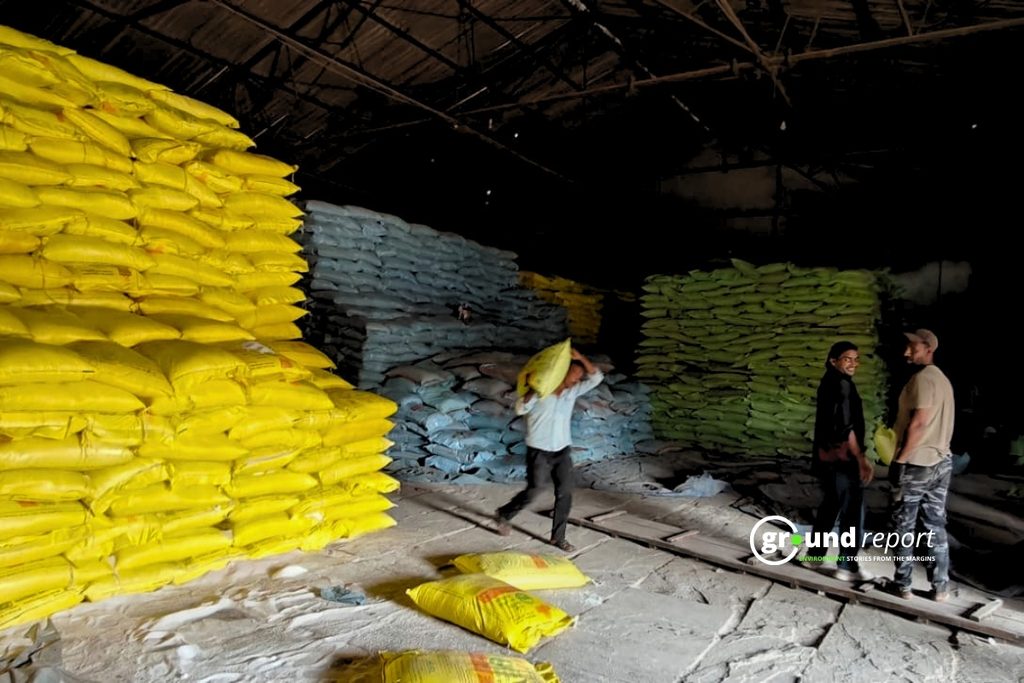
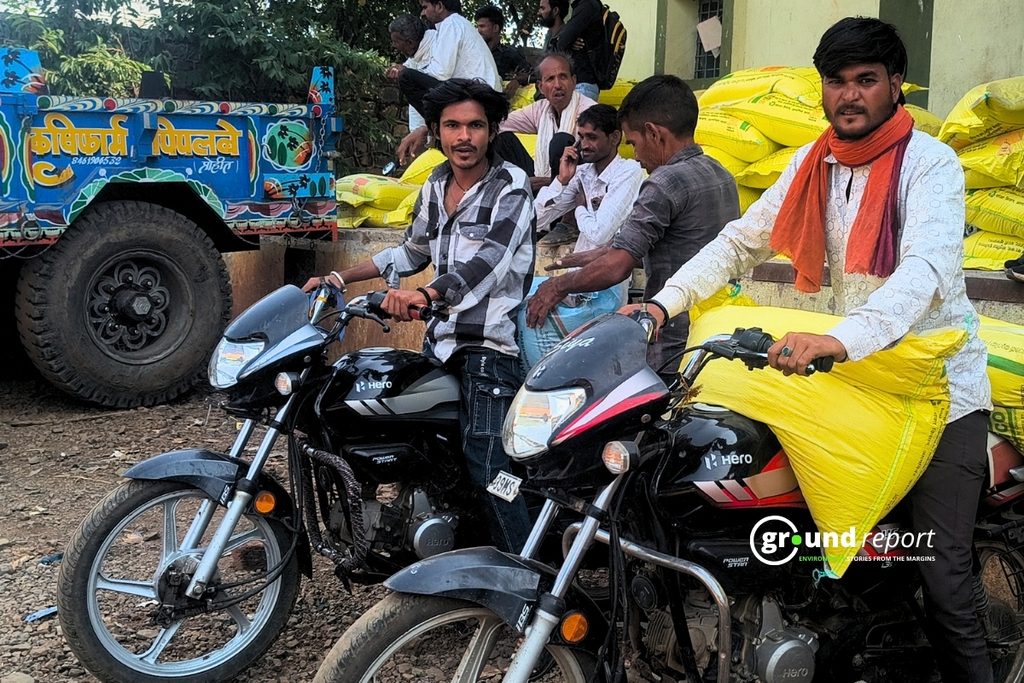
Abhishek Meena, a farmer who travelled from Berasia to Sehore to buy fertiliser, said the cost of diesel and transportation adds ₹100 to his expenses for every bag.
Farmers with an active Kisan Credit Card (KCC) account linked to a cooperative society can add their fertiliser expenses to their crop loan. They must repay the amount after the harvest or by the state government’s crop loan repayment deadline, generally in March for the rabi season or June for the kharif season.
Ashok Upadhyay, deputy director of agriculture in Sehore, urges farmers to obtain fertilisers through cooperative societies.
“Cooperative societies in the district have adequate fertiliser stocks. Sometimes, fertiliser arrives at a society, but it takes time to generate an identification number after the stock is recorded in the system. So, the fertiliser does not immediately appear on the portal. It will show up as soon as it is ready for sale,” he says.
Allegations of black marketing
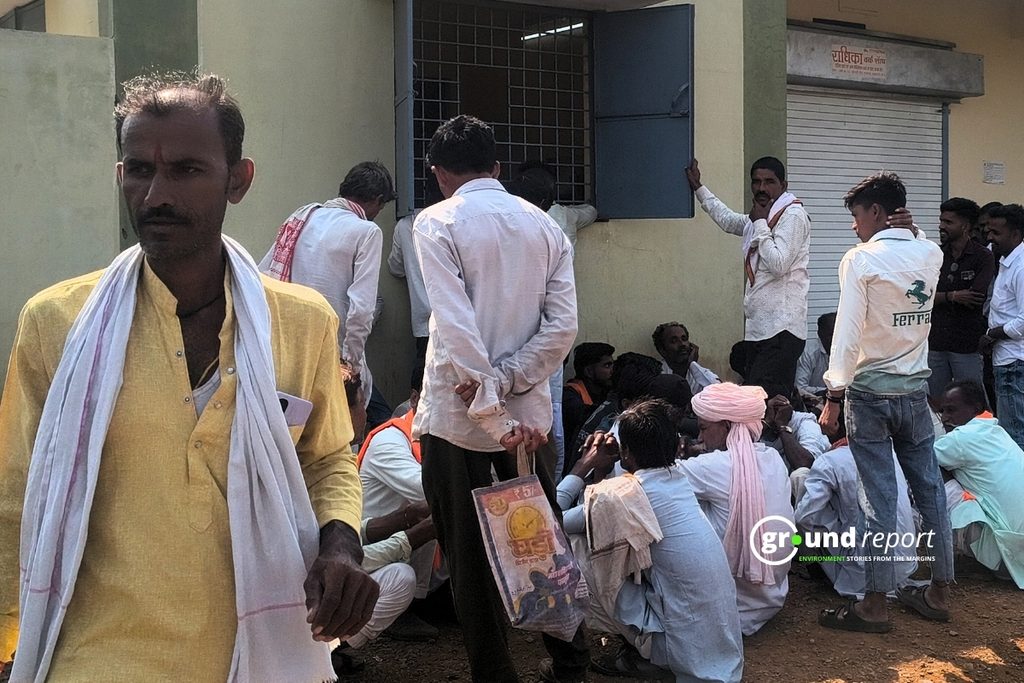
On the other hand, when fertiliser is unavailable at cooperative centres, farmers have to turn to private traders, who may insist on cash payments. Meena also accused private traders of black marketing.
“Traders sell fertiliser even without tokens. Pay ₹100–200 extra per bag, and you can buy as much as you want,” he alleged.
To investigate these allegations, our reporter Nafees Khan approached a fertiliser trader in Sehore while posing as a farmer. We have video evidence of the interaction. The trader told the reporter that 20–25 bags of fertiliser could be obtained without a token.
Barela said the practice is illegal. Under the e-Vikas 2.0 rules, private traders cannot sell fertiliser without an e-token. Fertiliser inspectors can take action against those who violate these rules. “If we receive information about fertiliser being sold without an e-token, we will take action in accordance with the rules,” said CS Solanki, senior agriculture development officer in Sehore.
The e-Vikas 2.0 system
Madhya Pradesh introduced the e-Vikas system—short for Vitaran evam Krishi Urvarak Aapurti Samadhan (Distribution and Agricultural Fertiliser Supply Solution)—to bring greater transparency to fertiliser sales. In this system, fertiliser purchases are regulated through e-tokens.
The system was rolled out across Madhya Pradesh on 1 April 2026. However, technical glitches in token generation and restrictions on farmers’ ability to choose fertilisers according to their needs sparked protests across the state. Just four months later, on 30 July 2026, the government suspended the system.
Chief Minister Mohan Yadav subsequently formed a committee headed by Agriculture Production Commissioner KC Gupta. Based on the committee’s recommendations, the agriculture department developed e-Vikas 2.0, introduced on 20 August 2026. Under the revised system, farmers can choose which fertilisers to purchase.
Barela said that the earlier system determined which fertilisers farmers could obtain and in what quantities, based on their recorded landholdings and soil health. Under the new system, farmers can choose the fertilisers they need and purchase additional quantities if required. However, they must provide a reason when booking a token for additional fertiliser.
“Under the new system, only 50–100 tokens are issued at fertiliser distribution centres in a day,” Upadhyay said. “This reduces the likelihood of overcrowding. Farmers receive fertiliser when their turn comes.”
Farmers can also generate tokens through a toll-free number and a WhatsApp bot. These alternatives can be used when internet servers fail. However, many farmers prefer booking tokens through online service centres, where they do not have to navigate the technology themselves.
Under e-Vikas 2.0, fertiliser allocations are calculated per hectare, limiting the quantity each farmer can purchase.
Ensuring fertiliser is used according to need
Nishant Warwade, secretary of Madhya Pradesh’s Farmers’ Welfare and Agriculture Development Department, told The Financial Express that the government monitors purchases that exceed recommended requirements.
“When the quantity of fertiliser purchased by a farmer exceeds 125% of the recommendation of the Indian Council of Agricultural Research (ICAR), based on the farmer’s landholding, crop size and soil type, we send a team to the farmer to find out why they needed to purchase more urea or DAP than recommended,” he said.
According to the Madhya Pradesh Agriculture Department, fertiliser allocations under e-Vikas are based on land records, crop types and seasonal requirements.
As a result, fertiliser consumption in the state during the 2026 kharif season was 11% lower than in the previous year. The government also reportedly saved ₹764 crore in fertiliser subsidy expenditure and improved nutrient-use efficiency in agriculture.
Rajgarh, where maize and soybean are major crops, recorded the sharpest decline in fertiliser consumption. The reported decline in fertiliser consumption and subsidy expenditure under e-Vikas is encouraging. However, for farmers waiting in queues, technical delays—and the risk of missing the sowing window—remain serious concerns.
Upadhyay advised farmers to use the moisture currently available in the soil and begin sowing without delay. To reduce the risks posed by El Niño, he recommends growing wheat varieties that require less water or switching to crops such as gram, peas and mustard, which can yield well with limited irrigation.
“The government should send its scientists here to find out how the e-token system is actually working on the ground, a farmer standing in the queue says. “We are farmers, how are we supposed to know why the OTP is not arriving or why the server is not working?”
Support Us To Sustain Independent Environmental Journalism In India.
More Ground Reports
Why Has India Failed to Keep Banned Thai Mangur Off Its Markets
Smart Meter Consumers May Save on Electricity Bills With Time-of-Day Tariffs
Stay Connected With Ground Report For Underreported
Authors
Support Ground Report to keep independent environmental journalism alive in India
We believe climate change should be the basis of current discourse, and our stories attempt to reflect the same.
Connect With Us
Send your feedback at greport2018@gmail.com
Newsletter
Subscribe our weekly free newsletter on Substack to get tailored content directly to your inbox.
When you pay, you ensure that we are able to produce on-ground underreported environmental stories and keep them free-to-read for those who can’t pay. In exchange, you get exclusive benefits.
Your support amplifies voices too often overlooked, thank you for being part of the movement.