
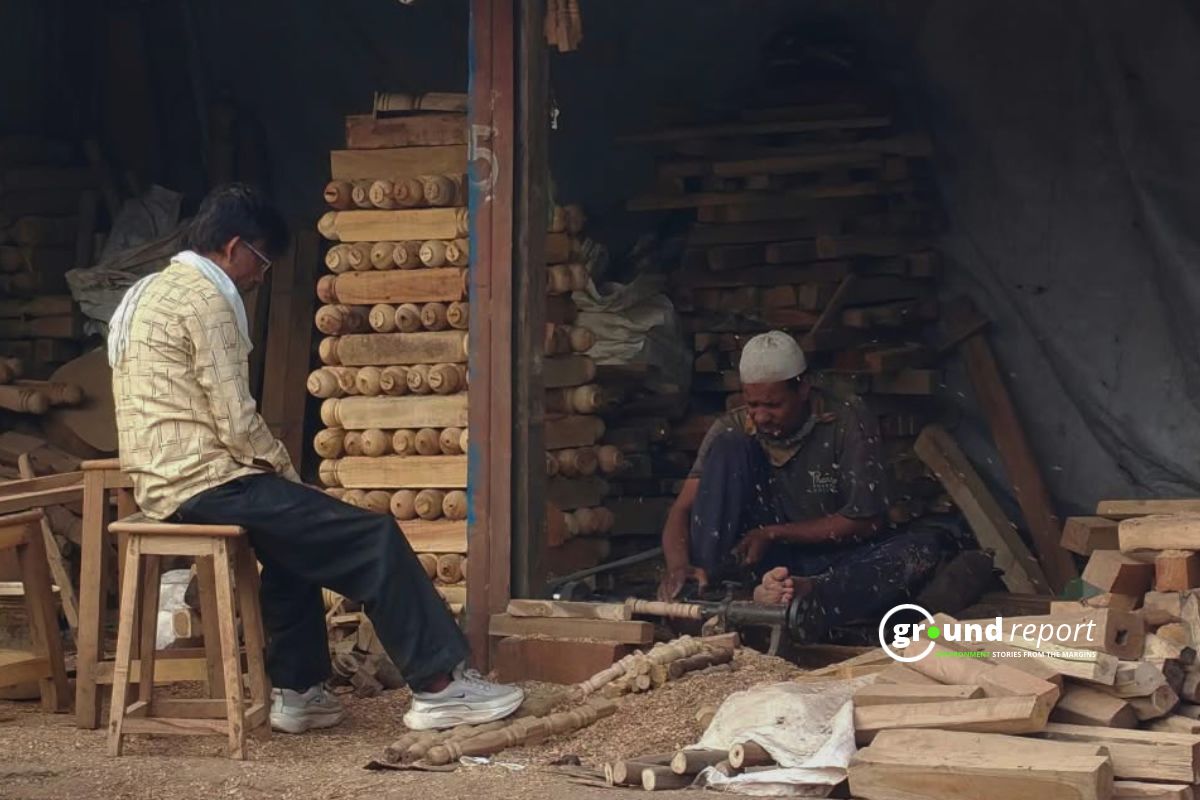
The timber market stretching from Bharat Talkies to Bogda Bridge in Bhopal has been around for decades. It is a hub for both furniture manufacturing and sales, with sawmills and furniture showrooms lining the area. But the market sits amid densely populated neighbourhoods and narrow lanes. As metro construction moves through the area, authorities have begun relocating the market outside the city. However, the opposition from sawmill operators has stalled the process.
On October 31, the administration began removing sawmills from Bhopal’s timber market. In the first phase, officials sealed around 10 units.
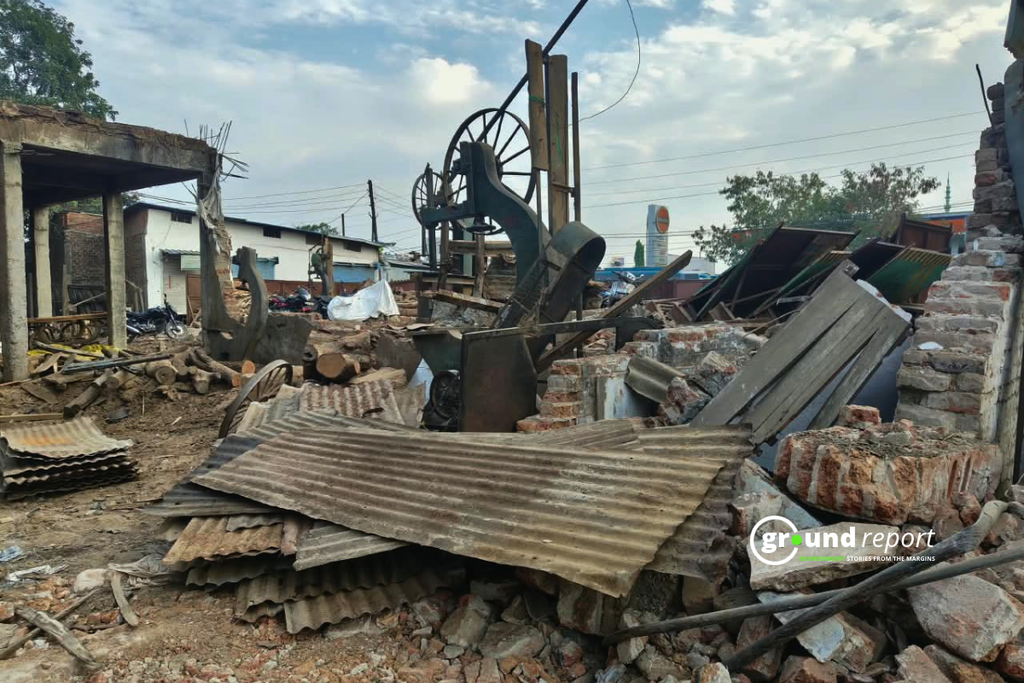
The action is part of the second phase of the Bhopal Metro project. Authorities are allotting plots and sheds to business owners at the new location. But disputes over land ownership and compensation, along with the challenges of restarting operations, remain. An even bigger concern is the fate of artisans, machine operators, loaders and other workers who depend on the market for their livelihoods. The rehabilitation plan makes no mention of them.
The Timber Market in the Metro’s Path
At the centre of this displacement is the Bhopal Metro project, which is taking shape beneath the narrow lanes of old Bhopal. The Madhya Pradesh Metro Rail Corporation (MPMRCL) is constructing a 3.39-kilometre underground twin-tunnel corridor at an estimated cost of ₹769 crore. The tunnels run about 24 metres below ground. The project includes underground stations, each 180 metres long, at Bhopal railway station and Nadra Bus Stand. At Pul Bogda, work is underway on a three-tier metro structure, described as the city’s first five-star metro station.
Around 40 sawmills lie along the Metro’s Phase II alignment. However, the administration’s relocation plan covers a wider area. It plans to remove 80 sawmills between Bharat Talkies and Pul Bogda, with 40 targeted in the first phase. Bhopal has 108 sawmills in total, and the administration plans to relocate all of them.
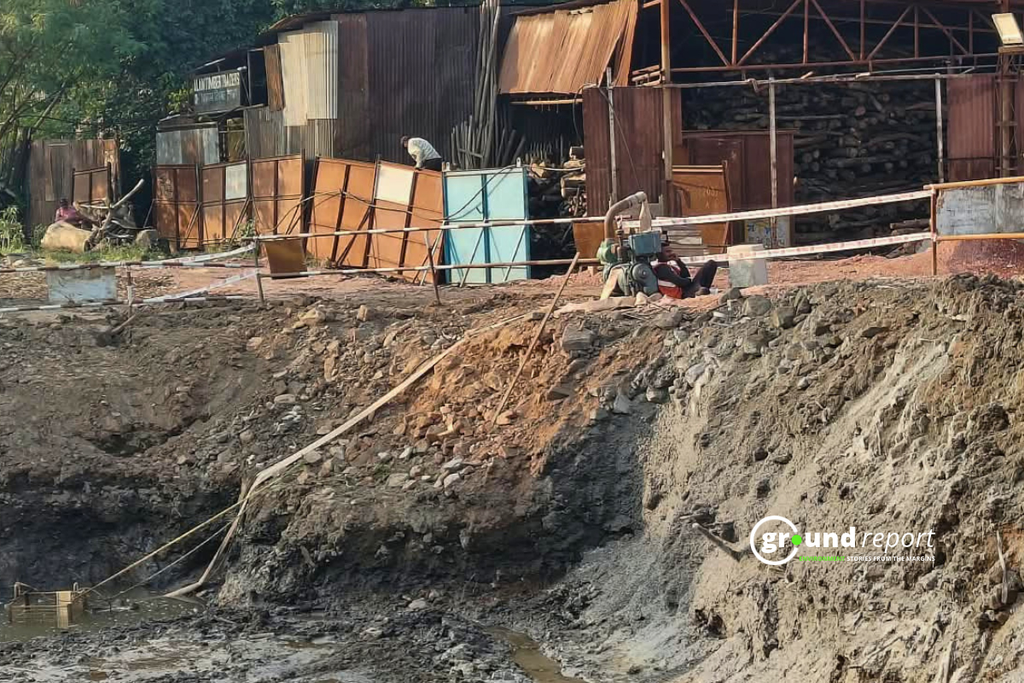
The units are being shifted to a timber cluster at Chhota Rati Badh, along Parwaliya Road. The Industries Department has allotted plots to around 40 operators so far and is processing allotments for the remaining ones. Construction of sheds at the new site has also begun.
A Long History of Delays
The proposal to move sawmills out of the city dates back to the first master plan, prepared in 1975. At the time, sawmills operating near railway lines and within the city were considered a safety risk to residents.
In April 2007, the then Industries Minister Babulal Gaur chaired a meeting with the Timber Merchant Association. The meeting decided to relocate sawmills and timber depots to Kolua Kalan or Jhirniya. The government also promised to provide basic facilities at the new site.
Over the years, several plans were drawn up, but the relocation never materialised. Officials considered sites at Kabadi Khana, the Aishbagh Stadium area, Govindpura, Transport Nagar and Chandpur. Each proposal stalled over land availability, infrastructure, or administrative hurdles.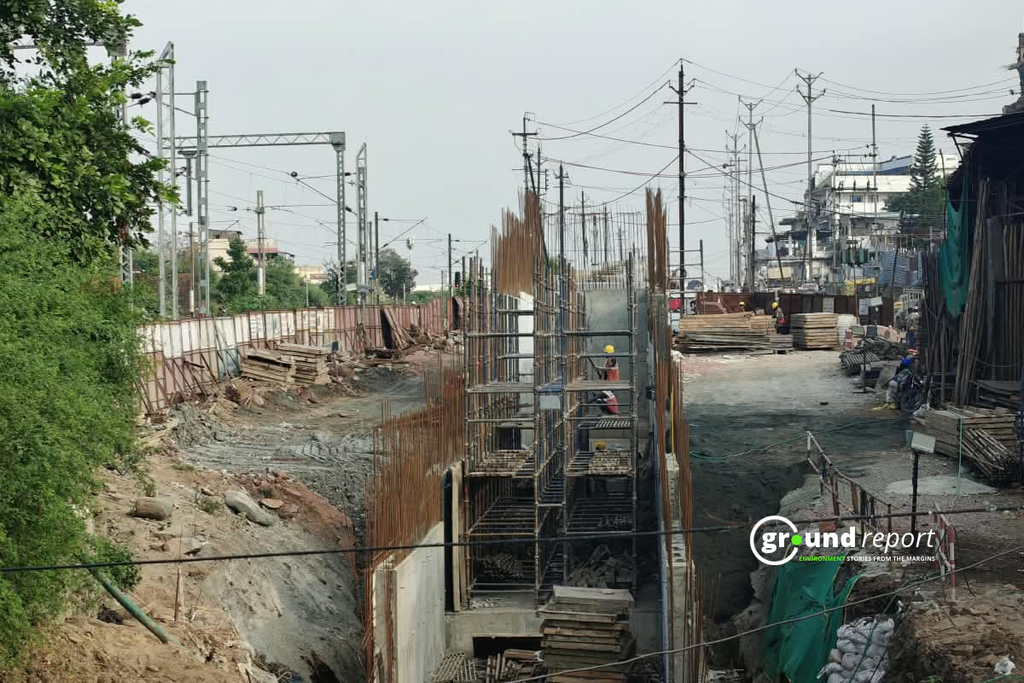
In May 2023, then Bhopal Collector Asheesh Singh directed business owners to vacate the premises within two months. On June 15, traders formally agreed to move to Rati Badh along Parwaliya Road. However, by 2024, land mutation and the transfer of possession to the Industries Department were still pending. The land was eventually acquired, and the MSME Department issued tenders. But development at the site remains incomplete.
The relocation plan, first proposed in 1975, has passed through promises and proposals in 2007, 2017, 2020 and 2023. Now, the Metro project has brought the long-delayed process to a head.
The Land Ownership Dispute
The dispute is now less about metro construction and more about land ownership and compensation. Sawmill operators are moving away from the construction zone to avoid obstructing metro work. However, the relocation and ownership issues facing the 32 metro-affected sawmills vary from one unit to another.
Revenue records show that the land has been registered in the municipal board’s name since 1959. SDM Deepak Pandey said the land is recorded as government property, leaving no provision for compensation under land acquisition.
Business owners disagree. They claim to possess old land documents and registered deeds. Badr-e-Alam, president of the Timber Merchant Association, said, “Traders have the documents. The administration should examine the original 1959 khasra records–official land registers– as well as the old registrations held by the business owners.”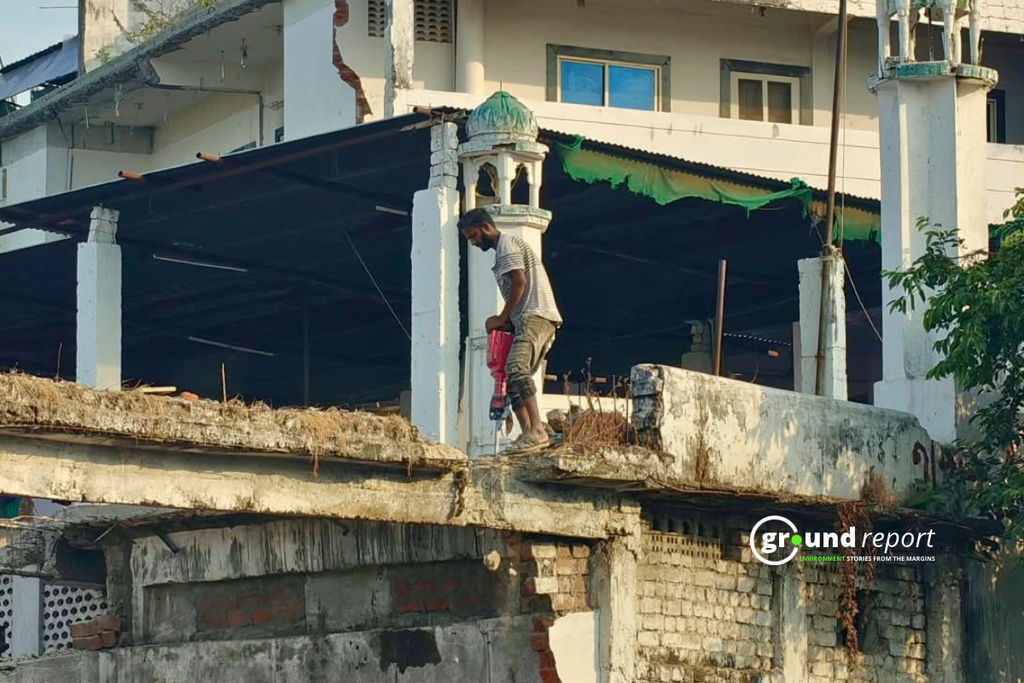
Business owners estimate that compensation for the loss of land and businesses would amount to around ₹30 crore. This is their estimate, not an amount approved by the administration. Business owner Aleem Khan also questioned the extent of the demolition. “Why are shops that are not in the metro’s path being removed? They should also be compensated,” he asked.
Separate Action on Private Land
A separate eviction drive is underway in the Bharat Talkies area, unrelated to the metro project. It concerns alleged encroachment on land belonging to Syed Nasiruddin. Tehsildar Bhupendra Kailashia asked 10 occupants to produce documents establishing ownership but failed to do so. On October 16, the administration issued an eviction order for 0.0495 hectares and directed the occupants, including Rizwan Khan’s Fine Timber, to vacate within three days.
After the occupants failed to leave, officials sealed 10 sawmill units. The administration has given them another four to five days to clear the premises, warning that bulldozers will be brought in if they fail to comply.
Ready to Relocate, but Without Facilities
Business owners are willing to move, but they insist on basic infrastructure availability at the new site. Alam said, “All business owners are ready to shift, but there is a lack of facilities there.”
Their concerns are straightforward: how can they run businesses without roads, electricity, and water? Allotting land alone is not enough to keep a business running. Alam also wants all sawmills and timber shops to relocate together. “This will help preserve the existing relationship between customers and traders,” he says.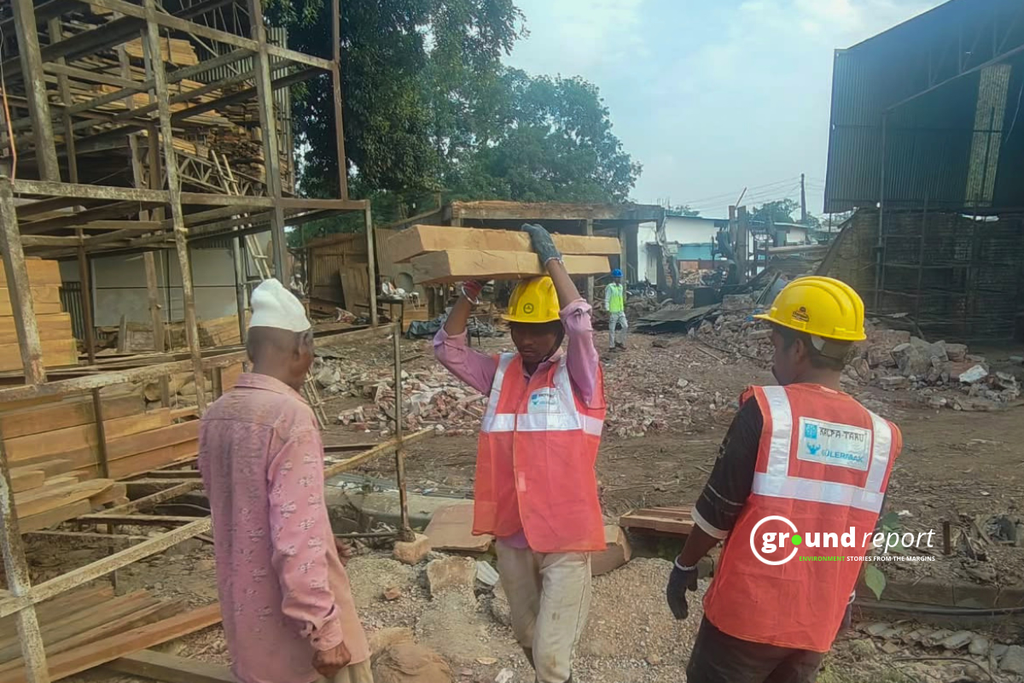
The impact of this relocation will extend beyond sawmill owners. The timber market employs machine operators, carpenters, timber measurers, loaders and other labourers, many of whom depend on daily wages. Their livelihoods, however, have largely been left out of the discussion.
Firoz has worked at a sawmill here for 20 years, earning ₹400–500 a day. He commutes by bicycle and worries about finding work and reaching the new site. “Nobody has spoken to us. The commute will cost ₹100–150. What will I take home to my family? This relocation means starvation for us,” he said.
Salim works as a loader and earns money whenever trucks carrying timber arrive. His income depends on the market’s daily business. “The owners have got plots. Our names are not even on any government register. We could end up starving,” he said.
Questions That Remain Unanswered
The relocation plan, pending since 1975, is now being implemented as part of metro development. Business owners are being allotted plots and sheds at the new site, but workers, loaders and labourers have no clear rehabilitation plan.
As the administration clears the old market for development, the relocation raises concerns about what happens to those who depend on it for daily wages. While owners prepare to restart their businesses at the new site, workers must contend with uncertainty over whether they will find jobs, afford the commute, and continue earning a living.
Support Us To Sustain Independent Environmental Journalism In India.
More Ground Reports
Madhya Pradesh’s e-Vikas 2.0 Fertiliser System: Why Are Farmers Still Queuing?
Smart Meter Consumers May Save on Electricity Bills With Time-of-Day Tariffs