Surat got a year’s worth of rain in one day this week. The city’s drains couldn’t handle it. According to Times of India, at least 26 people are dead, rescue teams pulled more than 7,300 people from flooded homes. This is not new. Surat has flooded roughly 20 times since the 1700s. It flooded in 2006. It flooded in 1968. Now it has flooded again, and the reasons are almost the same each time.
What happened
Surat got 358 millimeters of rain in 24 hours, from 6 a.m. Tuesday to 6 a.m. Wednesday, July 8. That’s the most rain the city has ever recorded in one day. Nearby towns got even more. Palsana got 462 mm. Kamrej got 442 mm. Bardoli, Navsari, and Mahuva each got over 190 mm. The rain finally eased on Wednesday night.
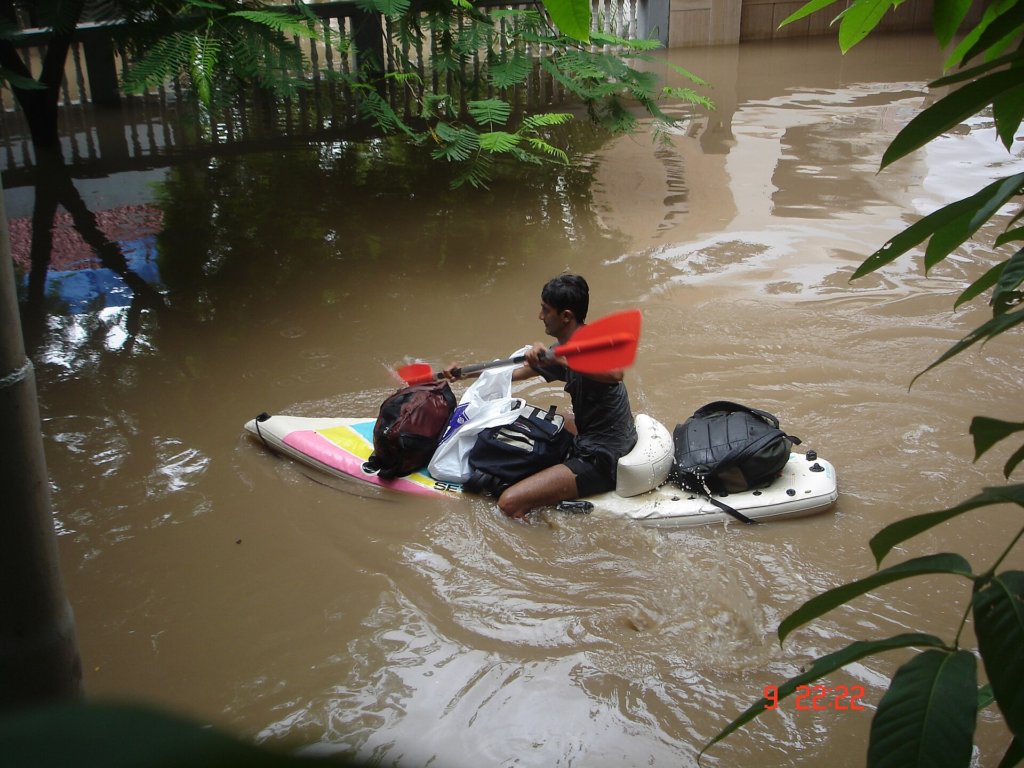
Surat Collector Tejash Parmar said the 26 deaths came from electrocution, drowning, lightning, and falling trees. Water filled the basements of Poddar Arcade, a mobile phone market near the railway station, and ruined stock for hundreds of small shop owners. People waded through a flooded underpass at the station. In Limbayat, near the Meethi Khadi creek, residents watched their two-wheelers vanish underwater while fire crews rescued people by boat.
The rescue effort moved fast. NDRF teams pulled 85 people, including 22 children, out of the flooded Sriram Nagar Society alone. By Wednesday, more than 7,300 people had been moved out of flooded areas. NDRF, SDRF, police, fire crews, and over 5,000 local volunteers worked together to get people to safety.
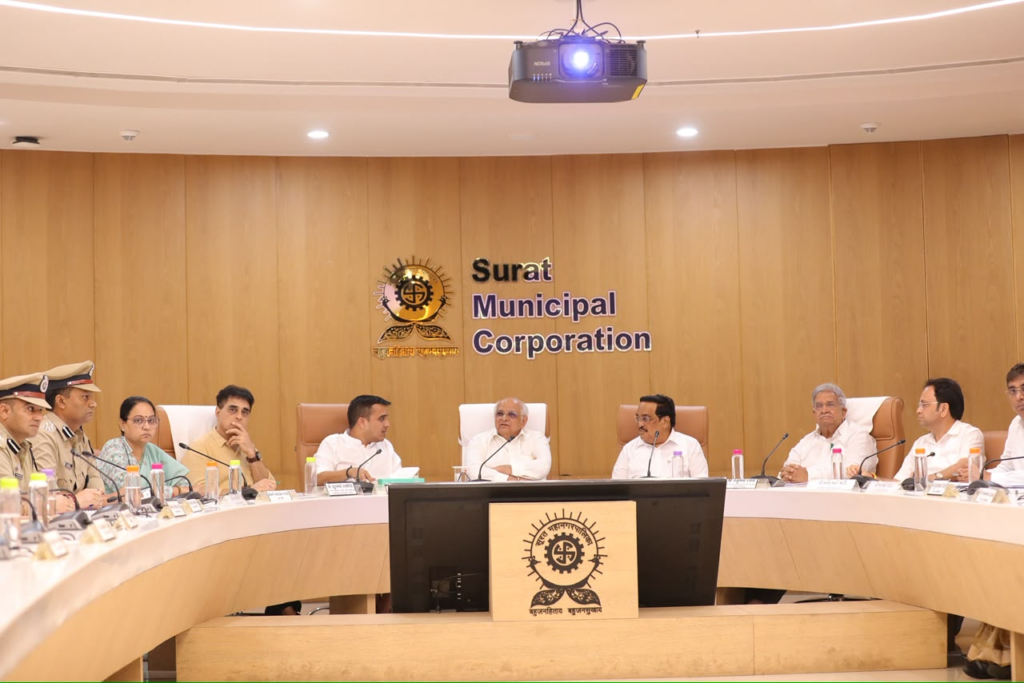
Chief Minister Bhupendra Patel visited Surat on July 9 and led a review meeting at the city’s command center in Althan. He announced a 500-crore-rupee plan to stop creek water from flooding the city. Deputy Chief Minister Harsh Sanghavi said this was the heaviest rain Surat has ever recorded. He also said any contractor whose bad road or drainage work made the flooding worse would face legal action, not just a warning. Patel came back on July 10 for a second review. He checked on cleanup work, disease control, and cash payments to flood-hit families. A week after the rain started, the crisis was still being managed hour by hour.
Why Surat keeps flooding
Surat sits at the point where the Tapi River meets the Arabian Sea. That spot is low and flat, and it has flooded for nearly 300 years. Records show major floods in 1737, 1782, 1837, 1949, 1968, 1998, 2002, and 2006. Almost all of them hit between July and September, when monsoon rain pounds both the city and the hills upstream that feed the Tapi.
The clearest comparison is 2006. That August, the Ukai Dam, 100 kilometers upstream, released a huge amount of water all at once. The Tapi’s water level rose from 333.6 feet to 339 feet in just four days. Nearly 90 percent of Surat went underwater for four straight days. Two citizen groups later looked into what happened. Both said the disaster could have been avoided.
They blamed poor handling of the dam and construction that had spread onto the river’s flood plain. Biswaroop Das, an urban development expert who sat on one of those panels, said Surat’s floods have grown as the city has spread into the Tapi’s own path. He said that nearly 20 years ago. It still holds true today.
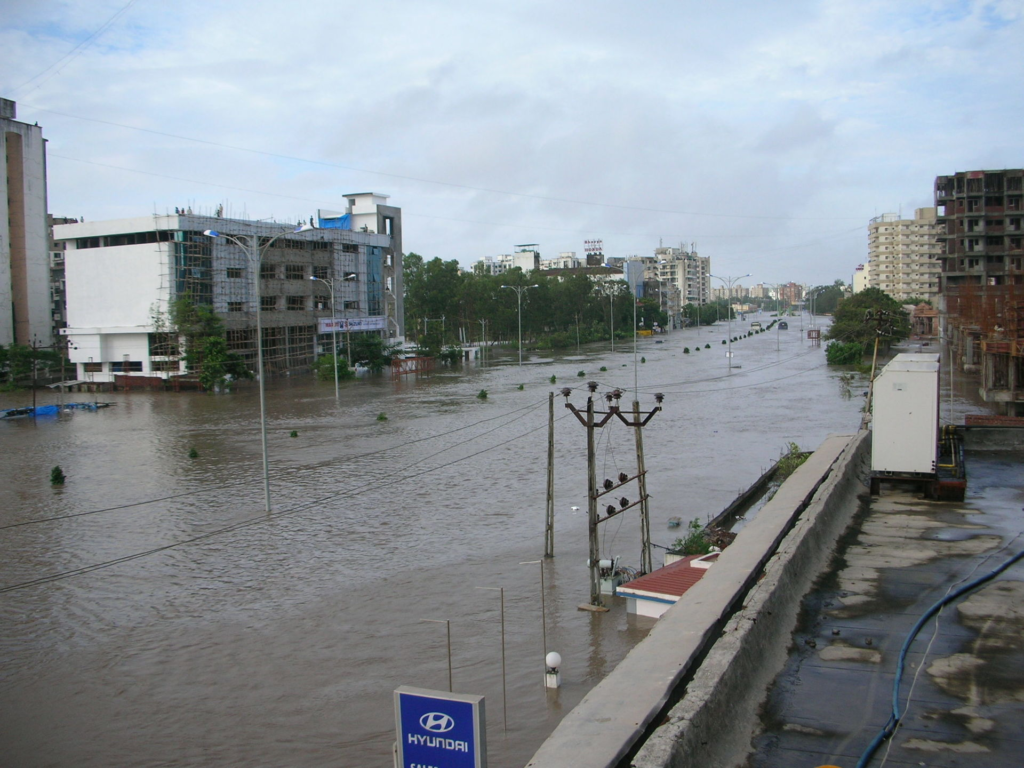
This week’s flood had a different trigger. No dam released water this time; the rain alone did the damage. But the weak point is the same one experts pointed to after 2006: a city sitting on a flood plain, with drains and creeks that never grew to match the city around them.
why Indian cities keep failing this test
Surat is not alone. Almost every major Indian city has a flood story like this now. Mumbai flooded badly in 2005, when 944 mm of rain fell in one day. Chennai flooded in 2015. Hyderabad flooded in 2020. Bengaluru flooded in 2022 and cost its tech industry more than $220 million. Delhi flooded in 2023. Mumbai flooded again in 2025, with 875 mm of rain in August alone. A May 2026 report from the Observer Research Foundation said flooding has stopped being a rare event in cities like Mumbai, Chennai, Delhi, and Guwahati. It happens every year now.
Three things are driving this, and they feed off each other.
First, the rain itself is getting worse. Scientists have found that short, heavy downpours are becoming more common across India as the air warms and holds more moisture. These are the kind of storms that dump over 100 mm of rain in an hour on one small area. Drains built for gentler rain simply can’t cope.
A 2024 study in Nature Scientific Reports found that India’s heaviest rainfall events are already well above past levels, and the trend is expected to keep climbing as the planet warms. This isn’t just a Surat problem. It’s a national one. The storm that broke Surat’s drains this week is a preview of what’s coming, not a one-off.
Second, the drains were built for a different world. Most Indian cities designed their stormwater systems to handle 12 to 20 millimeters of rain an hour. Storms now regularly bring 50 to 100 mm an hour. More than 70 percent of India’s urban areas still don’t have properly designed stormwater drains. What they have instead is often silted up, blocked by encroachment, or just too small. In many cities, the same pipes carry both sewage and rainwater. When those pipes overflow, sewage spills into homes and streets along with the floodwater. A weather problem turns into a health problem overnight.
Third, cities keep building on the land that used to soak up the rain. When a city paves over wetlands and low-lying ground, floodwater has nowhere to go. Studies show this kind of unplanned growth can multiply flood peaks by up to eight times and flood volumes by up to six times. That’s close to exactly what happened in Surat, both in 2006 and this week.
What govt has done and hasn’t
India does have rules on paper. The National Disaster Management Authority put out urban flooding guidelines in 2010. It was the first time the government treated city flooding as its own kind of disaster, separate from river flooding. The housing ministry followed up with flood response procedures in 2017 and a national drainage design manual in 2019. Programs like AMRUT 2.0 and the Smart Cities Mission have paid for some drainage upgrades. A 2024 bill in parliament would set up dedicated disaster authorities for big cities.
By the government’s own estimate, roughly 500 people die in urban floods across India every year. The World Bank says flooding already costs Indian cities billions of dollars a year, through damaged buildings, lost work hours, and broken supply chains. The rules exist. What’s missing is enforcement, money, and follow-through. Surat’s new 500-crore-rupee creek project may help. But on its own, it only fixes one piece of a problem experts have been describing the same way since 2006.
Support Us To Sustain Independent Environmental Journalism In India.
More Ground Reports
He Was Married as a Child, Now Manish Dangi Helps Stop It for Others
Despite The Ban, How Gutkha Became MP’s Most Common Household Habit