

Despite lamenting India’s rising cost of living, a cab driver in a Tier-II city kept reaching for sachets of chewing tobacco. He said he consumes five or more a day as a habit. He knows the health risks, he said, but the tobacco keeps his mouth busy and blunts his hunger during his 12-hour workdays on the road. Part of it, he admitted, is simply addiction.
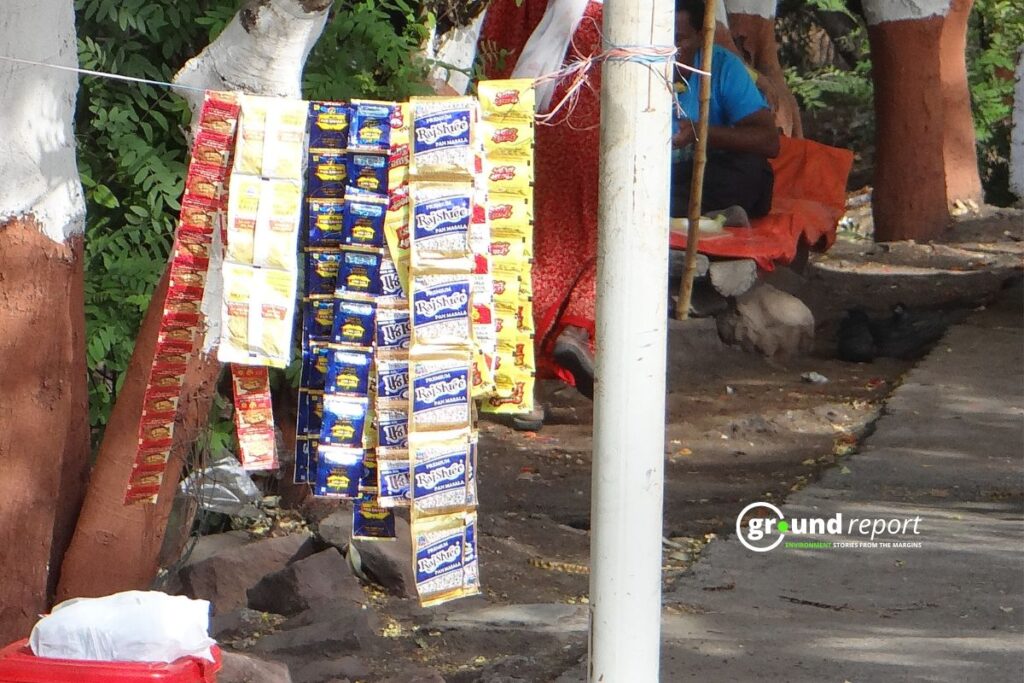
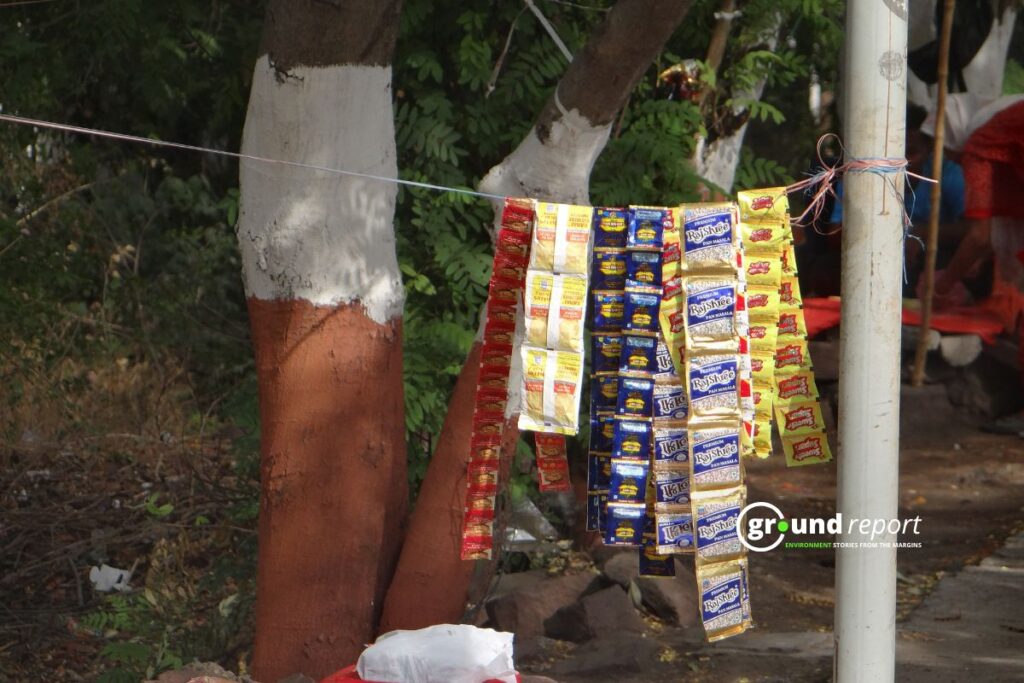
India has small roadside stalls that sell cigarettes, smokeless tobacco (Gutka), and tea. Gutka is sold in colored sachets that hang beside soap and biscuits.
Tobacco in India takes two forms: people either smoke it, in cigarettes or bidis, or they chew it. Gutkha is a chewed, smokeless product.
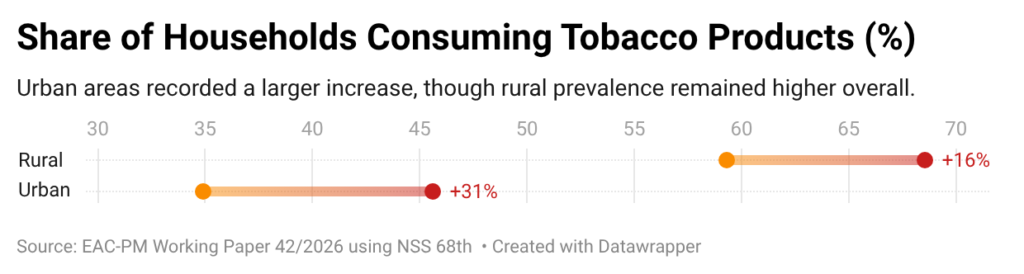
In India, between 2011–12 and 2023–24, the number of rural households consuming any form of tobacco rose from 9.9 crore to 13.3 crore, a 33 percent increase in just over a decade. In urban India, the tobacco-consuming households jumped 59 percent, from 2.8 crore to 4.7 crore. On the other hand, bidi, the traditional hand-rolled product, is declining.
Gutkha drove the sharpest national rise. The share of rural households consuming it increased 565 percent from 5.3 percent in 2011–12 to 30.4 percent in 2023–24. In cities, the increase was 544 percent. The cigarette consumption rose by 171 percent in rural areas and by 156 percent in urban areas.
Even after adjusting for inflation, rural households spent 58 percent more on tobacco in real terms. Urban households spent 77 percent more.
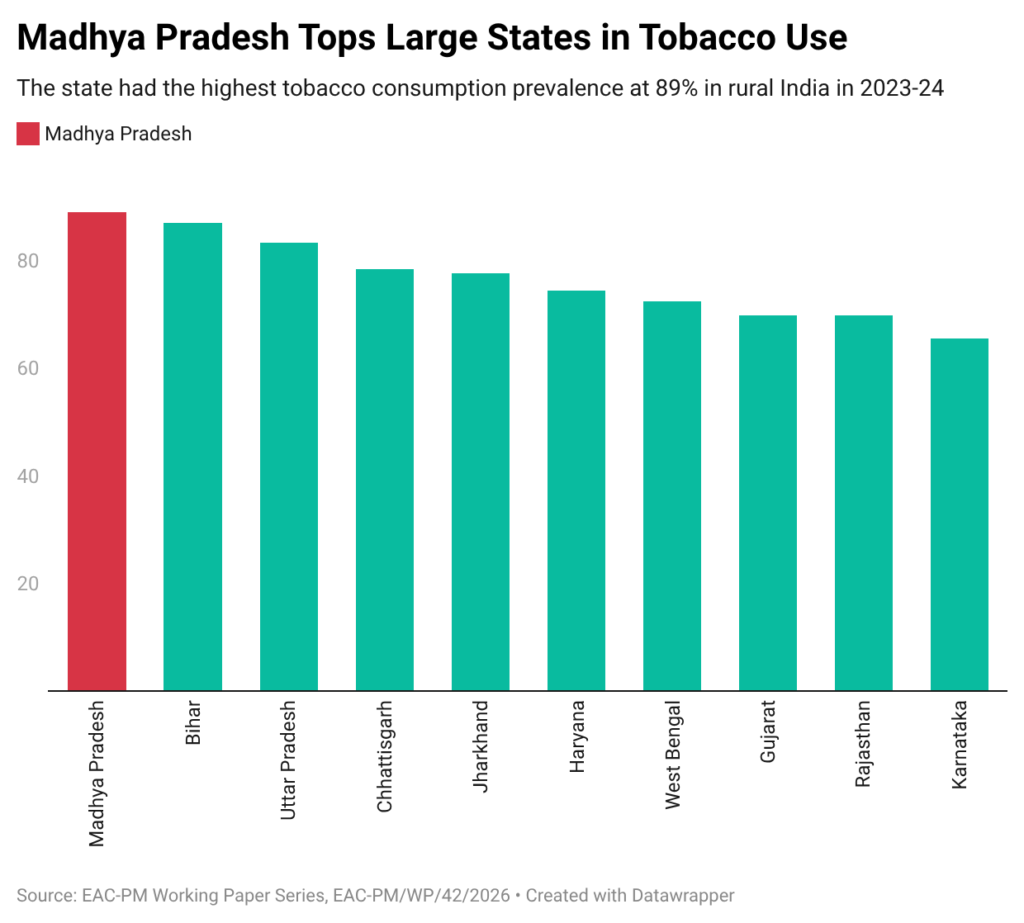
Madhya Pradesh banned gutkha (chewing tobacco) in 2012, the first state in India to do so. More than a decade later, 62.3 percent of its rural households still consume gutkha, the highest rate of any large state in the country.
In India, gutkha now accounts for 41 percent of all rural tobacco expenditure, the single largest share of any tobacco product by value. And consumption is concentrated in India’s central belt: Madhya Pradesh, Uttar Pradesh, Bihar, Chhattisgarh, and Rajasthan, where rates far exceed the national rural average of 30 percent. The southern states report lower rates overall, though Karnataka sees one in four rural households consuming gutkha.
Despite bans and higher taxes (sin tax), gutka use is rising in India, primarily because it remains cheap, easily available, addictive, and socially accepted. Experts say aggressive advertising, small sachets, weak enforcement, and stress-related use among workers keep consumption high, especially in poorer and rural communities.
At the same time, researchers argue that stricter enforcement, tighter advertising controls, and making gutka less affordable are key to reducing use and consumption.
What Gutkha Does
The International Agency for Research on Cancer classifies smokeless tobacco and areca nut, the two primary components of Gutka, as a Group 1 carcinogen, meaning there is sufficient evidence they cause cancer in humans. Group 1 is the same category as asbestos and benzene.
A 2017 study found that tobacco-specific nitrosamines in gutkha—compounds called NNN and NNK—cause direct DNA damage, triggering uncontrolled cell growth. The areca nut component independently causes oral submucous fibrosis, a progressive scarring of mouth tissue that precedes oral cancer. Gutkha users face 8.7 times the oral cancer risk of non-users.
The Ministry of Health and Family Welfare estimates that tobacco causes nearly 13 lakh deaths in India every year. Noncommunicable diseases, cardiovascular illness, cancer, and respiratory conditions now account for 63 percent of all deaths in the country, with tobacco as a leading driver.
Madhya Pradesh at Centre and Why People Use It
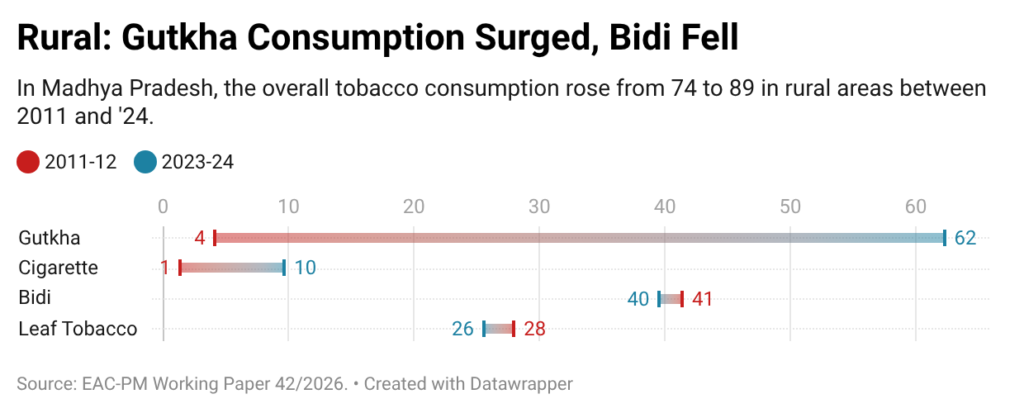
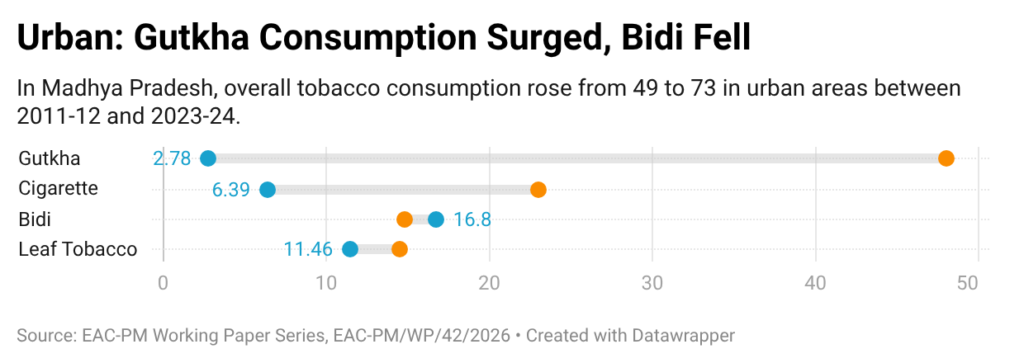
In rural Madhya Pradesh, gutkha consumption rose from 4.2 percent of households to 62.3 percent over the survey period. In urban areas, it climbed from 2.78 percent to 48.03 percent, again, the highest among large states.
Overall, tobacco use reached 89 percent of rural households by 2023–24, the highest of any large state. Only the smaller northeastern states, Tripura, Arunachal Pradesh, and Mizoram, rank higher nationally.
National Family Health Survey data show that smokeless tobacco remains more prevalent among women than smoked forms, with significant disparities persisting across gender, rural-urban residence, and socioeconomic strata.
A 2023 study published in The Lancet Regional Health found that over 1.2 million pregnant women in India chew tobacco, with khaini and gutka, the most common forms among rural women, often consumed to relieve nausea or as a culturally accepted practice passed down within families.
The data shows what is happening. It does not explain why millions of people continue reaching for a product they know can harm them.
A study in western Maharashtra found that 53.99 percent of adolescent tobacco users cited peer pressure and 43.74 percent cited curiosity as their primary reasons for starting. The mean age of initiation was 15.59 years. Some parents actively encourage their children to use smokeless tobacco, normalizing the habit.
Gutkha is a compressed mixture of tobacco, areca nut, slaked lime, and flavouring agents. Flavouring agents enhance palatability and actively attract young people. Areca nut, cardamom, and slaked lime increase its addictiveness. Users also report that it relieves stress and is believed to cure toothaches, headaches, and stomachaches.
The Cigarettes and Other Tobacco Products Act of 2003—known as COTPA—bans direct tobacco advertising. Gutkha brands shifted to campaigns for pan masala and flavoured cardamom, fronted by Bollywood celebrities and running during prime cricket broadcasts. “Gutkha advertisement goes unabated, and big Bollywood stars promote gutkha under the fig leaf of ‘silver-coated cardamom,’” the EAC-PM paper states.
In April 2022, Akshay Kumar appeared in a Vimal Elaichi advertisement alongside Shah Rukh Khan and Ajay Devgn. Vimal, which makes Gutka, sells itself as a cardamom brand in ads. An old video of Kumar immediately circulated on social media. In it, he called gutkha endorsements “galat kaam,” or wrong, and promised he would never do one. He apologised within days, donated his fee, and quit the campaign.
The apology changed nothing. “The ad will continue,” said Bhavna Mukhopadhyaya, chief executive of the Voluntary Health Association of India.
Dr. Rohini Ruhil, assistant professor at the Amity Institute of Public Health and Hospital Administration, Amity University Noida, and an alumna of Johns Hopkins University, points to a force at work across all income groups.
“Historically, smokeless tobacco was associated with routine labour, stress, and appetite suppression among low-income groups,” Ruhil said. “But now the penetration of the product across classes indicates its association with social identity and aspirations due to aggressive marketing.
And the tobacco industry is infamous for its advertisements. The World Health Organization (WHO) has documented how the tobacco industry has historically used advertising to normalise consumption and recruit young first-time users.
And, with social media, this advertising is more pertinent and aggressive.
A 2023 study published in the Journal of Global Health Reports, conducted across Delhi, Pune, and Bengaluru, found that nearly half of all tobacco promotional posts on social media featured models aged 10 to 24, evidence that India’s tobacco industry actively targets young audiences online.
The Ban That Failed
Manufacturers split the product into two legally separate items — pan masala and loose tobacco — sold in coordinated pouches designed to be combined by the buyer. The EAC-PM paper calls it the “twin sachet” method.
“Previously, we were getting a premix,” said Dr. Dilip Kumar Acharya, national chairman of the IMA Cancer and Tobacco Control Committee and surgical specialist at District Hospital, Indore. “Now the person has to mix it themselves; that is all the difference that has come. Indirectly, they have found a way to circumvent this law.”
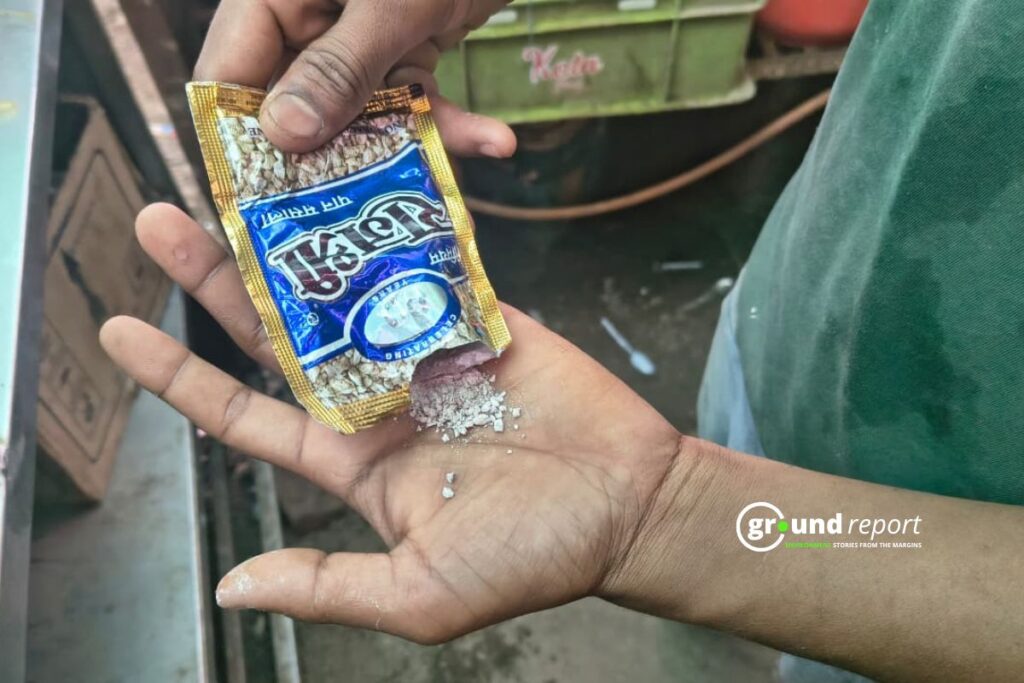
“Earlier, I was selling sugar mixed in tea,” said a researcher, who is a visiting scientist at Harvard School of Public Health. “Now I am making tea and giving it to you, telling you to add sugar to your taste. That is exactly what is happening in Madhya Pradesh.”
“In India, what happens with a ban is on paper compliance,” the researcher said. “The products with tobacco disappeared from the market, but regular users know exactly what to ask for.”
The Sin Tax
Tobacco falls under what economists and policymakers call “sin taxes,” along with alcohol and now carbonated sugar drinks in India. This is an additional tax that increases the product’s price and discourages its purchase.
In February 2026, tobacco had a 40 percent tax rate.
Needless to say, the tax hasn’t really changed the consumption pattern.
On taxes, the researcher put the arithmetic plainly. “If your bidi costs one rupee, even if you impose a 100 percent tax, it costs two rupees—and it is still absolutely affordable. They switch to alternatives. But if they haven’t quit tobacco, they have simply moved to another product.”
On the other hand, a 2021 study found that for every ₹100 collected in tobacco excise taxes, Indian society absorbs ₹816 in costs through healthcare, lost productivity, and premature death.A 2026 study estimated that among the poorest rural households, tobacco currently consumes 6.6 percent of monthly income. If that spending shifted toward food, education, or savings, 20.49 million Indian households could move to a higher economic class.
What Might Stop the Tobacco Epidemic
Dr. Acharya has pushed for vendor licensing—a registration requirement for anyone who sells tobacco. In Himachal Pradesh, tobacco retail licensing has been institutionalised and has “remarkably reduced the availability of tobacco products.”
“Once vendor licensing comes into force, nobody will be able to sell it on the street or from a moving train,” Dr. Acharya said. “The law has been passed in the state [Madhya Pradesh], but it has not yet been implemented.”
As reported in LiveLaw, on the advertising front, the draft rules under the Consumer Protection Act would explicitly prohibit similar logos, designs, and packaging between tobacco products and their brand extensions.
The COTPA Amendment Rules of 2024, which came into effect in June 2025, added another layer. Tobacco packs must now display “TOBACCO CAUSES PAINFUL DEATH” alongside new graphic pictorial warnings. In Karnataka, the proportion of users who considered quitting because of pack warnings jumped from 28.2 percent to 47.4 percent after pictorial warnings were expanded. The state achieved a 19.1 percent relative reduction in tobacco use—about nine lakh fewer users.
Madhya Pradesh has the same packaging rules. It does not have Karnataka’s enforcement record.
And then there are active supports to initiate the process to quit tobacco. For instance, the government’s National Tobacco Control Program operates Tobacco Cessation Centres in district hospitals. The National Tobacco Quitline, launched in 2016, now handles approximately 42,000 calls per month in 16 languages.
The mandatory “QUIT TODAY CALL 1800-11-2356” message, added to tobacco packaging, drove a 30 percent increase in call volumes. In 2023–24, the program facilitated 1.35 million counseling sessions nationally. TCCs help in the process of tobacco cessation for smoked tobacco, even when the numbers remain modest.
Though research suggests successful quit rates among smokeless tobacco users in India remain as low as 6.5 percent.
Dr. Acharya said, “We are on the right track. We have the law in place. But we have a long way to go on implementation. We have to give much more force than what we are currently doing.”
The researcher warned, “Technically, vaping has been banned in India,” he said. “But a ban does not mean it is not available. We cannot even imagine the scale at which this is happening.”
“An effective response would require a multi-layered approach rather than relying solely on bans,” Dr. Ruhil said. “Enforcement mechanisms must target supply chains, packaging loopholes, and surrogate marketing. As long as tobacco-linked branding continues to enter households through sports and entertainment media, prevention efforts will remain undermined.”
Support Us To Sustain Independent Environmental Journalism In India.
Keep Reading
How Solar Solutions Are Helping Protect Crops from Wild Animals
Pench Tiger Reserve: How a Man Survived a Tiger Attack