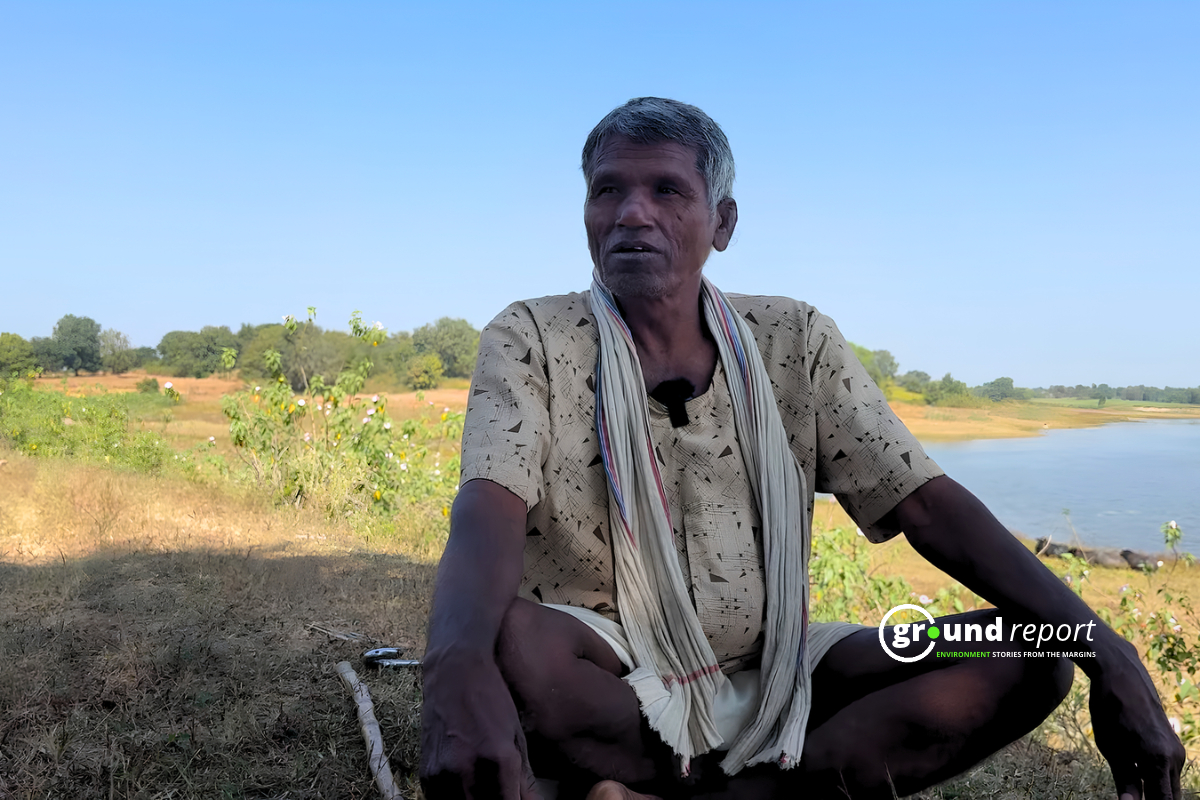
Every November, Sujit Mandal ties up his bag and sets off for the fields of southern India.
He is 38, from Tipligheri village in the Sundarbans delta of West Bengal. For eleven years he has been travelling to Andhra Pradesh, Kerala and Karnataka to plant rice in fields that are not his own. He goes because the land at home can no longer feed his family. Rising salinity, unpredictable monsoons and cyclone-battered coastlines have made farming in the Sundarbans a losing proposition for hundreds of thousands of men like him.
What Sujit carries back home is harder to measure. He calls it bhalo lagena — a Bengali phrase for a restlessness that settles in the body and does not leave. He does not sleep well. He has not for years.
Paritosh Sardar has been making the same journey since he was 18. More than two decades. Last year his body stopped cooperating. He now takes anxiety and sleep medicines prescribed by a doctor in his village. He has not stopped migrating. He cannot afford to.
An estimated five lakh men leave the Indian Sundarbans each season for work in southern India. They sleep on the ground, ten or fifteen to a room. They send money home. They return. And they do it again.
Dr. Arunoday Mondal, a Padma Shri-winning physician who has spent 26 years running a free clinic in the delta, has watched this cost accumulate in the bodies of his patients. Prof. Tuhin Ghosh of the School of Oceanographic Studies, Jadavpur University, has watched it accumulate in the land.
The United Nations has a name for what Sujit is losing: non-economic loss and damage. The things climate change destroys that money cannot replace. Psychological wellbeing. Sense of place. The feeling of home. For the five million people of the Sundarbans, there is no policy that addresses this. No programme. No recognition that the need even exists.
Sujit does not know any of this. When the contractor calls, he picks up his bag. He has no other plan.
Sleepless in Sundarbans is a GroundReport special report produced under the Earth Journalism Network fellowship, Supporting Coverage of Non-Economic Loss and Damage on the Bay of Bengal Coast (Bangladesh and India).
Support Us To Sustain Independent Environmental Journalism In India.
More Ground Reports
Madhya Pradesh’s e-Vikas 2.0 Fertiliser System: Why Are Farmers Still Queuing?
Smart Meter Consumers May Save on Electricity Bills With Time-of-Day Tariffs