On July 10, 2026, researchers published a new study in the journal Environmental Management. It warns that shrinking habitat and shifting rain will push more elephants into human settlements across the southern Western Ghats by 2030.
Researchers combined 507 interviews with local residents, satellite land maps, and computer modeling to trace where people and elephants meet.
What the Study Found
“This paper focuses on the environmental drivers of reported elephant occurrence and the experiences of local communities that live in proximity to elephants in shared landscapes,” says Simran Prasad, lead author of the study and a researcher at the Centre for Wildlife Studies in Bengaluru.
Prasad says “reported elephant occurrence” doesn’t mean people spotted a herd. It means residents reported a direct encounter — usually a crop raid, property damage, or a close call.
Rain turned out to matter most. The Western Ghats get between 4,000 and 6,000 millimeters of rain a year. When rain patterns shift, plants and water sources shift too, and elephants follow.
Land Is Disappearing Fast
Land use matters as well. Between 2012 and 2022, human settlements in Karnataka grew by about 31%. Dense forest shrank at the same time. In Kerala, settlements grew by roughly 16%.
Even so, elephants in Karnataka kept showing up near settled areas. The study suggests elephants can handle some human disturbance, up to a point. “But it did not focus on the routes taken by elephants, nor their movement or behavioural patterns,” Prasad adds.
Researchers ran these trends forward to 2030. The elephant patterns grew more scattered and harder to predict. That unpredictability raises the risk of encounters instead of lowering it.
A Shared, Shrinking Landscape
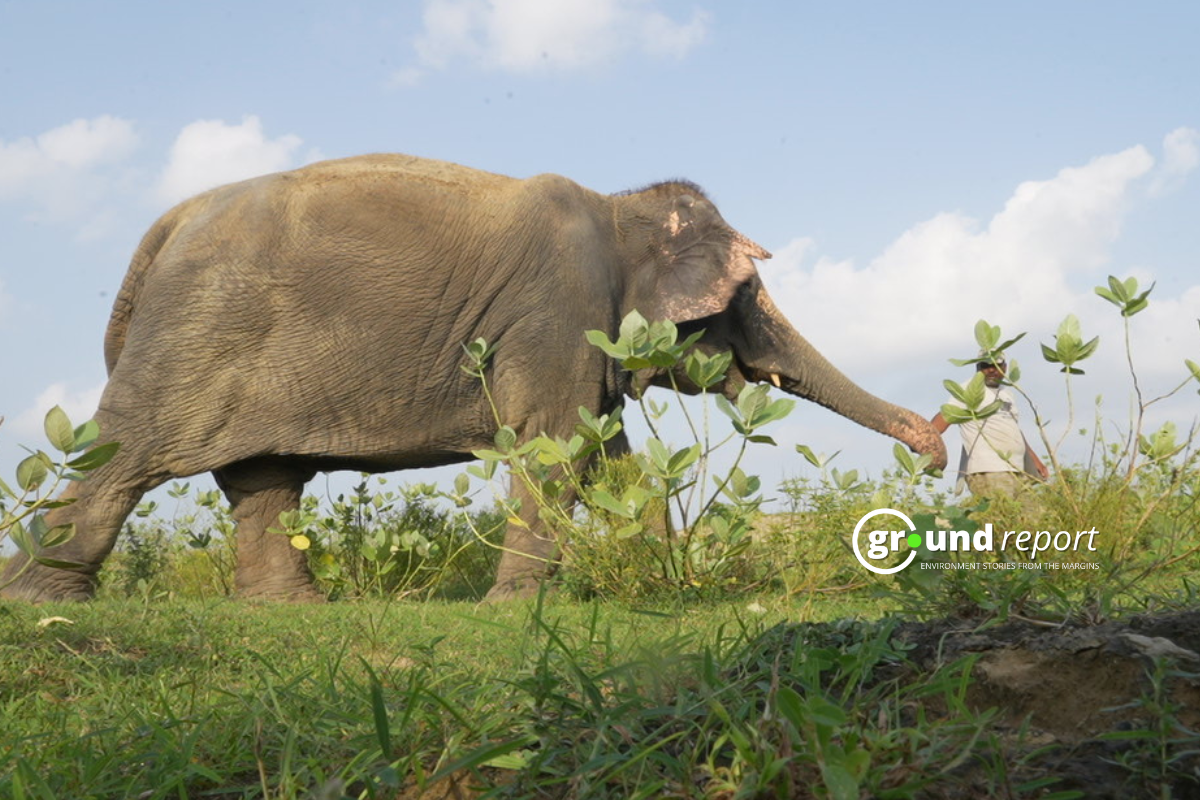
India holds about 22,446 wild Asian elephants. That’s roughly 70% of the world’s population. The Western Ghats alone hold around 6,000 of them — a UNESCO-listed biodiversity hotspot now packed with farms and villages.
The study team interviewed people in four regions: villages near Bandipur and Nagarahole national parks, and the Palakkad and Mannarkkad forest divisions. Most people they talked to had lived there more than 40 years. They know these landscapes better than anyone.
Krithi K. Karanth of the Centre for Wildlife Studies and Duke University’s Nicholas School of the Environment co-authored the study. Vikram Aditya of the Centre for Wildlife Studies and Jennifer Solomon of Colorado State University also worked on it.
Why This Matters Now
A separate study from April 25, 2025 found that monsoon rain has been declining across the southern Western Ghats for decades. Less rain means elephants travel farther for food and water — often straight through farmland and villages.
Paddy fields raise the stakes further. Farmers grow paddy widely because the government guarantees a minimum price for it. Elephants love the crop too, which drives frequent raids in Odisha, Jharkhand, and West Bengal.
The researchers don’t offer a fix. They offer a warning: as forests break apart and rain grows unpredictable, the line between elephant land and human land will keep blurring. Neither side gets to choose when they meet.
Support Us To Sustain Independent Environmental Journalism In India.
More Ground Reports
He Was Married as a Child, Now Manish Dangi Helps Stop It for Others
Despite The Ban, How Gutkha Became MP’s Most Common Household Habit