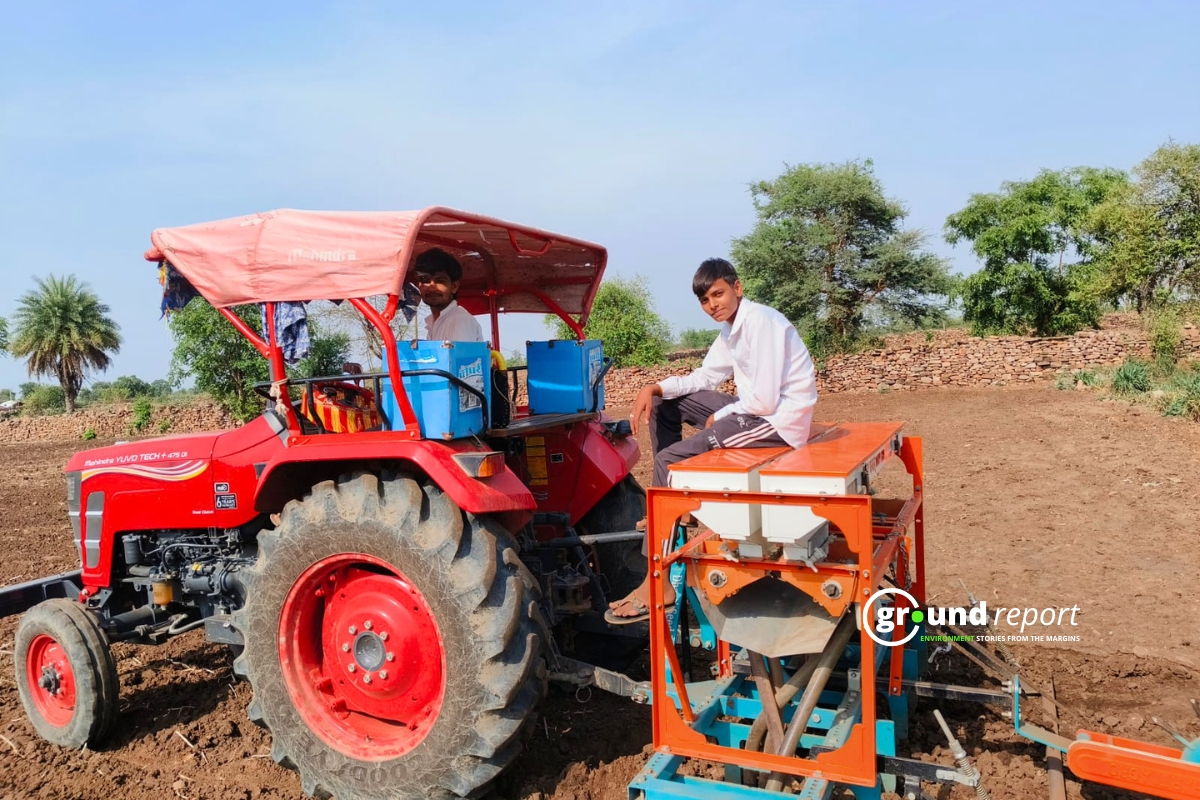
In Sagoni Kala village, 10 kilometers from Bairasia tehsil in Bhopal district, Mukesh Dangi (34) checked the soil moisture in his three-acre field every morning. He had sown paddy directly after the first rain in June. But the field stayed dry for many days after that. The top layer of soil had dried out, and now he feared he would have to sow again.
“I sowed the seed after seeing the first rain. If a farmer waits, he loses. If he sows early, he also loses. If the plant doesn’t come up, the cost of seed, labor, and diesel falls on him again,” Dangi said. He had spent around 8,000 to 10,000 rupees on sowing. If he sows again, it would cost him another 10,000 to 12,000 rupees.
Hundreds of farmers faced the same question, Arvind Dangi of Bairasia and Shobharam and Babulal Dhakad of Neemuch among them. Should they sow now or wait a few more days?
A weak start, then a sudden surge
Weather scientists had warned before the monsoon even arrived. The India Meteorological Department (IMD) had forecasted below-normal rainfall for June to September due to the El Niño effect. Central India felt the impact the most. Rainfall in the region was 50.4 percent below normal in June, marking the fifth driest June nationwide since 1901.
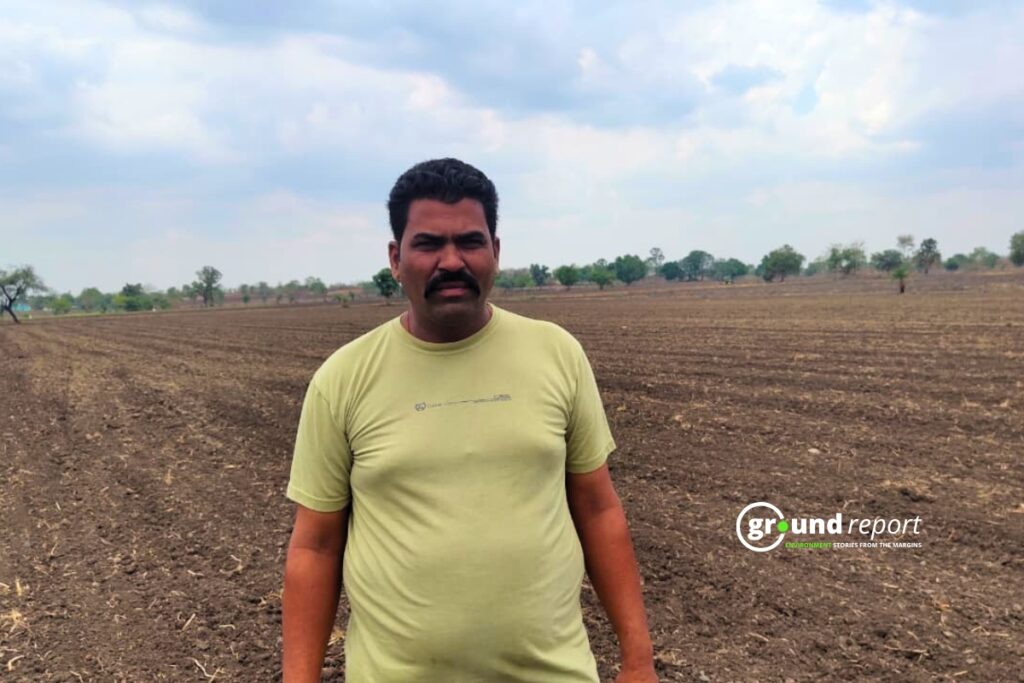
The monsoon reached Madhya Pradesh on 24 June. But, by 26 June, only 11 districts had received rain, while 40 districts still faced dry conditions. On 27 June, Umaria recorded the season’s highest temperature at 42 degrees. After 30 June, the monsoon picked up pace, and the weather department forecast heavy rain between 3 and 12 July.
Ajay Shukla, former senior scientist at the Meteorological Centre, Bhopal, said the monsoon pattern in central India had changed rapidly. Earlier, rain fell steadily and moderately. Now, he said, short bursts of heavy rain were followed by long dry spells.
This pattern lay at the root of farmers’ troubles. In some districts, no rain fell for 8 to 15 days after the first showers, which affected seed germination.
Dr. Ranjay Kumar Singh, principal scientist at the Krishi Vistar Kendra, Bhopal, said this adversely affected germination, and farmers still faced the risk of sowing again.
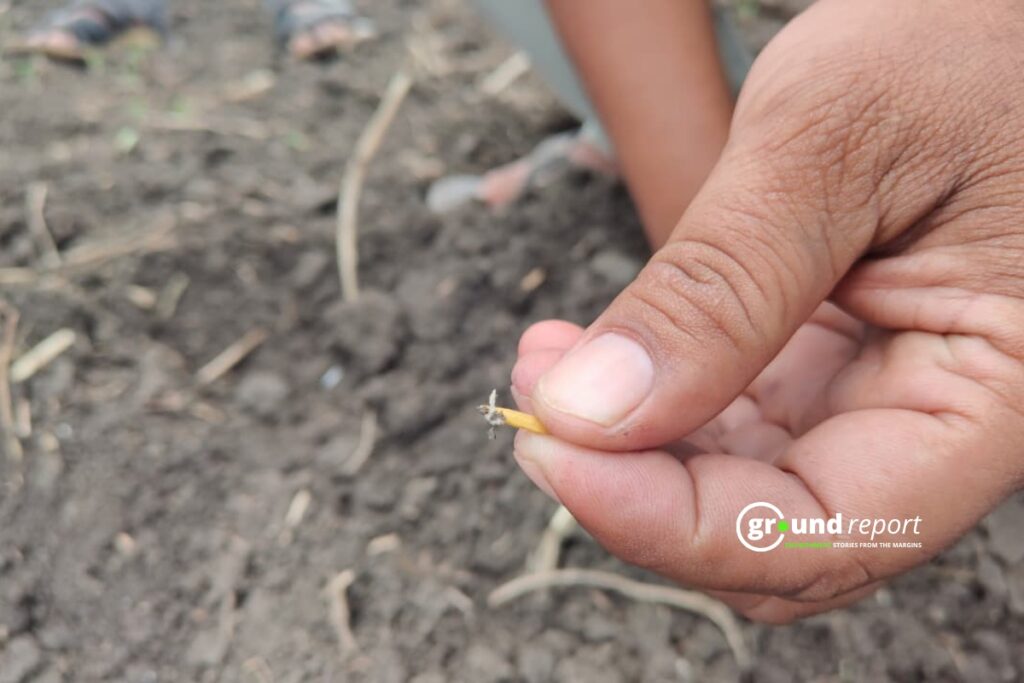
Arvind Dangi of Barkheda Baramad village had prepared his field and kept his seed ready, but he could not decide when to sow.
“Earlier, a farmer would fix his sowing time after seeing the June rain. Now, one or two showers aren’t enough to be confident. We don’t know when the clouds will abandon us,” he said.
The impact goes beyond the field
Kharif season is the backbone of Madhya Pradesh’s rural economy.
Of the state’s roughly 155.45 lakh hectares of farmland, kharif crops are grown on 144.04 lakh hectares. Soybeans alone cover about 58.72 lakh hectares. Along with soybeans, crops like paddy, maize, urad, moong, sesame, and cotton support the income of lakhs of families.
An unstable monsoon affected not just crop yield but also markets, farm wages, and farmers’ ability to repay loans, said Dr. Manish Bhan, professor and senior scientist at the Department of Physics and Agricultural Science at Jawaharlal Nehru Krishi Vishwavidyalaya, Jabalpur (JNKVV)
Bhan said the real challenge now was not low rainfall but a changing rainfall pattern. Continuous moisture was necessary for farming, he said, but rain was now concentrating into a few days instead of spreading out.
This uncertainty has changed crop patterns across the state.
Data from the Government of India’s Unified Portal of Agriculture Statistics, in its Area and Productivity, the third advance estimate for 2025-26, pointed to a shift in the state’s Kharif crop pattern.
The soybean area had fallen to 54.7 lakh hectares, down 6.85 percent from the previous year.
Maize area, in contrast, had risen to 27.13 lakh hectares, a jump of 30.62 percent. The paddy area had also grown by 10 percent, reaching 4.21 lakh hectares. The Urad area had shrunk by 20.99 percent to 3.35 lakh hectares. Cotton area reached 5.59 lakh hectares, up 4.1 percent, while moong area stayed almost steady at 0.44 lakh hectares.
Scientists say that the farmers are turning to alternative crops to avoid long dry spells. In several districts of Malwa and Nimar, in particular, farmers are shifting part of their soybean area to maize and paddy.
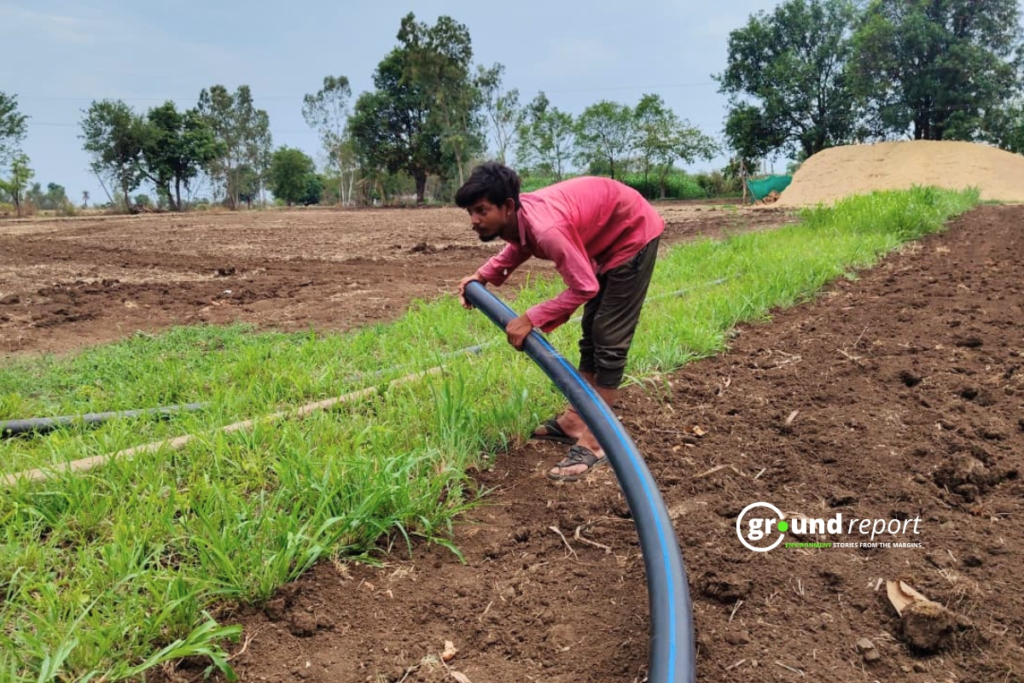
The Ministry of Agriculture’s Weekly Kharif Coverage Report on Progressive Area Sown, released on 19 June 2026, showed that kharif sowing across the country had reached 84.60 lakh hectares by 12 June — 3.44 lakh hectares less than the 88.04 lakh hectares recorded during the same period the previous year.
The paddy area had increased, but cotton and pulses had recorded a decline.
A statewide report on kharif crops had not yet been released. But agriculture department officials said the pace of kharif sowing in the state up to 20-22 June had been affected by the uneven progress of the monsoon.
In several districts of the Malwa-Nimar and Bhopal divisions, farmers began sowing after the first rain. But in villages across Vidisha, Raisen, Sehore, Neemuch, and Mandsaur, farmers kept waiting for adequate moisture. As a result, a large part of the state was still at an early stage compared to its sowing target.
New varieties, but where are the seeds?
Madhya Pradesh is the country’s largest soybean-growing state, with soybeans cultivated on about 58.72 lakh hectares.
Monsoon uncertainty directly affects farmers’ income. To address this challenge, the ICAR-Indian Institute of Soybean Research (IISR) in Indore developed three soybean varieties—NRC-157, NRC-136, and NRC-131—in 2024. These varieties were designed to withstand dry spells, delayed sowing, and changing climate conditions.
Dr. Gyanesh Kumar Satpute, principal scientist and breeder at ICAR-IISR, said the varieties were tested for several years across regions, including Madhya Pradesh, Maharashtra, and Rajasthan. The trials found that these varieties performed relatively well even during dry spells of 10 to 15 days during the monsoon.
“NRC-136 was developed to deal with the problem of long dry spells during the monsoon. Its purpose is to reduce farmers’ production risk, especially in areas where rainfall is becoming increasingly unpredictable,” Satpute said.
However, Satpute also acknowledged that no single variety could fully solve problems due to the climate crisis. A crop’s success also depended on soil, temperature, rainfall distribution, pest and disease management, and farming practices.
The second important variety, NRC-157, was developed to mature in about 94 days. In trials, it recorded an average yield of about 16.5 quintals per hectare.
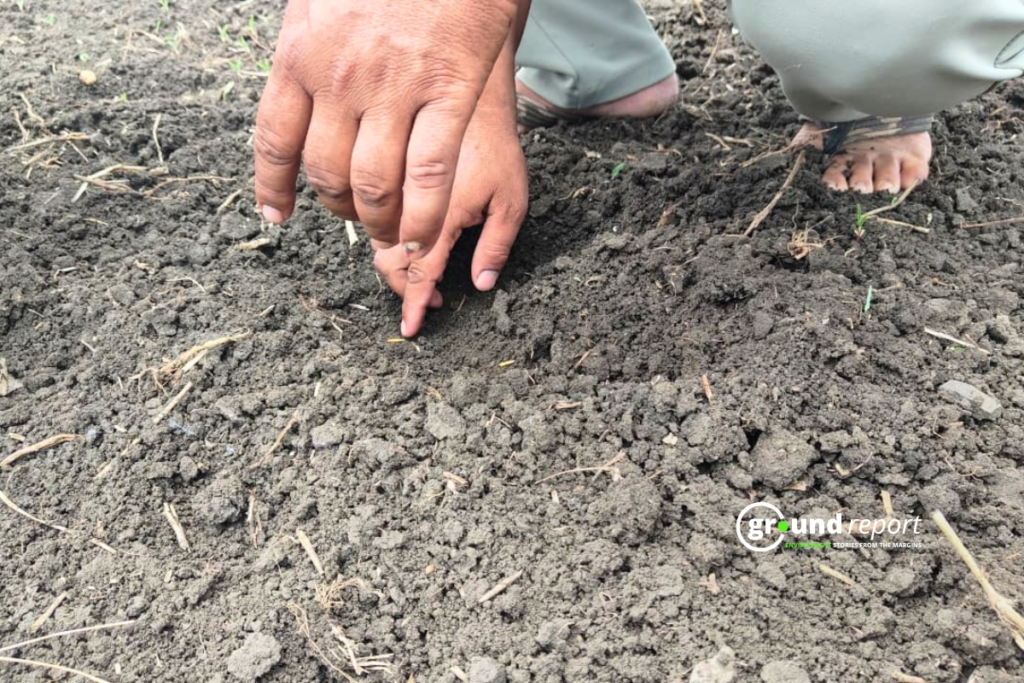
Dr. Sanjay Gupta, principal scientist and breeder at ICAR-IISR, said that for many years, June did not bring enough rain, forcing farmers to wait until July to sow. He said NRC-157 could become an option in such conditions, and in trials it performed well with minimal yield loss even when sown as late as 20 July.
The ICAR-IISR scientists, NRC-157, NRC-136, and NRC-131 are new varieties, and seed production is being scaled up through the National Seeds Corporation, state seed corporations, agricultural universities, and authorized producers.
Dr. Shyaudan Singh, seed certification officer in Gwalior, said that under the guidelines of the Government of India’s Central Seed Certification Board, it takes time for a new variety to reach the market at scale after notification.
Breeder seed is produced first, followed by foundation seed, and only then does certified seed reach farmers.
Conversations with seed dealers between Bhopal and Sehore revealed that only limited packets of NRC-157 and NRC-136 were available in the 2025-26 kharif season. Most shops still saw higher demand for older varieties like JS-95-60, JS-20-34, RVS-2001-4, and NSC-36. Dealers said the availability of new varieties varied from district to district.
The seed dealers say that the retail price of certified soybean seed this season ranged from 80 to 110 rupees per kilogram. In some places, the limited stock of new varieties sold for up to 120 rupees per kilogram. Prices depended on the company, packaging, and local availability.
Shobharam, a farmer from the Jawad area of Neemuch district, said he had heard the name NRC-136 at an agriculture department meeting. But he said most farmers in his village were still sowing older, trusted varieties.
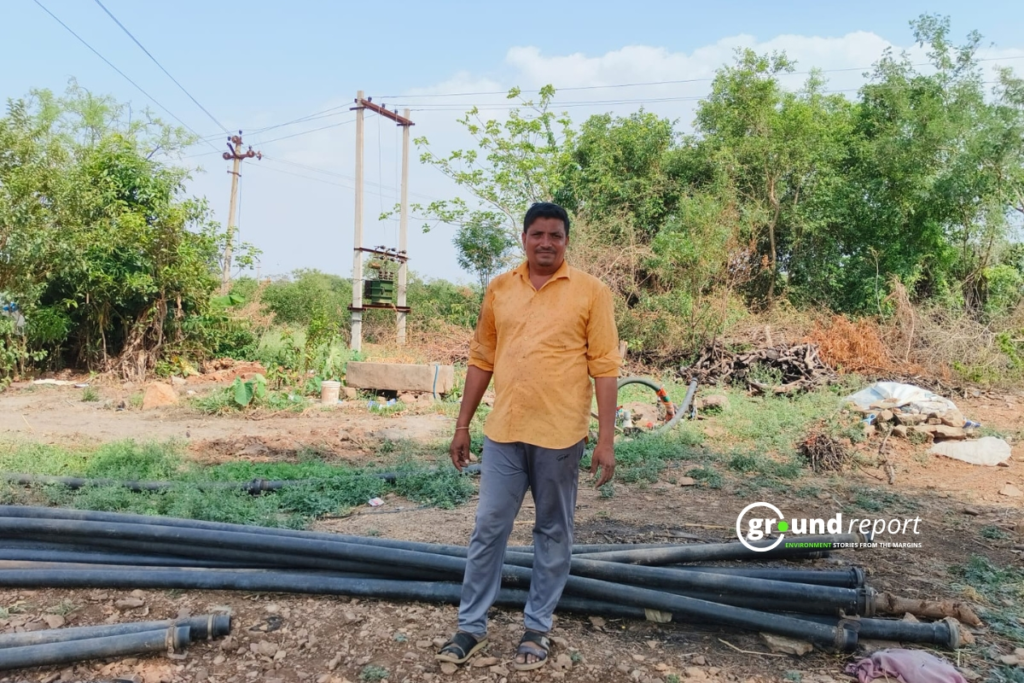
“If the new variety’s seed becomes easily available and a few farmers get good results in their fields, other farmers start adopting it too. Right now, we have the information, but the seed isn’t available everywhere,” Shobharam said.
Arvind Dangi, a farmer from Barkheda Baramad in Bairasia, said he had gathered information about NRC-157. He said farmers have an interest in shorter-duration varieties because of delayed rainfall, but availability remained limited.
For now, the challenge is not scientific success but seed availability. Most farmers in Madhya Pradesh still depend on old, established varieties. Experts say that it will take time for the new varieties to reach the fields and win farmers’ trust.
Monsoon uncertainty and climate change have placed farmers in a bind, one where both traditional crops and the weather itself seem to be abandoning them. Until seeds of the new drought-tolerant varieties reach farmers, the kharif season will remain a risky gamble for them.
Support Us To Sustain Independent Environmental Journalism In India.
More Ground Reports
He Was Married as a Child, Now Manish Dangi Helps Stop It for Others
Despite The Ban, How Gutkha Became MP’s Most Common Household Habit