
Tribal and forest-dependent communities told a five-member jury on Nov. 12 that Madhya Pradesh has not properly enforced the Forest Rights Act in the 20 years since Parliament passed the law.
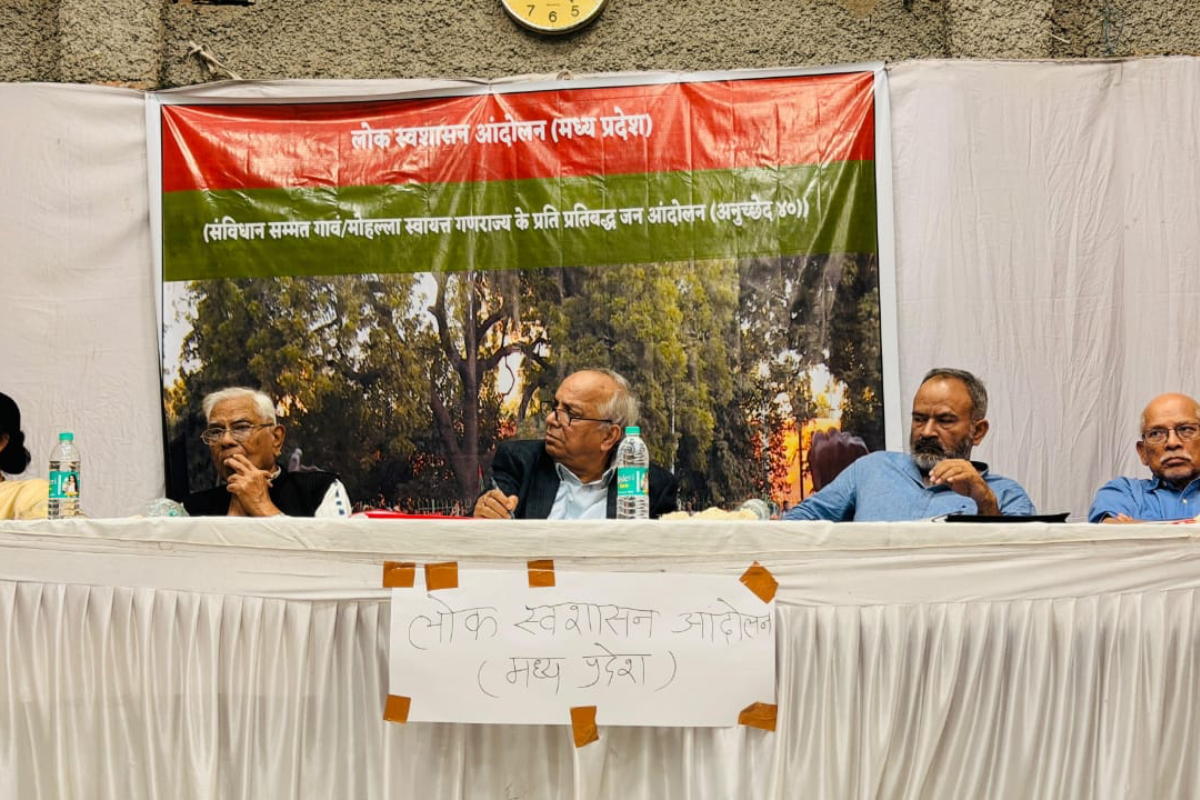
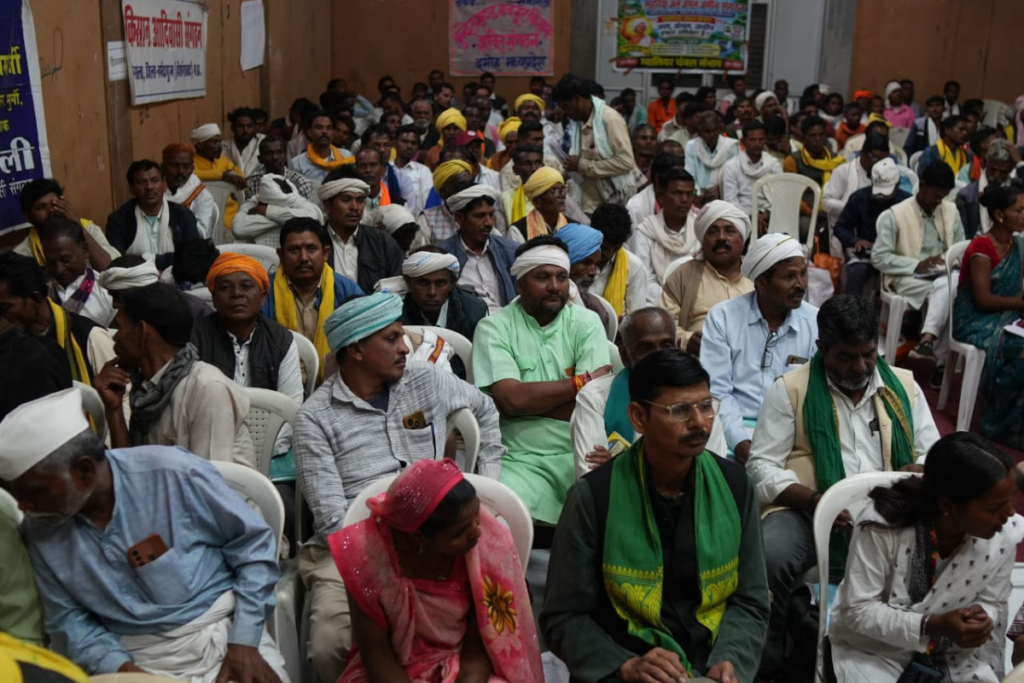
The Lok Swashasan Andolan organized the one-day public hearing at Gandhi Bhavan to review how the state implements the Act. Organizers said more than 500 communities from about 35 districts, along with their grassroots groups, testified and presented evidence.
The Hearing and the Jury
Justice A.K. Patnaik, a retired Supreme Court judge, sat on the jury with Virginius Xaxa, a retired professor at the Tata Institute of Social Sciences. The panel also included Sharad Chandra Behar, a former chief secretary of Madhya Pradesh, and Kusum Alam, a poet and social activist from Maharashtra. Vineet Tiwari, a poet, journalist and playwright, completed the jury. Tiwari edits the magazine Vasudha and serves as national secretary of the Progressive Writers’ Association.
Parliament passed the Act in 2006 to correct injustices tribal and forest-dependent people suffered under colonial and post-independence rule. The law moves authority over forest governance, management and conservation from the Forest Department to village assemblies, called Gram Sabhas.
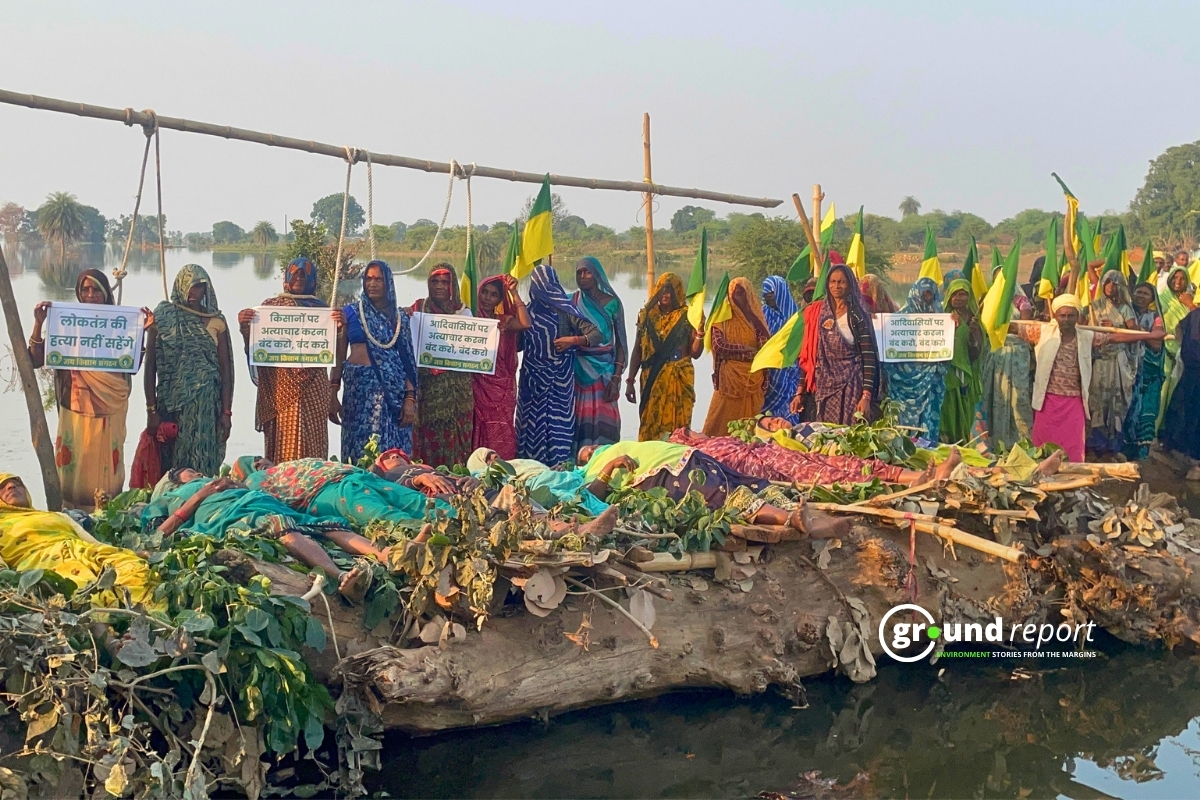
Participants said the department carried out forced evictions, home demolitions, crop burning and pesticide spraying in almost every district. They reported false cases against forest dwellers. Some claimants who hold title deeds received eviction notices.
Sahariya tribals said the structure to implement the Act in the Gwalior-Chambal division has not worked for 20 years. They said officials from patwaris to beat guards sit on forest rights committees, and subdivision committees meet irregularly.
Claims, Portal and Villages
Participants said authorities leave many individual claims pending and reject others without reasons, written notice or a hearing. They listed satellite imagery, absence from an encroachment list, no fine receipt and claims on land marked disputed in revenue and forest records among the grounds.
The state launched the Van Mitra Portal in 2019 to review rejected claims with more transparency. Participants said kiosk operators and Panchayat secretaries mostly run the portal. They said claimants cannot check their own claim status and officials reject some claims a second time because of technical errors.
Residents of Dindori said the Forest Department, not the Gram Sabha, drives the conversion of forest villages into revenue villages. They said officials demarcate smaller areas than the villages hold. Villagers learn of conversions from the news, they said.
Participants said Madhya Pradesh has three particularly vulnerable tribal groups, including the Baiga, Saharia and Bharia, but no habitat rights process. The law requires district-level committees to help secure those rights.
Residents of Ratapani, Panna, Durgawati, Kanha, Harda, Satpura, Hoshangabad and the Kalda mountain region said the state displaces them as it expands tiger reserves, sanctuaries and corridors. They said their families have lived alongside wildlife for centuries.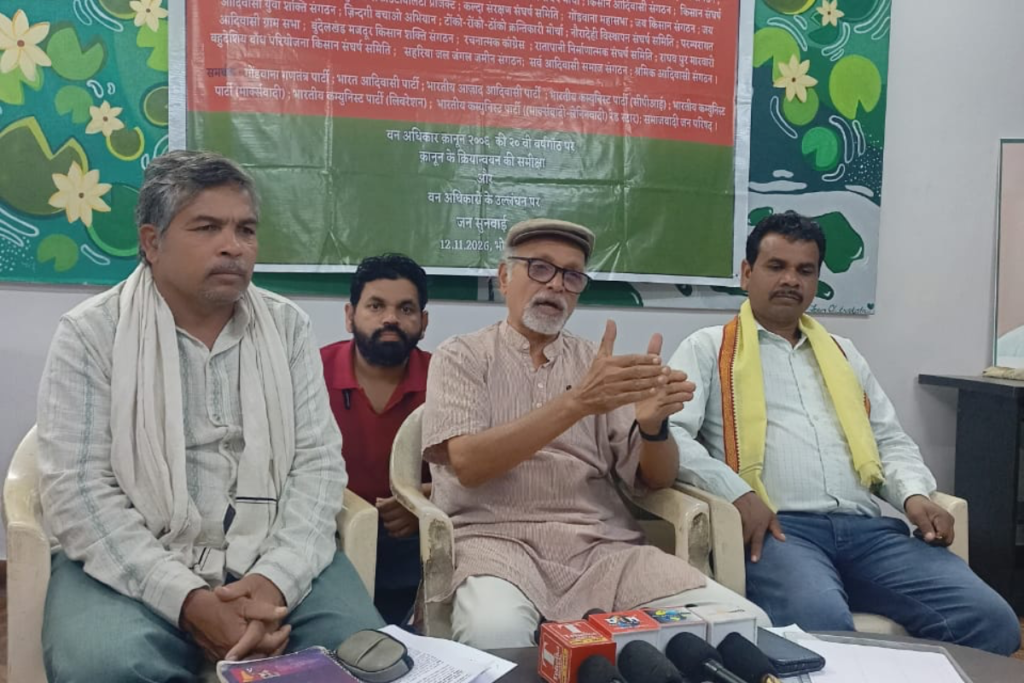
Participants also gave testimony on the Ken-Betwa project in Panna, Narmada River dams in Mahakoshal and nuclear projects. They described rights violations and disputes over compensation and Gram Sabha consent. Villagers in Gwalior, Seoni, Vidisha, Singrauli, Malwa, Nimar and Bundelkhand said the department digs pits, builds fences and plants trees on individual and community forest land as compensation for deforestation. They said they lose farmland.
The Organizers’ Statement
In a statement, the organizers said the testimony shows the Forest Department is the biggest obstacle to the Act. “Political and administrative apathy is a major reason” for weak implementation, the statement said.
The organizers said the Principal Chief Conservator of Forests in Bhopal recently issued a letter restricting community forest resource rights without the authority to do so. Down To Earth reported on Oct. 1 that the department put an Aug. 6 directive on these claims on hold in a Sept. 30 letter.
The organizers also said the state is turning the Act into a beneficiary scheme through the Dharti Aaba Janjatiya Gram Utkarsh Abhiyan. They said the government marks Janjatiya Gaurav Divas on Nov. 15 while state machinery denies rights, evicts and displaces Adivasis.
The statement carried no response from the state government or the Forest Department.
Support Us To Sustain Independent Environmental Journalism In India.
More Ground Reports
Madhya Pradesh’s e-Vikas 2.0 Fertiliser System: Why Are Farmers Still Queuing?
Smart Meter Consumers May Save on Electricity Bills With Time-of-Day Tariffs