
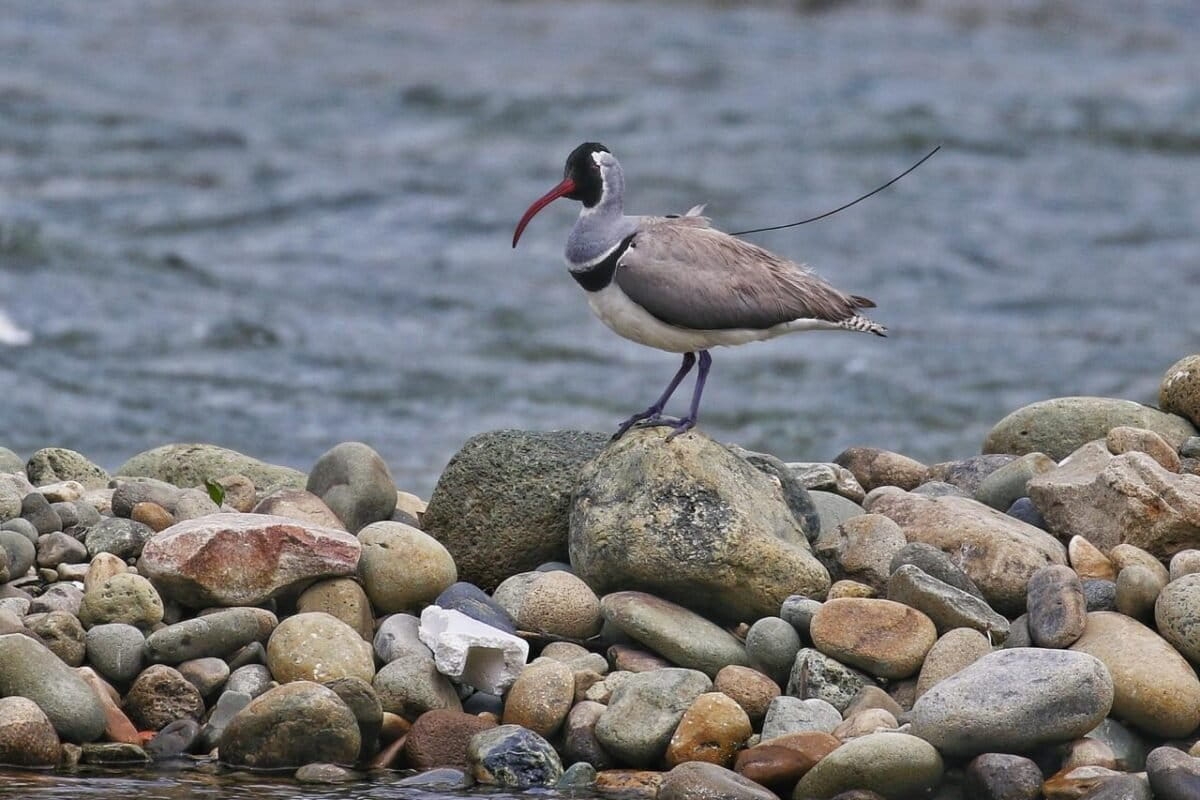
The ibisbill, a rare Himalayan wading bird that nests on the gravel banks of fast-flowing rivers, faces a growing threat along Kashmir’s Sindh River. Miners dig up the same gravel that the bird needs to breed, putting its nesting habitat at risk.
A study published in the Journal for Nature Conservation projects that rising temperatures will make more of Kashmir and Ladakh climatically suitable for the wader. However, the authors from Sher-e-Kashmir University of Agricultural Sciences and Technology (SKUAST-Kashmir) caution that this does not necessarily mean the bird will gain more suitable habitat.
“As a highly specialised riverine bird, the ibisbill depends on intact braided rivers, gravel bars and natural river flow for breeding and survival,” said Khursheed Ahmad, a co-author and senior scientist in the division of wildlife sciences at SKUAST-Kashmir.
But the mining threat is real.
“We should therefore interpret such projections as potential opportunities, not guaranteed benefits of climate change,” said Dr Mehreen Khaleel, who heads the Wildlife Research and Conservation Foundation in Srinagar.
The ibisbill receives the highest level of legal protection under Schedule I of India’s Wildlife (Protection) Act, 1972, which prohibits hunting, capturing, and trading the bird. However, this protection does not automatically safeguard its nesting habitat from activities such as gravel mining.
The scientists interviewed for this story say the bird’s future depends on whether its gravel bars survive. This story sets the projection against the record on the Sindh, in Ganderbal district.
What the study found
In their study, published in February, Iqram ul Haq and Ahmad examined six bioclimatic variables alongside recorded ibisbill sightings to identify the factors shaping the bird’s distribution. Temperature emerged as the strongest influence, accounting for about 60% of the relative importance in their models.
The models suggest that rising temperatures could make larger stretches of river habitat climatically suitable for the bird, particularly along mid-elevation river corridors. Ladakh could see some of the greatest gains. However, the researchers describe their work as a first-order assessment, cautioning that an expansion in climatically suitable areas does not necessarily mean the bird will occupy them.
A narrow habitat
The International Union for Conservation of Nature (IUCN) lists the ibisbill as least concern worldwide with no quantified global population. A 2021 survey in the Journal of Threatened Taxa said India has no population estimate.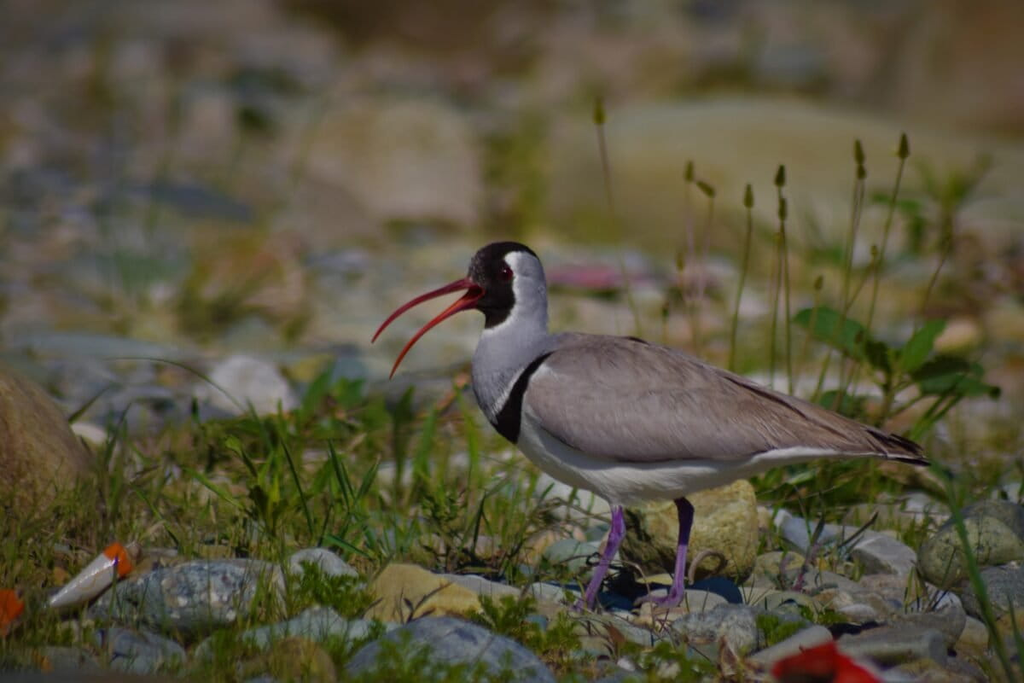
A 2022 assessment by Haq, Ahmad and colleagues in Ornis Hungarica applied IUCN criteria to Kashmir and Ladakh alone and classed the bird as Endangered there.
Ankita Sinha, a wildlife biologist at the Senckenberg Biodiversity and Climate Research Center in Frankfurt, said, “Because of their limited sightings and ranges restricted to remote uninhabited areas, knowledge on their ecology and behaviour is limited.”
The 2021 survey checked four Kashmir rivers and found ibisbills on two, the Sindh and the Lidder. Only four birds appeared on the Lidder. On the Sindh, the team ran 72 surveys between September 2017 and August 2018 and counted the most birds in autumn, when flocks of more than 10 gathered at lower elevations.
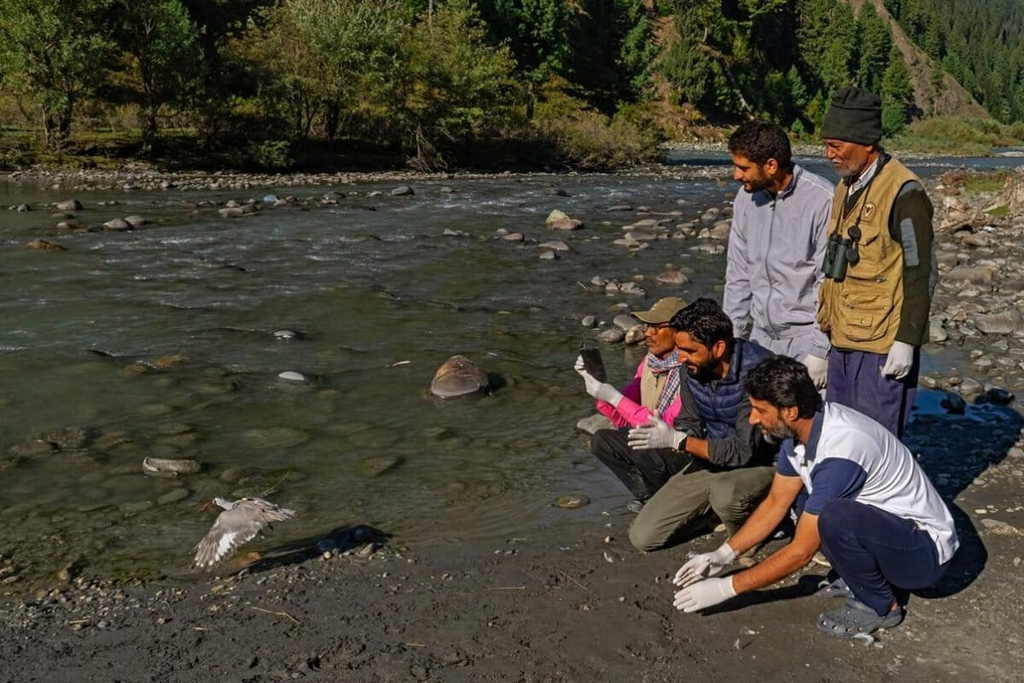
Ahmad said satellite telemetry studies conducted by his team have provided insights into the Ibisbill’s movements, breeding patterns across elevations and tendency to return to the same nesting sites.
Why the habitat is under pressure
The Sindh rises in the Panjtarni snowfields at 4,250 metres and draws water from the Amarnath, Kolahoi and Thajiwas glaciers.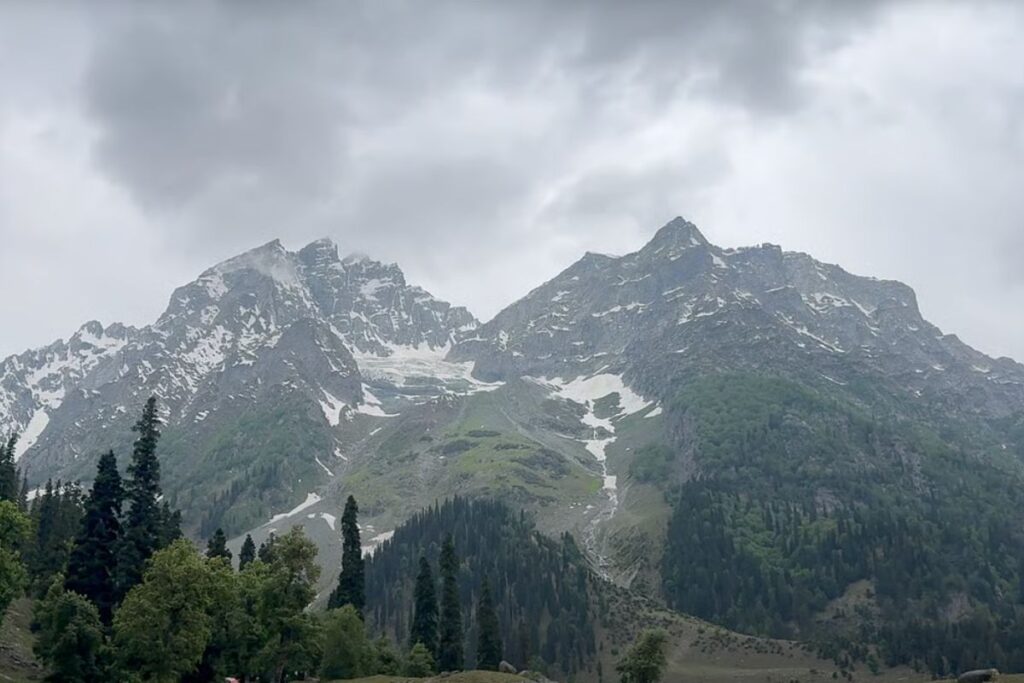
Ahmad said his team documented severe damage to breeding habitat along the Sindh in Ganderbal caused by extensive sand and boulder mining.
Khaleel described how the damage happens. Extraction strips the gravel the birds nest on and changes the riverbed. Pollution harms the insects and other food the birds eat. In some stretches, she said, the damage might outweigh any climate gain. She said effects differ between rivers and need site-by-site monitoring.
Plastic waste poses another concern. Wildlife biologist Ankita Sinha said that discarded plastic along riverbanks could enter the Ibisbill’s diet as microplastics and cause choking in chicks. She called for closer monitoring of waste disposal near rivers.
A 2022 study documented threats to ibisbills at six sites along the 106-kilometre stretch of the Sindh River. It recorded mining at three sites, livestock grazing at three, predation at four and human presence at five.
The 2022 paper found that ibisbills flew more than 50 metres to escape in 35% of the 327 recorded responses to threats. The researchers also linked repeated disturbance to breeding failure and poor recruitment, drawing on their earlier work.
Ahmad said his team told the administration and the Environment Department that extraction in some areas was illegal. Officials had authorised extraction in certain areas, he said, but diggers work beyond them.
In January 2023, police seized around two dozen vehicles hauling sand, bajri and boulders from Nallah Sindh. In February, Ganderbal police seized eight vehicles, five tractors and three tippers, carrying material extracted from Nallah Sindh without permission.
In the week before October 4, they seized 25 vehicles, 19 tractors and six tippers in the district for unauthorised extraction and transport of minor minerals. The Geology and Mining Department fined the offenders, police said.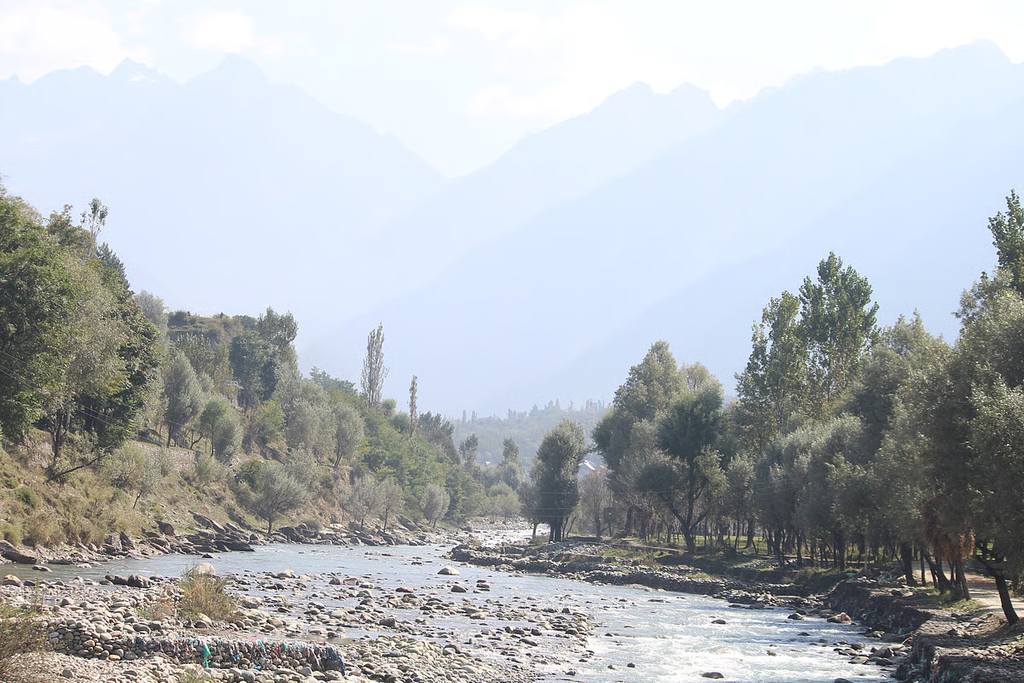
Warming adds another layer of pressure. Khaleel said rising temperatures alter snow and glacier melting patterns, affecting seasonal river flows and, in turn, the availability of exposed gravel banks and shallow water where ibisbills feed.
Ahmad, however, cautioned against attributing every change to climate change. Glacial melt continues to play a major role in regulating river flows, he said, meaning birds and other species that depend on these rivers experience the effects of warming indirectly.
“This poses a significant threat to the species’ reproductive success and long-term survival, underscoring the urgent need to conserve and legally protect these key nesting sites from further anthropogenic disturbance,” he said.
What scientists recommend
Khaleel said protection should cover whole river systems, with extra cover for nesting and feeding sites.
She also called for mapping critical habitats, restricting extraction in sensitive stretches and regularly monitoring nesting success and human pressure. “Environmental assessments should consider impacts on the river ecosystem as a whole, rather than evaluating individual projects in isolation,” she said.
“Safeguarding free-flowing Himalayan rivers and their natural geomorphology is essential for the long-term survival of the species, Ahmad said.
Most of the area the bird inhabits is not protected, the authors wrote. The authors describe the 2026 study as a baseline for long-term monitoring. Its introduction says no targeted conservation or long-term monitoring programme exists for the ibisbill today.
Support Us To Sustain Independent Environmental Journalism In India.
More Ground Reports
Madhya Pradesh’s e-Vikas 2.0 Fertiliser System: Why Are Farmers Still Queuing?
Smart Meter Consumers May Save on Electricity Bills With Time-of-Day Tariffs