Fourteen-year-old Nisar Ahmad (name changed) wakes before sunrise. Not because he has to get ready for school, or has to finish homework, or a test to prepare for. He is awake because the fishing nets need to be in the water early and his father is already heading towards the lake.
It is peak fishing season in Kashmir and this is what mornings look like in Kulhama village in Bandipora district of Kashmir, situated on the banks of one of Asia’s largest freshwater lakes –Wular. Children of the fishermen community of Kashmir can be seen carrying not school bags, but fishing nets in their hands, rushing towards the lake following their parents.
Nisar was in Class 3 when he first accompanied his father to the lake. What began as occasional help slowly became permanent because smaller catches meant his father could no longer manage the work alone.
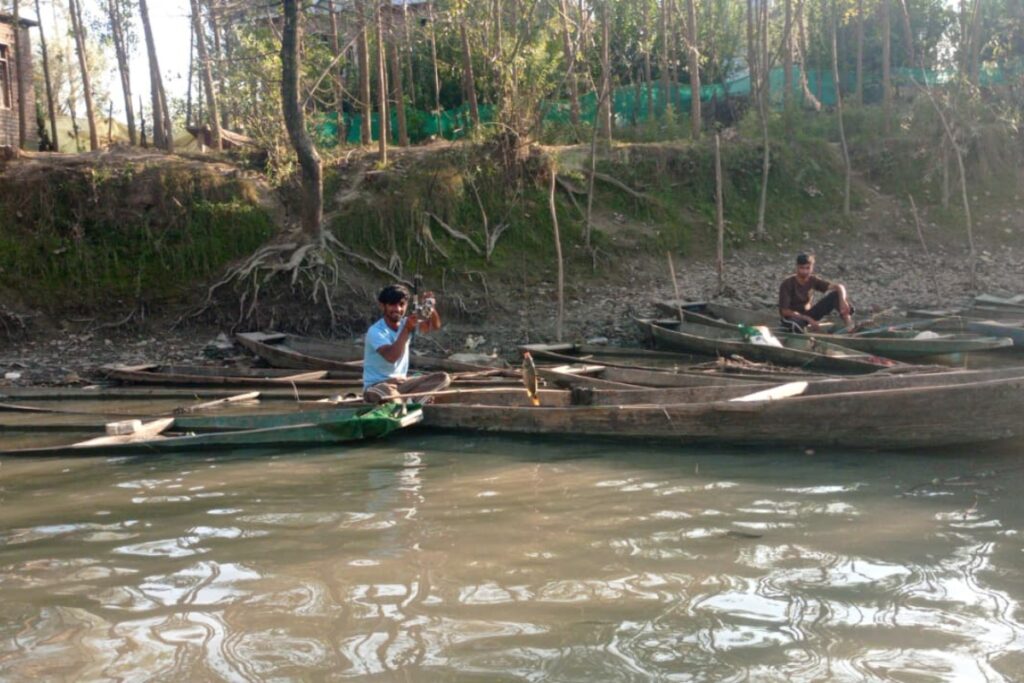
“It happened the way many things happen in families under financial pressure. First, I missed some classes to help my father and later I completely stopped going to school,” he said.
A few kilometres away in another village Laharwarpora, Mohammad Waqar Penchoo (name changed) made it further by staying in school until Class 8. As per his father Zaheer Ahmed (name changed), Waqar was one of the brightest students in his class. For years their family has relied on fishing in Wular Lake to fulfil their needs.
“Fishing is no more a profitable business. Our lakes have been shrinking for years, and the yield of fish, especially our local ones, has become very poor”, he added.
With the decline in fish, even grocery purchases at home became a challenge. As conversations about money grew heavier in the family, pressure started accumulating quietly on Waqar. Small breaks from school became routine, and the gaps eventually pulled him away from the classroom.
The Child and Adolescent Labour (Prohibition and Regulation) Act does allow children under 14 to help with family work but only after school hours or on holidays, and only if the work isn’t hazardous. On paper, this sounds reasonable but in practice, Nisar and Waqar’s stories show how easily that line gets crossed. What started as a few hours of help after school slowly replaced it completely. Whether the fishing work was hazardous or not made little difference to Nisar and Waqar, what pulled them out of school wasn’t the nature of the work, but how much of their day and their family’s survival it slowly began to demand.
What the Lake Once Held
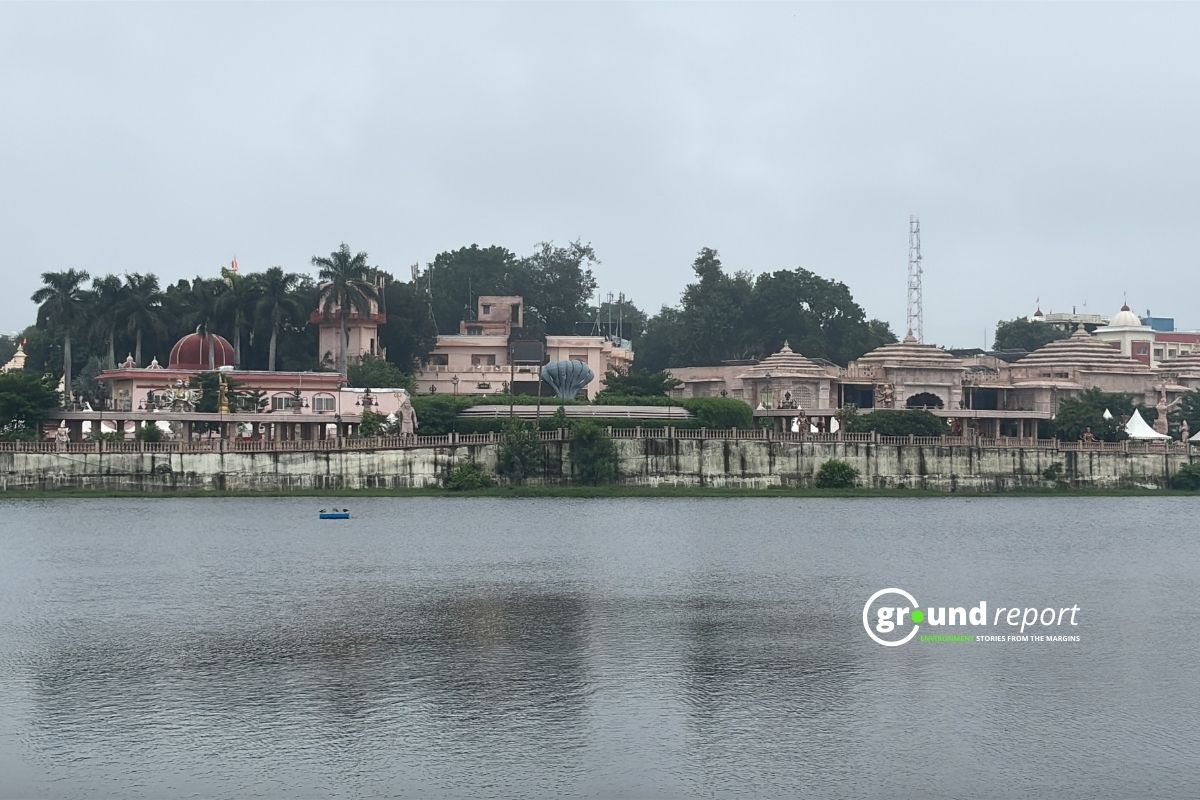
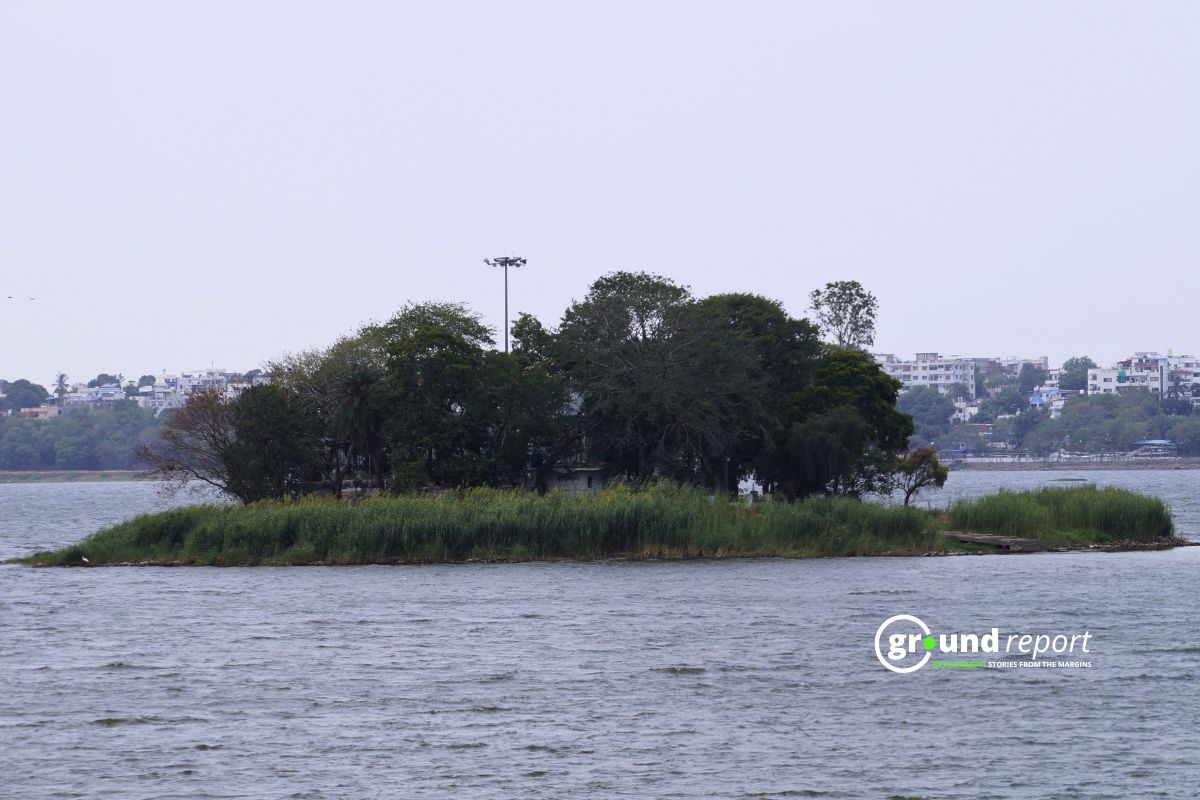
For generations, Wular Lake was more than just a source of water. Spread across the northern edge of the Kashmir Valley, this freshwater lake is the foundation of everything for the fishermen community settled in its surroundings.
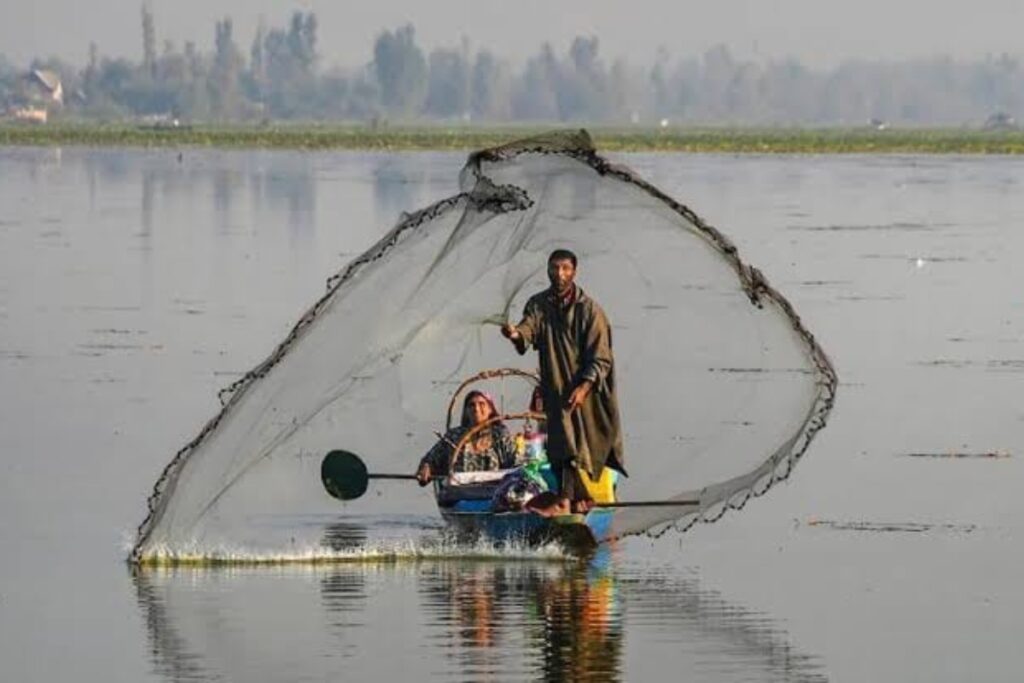
Across more than 30 villages, thousands of families have depended on the lake for their livelihoods. It has historically contributed a significant share of Kashmir’s fish production, sustaining local markets and household incomes. Indigenous fish species, once abundant, made fishing a reliable source of earning, allowing families to meet daily needs and send their children to school.
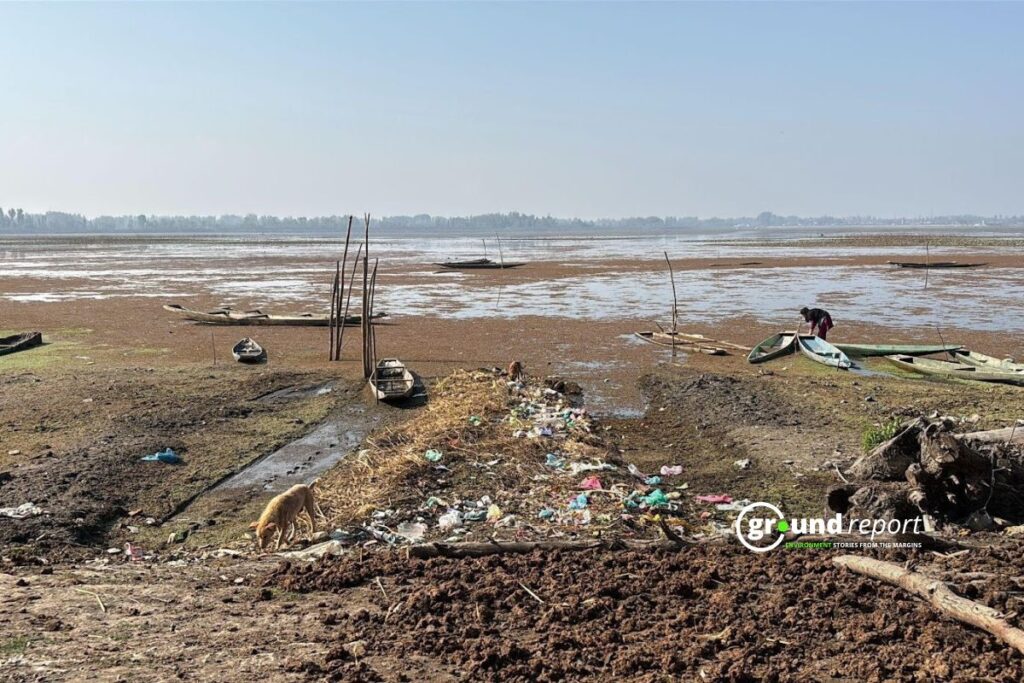
For these households, a good season on the lake meant stability. But as the lake has steadily shrunk, that stability has begun to slip, eroding year after year.
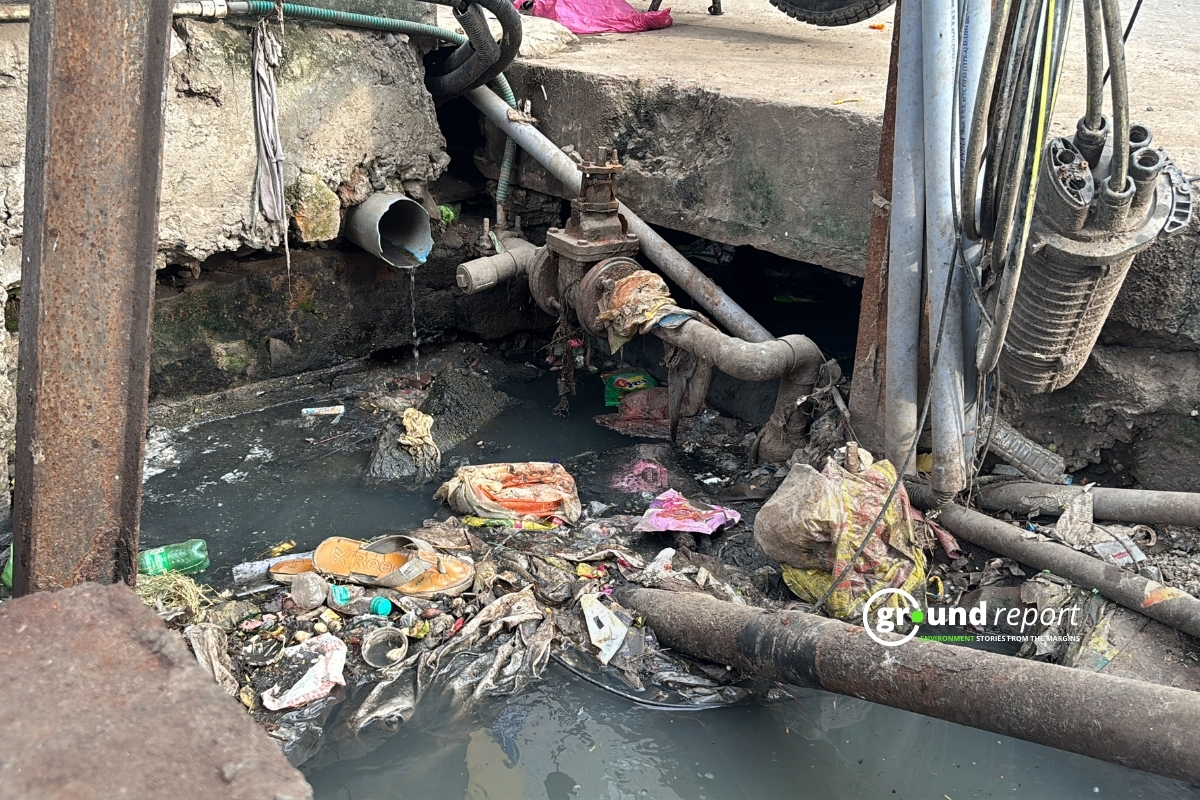
Various studies show decades of siltation, encroachment, pollution, and ecological disruption have steadily reduced both the lake’s size and its capacity to sustain aquatic life. A recent Comptroller and Auditor General (CAG) report found that over 70 percent of wetlands and water bodies in Jammu and Kashmir have either shrunk or disappeared since the 1960s. Of the 697 lakes recorded in 1967, 315 have completely vanished, covering an area of 1,537.07 hectares. The report noted that Wular Lake in Bandipora district has witnessed a reduction in its water spread due to large-scale encroachments along its periphery and continuous silt accumulation, affecting its role as a natural flood buffer for the Kashmir Valley. The audit explicitly flagged the disappearance of indigenous fish species from Wular Lake as a primary indicator of its rapid ecological degradation and declining biodiversity.
For fishing families, this is not an environmental crisis, it is an economic one. As fish production falls, daily incomes shrink. Though recent government data points to an improvement in overall fish yield across Kashmir, fishing families around Wular say the challenge on the ground has not eased, as the lake itself continues to shrink and its native fish continue to disappear. A day of low catches is felt immediately at home, in meals and in other household expenses.
And at the centre of those decisions, most often, is a child.
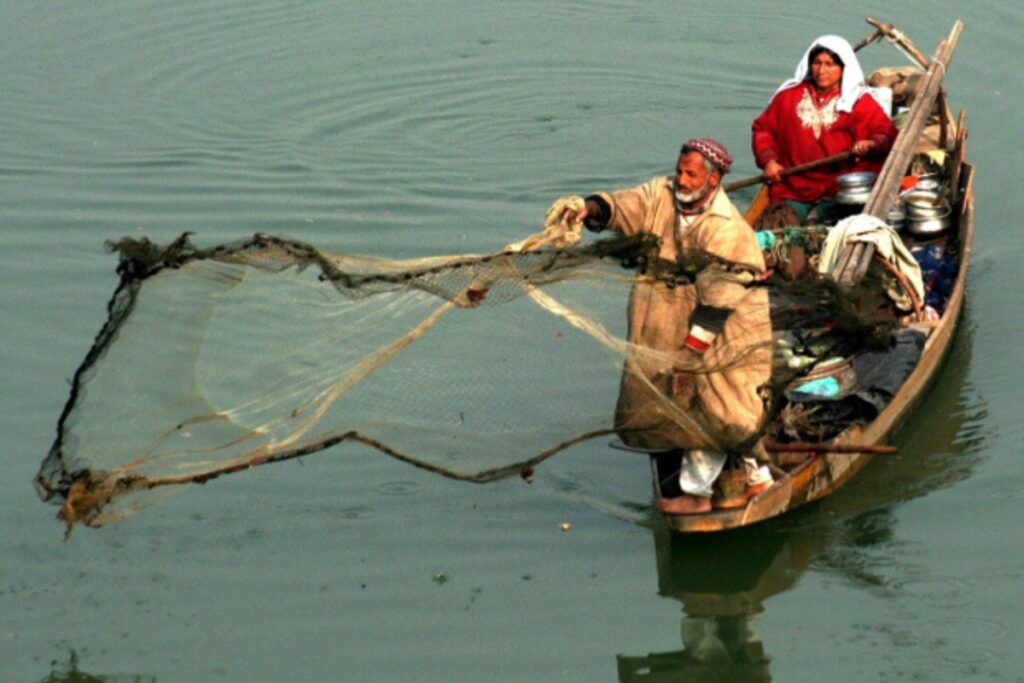
“It’s been almost a decade our team has been working with the communities whose livelihoods are dependent on Wular Lake and the Jhelum River. Across the villages surrounding Wular Lake, the same pattern repeats. Children begin by helping, accompanying parents to the lake, sorting fish, doing what needs to be done. School becomes irregular. Over time, irregular becomes absent. This crisis remains largely invisible because Wular Lake is most often discussed in environmental terms like siltation, pollution and restoration,” said Ashfaq Ahmad from Jammu & Kashmir Association of Social Workers (JKASW).
Restoring the Lake is Not Enough
Efforts to restore Wular Lake are essential. But ecological recovery alone will not reverse what is already unfolding in these homes. Children who have left school will not return simply because fish stocks recover. The years lost cannot be easily reclaimed.
What is needed alongside environmental action is direct support for fishing communities: livelihood security during periods of low catch, social protection, and sustained efforts to ensure children remain in school.
Child Rights and You (CRY)’s on-ground experience working with fishing communities around Wular Lake suggests that identifying school dropouts and irregular children, and providing them remedial learning support through interventions like Child Activity Centres (CAC), has actually helped bring children back into the mainstream education system.
“Between 2023–24 and 2025–26, CRY-JKASW’s Child Activity Centre intervention identified and supported 243 children from Wular Lake and Jhelum River-dependent communities across Bandipora and Baramulla – 238 of them, or nearly 98%, have since been mainstreamed or regularised back into formal schooling, with 5 still pending,” Ashfaq added.
Tracking school attendance to catch early warning signs before absences become permanent is another effective way of dealing with school dropouts in this region. For the said purpose, CRY/JKASW has initiated EWS (Early Warning System) as proactive measure to address the vulnerabilities that impact the education of children. Making parents aware of alternatives like government scholarships and social protection schemes can also ease the financial pressure. Involving School Management Committees, village leaders, and child collectives to address the economic, social, and logistical barriers that keep children away from school is among the most impactful ways to deal with the situation.
For Nisar and Waqar, these interventions represent more than a return to class. They represent a chance to break a cycle where shrinking livelihoods dictate what a childhood looks like.
The persisting ecological damage has compelled children to take up adult responsibilities before they were even ready. Unless the cycle is broken, the next generation growing up along these shores may inherit not just a smaller lake, but smaller dreams.
Ground Report has earlier reported on Wular Lake restoration and the concerns of people who depend on the lake. Their lives depend on the lake’s water, fish and wetlands. But restoration cannot succeed if it only focuses on the lake. It must also support the families who depend on it. As fish catches fall and incomes shrink, some families now rely on their children to help them survive.
Support Us To Sustain Independent Environmental Journalism In India.
Keep Reading
Highway Halt Puts Kashmir’s Fruit Economy at Risk
Railway line expansion plan put Kashmir’s apple orchards at risk
Warmer winters in Kashmir raise concerns over apple and crop yields