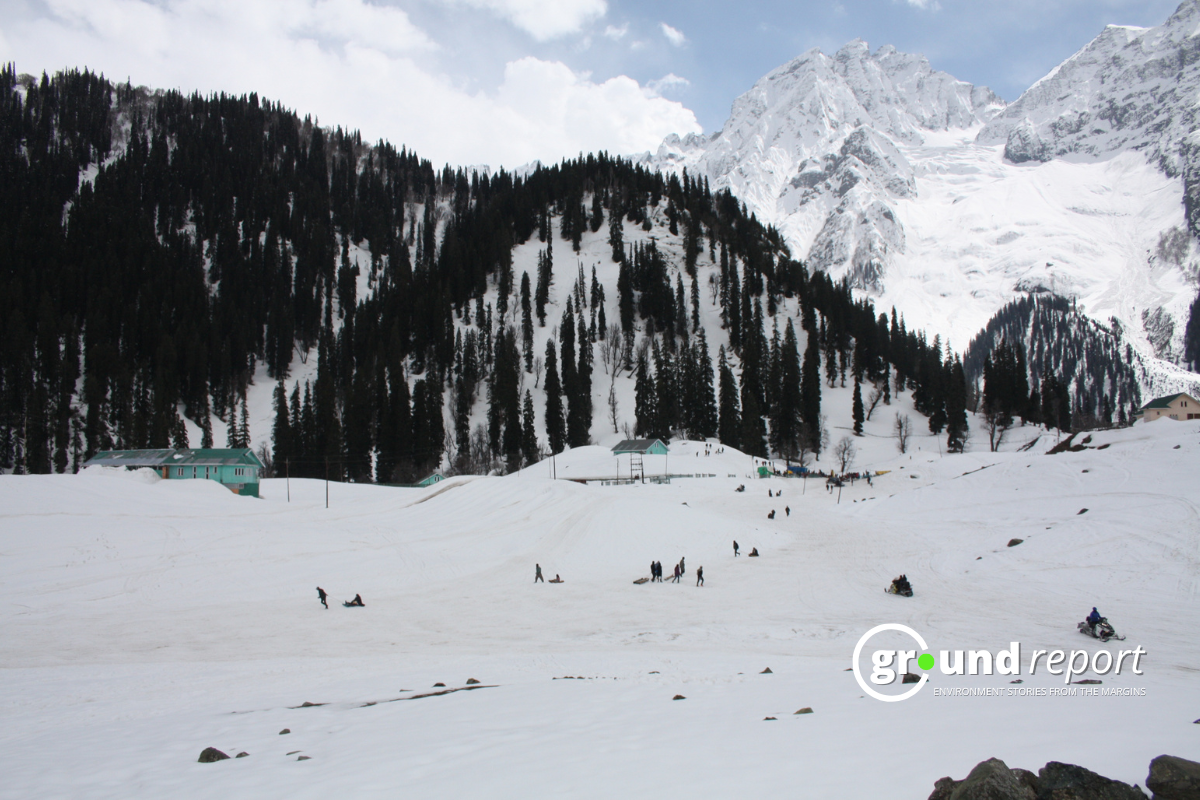
Powerful storms forming over the Himalayas are doing something scientists are only now beginning to fully understand. They are pumping water vapour directly into the stratosphere — the atmospheric layer that regulates Earth’s climate, protects the ozone layer, and controls global air circulation.
A new study published in the journal Advances in Atmospheric Sciences reveals the precise chain of events through which this happens. The findings have significant implications for climate modelling and our understanding of global warming.
The study was led by Li Ming, a PhD student, and Dr. Xue Wu, a researcher at the Institute of Atmospheric Physics at the Chinese Academy of Sciences in Beijing.
The team used high-resolution satellite data from the CloudSat mission and a detailed computer simulation to model a real storm event that occurred on June 30, 2009, over the southern slopes of the Himalayas — one of the world’s most active regions for intense convective storms during the Asian summer monsoon.
They identified three separate mechanisms through which these storms force moisture into the lower stratosphere.
Three Pathways to the Stratosphere
The first pathway is direct. When a storm grows powerful enough, its clouds punch through the boundary between the troposphere and the stratosphere — a threshold called the tropopause. This overshooting injects water vapour and ice particles upward within minutes.
The second pathway involves gravity waves. These are atmospheric ripples generated by the intense updrafts of the storm. When these waves break near the tropopause, they create turbulence that mixes moist air from the lower atmosphere into the stratosphere.
The third — and most significant — pathway involves structures the researchers call above-anvil cirrus plumes, or AACPs. These are thin, icy clouds that form above the storm’s flat-topped anvil cloud, pushed upward and carried horizontally by strong wind shear. Unlike the storm itself, these plumes linger in the lower stratosphere for hours, slowly releasing water vapour as their ice particles evaporate.
Why the Plumes Matter Most
Dr. Xue Wu described the significance of the finding directly.
“These long-lasting ice clouds formed by gravitational waves can deliver more water vapour into the stratosphere than the initial storm,” Wu said. “This means that above-anvil cirrus plumes have now become an important indicator of increasing moisture in the stratosphere.”
The simulation confirmed this. When the researchers compared results from high-resolution and lower-resolution model runs, the presence of AACPs in the detailed simulation produced substantially more moisture in the stratosphere — a difference that coarser climate models would miss entirely.
Why This Matters for the Climate
The stratosphere begins roughly 12 to 15 kilometres above the Earth’s surface. Unlike the turbulent weather layer below it, the stratosphere is stable and slow-moving. Moisture that enters it stays there far longer than in the lower atmosphere.
Water vapour in the stratosphere acts as a greenhouse gas. It traps outgoing heat, warms the surface, and disrupts the ozone layer’s chemistry. Even small increases in stratospheric humidity can affect global temperatures over years and decades.
Scientists have long known the tropics serve as the primary gateway for moisture entering the stratosphere. This study establishes that the Himalayan region — driven by the intensity of the Asian monsoon — functions as a second, equally important pathway, particularly in summer.
The team now plans to extend the research using a combination of satellite data and ground-based measurements, including readings from the Atmosphere Profiling Synthetic Observation System station, a facility built by the Institute of Atmospheric Physics in 2017 and located approximately 90 kilometres northwest of Lhasa, at an altitude of 4,300 metres.
That station sits at the edge of the Tibetan Plateau — directly in the path of the storms this study examined. Data from that altitude, combined with improved climate models that can capture AACPs, could significantly sharpen predictions of how much moisture the Himalayas pump into the upper atmosphere each monsoon season.
As extreme weather events intensify with climate change, so will the storms over the Himalayas. More powerful storms mean more overshooting convection, more gravity waves, and more AACPs. The stratosphere may be getting wetter — and the Himalayas are a primary reason why.
Support Us To Sustain Independent Environmental Journalism In India.
Keep Reading
How Solar Solutions Are Helping Protect Crops from Wild Animals
Pench Tiger Reserve: How a Man Survived a Tiger Attack