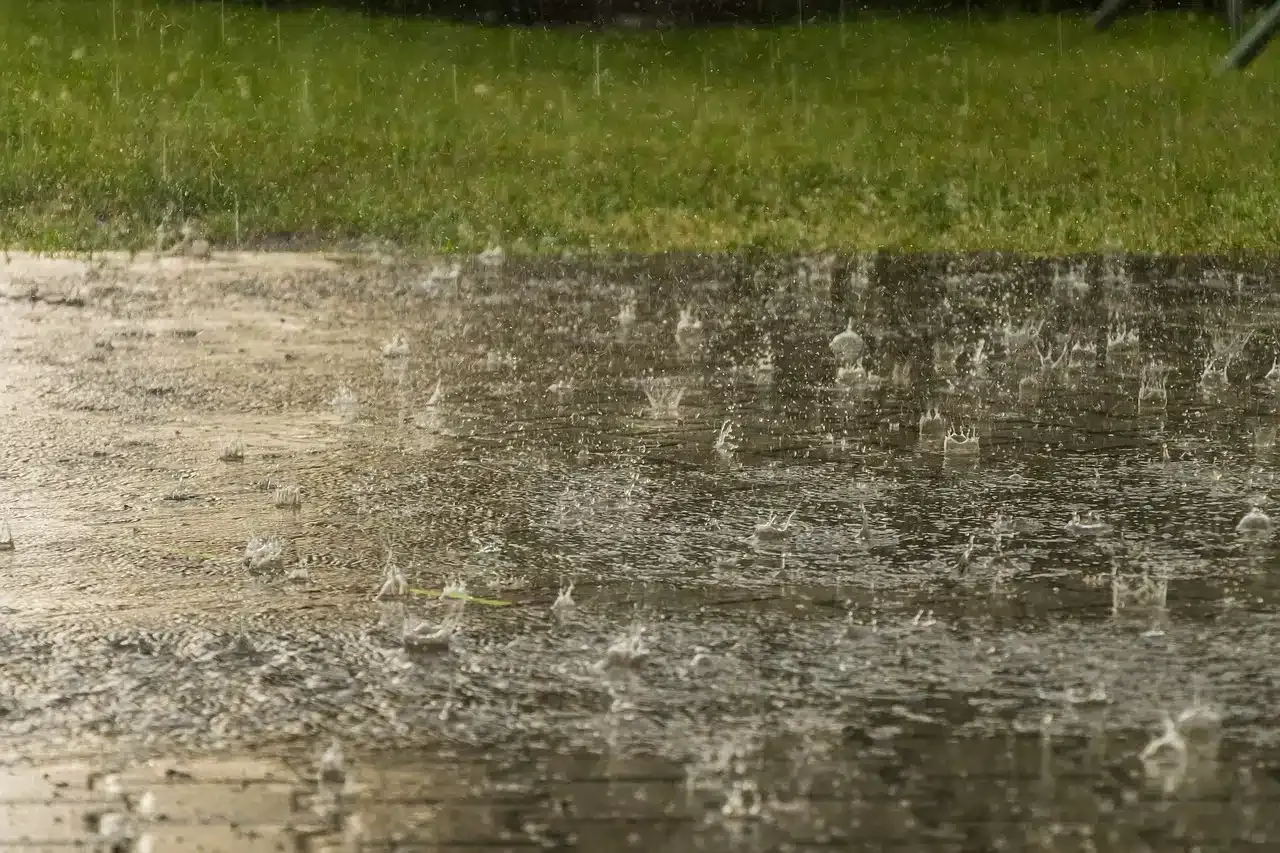
A new study from the Indian Institute of Tropical Meteorology in Pune has measured, for the first time in India, exactly how much monsoon rain evaporates mid-fall. The answer: 23 percent on average, with daily swings as high as 61 percent.
The paper, led by Sheena Sunil Nimya alongside Sundara Pandian Rajaveni, Saikat Sengupta, Sourendra Kumar Bhattacharya and Nandhini Ananthavel, appeared June 26 in Atmospheric Chemistry and Physics.
How Scientists Caught Rain Disappearing
The team collected paired samples of rainwater and atmospheric vapor in Pune through the entire 2019 monsoon. They tracked stable isotopes — natural chemical fingerprints in water molecules that shift measurably when a raindrop evaporates on its way down.
By comparing rain and vapor side by side, researchers worked backward to estimate how much of each drop vanished before touching ground. They fed the isotope data into the Below Cloud Interaction Model, a tool built by researchers in Zurich that tracks a single raindrop’s descent step by step.
The evaporation rate swung hard, from 4 percent on humid days to 61 percent on hot, dry ones. Smaller drops and drier air drove the losses. Exclude the four driest outlier days, and the typical loss settles closer to 18 percent.
An evaporating drop pulls heat from the air around it. That cooling can trigger downdrafts, cold pools near the surface, and shifts in the very storm systems producing the rain.
Climate models have long struggled to capture this feedback. Get it wrong, and rainfall forecasts drift off course.
How Pune Stacks Up Globally
Pune’s 23 percent sits at the low end of the global range. Satellite-based estimates put tropical evaporation near 20 percent. A 2023 study over Barbados, using aircraft data from the trade winds, found evaporation near 63 percent. Zurich recorded roughly 40 percent during a 2011 cold front.
The gap traces back to drop size and humidity. Barbados drops averaged under half a millimeter — small enough that some vanished completely before reaching the surface. Pune’s drops, shaped by monsoon downpours, ran nearly three times larger, and the air stayed more humid, both of which slow the loss.
In Zurich, researchers found that switching off evaporation in their model raised rainfall by roughly 75 percent — a measure of how much one overlooked process can distort a forecast.
“This is the first observational estimate of raindrop evaporation over the Western Ghats, and the technique can be used over the whole of India,” said Saikat Sengupta, one of the study’s authors, according to comments shared alongside the study’s release.
What Comes Next
IITM already runs a network of nine rainwater-isotope stations, from the Himalaya to the Andaman Islands, with a decade of sampling behind it. The next step: mapping how evaporation shifts across India’s climate zones, from parched Rajasthan to the drenched Western Ghats coast.
The Pune numbers offer something rare in this field — a measurement grounded in direct observation, not satellite inference or assumption. Even India’s heaviest downpours, it turns out, lose something on the way down.
Support Us To Sustain Independent Environmental Journalism In India.
More Ground Reports
He Was Married as a Child, Now Manish Dangi Helps Stop It for Others
Despite The Ban, How Gutkha Became MP’s Most Common Household Habit