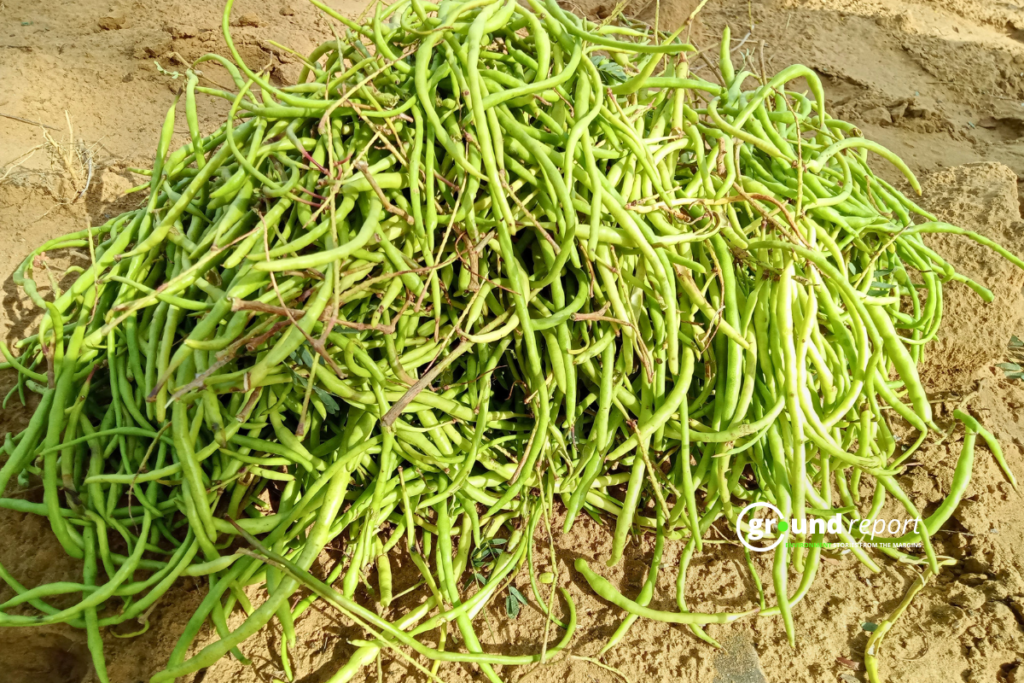
हिंदी में पढ़ें: Santosh Devi loves sangri vegetables. Between her farm work and household chores, she finds time to pluck raw sangri pods from khejri trees. She also uses them to add flavour to other dishes.
Sangri — the pod that grows on the khejri tree — has long held an important place in the traditional cuisine of Rajasthan, particularly its western region. Rich in nutrients and prized for its taste, it is sold by vendors for ₹1,150 to ₹1,500 per kilogram.
Santosh, a resident of Nawalgarh in Rajasthan’s Jhunjhunu district, has more than 30 khejri trees on her farm. Yet she says: “Over the past few years, sangri has been disappearing from the khejri trees. This year, the trees have none at all.”
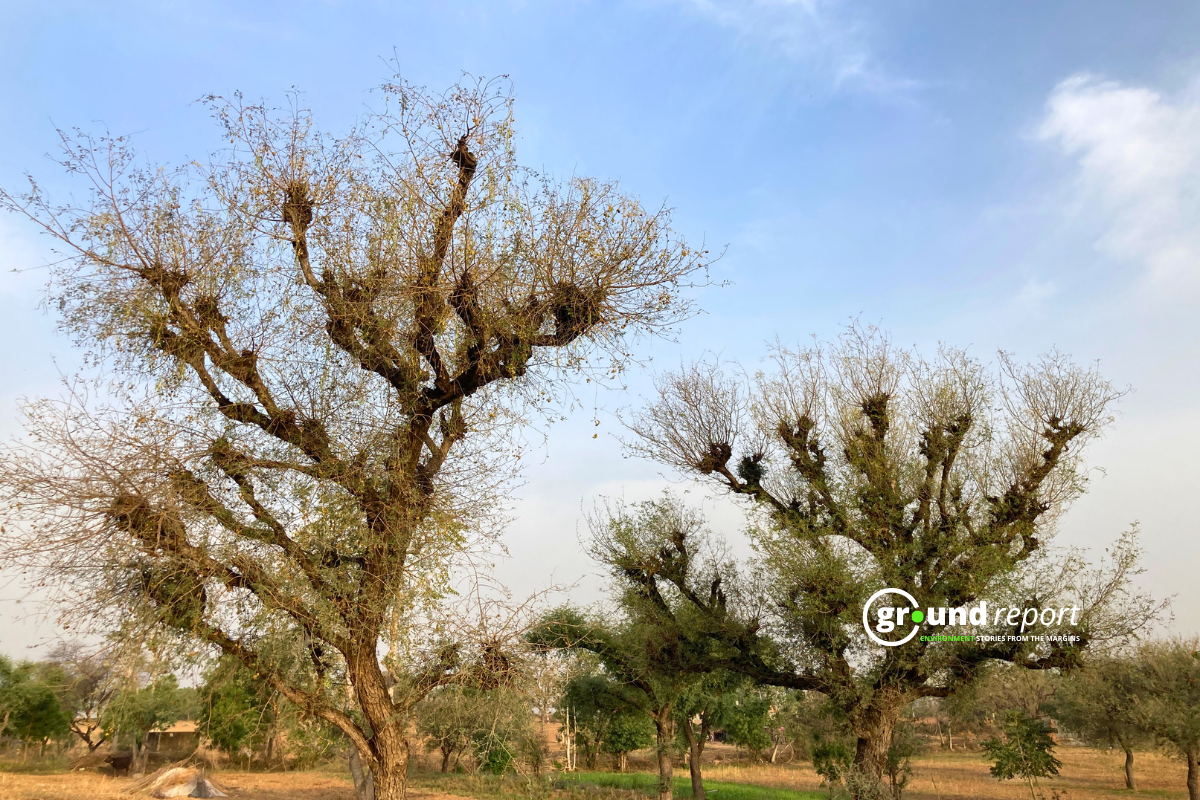
Khejri trees, Rajasthan’s state tree and a cultural touchstone of its western desert communities, are dying at rates of up to 22.67% across five major districts, driven by climate-linked fungal infection, termite infestation, and erratic rainfall. As the trees disappear, so does sangri, the prized pod that feeds local kitchens and supports a market trading at up to ₹1,500 per kilogram.
Drying Trees, an Endangered Heritage
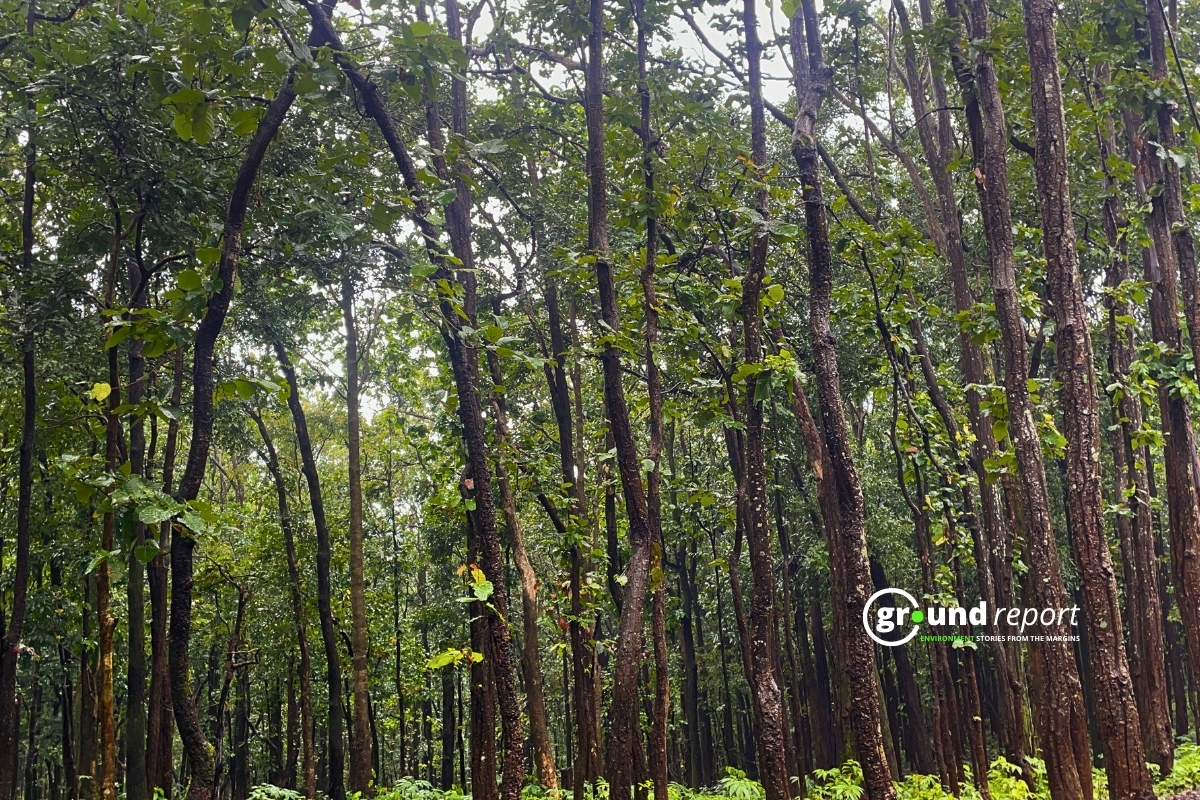
Shravan Patel, from Luni tehsil in Jodhpur district, recalls: “Until 1985, there were very few khejri trees in our area. But later, village elders — recognising the tree’s importance — took up the work of planting and protecting them.”
He explains that villages used to appoint a dedicated person, with the consent of the village head and residents, to look after the khejri trees. His wages were paid in bajra (millet). This practice continued until 2012. Today, Patel says, every farm in Luni and the surrounding areas has between 60 and 75 khejri trees standing.
Yet Patel also acknowledges that over the past few years, mature khejri trees have been drying up, and the quantity of sangri has dropped significantly. Traders from various districts of Rajasthan report that sangri arrivals in the market have fallen sharply.
Vijay Singh, a trader who buys sangri from farmers and small shopkeepers in Nagaur and Bikaner and sells it to hotels and large markets, said that this year the market price for dry, thin sangri is ₹1,400–1,500 per kilogram. Thicker, weather- and pest-affected sangri started at ₹1,100. Due to lower arrivals, he has purchased around 2.25 quintals of sangri so far, spending between ₹2.90 and ₹3 lakh in total.
Raju Soni, a trader from the Osiyan area of Jodhpur, said that until 2020–21, sangri arrivals at the market were very brisk by this time of year. But this year, the sangri market in the Marwar region has not fully opened up. He anticipates that once it does, prices could climb to ₹1,600–1,800 per kilogram.
Dr. Vikas Pawadia, assistant professor at the Agriculture College in Nagaur and a state counsellor for Rajasthan’s GI Tag Mission, says: “The current shortage of sangri has pushed market prices higher than they were in 2020–21.”
Pest and disease infestations, along with climate change over recent years, have adversely affected both the khejri tree and its sangri pods, causing greater losses for farmers.
The Main Causes
Dr. Sandeep Gawadia — who holds a PhD from the Department of Agronomy at the Indian Agricultural Research Institute, New Delhi, and currently teaches at a private university — explains that khejri, which thrives in sandy desert dunes and flat sandy soils, is a tree adapted to arid and semi-arid climates. It can withstand temperatures ranging from 10°C in winter to 45°C in summer.
Dr. Archana Verma, principal scientist at the Central Arid Zone Research Institute (CAZRI), has been working on khejri since 2021. She explains that rain and hail during the tree’s flowering and pod-formation stages damage sangri production. Instead of pods, the tree develops galls — known locally as girdu — which can reduce output by 40 to 70 percent.
Khejri blooms from late February through early April, after which the green pods develop. These green pods are called sangri. The pods that dry out and fall on their own are called khokha, meaning the inner part of the pod empties after drying.
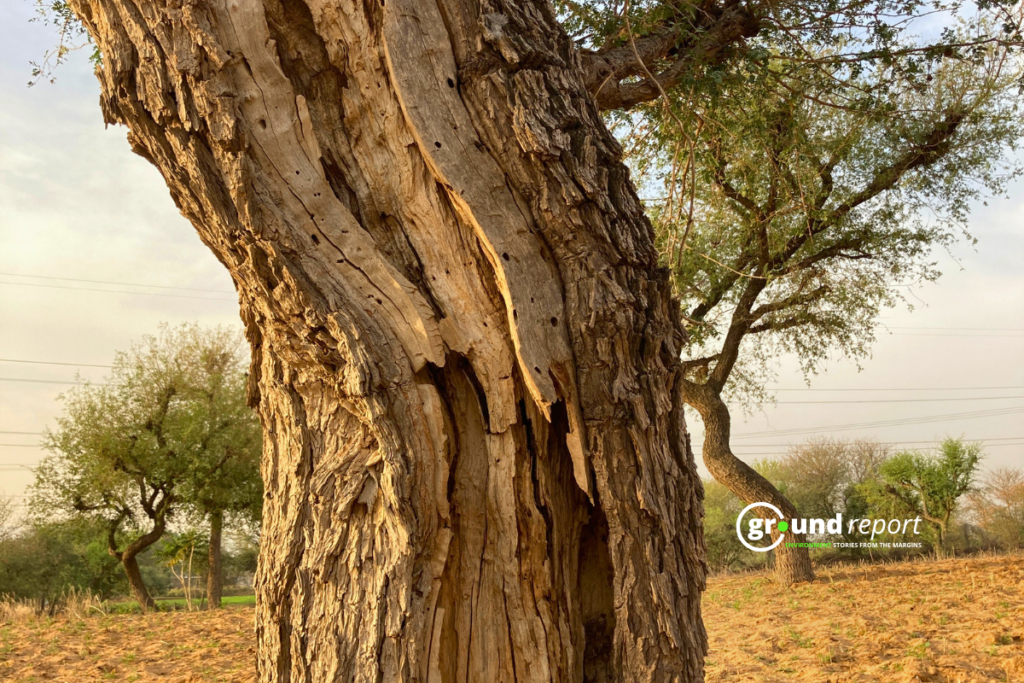
Verma also notes that a fungus called Ganoderma lucidum infects khejri roots, disrupting the tree’s vascular system. This causes the tree to dry up gradually. Locally, this condition is known as bhafoda or vishkhofra. Termites, too, hollow out the trees. Their damage was once confined to the rainy season, but erratic rainfall now compounds the harm. Rain between January and March raises soil moisture levels while reducing sunlight, creating conditions in which termites proliferate.
In 2017, the Arid Forest Research Institute (AFRI), Jodhpur, published a survey reporting that in five districts — Jodhpur, Nagaur, Churu, Sikar, and Jhunjhunu — the mortality rate of khejri trees ranged from 18.08% to 22.67%, with an average decline of 20.93%.
A study conducted in Jhunjhunu found the district’s total tree mortality rate at 10.82%. It concluded that climate change has increased both the frequency and severity of pest and pathogen attacks on khejri. Sudden die-off due to root borers and root rot has emerged as a serious threat to the tree’s survival.
Movements to Save the Khejri
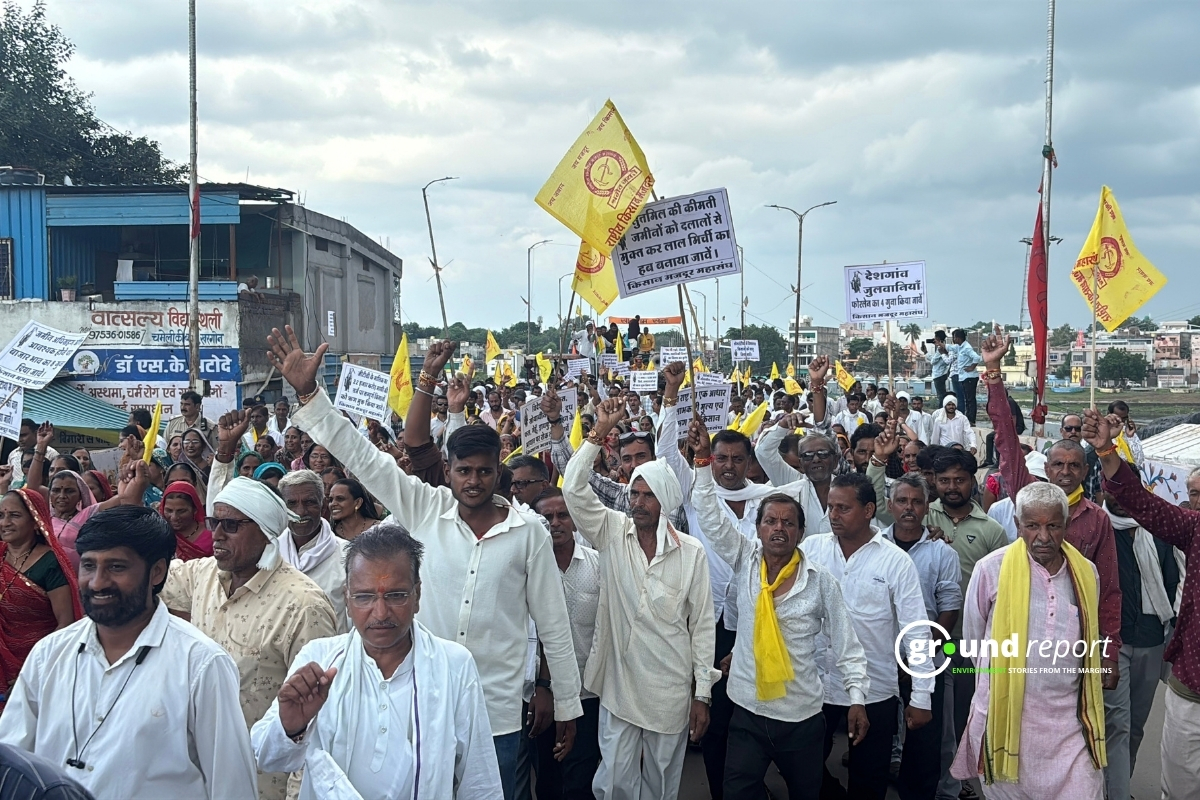
Over the past year, protests have erupted across western Rajasthan against solar energy projects that are felling khejri trees. On 3 February 2026, thousands gathered at the Polytechnic College campus in Bikaner district, pledging to protect khejri trees against solar projects.
Protesters argued that thousands of khejri trees were being felled to make way for solar plants installed along both sides of the Bikaner–Jaipur highway. They demanded that the state government enact stricter laws.
On the 11th day of the protest, the state government gave assurances that it would soon introduce new legislation and that no trees would be cut until then. The agitation ended following that commitment.
Khejri — known as the kalpavriksha or wish-fulfilling tree — holds deep cultural and economic significance for the people of Rajasthan. Sangri is not just a cornerstone of Rajasthani cuisine; it is also a source of income for traders and farmers alike. The disappearance of khejri trees from the state steadily erodes this economic opportunity, making conservation of the tree all the more urgent.
Agricultural research institutions have been working for years to develop new approaches, but a large-scale impact is yet to be seen.
Support Us To Sustain Independent Environmental Journalism In India.
More Ground Reports
He Was Married as a Child, Now Manish Dangi Helps Stop It for Others
Despite The Ban, How Gutkha Became MP’s Most Common Household Habit