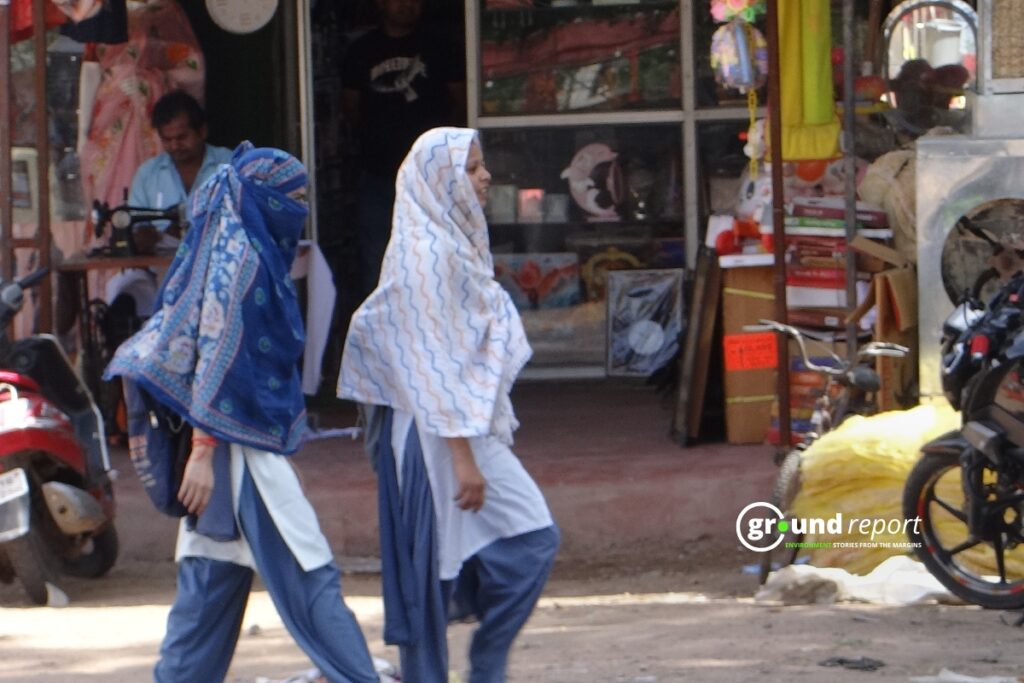
Since 2005, heat has killed more women, and deaths among men have fallen, a 30-year analysis of India’s mortality data found.
“The study provides evidence that the health burden of extreme temperatures can be gendered, but this relationship is strongly shaped by social, environmental and exposure contexts,” Ronita Bardhan, who co-authored a 2024 study published by the Royal Statistical Society, told Ground Report in an email.
Bardhan is a professor of sustainable built environment and health at the University of Cambridge.
On 4th August, the Indian government notified heatwaves and lightning as natural disasters, allowing disaster management authorities to allocate resources and funds for their prevention, mitigation and response. The move could also help standardise data collection across states, making it easier to assess the scale of these hazards and develop more targeted policies.
But the burden of extreme heat remains uneven.
Multiple studies agree on the basic fact: more women than men are dying from extreme heat in India. What researchers disagree on is why.
Who is More Vulnerable
Ground Report asked scientists the same question: if a healthy man and a healthy woman, with no difference in living conditions, work or access to resources, are exposed to the same heat, does the woman’s body still struggle more?
“The short answer is no, a woman’s body does not struggle more than a man’s on a purely physiological level, all else being equal,” said Nisha Charkoudian, an environmental physiology researcher who worked with the US Army Research Institute of Environmental Medicine for 14 years.
Charkoudian co-authored a 2024 review in Experimental Physiology with Gabrielle Giersch on female heat regulation. Labelling one sex as having a heat “advantage” or “disadvantage” oversimplifies the science, they concluded.
A 10-year study of nearly 4,500 soldiers, cited in the review, found men and women had roughly equal rates of serious heat illness.
Charkoudian’s own 2024 study, which controlled for activity and environment, found that body mass index, not sex, predicted exertional heat stroke risk in young, healthy adults.
Bardhan said that current physiological studies don’t show “women are universally less heat tolerant than men”. But, she said, more than a physiological question, “a more important scientific question is whether the populations studied are representative of the people carrying the greatest heat burden globally,” she said.
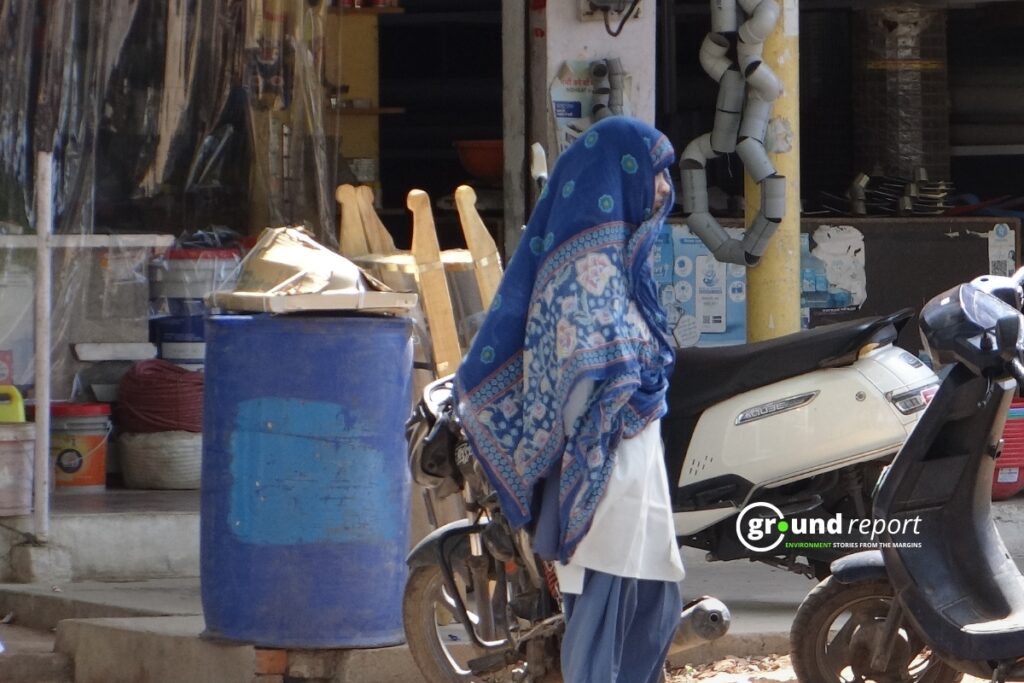
The underlying conditions that can modify heat vulnerability include anaemia, pregnancy, undernutrition, chronic or recurrent illness, and cumulative environmental stress. These conditions are particularly relevant in many heat-vulnerable populations in the Global South.
“Additionally, our recent work shows that physiological heat stress and perceived heat are not always aligned,” Bardhan said. “In humid environments, particularly at night, people can experience substantial physiological strain without feeling proportionately uncomfortable. Once we place physiology inside real homes and neighbourhoods, where exposure is repeated, and recovery is constrained, the question becomes much more complex than simply comparing healthy men and women.”
Syntax and Semantics
On Heat Action Day, ADB Gender Equality posted that Bardhan’s research showed women sweat 15 per cent less than men, causing their bodies to retain more heat under the same conditions.
Charkoudian replied, addressing Bardhan directly. Women are not “physiologically more strained” by heat compared to men, she wrote, calling the claim inaccurate and warning it could be “damaging to women’s careers when such statements are perpetuated”.
She cited physiological research as mentioned above.
In the comment section, Bardhan agreed that the relationship between sweat rate and heat tolerance was more complex than the post conveyed.
She said she had intended to flag documented sex differences in thermoregulation, like lower sweat rates in some ethnic groups and climates, and to argue that heat-adaptation design should account for sex-specific physiology rather than a one-size-fits-all model, not to claim women’s bodies handle heat worse.
In her comments to Ground Report, Bardhan was careful to frame her argument around environments and cumulative exposure rather than inherent physiological fragility.
“My argument is therefore not that women are inherently more fragile,” she said. “It is that the body’s heat response is shaped by the environments it inhabits over time.”
Women Sweat Less
A recent BBC article on heat and women cited a 2025 study that said women produce less sweat, start sweating at a higher temperature, and have a higher core body temperature and body fat percentage than men.
Charkoudian said people respond to heat differently regardless of sex. Some sweat more, some less, and the same holds for every physiological response to heat, which is why controlled studies matter.
The 2025 paper is a meta-analysis, meaning the authors reviewed existing literature and synthesised the findings.
This “meta-analysis has to do with women’s subjective responses to heat and cold and does not contain any new data about women’s risk of heat illness,” Charkoudian said.
She explained that more sweat is not “necessarily an advantage”.
When sweat cannot evaporate because of high humidity or heavy clothing, it does little to cool the body and instead runs off the skin. Excessive sweating can worsen dehydration, which makes it harder for the body to regulate its temperature and increases the risk of heat-related illness.
She said the picture changes with age.
“Aging does cause decreases in our bodies’ ability to dissipate heat, and older people are at increased risk of heat illness,” she said. Postmenopausal women may face higher risk than age-matched men, she said, though evidence remains limited.
Intersectionality and Heaviest Burden
A review of 17 studies on heat stress in India, published in 2024 in Preventive Medicine: Research & Reviews, found a different group carries the heaviest burden: older people, pregnant women, overworked people and newborns.
“A person exposed to heat during the day but able to recover in a cool, well-ventilated home faces a very different risk from someone exposed to heat continuously across both day and night,” Bardhan said.
In India, rising temperatures have led to longer and more intense heatwaves, with heat-related deaths increasing by 34% between 2013 and 2022, according to Indian Meteorological Department data.
In parliament, the government revealed that India had recorded 4,853 heatstroke cases since March 1, 2026, based on data from more than 51,000 reporting units under the National Heat-Related Illness and Death Surveillance system. The surveillance system recorded 20 confirmed heatstroke deaths during the same period, with Maharashtra accounting for the highest number at 11.
A 2025 study by the M S Swaminathan Research Foundation, led by former World Health Organization WHO chief scientist Dr Soumya Swaminathan, surveyed more than 3300 women across 7 states and found that 70 percent reported heat-related physical symptoms during peak summer months, and 97 percent had no institutional support to cope with extreme heat.
In India, 250 cities and districts across 23 heat-prone states have operational Heat Action Plans (HAPs).
“Most heat policies continue to focus on emergency response rather than thermal resilience in everyday environments,” Bardhan said.
India still has no standardised national method for counting heat deaths, a gap that Debnath and Lin flagged in a commentary in Nature India. This lack of detailed data prevents determining the reason.
Female deaths are also not recorded and certified with the same accuracy as male deaths.
Charkoudian agreed better data is urgently needed. If female heat deaths are being undercounted, she said, “the situation is even more tragic and urgent than what we already think,” and this is a separate issue from the debate over physiology.
Both researchers agree India’s death toll is not explained by women’s bodies failing more than men’s. What divides them is a question of method — and, in one instance, of how carefully a finding gets worded once it leaves the nuances of scientific inquiry and enters public discourses.
Support Us To Sustain Independent Environmental Journalism In India.
More Ground Reports
He Was Married as a Child, Now Manish Dangi Helps Stop It for Others
Despite The Ban, How Gutkha Became MP’s Most Common Household Habit
Stay Connected With Ground Report For Underreported
Author
Support Ground Report to keep independent environmental journalism alive in India
We believe climate change should be the basis of current discourse, and our stories attempt to reflect the same.
Connect With Us
Send your feedback at greport2018@gmail.com
Newsletter
Subscribe our weekly free newsletter on Substack to get tailored content directly to your inbox.
When you pay, you ensure that we are able to produce on-ground underreported environmental stories and keep them free-to-read for those who can’t pay. In exchange, you get exclusive benefits.
Your support amplifies voices too often overlooked, thank you for being part of the movement.