The Madhya Pradesh government on July 29 raised the procurement limit for moong from 25 percent to 60 percent after thousands of farmers marched to Bhopal demanding higher procurement and changes to the state’s fertilizer distribution system.
The decision came after a meeting between State Agriculture Minister Edal Singh Kansana and farmer representatives, hours after nearly 2,000 protesters broke through police barricades and reached the state capital, setting up camp near Chief Minister Mohan Yadav’s residence.
Government accepts key demands
Late on July 29, Chief Minister Mohan Yadav announced the decision on X, calling it an important step in the interest of farmers. He said the last date for slot booking had been extended to August 10, while procurement would continue until August 20.
Agriculture Minister Kansana said the revised procurement limit would take effect immediately and that the government would ensure as many farmers as possible benefited.
He also announced that the state had suspended the e-token system for fertilizer distribution. A high-level committee, headed by the Agriculture Production Commissioner, will review the system and recommend changes.
Rajesh Jat, district president of the Bharatiya Kisan Union in Narmadapuram, welcomed the decision. He said increasing the procurement limit to three quintals per acre would provide significant relief to farmers.
March to Bhopal
The announcement came after three days of protests.
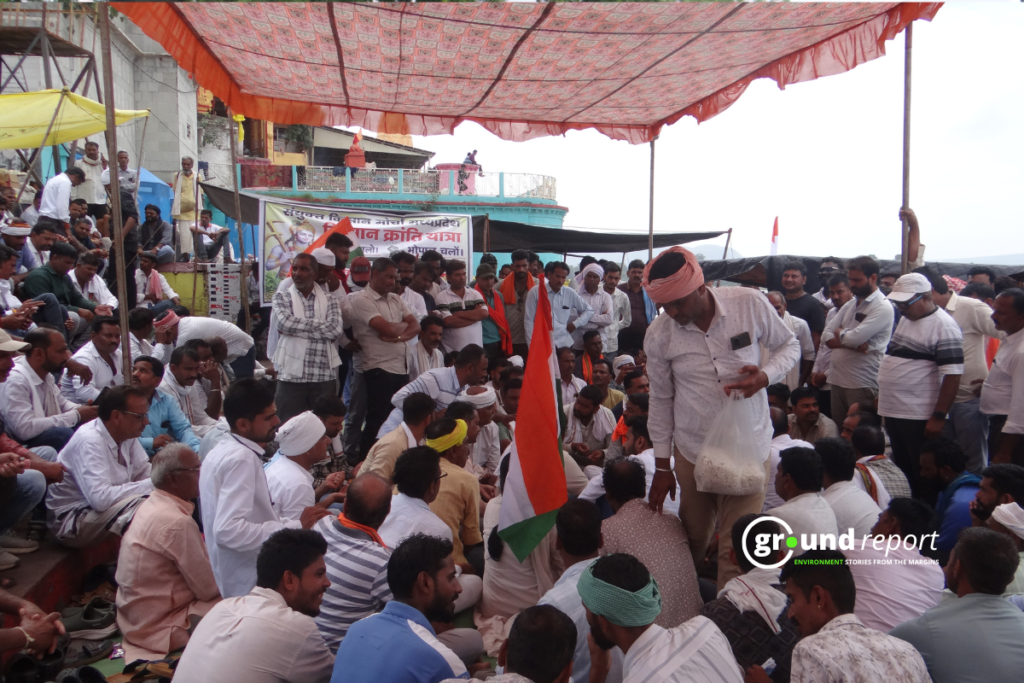
Farmers from Bhopal, Narmadapuram, Vidisha and Raisen districts had begun the Kisan Kranti Padyatra from Sethani Ghat in Narmadapuram on July 27, marching to Bhopal under the banner of more than 19 farmer organisations, including the Samyukt Kisan Morcha.
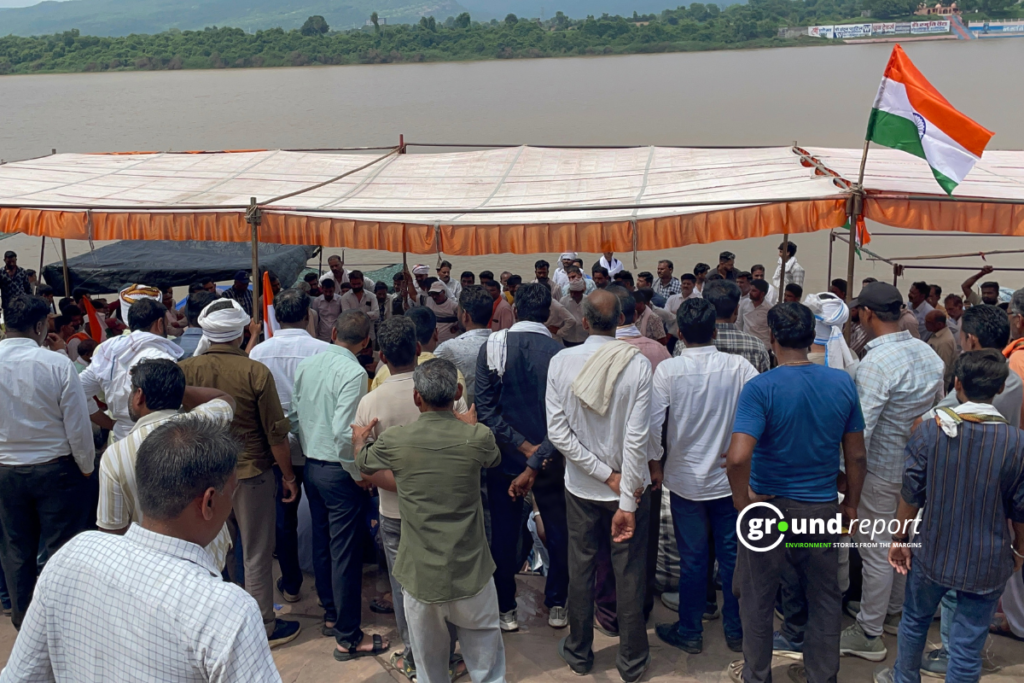
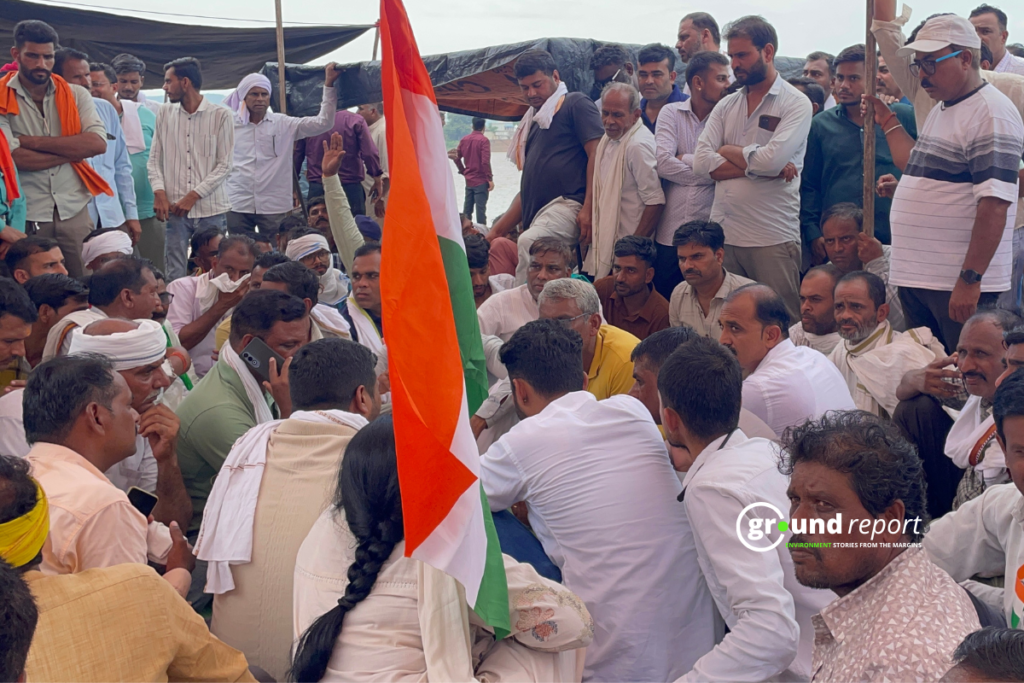
On July 29, after talks with the agriculture minister failed to produce an agreement, protesters resumed their march. They crossed police barricades on Narmadapuram Road carrying bedding, cooking utensils and supplies for what they expected would be a long protest.
By evening, they had reached Polytechnic Chauraha, less than a kilometre from the Chief Minister’s residence, where the administration blocked the road with buses and additional barricades.
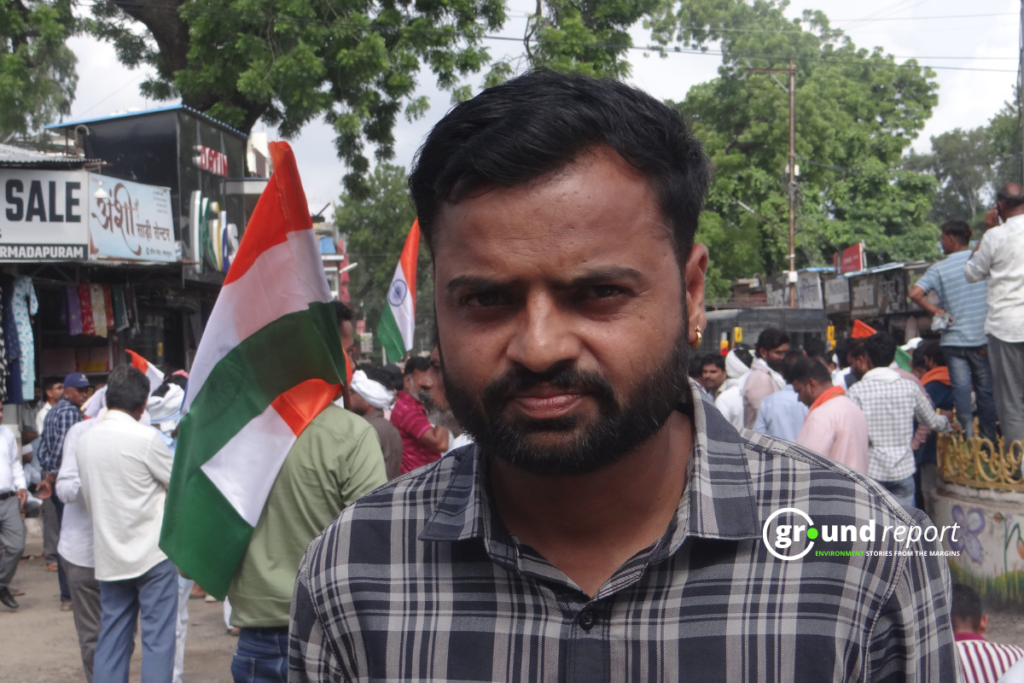
Surya Pratap Singh Sisodia, a farmer leader from Bhairunda in Sehore district, said the government’s decision addressed two of the protesters’ main demands: higher moong procurement and the suspension of the e-token system.
“This will provide major relief to farmers,” he said. However, he added that other demands, like 10 hours of electricity supply, remained unresolved.
Centre and state disagree
However, there is a difference between the Centre and the state government over moong procurement.
Earlier, the Centre approved procurement of 4.54 lakh metric tonnes of moong from Madhya Pradesh at the minimum support price of ₹8,780 per quintal for the 2026-27 marketing season. The quantity amounted to only about 25 percent of the state’s estimated production of 20.16 lakh metric tonnes.
According to the Madhya Pradesh Public Relations Department, the state government had asked the Centre to increase the procurement target to more than 8 lakh metric tonnes.
Kansana had written to Union Agriculture Minister Shivraj Singh Chouhan, who was the former Chief Minister of Madhya Pradesh, and farmers said he encouraged them to grow moong as a zaid crop, seeking the revision.
Responding on X, Chouhan said the Centre could approve procurement only up to 25 percent under the PM-AASHA scheme. Any procurement beyond that, he said, would have to be undertaken by the state government.
He added that procurement limits under PM-AASHA are approved by the Union Cabinet and not by the agriculture minister. He also urged the Madhya Pradesh government to complete procurement within the quantity already approved by the Centre.
Chief Minister Yadav later said the state remained committed to protecting farmers’ interests during the “Year of Farmer Welfare.” He announced a ministerial committee, comprising Kansana, Public Works Minister Rakesh Singh, Cooperation Minister Vishvas Sarang and Minister of State Krishna Gour, to address farmers’ issues.
Sisodia said farmers had arrived in Bhopal prepared for an indefinite sit-in if the government refused to negotiate.
“But the government accepted our main demands in time,” he said. “So we have ended the protest and returned home.”
Support Us To Sustain Independent Environmental Journalism In India.
More Ground Reports
He Was Married as a Child, Now Manish Dangi Helps Stop It for Others
Despite The Ban, How Gutkha Became MP’s Most Common Household Habit