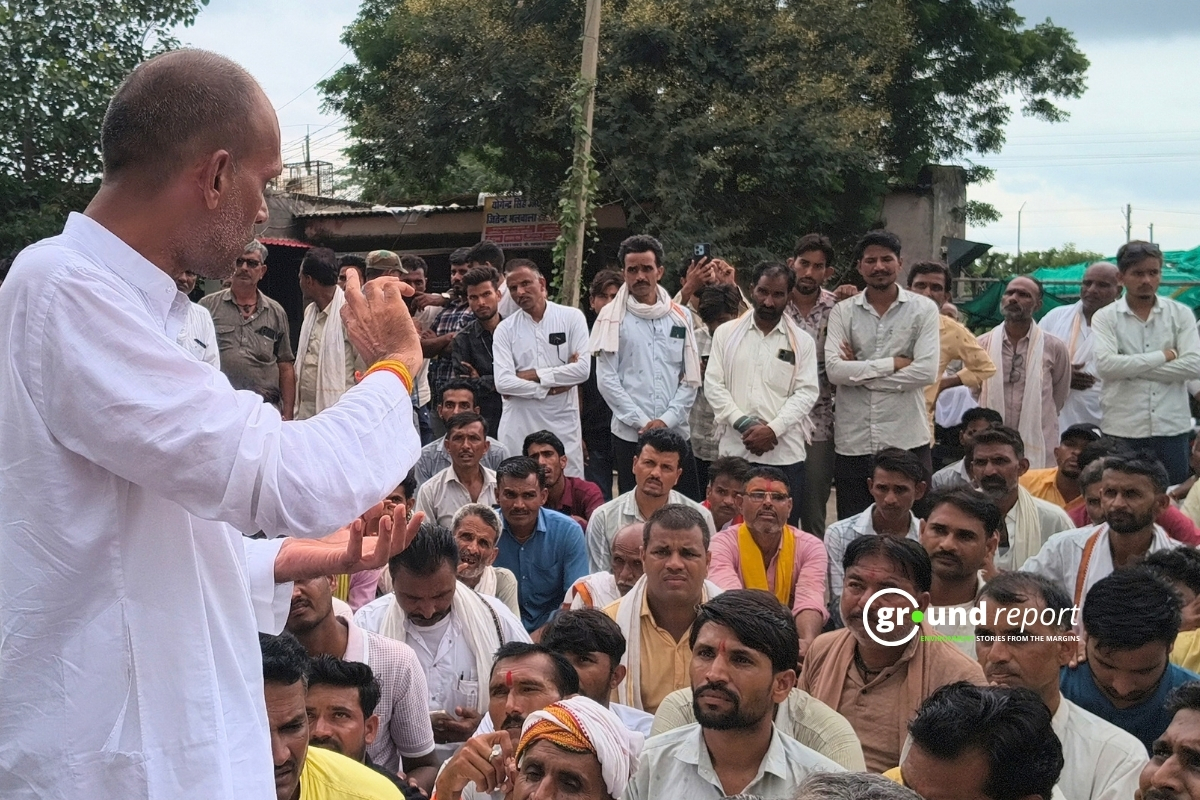
On 24 May 2024, around 2:30, a tiger entered Kherwa Tola village, adjacent to the Panpatha buffer zone of Bandhavgarh Tiger Reserve. It attacked 40-year-old Phoolbai, who was sleeping in the courtyard. Her husband and other family members, who rushed to save her, were also attacked. The tiger returned a few hours later, spreading panic in the village. Angry villagers attacked forest department personnel. The department subsequently tranquilised the tiger.
But the tiger died before it could reach the camp.
In the post-mortem examination, the State Wildlife Forensic Health Centre in Jabalpur found that the tiger had died of cardiorespiratory failure. Seven villagers were arrested after the report.
The National Tiger Conservation Authority (NTCA) data shows that at least 168 tiger deaths were recorded in Madhya Pradesh between 2022 and 2025. Of these, 114, or about 68%, occurred inside tiger reserves and 54, or around 32%, outside them. At least 33 tiger deaths have been recorded so far in 2026, taking the total to 201. Tigers died due to natural causes, territorial fights, disease, accidents, human-wildlife conflict, and poaching.
On the other hand, the number of people killed in tiger attacks this year has reached 22.
At the reserve level, Bandhavgarh recorded the highest number of tiger deaths, at around 50, between 2022 and 2025, followed by Kanha with 25, Pench with 20, Satpura with 15, and Panna with about 10. The remaining deaths were reported from Madhav, Sanjay-Dubri, Veerangana Durgavati, and Ratapani tiger reserves, as well as forest areas outside the reserves.
Natural deaths and territorial conflicts appear more frequently in high-density reserves such as Bandhavgarh and Kanha. The death of ‘Pujari’, a tiger popular among tourists in Bandhavgarh, on May 11, 2026, is one example.
Outside reserves, tigers face risks including road and railway accidents, electrocution from power lines, falling into wells, poisoning, and human-wildlife conflict. The share of tiger deaths occurring outside reserves was around 29% in 2022, rising to 35% in 2025.
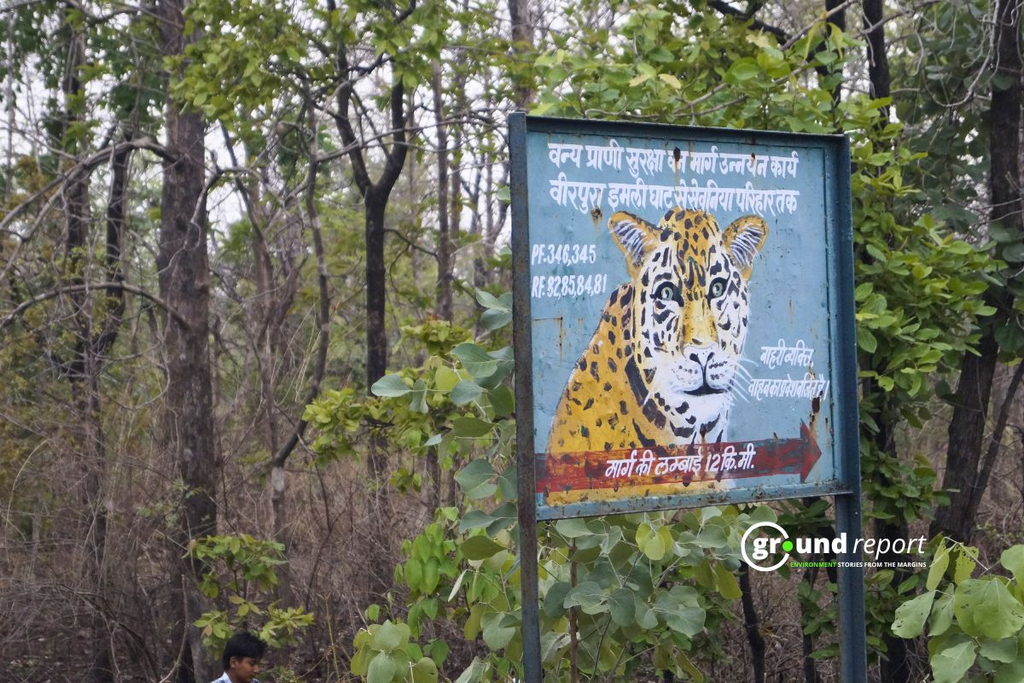
This suggests that tiger movement is no longer confined to protected areas. Risks are increasing in corridors, buffer zones, and human-dominated areas.
A study by the State Forest Research Institute (SFRI), Jabalpur, titled “Landscape-Scale Tiger Occupancy in Madhya Pradesh: Patterns, Drivers and Conservation Implications,” suggested that tiger habitats are approaching their ecological carrying capacity. In this situation, protecting wildlife corridors and implementing coexistence policies in rural areas may be the only way forward.
How Much Space Does a Tiger Need?
According to the All India Tiger Assessment 2022, Madhya Pradesh has 785 tigers—the highest number in the country. In 2018, the figure was 526, meaning the state gained 259 tigers in just four years. This is a major conservation success.
Mandar Pingle, deputy director of the Satpuda Foundation, says, “The area a tiger needs depends on prey availability, forest quality, water and the presence of other tigers.”
The study done in Satpura tiger reserve found that a radio-collared adult male tiger had an average annual home range of about 268 square kilometres. Meanwhile, an adult female had a home range of around 64 square kilometres. The sub-adult tigers (a young tiger that is between 12 and 36 months) had considerably smaller ranges.
Kanha’s Tiger Conservation Plan also links tiger carrying capacity to prey species biomass. Based on available prey, the assessment estimated a potential capacity of up to around 12 tigers per 100 square kilometres. This is a model based on Kanha’s specific habitat and prey availability at the time.
“An increase in tiger numbers is not a problem in itself,” Pingle said. “The problem arises when the balance between local tiger density, prey availability and the availability of secure territories begins to break down.”
Why the SFRI Study Matters
The study by scientists at the State Forest Research Institute (SFRI), Jabalpur, is based on field data collected during the All India Tiger Assessment 2022.
The researchers used occupancy modelling, instead of relying on camera traps. Dr Mayank Makrand Verma, one of the study’s authors, explained, “This method estimates the probability of a species being present in an area rather than its population size.”
“The model can still estimate the probability of its presence there,” Verma said. “This is why it is considered more effective than camera traps at the landscape scale.”
The state forest was divided into approximately 106,700 square kilometres of forest area into 1,067 grids measuring 10×10 kilometres. In each grid, they surveyed signs of tiger presence, such as pugmarks, scat, scratches and other field signs. They then used statistical models to analyse these signs alongside factors such as forest cover, prey availability, rainfall, temperature, water sources and human pressure.
The study divided Madhya Pradesh into two major tiger landscapes—the Vindhya and Satpura-Maikal landscapes—and analysed them separately.
The Vindhya landscape, which includes Bandhavgarh, Panna and Sanjay-Dubri, showed that tiger presence was primarily dependent on prey availability. The landscape is more fragmented because of agriculture, villages and mining. As a result, encounters between tigers and people are relatively more frequent.
Tiger presence was recorded in 172 of the 654 grids here, covering approximately 17,194 square kilometres, with a naive occupancy of 0.26.

In contrast, the Satpura-Maikal landscape, which includes the dense and interconnected forests of Kanha, Pench and Satpura, showed that dense forest cover and good rainfall were the strongest factors influencing tiger presence. Tigers were recorded in 155 of 413 grids, covering 15,599 square kilometres, with a naive occupancy of 0.38.
Researchers identified this as the major source landscape of Madhya Pradesh, from which young tigers disperse into other areas.
The researchers also accounted for the possibility that tigers may have been present in some areas but were not detected during surveys. Based on this, the estimated area of tiger occupancy across the state was around 37,345 square kilometres, with an occupancy of 0.35. This is 4,268 square kilometres more than the 33,077 square kilometres estimated from direct field signs using naive occupancy.
The researchers found tigers to be concentrated mainly around existing tiger reserves and the corridors connecting them. They were also found in forest patches adjacent to existing tiger populations.
Based on this, the study described the existing tiger occupancy of around 37,345 square kilometres as being close to saturation of the available suitable forest habitat.
“This does not mean that there is no space left in the forests. Rather, it means that safe territories for new adult tigers are becoming increasingly limited,” Makrand said, “Where suitable forests for tigers exist, their presence has already become largely concentrated there. The options for large-scale expansion into new areas are limited.”
Tiger Pressure Is Not the Same in Every Reserve
Tiger populations are not evenly distributed even across Madhya Pradesh’s six older tiger reserves.
The 2022 national assessment recorded 135 tigers in Bandhavgarh, 105 in Kanha and 77 in Pench. In Satpura, 50 individual tigers were identified in 2022, with an estimated density of 2.01 tigers per 100 square kilometres.
Kanha had 105 individually identified tigers in 2022, with an estimated density of 5.57 tigers per 100 square kilometres. The situation is very different in newer reserves. Veerangana Durgavati was declared a tiger reserve in 2023. At the time, around 15 tigers were reported there. In 2024, two tigers were translocated there from Bandhavgarh.
Madhav became Madhya Pradesh’s eighth tiger reserve in 2025, and tigers were brought in from other reserves to establish a breeding population. By 2025, its tiger population had reached seven.
Not all tiger reserves in Madhya Pradesh are facing high tiger densities. While some landscapes support very large tiger populations, newer reserves such as Madhav are in the process of establishing viable populations.
Are Their Corridors Shrinking?
“A tiger reserve is not sufficient on its own. A young tiger needs a route to reach another forest when it is looking for a new territory. These routes are called wildlife corridors,” Pingle said. “If these corridors are broken, tiger dispersal is disrupted, and tigers increasingly come into contact with farms, villages and people.”
The National Tiger Conservation Authority (NTCA) and the Wildlife Institute of India (WII) have identified several such corridors in central India.
Among them, the Bandhavgarh-Sanjay-Dubri-Guru Ghasidas, Kanha-Achanakmar, Kanha-Pench and Pench-Satpura-Melghat corridors are particularly important for Madhya Pradesh.
A large part of these corridors lies outside tiger reserves. This is where conflicts between tiger conservation and development projects are more likely to arise. A recent example is the Betul-Khandwa economic corridor, which is linked to the Satpura-Melghat corridor.
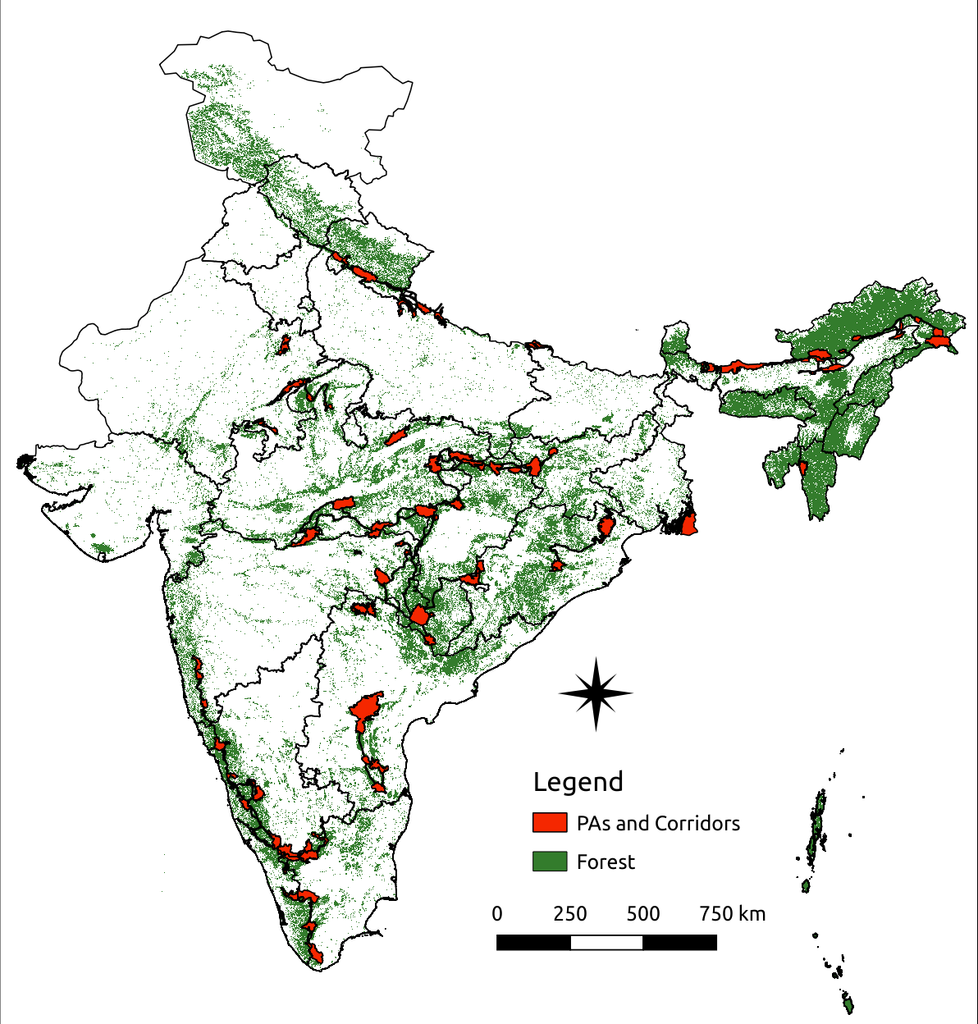
At a National Board for Wildlife meeting on February 3, 2026, the NTCA called for a detailed site assessment of the road project. The committee noted that the proposed road passes through an ecological landscape important for maintaining connectivity between the Satpura and Melghat tiger reserves.
The problem is not limited to roads. Water levels rose following the Bansagar Dam on an old corridor between Bandhavgarh and Sanjay-Dubri. This affected wildlife movement. The Madhya Pradesh Accountant General’s Wildlife Report 2022 also confirms this. The report warned that an important route for gene flow between the two areas had been blocked.
The 2025 Eco-Sensitive Zone Plan for Sanjay-Dubri also records the importance of this landscape. According to the document, Sanjay National Park and its ESZ form part of a regional corridor connecting Bandhavgarh with Kanha and, further, protected areas in Chhattisgarh. Around 20–30% of its ESZ functions as an important wildlife corridor.
According to the India State of Forest Report (ISFR) 2023, Madhya Pradesh’s forest cover declined by 371.54 square kilometres between 2021 and 2023—the highest decline among Indian states. However, this figure does not directly indicate that the entire loss occurred in tiger corridors. It does, however, point to growing pressure on the broader forest landscape through which tigers need to disperse.
Focus Now on Carrying Capacity, Not Just Numbers
The Forest Department has requested the Wildlife Institute of India (WII) to assess the carrying capacity of high-density tiger reserves under existing ecological conditions. It has also sought scientific inputs and evidence-based recommendations on key indicators such as prey biomass, habitat quality, land use, territorial dynamics and social structure.
Madhya Pradesh’s Principal Chief Conservator of Forests and Chief Wildlife Warden, Shubhranjan Sen, explained, “Many deaths have occurred due to intraspecific competition—competition within the same species. This indicates that density-driven pressure is now increasing in the tiger landscapes of central India.”
The state government also launched a ₹145-crore plan in 2025 to reduce conflict in buffer areas. The project includes measures such as chain-link fencing in vulnerable areas, development of water sources, wildlife health monitoring and skill development for local communities.
As the tiger population grows, working only in buffer zones will no longer be enough. Pingle said the focus will need to be on protecting corridor land, properly designing linear infrastructure projects, maintaining prey and water availability in buffer areas, and ensuring that rural residents receive compensation on time.
Support Us To Sustain Independent Environmental Journalism In India.
More Ground Reports
He Was Married as a Child, Now Manish Dangi Helps Stop It for Others
Despite The Ban, How Gutkha Became MP’s Most Common Household Habit