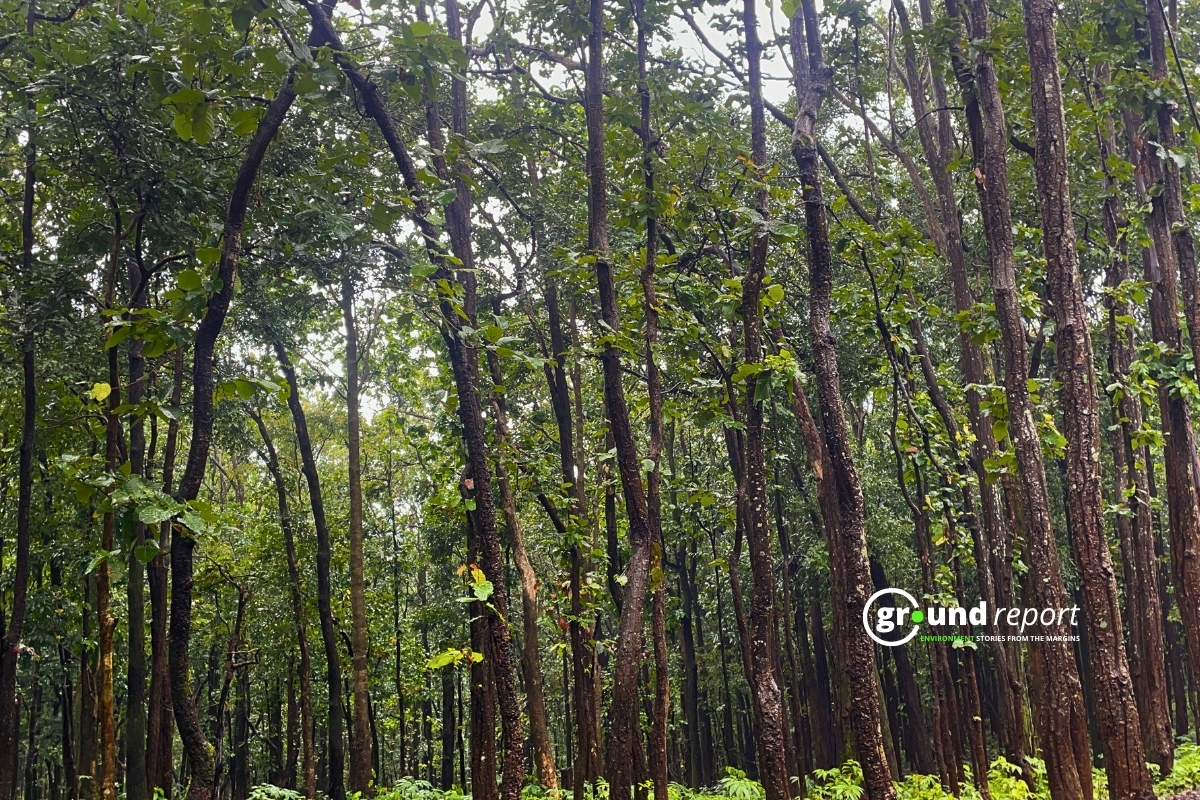
Scientists spent decades warning that tropical species would suffer most from climate change. They had it backward. A new study in Nature Climate Change, published June 18, 2026, found that 49 percent of temperate species have vanished from parts of their range in a warming climate. Only 33 percent of tropical species have suffered the same fate.
“For decades, scientists generally believed that temperate species were less vulnerable to climate change,” said Gopal Murali, an evolutionary ecologist at the Indian Institute of Science, Bengaluru, and the study’s lead author. “We were surprised by our results.”
The Largest Dataset Yet
Murali and his co-authors, including University of Arizona ecologist John Wiens, tracked more than 5,100 plant and animal species across nearly 40,000 survey sites worldwide. The dataset covers moths, beetles, birds, fish, mammals, reptiles and roughly 3,000 plant species, the largest analysis of climate-driven local extinctions to date.
Wiens published the opposite finding in 2016, based on a smaller dataset of 976 species. “I actually published a study… that showed the exact opposite pattern,” he said.
Temperate zones have since warmed nearly twice as fast as the tropics, rising about 6 degrees Fahrenheit over 25 years compared with 3.3 degrees in tropical regions. That gap, the researchers found, is the main driver of the reversal.
Temperate species also turned out to be just as sensitive to heat as tropical ones, despite long-standing assumptions that seasonal swings had toughened them.
Nowhere to Run
Tropical mountains pack a wide range of temperatures into short distances. When lowlands grow too hot, animals and plants retreat uphill and often find suitable conditions nearby. Temperate mountains warm more gradually with elevation, leaving fewer nearby refuges for species to escape to.
“Tropical mountains offer a greater variety of temperatures over relatively short distances in elevation,” Murali said. “As a result, extinctions tend to be concentrated at the warm edge.”
That gap shows up starkly in the numbers. Only 29 percent of all species studied expanded into cooler territory as their habitats warmed. Highways, cities and farmland block many land animals from moving to new areas. Fish and other aquatic species often stay trapped in a single lake or river system, with nowhere else to go.
“People often think that a species will simply move into cooler areas as the climate warms, but we found that more than 70 percent of the species were not doing so,” Wiens said.
No Safe Zone
In the tropics, local extinctions clustered at the hottest edge of a species’ range, leaving the rest of its territory relatively intact. In temperate zones, populations disappeared across the entire range, not just at its warmest fringe.
On Mount Lemmon near Tucson, Arizona, dead trunks of trees that once thrived at lower elevations now stand only at higher, cooler ones — a visible marker of the shift researchers describe.
“In the past, we have been laser-focused on the warmest areas,” Wiens said. “But it turns out that nowhere is really safe for populations of many temperate species.”
The researchers were careful to note what their data does not show. A local extinction does not mean a species has vanished everywhere, only that a population could no longer survive in one place. But enough of those losses, stacked across a range, can add up to the disappearance of a species entirely.
The team was not projecting future losses. They were documenting ones that have already happened.
Support Us To Sustain Independent Environmental Journalism In India.
More Ground Reports
He Was Married as a Child, Now Manish Dangi Helps Stop It for Others
Despite The Ban, How Gutkha Became MP’s Most Common Household Habit