हिंदी में पढ़ें: The delayed monsoon, drying rivers and streams, and absent canal water had put Khargone’s chili producers on edge. Many farmers had already transplanted their chili seedlings and were managing irrigation, but the failure to release water into rivers and streams had left farmers furious.
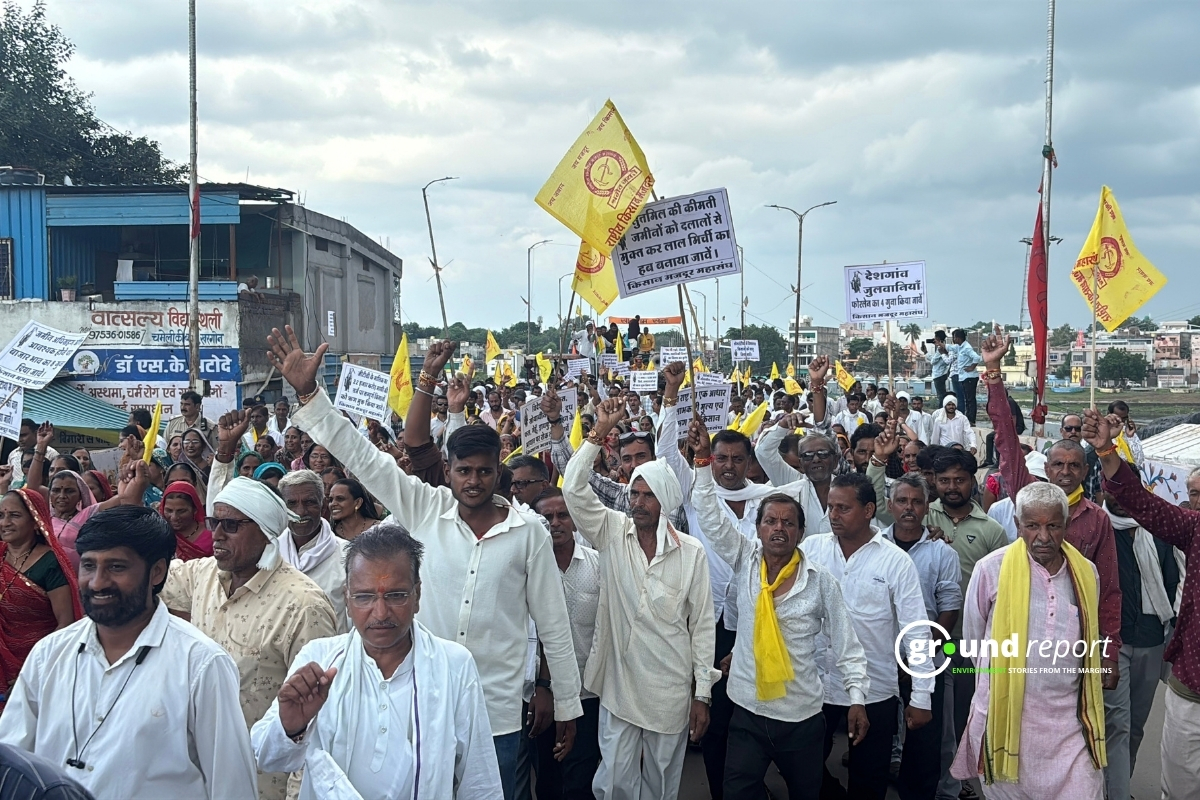
Farmers said they had repeatedly informed the administration about the water crisis, but no concrete steps had been taken to resolve it. They were demanding that canal water from Piplai Tank be released into rivers and streams to meet drinking water and livestock needs.
On Friday, they blockaded the Khandwa-Baroda highway. Around 250 farmers from four villages — Lakhi Bilali, Sultanpur, Mohammadpur, and others — took part in the protest.
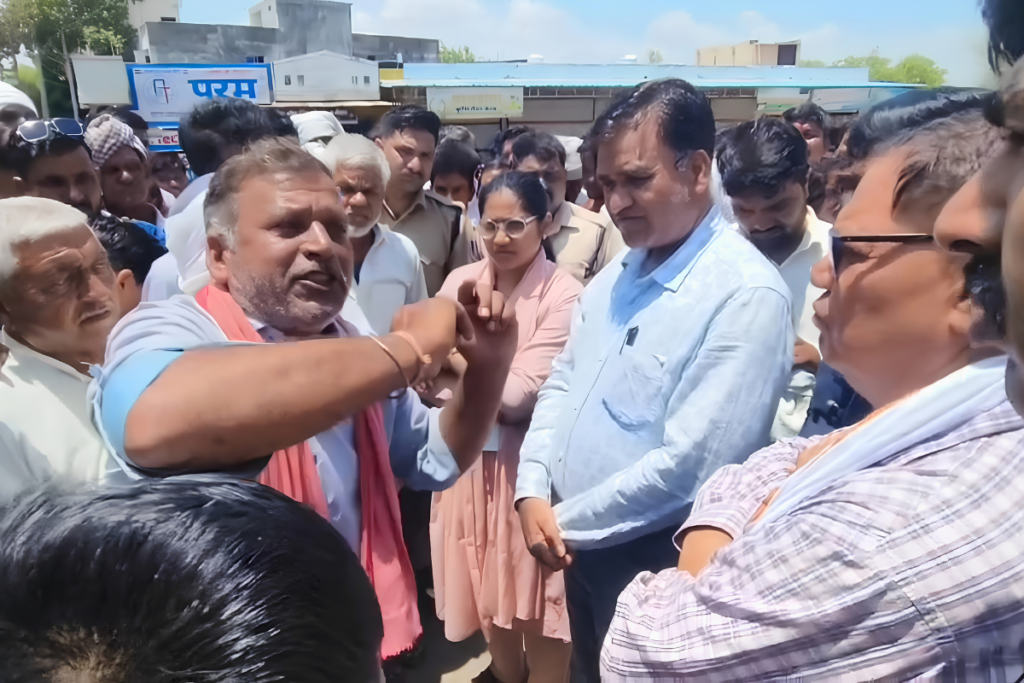
On receiving news of the blockade, Gogawan Deputy Tehsildar Hemlata Chauhan, Narmada Valley Development Authority (NVDA) Executive Engineer S.S. Solanki, and Gogawan police station in-charge Deepak Yadav reached the spot.
During talks, NVDA officials assured farmers that water would be released from Piplai Tank every six days. However, chili farmers said there would be no real relief until the rains arrived.
Forced to Replant
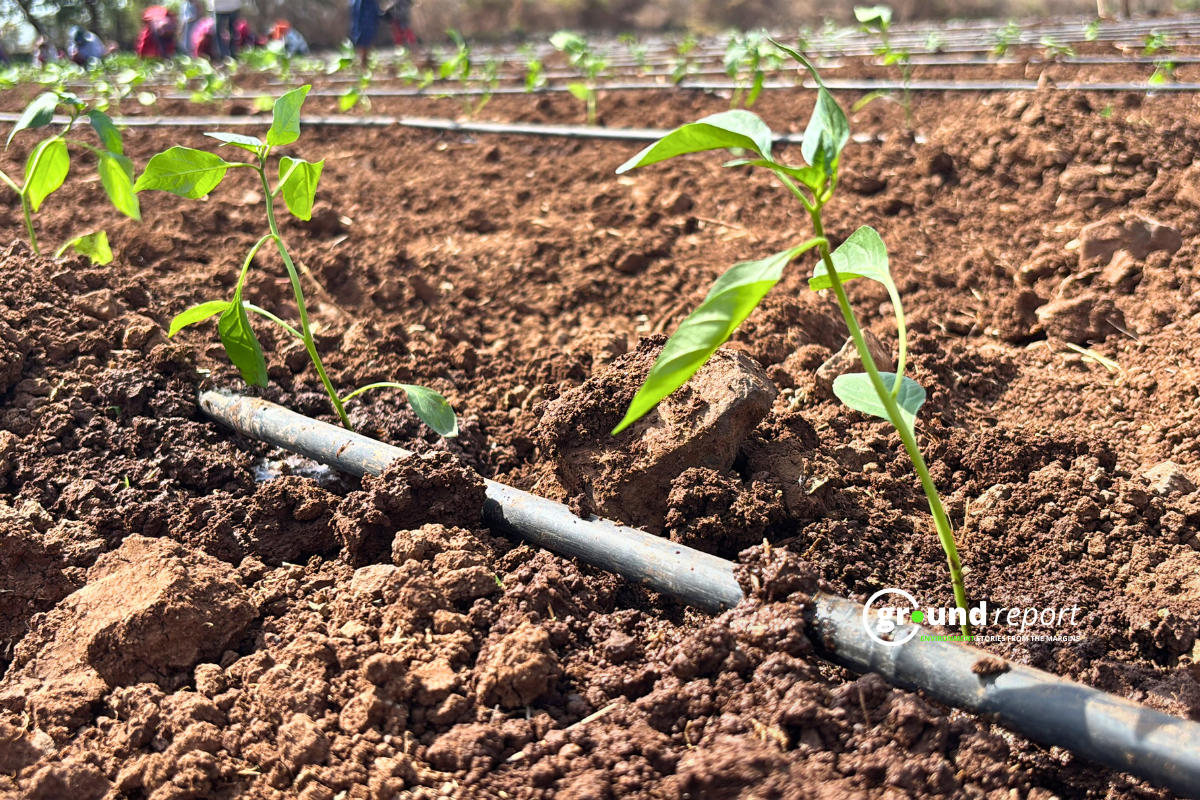
Arvind Patidar of Gavsan village said he had planted 24,000 chili seedlings across three acres twenty days earlier. He had been irrigating them through a drip system from a well. But without rain and with rising temperatures, the plants were wilting. Around 8,000 plants on his farm had dried up, forcing him to uproot and replant them.
He had already spent ₹70,000–80,000 on his main crop. The cost of buying new seedlings and replanting had pushed expenses higher. He warned that if the rains didn’t arrive soon, conditions could worsen further.
Last year, he planted chilli on five acres and earned ₹17 lakh in output against ₹7 lakh in costs — a combination of red and green chilli. Encouraged by that profit, he planted chilli again this season, but was now anxious about the outcome.
Plant Growth Had Stalled
Kamlesh Patidar of Ubadi village said rain typically arrived by the first week of June, and farmers timed their nursery transplanting accordingly. This year, however, two weeks had passed with no rain. Temperatures had risen, and plant growth had stalled. In some places, he said, plants had turned yellow.
He transplanted 20,000 seedlings across 2.5 acres on May 26. Last year, he earned a net profit of ₹8 lakh, which was why he had expanded his acreage this season.
But the rain situation was creating problems. If rain didn’t come soon, things could get worse. Last year, he planted 30,000 seedlings on four acres, produced ₹16 lakh worth of crop with ₹8 lakh in costs, and got prices ranging from ₹12 to ₹50 per kg for green chili and up to ₹170 per kg for red chili.
Nitin Patidar of Dongargaon, who had grown cotton the previous season, switched to chili this year after he saw a good market. He planted chili on four acres on May 22 and laid a pipeline from a nearby river for irrigation, but the river had dried up, and he could no longer water his crop.
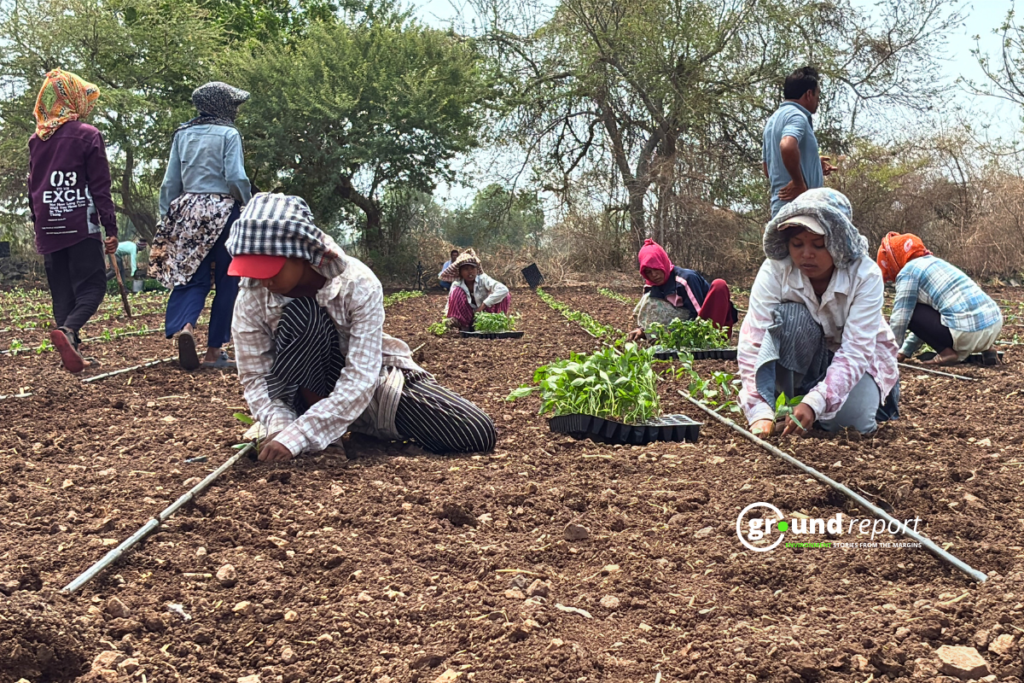
With no irrigation for the previous ten days, most of his plants had dried out, costing him thousands of rupees.
He said that if rain did not arrive soon, the entire crop could be lost. He noted that water from the Pipri irrigation scheme had previously been released into the river, maintaining water levels. But this year, insufficient water was released, and the river had run dry.
Ideal Conditions for Chilli
According to Dr. Sunil Kumar Tyagi, a horticulture scientist at Krishi Vigyan Kendra (KVK) Khargone, chili was primarily a tropical and subtropical crop that thrived in warm, humid conditions. The ideal temperature for seed germination and healthy plant development is between 15 and 35°C. Above 40°C, flower and fruit drop began, causing a sharp decline in yield.
He said the crop needed 60–120 cm of annual rainfall on average, but required dry weather during flowering and fruit set. Prolonged heavy rain or waterlogging could cause root rot and defoliation —the process where a plant or tree loses its leaves prematurely. Adequate sunlight was also essential for proper fruit development, good color, and pungency.
Devendra Patel of Barud added that chilli needed 5–6 hours of water per day in the first month. But tubewells in summer ran for no more than half an hour. As things stand, the district has received only 55 mm of rainfall between June 1 and June 19 this year, compared to 527 mm during the same period the previous year.
Horticulture Department Deputy Director K.K. Girwal, however, said he had received no reports of chili crops being damaged by lack of rain or high temperatures. When the reporter informed him, he said, “Since you’ve brought it to my notice, the concerned areas will be inspected. Chilli sowing in the district continues through the last week of July.”
Falling Output and Acreage
Farmer Bhagwan Birla of Barud was hopeful that even a week of rain would allow him to achieve adequate production. He cautioned, however, that the heat was increasing the risk of virus attacks on chili, which could reduce yields. Farmers in the region had previously spoken to Ground Report about losses from viruses, diseases, and pest attacks.
Girwal said that the previous year, chili had been sown across 38,000 hectares in the district; that year, the estimate was 40,000 hectares.
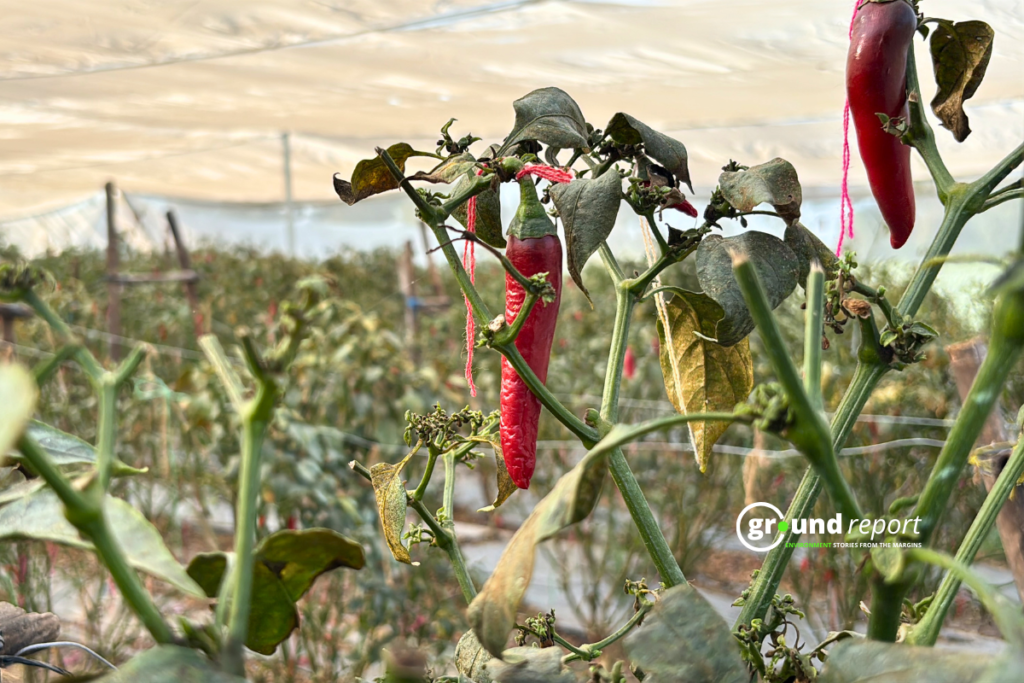
Madhya Pradesh was known for its ‘Nimadi chili,’ grown across Khargone, Barwani, and most of the Nimar region. Other local varieties, such as ‘Mahi’ and ‘Mahi S-15,’ were also prized for their medium-to-sharp heat and strong aroma.
In Khargone alone, farmers had cultivated chili on 45,000 hectares as recently as 2024. However, five-year data showed a declining trend: in 2020, production stood at 1,71,682 metric tonnes across 49,052 hectares; by 2024, both area and output had fallen, with production dropping to 1,57,500 metric tonnes.
The district had received a ‘Runner-Up Certificate’ for 2024–25 for its performance under the One District One Product scheme. Dried chilli was primarily processed into red chilli powder there.
But water remained the lifeblood of chili and all other crops. Farmers in Khargone were clear: depending on groundwater alone during a delayed monsoon was a gamble. Their demand was straightforward — sufficient water had to be released from canals into rivers and streams to compensate for the drought conditions created by the monsoon’s absence.
Support Us To Sustain Independent Environmental Journalism In India.
More Ground Reports
He Was Married as a Child, Now Manish Dangi Helps Stop It for Others
Despite The Ban, How Gutkha Became MP’s Most Common Household Habit