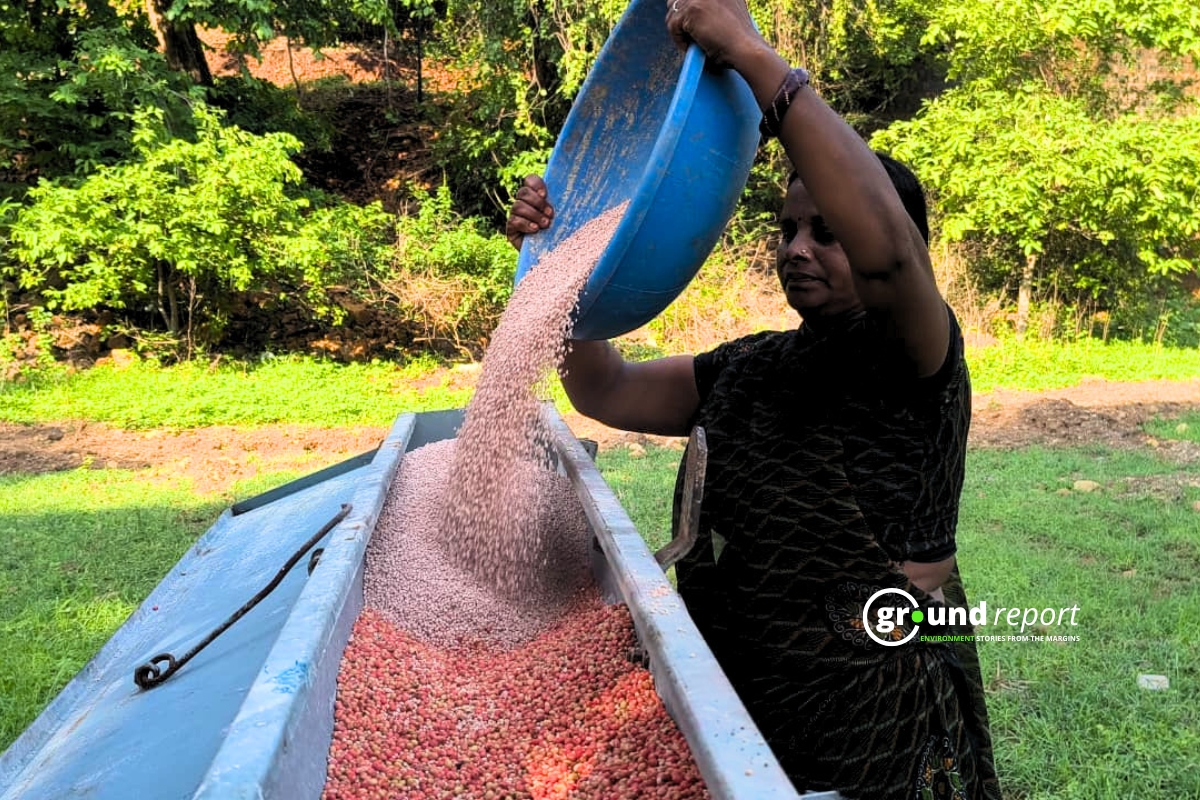
In Barkheda village in Madhya Pradesh’s Rajgarh district, farmer Jitendra Patel sprayed weedicide on his 25-bigha (10-acre) field.
He usually finishes sowing his kharif soybean crop around 15 June. But this year, the monsoon arrived late, delaying sowing until the last week of June. Now, his newly sown crop is at risk as the fields are drying out, with the monsoon still weak in early July.
“Sowing was very late this time. Around ₹6,000 per bigha (0.4 acre) had already been spent on the initial work, and by harvest, the total cost was expected to reach about ₹3,240 per bigha (0.4 acre), Jitendra said.
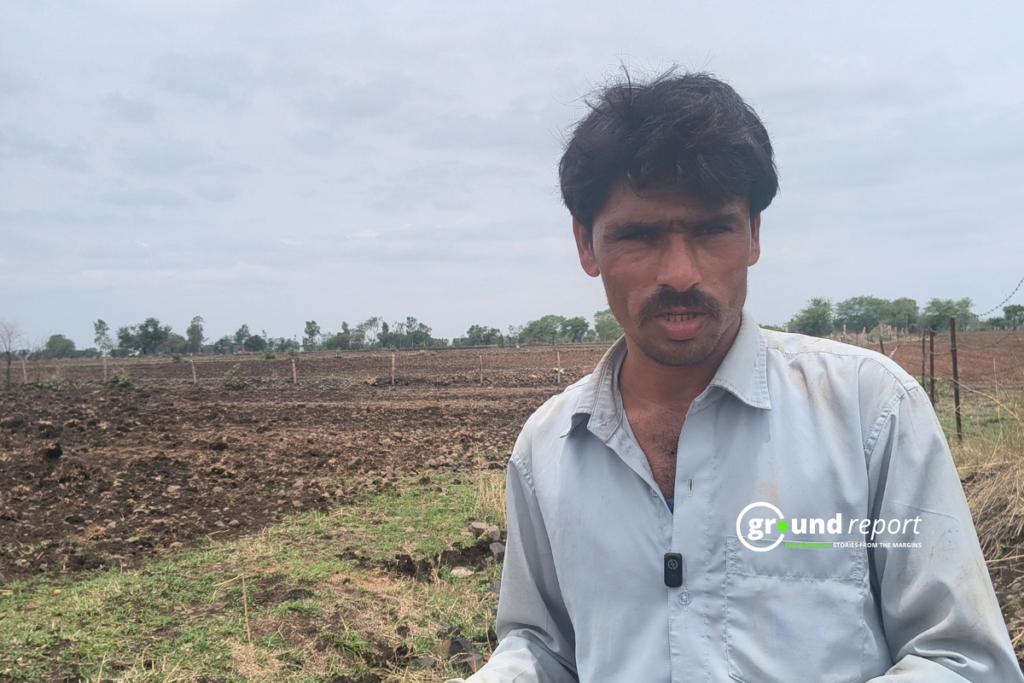
He sown new soybean seed for 17,000 rupees per quintal, but due to bad weather, the yield is expected to be only 3 to 4 quintals per bigha.
“Farmers don’t keep any direct profit from the soybean crop. Government fertiliser and seed keep getting more expensive. A farmer grows this crop [soybean] only so that his field doesn’t stay empty,” he said.
His biggest fear was that if it did not rain for the next 15 days, the entire crop would dry up.
No help from irrigation either
Madhya Pradesh is called the country’s “soya state“. The state accounts for more than 41 percent of India’s total soybean production.
Every year, soybeans are sown across roughly 51 to 54 lakh hectares in the Malwa and Nimar regions, producing more than 53 lakh metric tonnes.
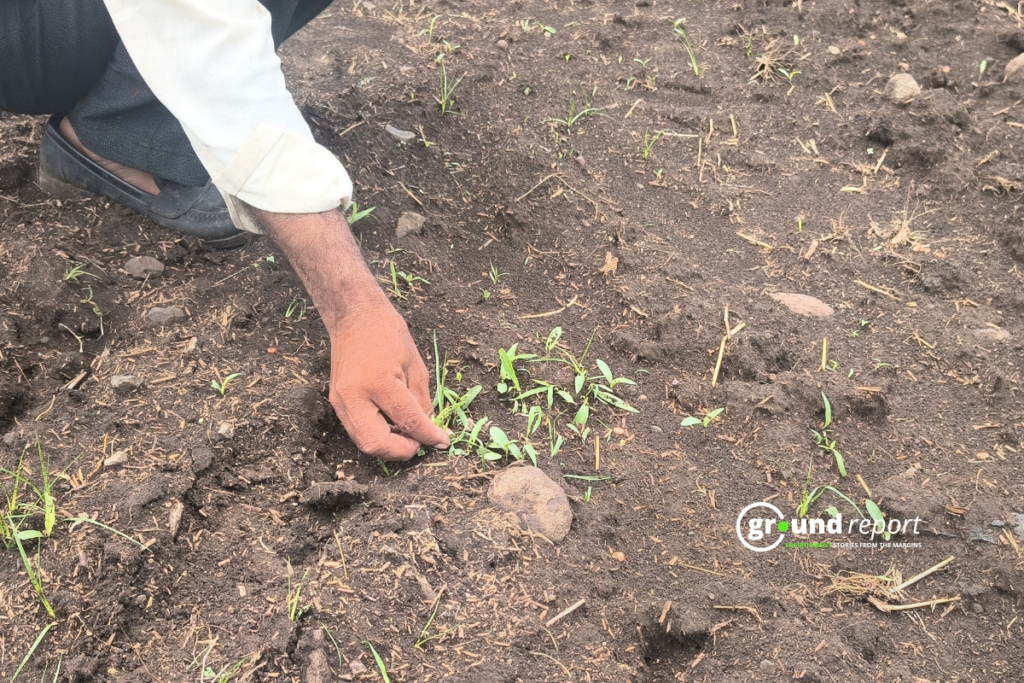
Jitendra’s crop was threatened by poor rainfall and failing irrigation. Two years ago, he had installed a 700-foot-deep tubewell on his field. Because the water table had dropped, it now gave barely an hour of water in 24 hours before shutting off.
“Soybean needs only rainwater. If tubewell water is given, the crop turns yellow and dries up,” Jitendra said, explaining the limits of modern techniques. According to him, scientific methods like broad-bed-furrow also only helped drain water during heavy rain; they became useless during a long dry spell.
“Farmers here only know soybean farming. The agriculture department and village workers don’t come to the fields to give information about other crops and their seeds,” he said.
Earlier, longer-duration crops like sorghum and cotton used to grow here, but now wild animals destroy them.
A slow start, then a pickup in pace
The country recorded 42 percent below-average rainfall in June, the main reason behind this crisis.
According to a joint assessment by the India Meteorological Department (IMD) and the Union Ministry of Agriculture, the early lack of monsoon rain and the effect of El Niño this year had placed 16 major agricultural districts of Madhya Pradesh in the high-risk drought zone.
The monsoon was about two weeks late, and 48 districts recorded far below normal rainfall as drought-like conditions set in at the start of the season.
Since early July, an active monsoon system that formed over the Bay of Bengal had brought relief, and heavy rain. This has driven back the immediate threat of widespread drought.
Even so, the 16 identified districts — including Dhar, Jhabua, Barwani, Neemuch, Ratlam, Tikamgarh, Chhatarpur, Panna and Shivpuri — remained the most vulnerable to a long dry spell, and the government had put a special contingency protection plan in place for them.
On a positive note, according to the latest IMD data, the monsoon was expected to pick up pace in Rajgarh in the first week of July, and the average rainfall quota was expected to be met in July.
The picture from a rapid survey by the Soybean Processors Association of India (SOPA) was also encouraging.
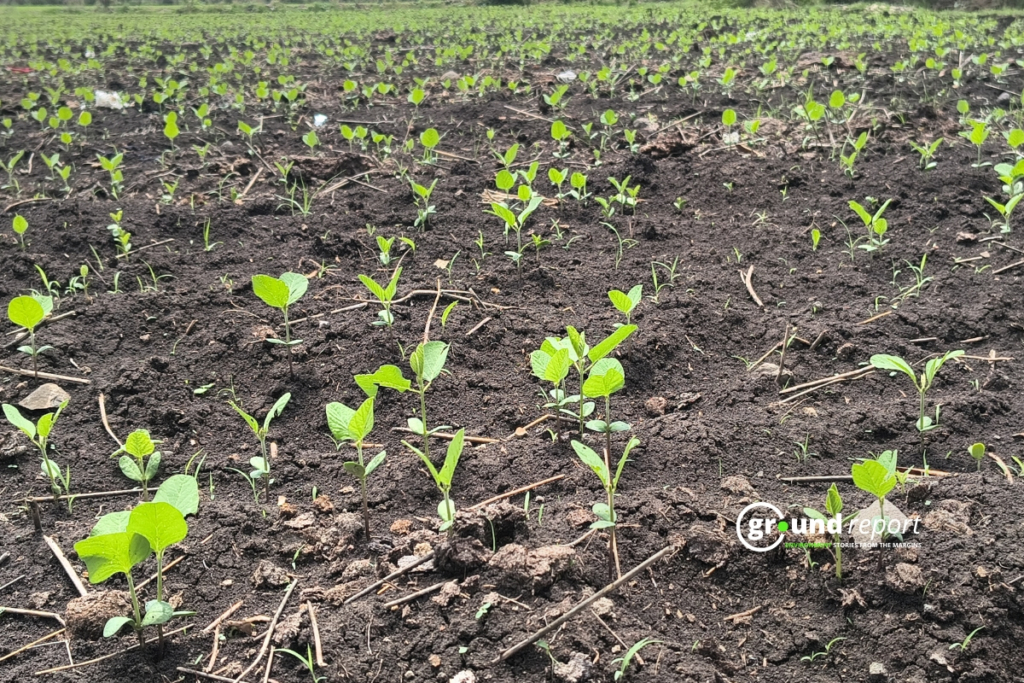
According to the report, once rain fell in the major producing areas after the early delay, sowing picked up speed fast — by the end of June, the soybean-sown area in the state had risen to 28.92 lakh hectares, well above the initial government estimates.
SOPA estimated that if the weather held, the sowing target would be met by 15 July.
Data released by the Rajgarh district agriculture department up to 6 July 2026 also pointed to the same shift.
The district have a target to sow soybeans on 4 lakh 57 thousand hectares this year. But, due to low rainfall, only 82.42 percent of that area, around 3 lakh 61 thousand hectares, has been sown so far.
Meanwhile, because of the government’s contingency plan, the area under low-water crops like sorghum had risen to 1,000 hectares compared to last year. While pulses like black gram and green gram are still lagging behind their normal targets.
What would happen to the late-sown crop?
The scientific data showed that a delayed monsoon and a long dry spell stopped the growth of soybean plants, which could directly cause a 30 to 40 percent drop in yield.
This also affected the country’s economy, since India met a large share of its needs through edible oil imports — falling domestic production will raise the import bill, that would put pressure on foreign exchange reserves, and a fall in soya meal exports raised the risk of a slowdown in the rural economy.
“When the monsoon is delayed, farmers need to keep a second option ready alongside the main crop,” Dr. Surinder Kumar Kaushik, a senior scientist at the Krishi Vigyan Kendra, said. “Sowing time, crop varieties, and farming techniques need to change according to the weather.”
He explained that as the monsoon gets delayed, there will be less time for kharif crops. So, farmers should choose the right soybean variety while keeping the rabi crop schedule in mind. Long-duration varieties that take more than 100 days are risky; medium-duration varieties are ready in 90 to 95 days; and the most suitable ones for this season are short-duration varieties which can be harvested before 90 days.
Solutions, and Live Demonstrations
For farmers who had already sown their crops and feared drought, Dr. Kaushik had simple advice: “These days, farmers don’t hoe their fields after applying weedicide. But if they want to protect their crops from the effects of El Niño, they should.”
Hoeing breaks the soil’s surface, reducing evaporation and helping it retain moisture. It also improves air flow in the soil, promotes plant growth, and buries weeds, which eventually decompose into compost. Farmers can also spread straw or cut grass over their fields to help conserve moisture.
To help pull soybeans out of this drought crisis, scientists at Rajgarh’s Krishi Vigyan Kendra (Kothibagh Farm) were themselves demonstrating modern techniques on a war footing.
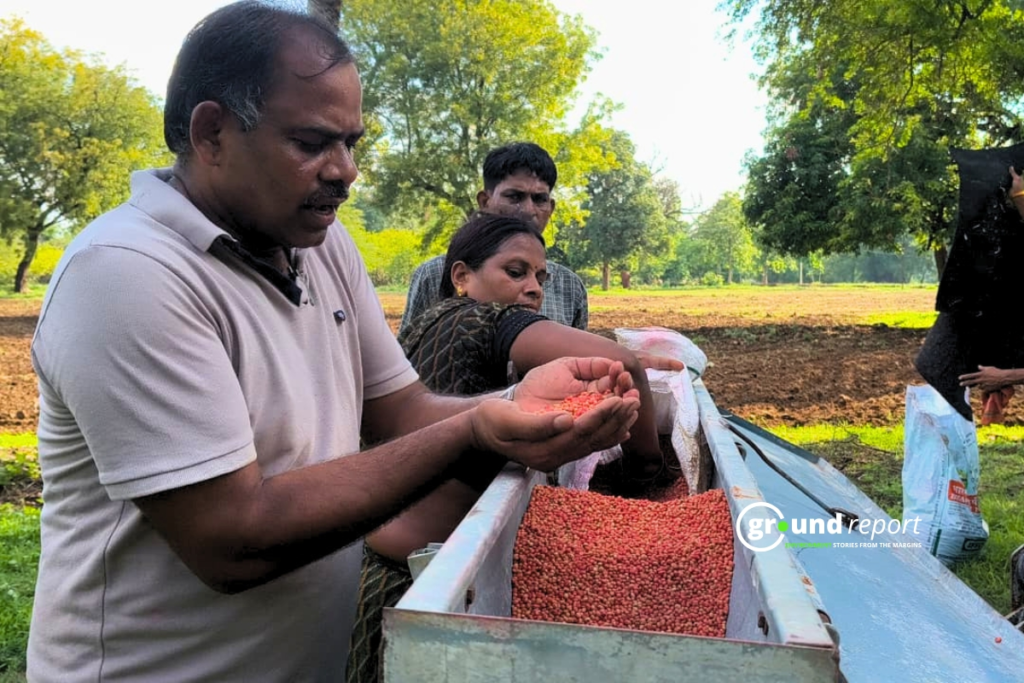
Under the guidance of agricultural scientist Dr. Lal Singh, sowing was being done here using the advanced broad-bed-furrow and raised-bed methods — techniques considered effective both at holding soil moisture during low rainfall and draining excess water during heavy rain.
During sowing at the farm, Dr. Lal Singh advised farmers to follow the “FIR formula” for seed treatment.
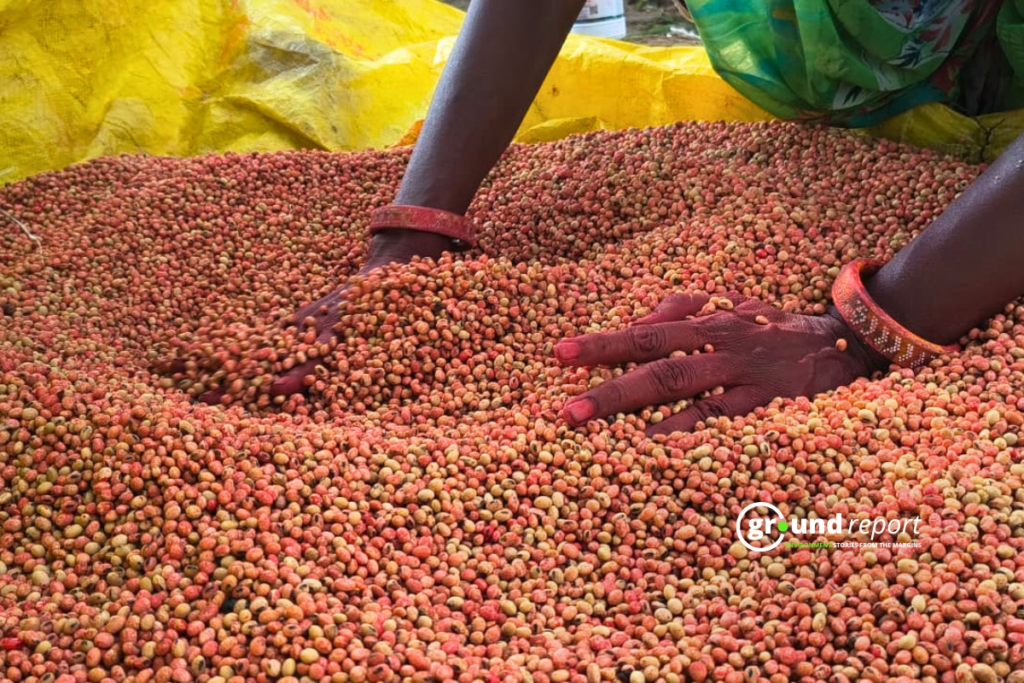
“Seed treatment before sowing soybean is essential. First, apply a fungicide — such as carbendazim or thiram — which protects the seed from fungus.
Then use the insecticide thiamethoxam, which protects against pests like stem fly and whitefly in the early days. And finally, apply Rhizobium culture bacterial fertiliser, which forms nodules on the roots and increases the plant’s ability to absorb nitrogen from the air.
Farmers should always treat seeds in this same order.”
Push for millets and Insurance deadlines
As low rainfall raised fears of drought, Chief Minister Dr. Mohan Yadav chaired a high-level meeting and ordered a statewide awareness campaign. Agriculture officials were asked to visit villages and encourage farmers to grow short-duration crops that require less water.
The state particularly promoted millets and pulses such as sorghum, pearl millet, black gram, green gram, pigeon pea, and kodo-kutki. These crops need less water, are more resilient in dry conditions, and can help farmers reduce losses during poor monsoons.
As uncertainty over the monsoon continued, the Rajgarh district administration took another step to protect farmers. The Department of Farmer Welfare and Agriculture Development announced that farmers could apply for kharif crop insurance under the Pradhan Mantri Fasal Bima Yojana until 31 July.
The department urged farmers to enrol to protect themselves against losses caused by drought, heavy rain, or pests. Farmers can apply through the online portal or their nearest bank using their Aadhaar card, land records, bank passbook, and a sowing certificate. They need to pay a premium of just 2% of the insured amount for kharif crops.
With the monsoon delayed and drought fears growing, farmers were left with two ways to reduce risk: adopt drought-resilient farming practices and insure their crops before the deadline. For farmers like Jitendra Patel, however, the biggest hope still lay in the arrival of the next spell of rain.
Support Us To Sustain Independent Environmental Journalism In India.
More Ground Reports
He Was Married as a Child, Now Manish Dangi Helps Stop It for Others
Despite The Ban, How Gutkha Became MP’s Most Common Household Habit