हिंदी में पढ़ें: In 2021, twelve farmers in Khargone’s Gogawan pooled Rs 1.20 crore and registered a seed trading company. Four years on, their Farmer Producer Organisation (FPO) has over 1,000 members, a working warehouse, cotton seed processing contracts, and an annual turnover of Rs 5.5 crore. This puts them among the roughly 30 percent of India’s FPOs that are actually functioning.
Mohan Singh Sisodiya is a board member of the Gogawan FPO. He says 750 farmers are formally registered with it. But the unregistered farmers who work alongside them take the total membership to exceed 1,000.
For most small farmers in Khargone, two problems have always defined the limits of what farming can earn: no reliable market, and no power over price. Farmers associated with the FPO, he says, no longer need to hunt for markets or worry about prices. Members say joining has increased their risk appetite, which allows them to experiment with new crops and techniques.
In 2020, the central government launched a scheme for the “Formation and Promotion of 10,000 Farmer-Producer Organisations (FPOs).” With an outlay of Rs 6,865 crore, the target was to establish and develop 10,000 new FPOs by 2027–28. The target was met ahead of schedule, in February 2025.
It is worth examining what benefits these FPOs have delivered to farmers, how they function, and what challenges they face.
The Journey That Started with 12 People
A Farmer Producer Organisation is a business collective of farmer-producers that engages in production and marketing activities — in agriculture and allied sectors — much like a company. FPOs are registered either under Part IXA of the Companies Act, 1956, or under the relevant state Co-operative Societies Act. In simple terms, it is a company owned by farmers. It encompasses both Farmer-Producer Companies (FPCs) and cooperative societies.
Vijendra Dinkar Patil, District Development Manager of National Bank for Agriculture and Rural Development (NABARD) in Khargone, explains that registering an FPO requires at least five board directors and an equal number of promoters. After registration, farmers are brought in as shareholders, typically at Rs 2,000 per farmer as a share contribution. The government matches this with an equity grant of Rs 2,000 per farmer, subject to a ceiling of Rs 15 lakh.
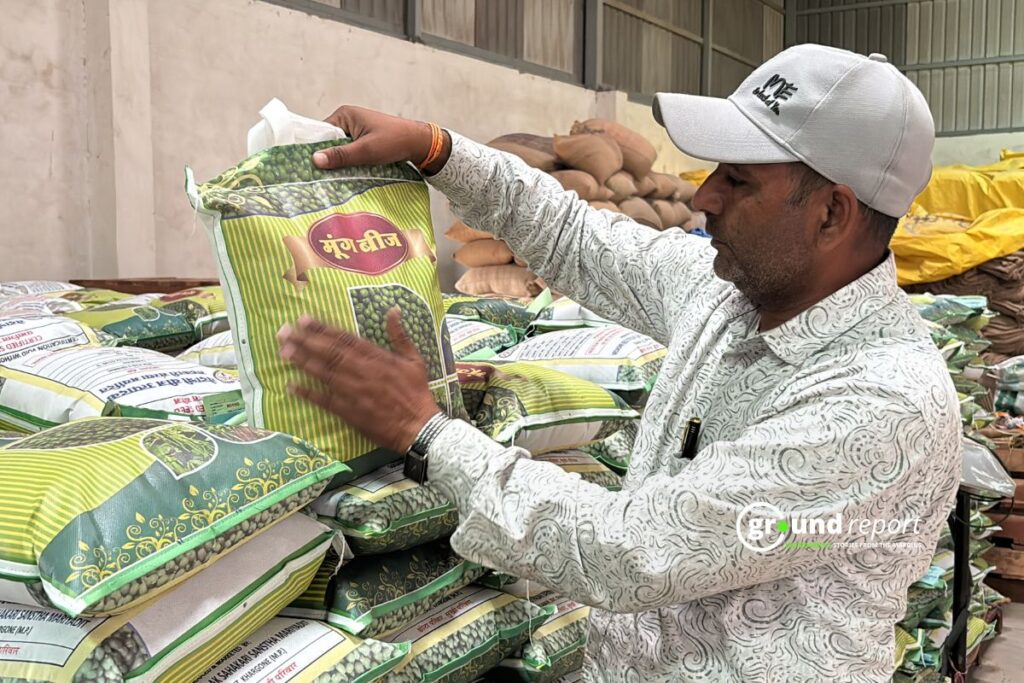
In 2021, acting on NABARD’s advice, Sisodiya decided to form an FPO. Twelve founding members invested Rs 1.20 crore to establish the Gogawan FPO. Sisodiya, who had been producing seeds since 2014, proposed to the board that the FPO should pursue seed trading.
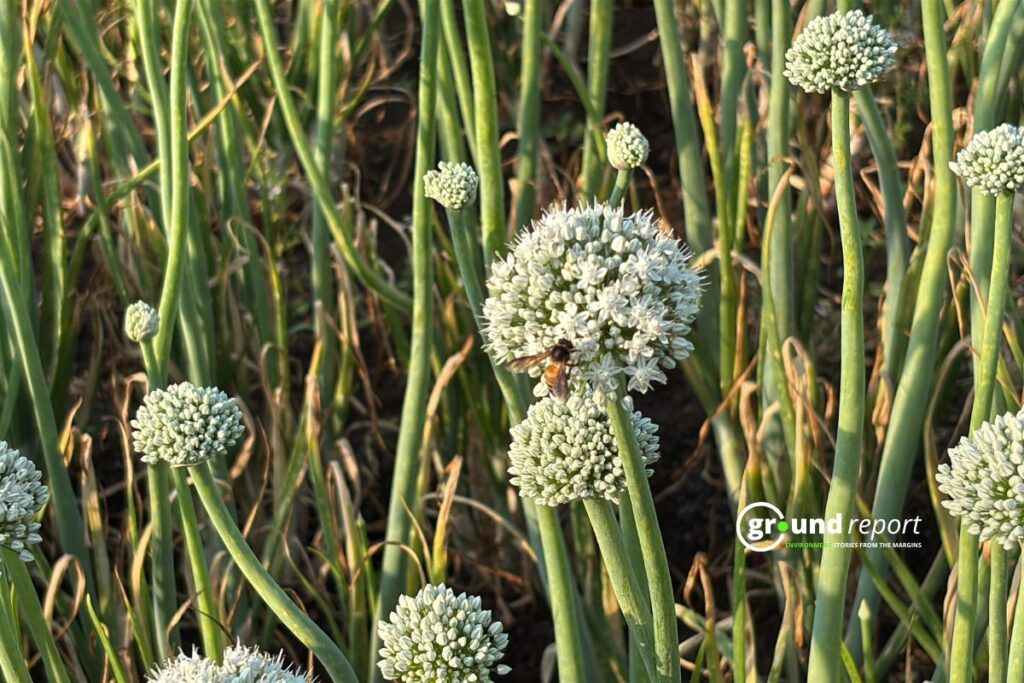
Members now grow a total of 15 varieties of seeds, including wheat, onion, chilli, okra, moong, and cotton. The Gogawan FPO tests all new seed varieties on his fields.
What’s in it for Farmers?
Pratap Verma of Bijaypur farms 25 acres, growing wheat and corn in the rabi season (India’s winter cropping season). Describing the benefit of joining the FPO, Verma says, “Earlier, I had to stand in line at the mandi. Now I sell directly to the FPO once the crop is ready,” he says. Prices are better, too. “At the mandi, rates are set by auction; sometimes you sold cheaply because bringing the crop back was more expensive. With the FPO, the price is fixed in advance.”
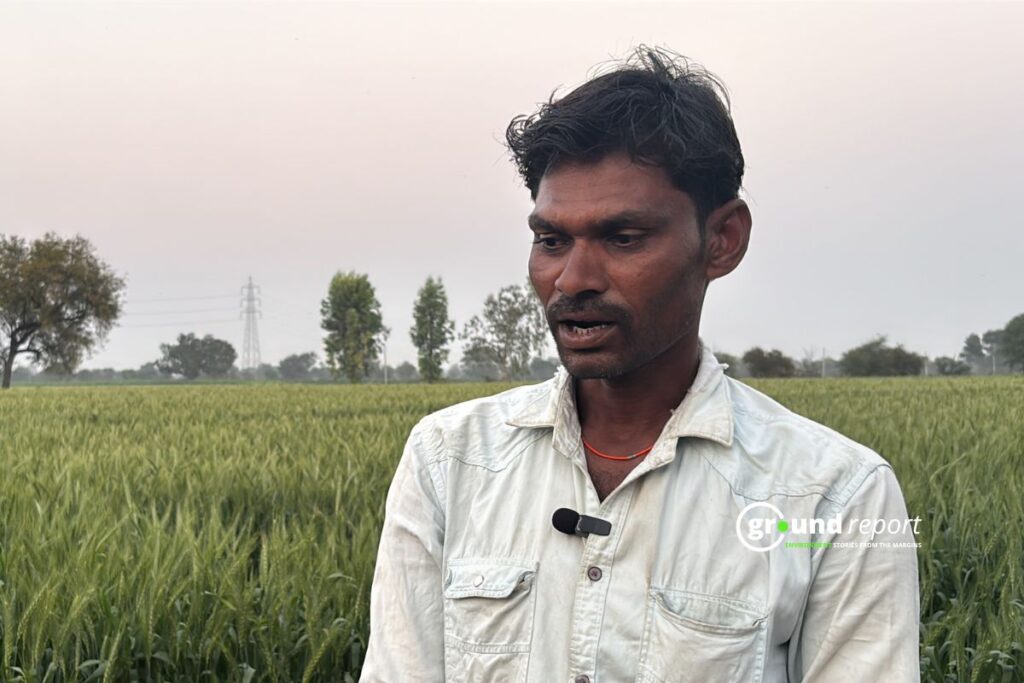
Sisodiya explains that the FPO procures in three ways: at Rs 50 per quintal above market rate, at Minimum Support Price (MSP) from the day government procurement opens, or at the warehouse’s model rate on the day the farmer chooses to sell. A bonus is paid to all members after the season’s purchases are complete.
The FPO’s first major investment was its own warehouse. That solved the members’ storage problem and let them sell on their own terms. By operating at scale, the FPO has also attracted large seed companies as business partners, something an individual farmer could rarely manage. Verma, who once knew only the local mandi, now understands how to export his produce to larger markets.
A Greater Appetite for Risk
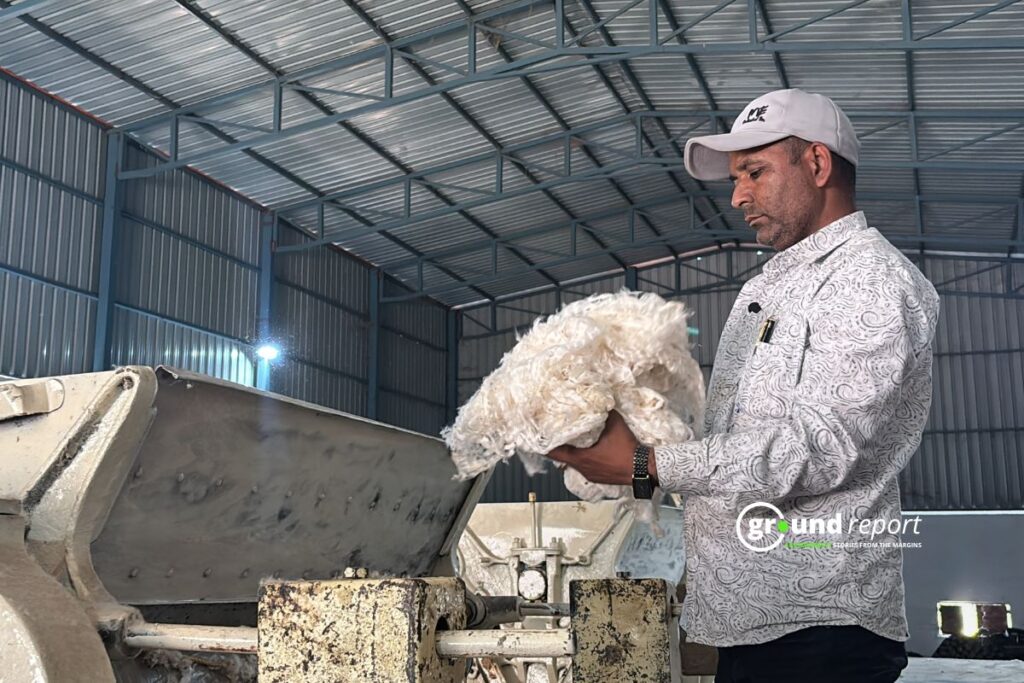
Gogawan FPO was the first to produce cottonseed in the Nimar region. When the work began in 2024, the members lacked knowledge of the right machinery and had to re-purchase equipment at a loss. “Because the purchase was made through the FPO, we could absorb it,” Sisodiya says. This year, Beej Mahasangh (Seed Federation) has contracted the FPO for cottonseed processing.
The capacity to invest and absorb early losses has enabled FPO farmers to take risks on new experiments. In one such venture, they planted one lakh papaya saplings. Within a year, the FPO traded 100 tonnes of papaya at Rs 7–11 per kg. Last year, members earned Rs 4–5 lakh profit per acre.
Director Shyam Singh Solanki notes that costly modern machinery, beyond what an individual small farmer can afford, like a tractor, can be bought collectively and shared.
How Many FPOs Are Actually Succeeding?
As of 31 December 2025, all 10,000 FPOs under the central scheme are registered. Equity grants of Rs 430.77 crore have gone to 6,557 FPOs; credit guarantee cover of Rs 662.71 crore has been issued to 2,671.
The report, “A National Level Study on Assessment of Competitiveness and Sustainability of Farmer-Producer Companies (FPCs) in India,” was conducted by the Vaikunth Mehta National Institute of Cooperative Management (VAMNICOM) for the Ministry of Corporate Affairs and published in March 2022.
Using a multi-method approach, including field surveys, financial analysis, and case studies of FPCs across India, the study assessed business performance, governance, institutional support, and long-term sustainability.
According to a 2022 national study by VAMNICOM, about 84% of India’s FPOs are registered as Farmer-Producer Companies (FPCs). The study estimated that only around 30% were operating sustainably, while 20% were struggling. Half of all FPCs were less than three years old. Low capitalisation, inadequate infrastructure, weak governance, limited market access, and shortages of skilled management were identified as major constraints to long-term viability.
Gogawan FPO, however, has adequate paid-up capital with its 1,000-plus members. FPO has expanded its market reach through diverse experiments seek active collaboration with other FPOs.
NABARD’s Role and the Way Forward
NABARD provides grants to cover FPO operating costs and periodically connects them with new markets, Patil says. He advises that any FPO should ensure its board and directors include people with diverse skills, rather than loading everything onto one or two individuals. One member for banking, one for farmer liaison, one for technology; responsibilities should be distributed as per each person’s strengths.
Members need to think about collective advancement rather than individual gain, particularly in the early years.
The venture that started with an investment of Rs 1.20 crore has now reached a turnover of approximately Rs 5–5.5 crore. Sisodiya says the FPO now has large-market experience and the skill to take calculated risks, and its members are actively looking for the next opportunity.
Support Us To Sustain Independent Environmental Journalism In India.
More Ground Reports
He Was Married as a Child, Now Manish Dangi Helps Stop It for Others
Despite The Ban, How Gutkha Became MP’s Most Common Household Habit