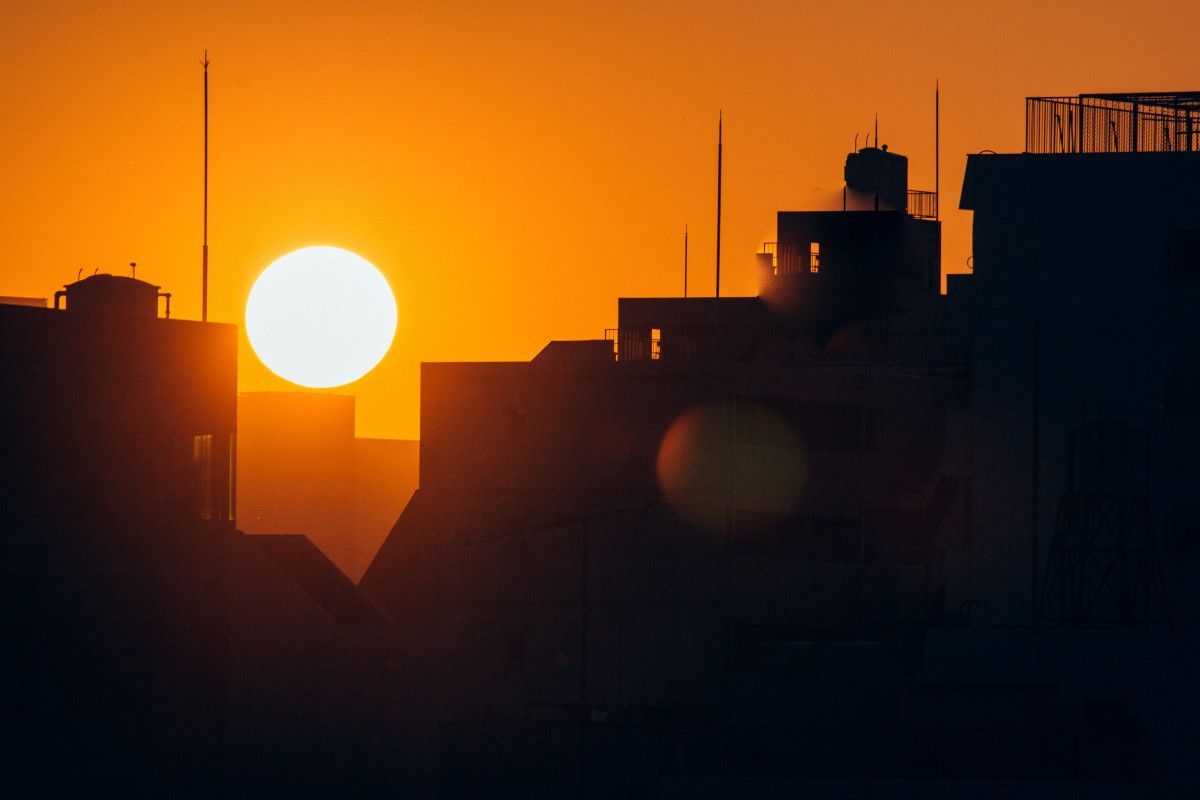
The consequences of climate change can be seen today in Europe, where heat waves are getting longer and more intense. But it’s not just happening there. Every decade since 1980 is hotter than the last. And the planet’s seven warmest years on record have occurred since 2015.
According to the World Meteorological Organization, last month was one of the three warmest Julys on record, with temperatures about 0.4 degrees Celsius above average for years. 1991-2020.
The most immediate risks are heat stroke and heat exhaustion, which can be fatal in some cases, especially among older adults and people who exercise or work in high temperatures.
As the temperature rises, sweating increases to cool the body by evaporation. Also, blood vessels near the skin dilate, allowing blood to flow out of the center of the body to the extremities. Without rehydration, this can put extra pressure on the heart and cause blood pressure to drop dangerously low, leading to organ failure in extreme cases.
Also, when the ambient temperature exceeds 37.5 °C of the body, sweating becomes less effective. “Sweat evaporates from the heat of the air, not from the body. So sweating is not as efficient at cooling you down,” said Dr. Simon Cork, senior lecturer in physiology at Anglia Ruskin University.
Heat stroke occurs when the body can no longer maintain its temperature and can lead to brain and organ damage without prompt emergency treatment.
But the actual death toll from a heat wave tends to be much higher than is reported. Because heat stresses the body’s cells and organs, it tends to exacerbate existing conditions and vulnerabilities. Particularly among the sick, the elderly and the very young, the stress of dealing with high temperatures can take its toll several days or even weeks later.
Rising temperatures are fueling environmental degradation, natural disasters, weather extremes, food and water insecurity, economic disruption, conflict and terrorism. Sea levels are rising, the Arctic is melting, coral reefs are dying, oceans are acidifying, and forests are burning. It is clear that business as usual is not good enough. As the infinite cost of climate change reaches irreversible levels, now is the time for bold collective action.
The last four years were the four hottest on record. According to a September 2019 World Meteorological Organization (WMO) report, we are at least one degree Celsius above pre-industrial levels and close to what scientists warn would be “an unacceptable risk.”
The 2015 Paris Agreement on climate change calls for keeping ultimate warming “well below” 2 degrees Celsius, and for efforts to limit the increase even further, to 1.5 degrees. But if we don’t reduce global emissions, temperatures could exceed three degrees Celsius by the year 2100, causing more irreversible damage to our ecosystems.
Glaciers and ice sheets in polar and mountainous regions are already melting faster than ever, causing sea levels to rise. Almost two-thirds of the world’s cities with a population of more than five million are located in areas at risk of sea level rise and almost 40 per cent of the world’s population lives within 100 km of the coast. If no action is taken, entire districts of New York, Shanghai, Abu Dhabi, Osaka, Rio de Janeiro and many other cities could find themselves underwater in our lifetimes, displacing millions of people.
Global warming affects everyone’s food and water security. Climate change is a direct cause of soil degradation, which limits the amount of carbon the land can hold. Some 500 million people today live in areas affected by erosion, and up to 30 per cent of food is lost or wasted as a result. Meanwhile, climate change limits the availability and quality of water for drinking and agriculture.
In many regions, crops that have thrived for centuries are struggling to survive, making food security more precarious. Such impacts tend to fall primarily on the poor and vulnerable. Global warming is likely to cause economic output among the world’s richest and poorest countries to grow more.
Climate change is a major threat to international peace and security. The effects of climate change intensify competition for resources such as land, food and water, fueling socio-economic tensions and, increasingly, causing massive displacement.
Climate is a risk multiplier that worsens existing challenges. Droughts in Africa and Latin America directly fuel political unrest and violence. The World Bank estimates that, in the absence of action, more than 140 million people in sub-Saharan Africa, Latin America and South Asia will be forced to migrate within their regions by 2050.
Keep Reading
Part 1: Cloudburst in Ganderbal’s Padabal village & unfulfilled promises
India braces for intense 2024 monsoon amid recent deadly weather trends
Support us to keep independent environmental journalism alive in India.
Follow Ground Report on X, Instagram and Facebook for environmental and underreported stories from the margins. Give us feedback on our email id greport2018@gmail.com.
Don’t forget to Subscribe to our weekly newsletter, Join our community on WhatsApp, and Follow our YouTube Channel for video stories.
Support Ground Report to keep independent environmental journalism alive in India
We believe climate change should be the basis of current discourse, and our stories attempt to reflect the same.
Connect With Us
Send your feedback at greport2018@gmail.com
Newsletter
Subscribe our weekly free newsletter on Substack to get tailored content directly to your inbox.
When you pay, you ensure that we are able to produce on-ground underreported environmental stories and keep them free-to-read for those who can’t pay. In exchange, you get exclusive benefits.
Your support amplifies voices too often overlooked, thank you for being part of the movement.