Jammu and Kashmir’s high mountains are warming faster than its plains, and its nights are heating up faster than its days, according to a new 45-year analysis of temperature records across the region.
This comes as Srinagar hit 35.2°C on July 1, 5.6°C above normal, and schools across Kashmir shut for two weeks.
But the nighttime warming didn’t follow the same pattern as scientists expected.
The study, “Warming of the high-mountainous, climate-sensitive Jammu and Kashmir during the period 1980–2024,” published in Scientific Reports, a Nature journal, analysed data from ten India Meteorological Department stations across Jammu and Kashmir between 1980 and 2024.
Daytime temperatures rise faster the higher up you go, the study found, a pattern consistent with typical mountain warming elsewhere in the world.
At night, that pattern disappears entirely. Some mid-elevation towns are now warming faster after dark than Kashmir’s highest, coldest peaks.
Bhaderwah, a mid-height town at 1,613 metres, saw its nights warm by 0.78°C per decade, faster than any other station, including Pahalgam, whose nights warmed just 0.58°C per decade despite Pahalgam sitting a kilometre higher.
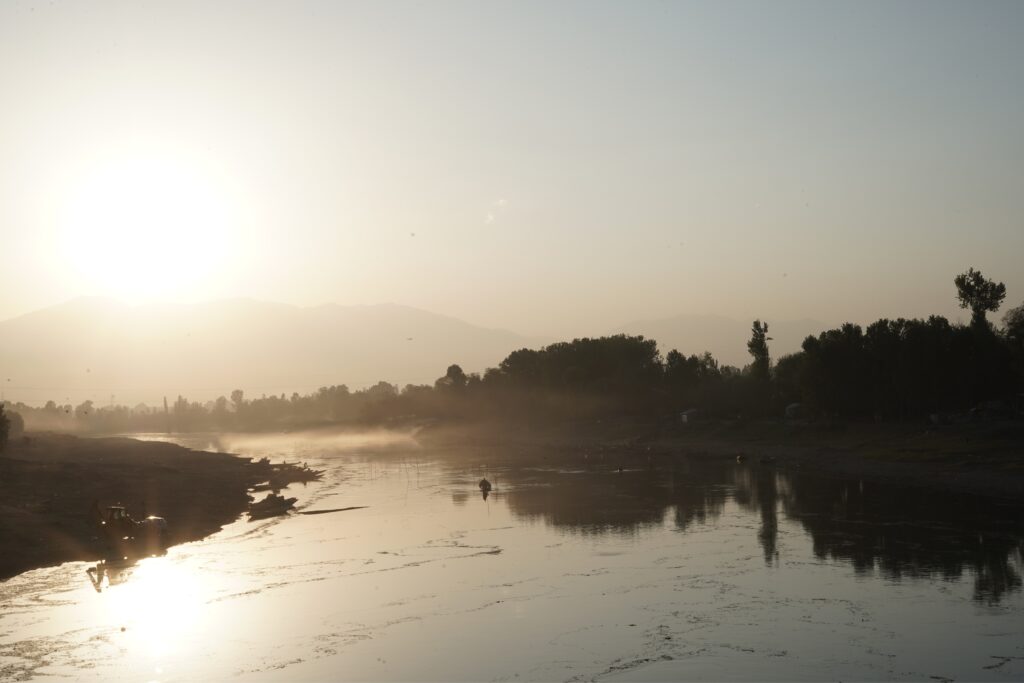
Another insight: two of Kashmir’s coldest tourist towns, Pahalgam and Gulmarg, have warmed by nearly 1°C over the last two decades. On the other hand, Jammu tells the opposite story; it sits at low elevation, and it has barely warmed at all. In winter, it has even got a little cooler.
Dr Mukhtar Ahmad, director of Meteorological Centre Srinagar, told Ground Report, “Places such as Bhadarwah, Pahalgam, Katra and Banihal have recorded a noticeable increase in minimum temperatures over the past few years.”
The gap between the two shows how unevenly the warming is spread across the region.
“The Himalaya is among the most climate-sensitive regions on Earth, and our results show that warming is not uniform across elevations,” Jayanarayanan Kuttippurath, professor at CORAL, IIT Kharagpur, and study co-author, told Ground Report.
Why Does It Matter To The Region?
The study was led by G.S. Gopikrishnan, with Jayanarayanan Kuttippurath and V.M. Pranav Chandran, of the Centre for Ocean, River, Atmosphere and Land Sciences (CORAL) at IIT Kharagpur.
Scientists have documented that nights are warming faster than days worldwide for decades. For Kashmir, the question to be asked is: how do warmer nights affect a region that depends on snow and glaciers for its water supply?
Warmer nights reduce natural cooling, accelerate snow and ice melt, and alter mountain hydrology, Gopikrishnan, the study’s lead author, told Ground Report.
In March this year, ICIMOD reported that glaciers across the Hindu Kush-Himalaya have lost about 12% of their area and 9% of their ice reserves between 1990 and 2020, with the pace of loss roughly doubling since 2000. This shift, the organisation said, threatens water security for nearly two billion people downstream.
Snow normally refreezes overnight and melts slowly through the day. When nights stay warm, that refreezing stops happening, so snow melts away faster year-round. This can disrupt farming, drinking water supply, and hydropower generation.
The consequences reach beyond glaciers and rivers, Kuttippurath said.
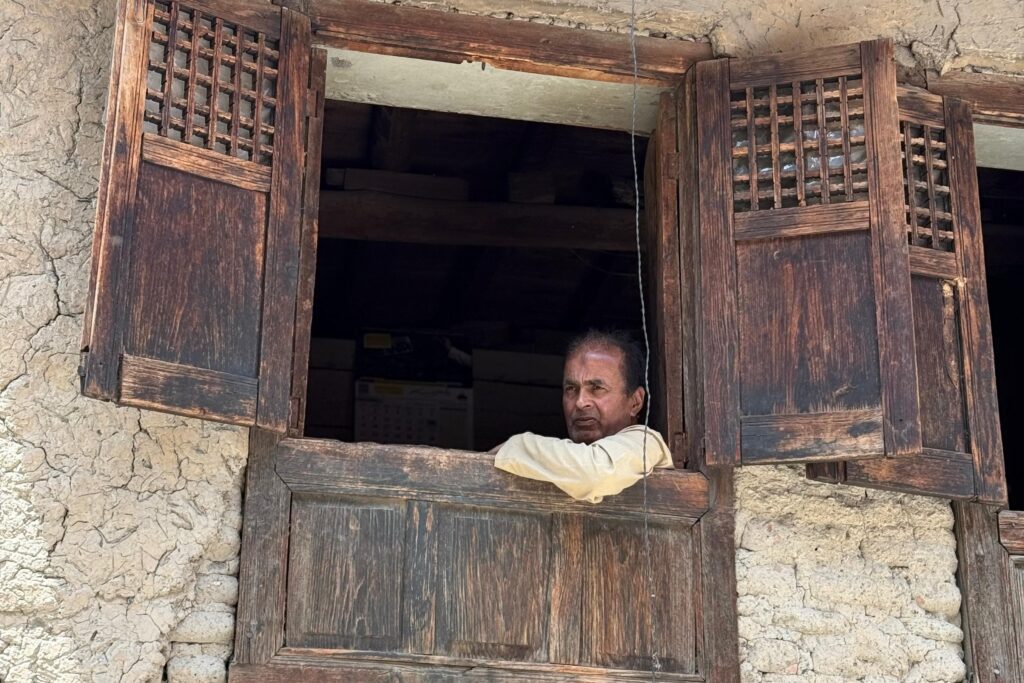
“Think about your saffron,” he told Ground Report, referring to Kashmir’s temperature-sensitive crop. “Even half a degree will reflect in the quality and quantity of your harvest. What about your apple? These mountainous regions are ecologically sensitive.”
Ahmad expects the shift to push cold-sensitive crops to higher ground.
“If this trend continues over the coming years, cultivation zones for crops that require colder conditions may have to move to higher altitudes,” he said. “This shift is already becoming visible in agriculture.”
“This is not limited to saffron alone,” he said. “We are observing similar changes in apples, cherries and other crops that depend on cooler climatic conditions. Rising temperatures are influencing agricultural patterns across the region.”
Why Jammu Is the Exception
Jammu’s nighttime temperatures moved in the opposite direction from every other station, cooling by 0.45°C per decade, the study found. Researchers tentatively linked this to the area’s expanding irrigated farmland, though they cautioned that the explanation hasn’t been directly tested.
Kuttippurath offered some theories.
He said that apart from irrigation and farmland, the area lacks the snow cover driving mountain warming elsewhere, and clouds and dust at low elevations can block the sun rather than trap heat.
“You cannot compare it with the high altitude,” he said. “The snow albedo, the measure of how much solar radiation a snowpack reflects, is not that much, and you don’t have that much water vapour feedback.”
Beyond the Numbers
The new study looked at nighttime, warming station by station, across four seasons. The numbers vary widely from station to station.
Bhaderwah, at 1,613 metres, warms the fastest at night of any station in the study. Pahalgam, sitting over a kilometre higher, warms more slowly. Banihal, Kokernag, and Batote each warm at their own separate rates, with no order tied to how high they sit.
In short: a station’s height barely tells you how fast its nights are warming. Daytime warming is the opposite; there is a strong clue.
Dr Yasir Altaf, assistant professor in the Department of Environment, Sustainability and Climate Change at the Islamic University of Science and Technology (IUST), called the finding “interesting and plausible”.
“Nighttime warming is influenced by much more than elevation alone,” he said.
“Local atmospheric moisture, cloud cover, valley topography, land-use changes, vegetation, and boundary-layer processes can all reduce nighttime cooling by trapping outgoing longwave radiation.”
That lines up with the study’s own conclusion, he noted; minimum temperature does not show a statistically significant elevation-dependent warming signal and is instead shaped more by local radiative and atmospheric conditions.
Weather stations coverage above 3,000 metres is a limitation, the researchers acknowledged. Only one station reaches that height, and most of the network is clustered between 500 and 1,500 metres.
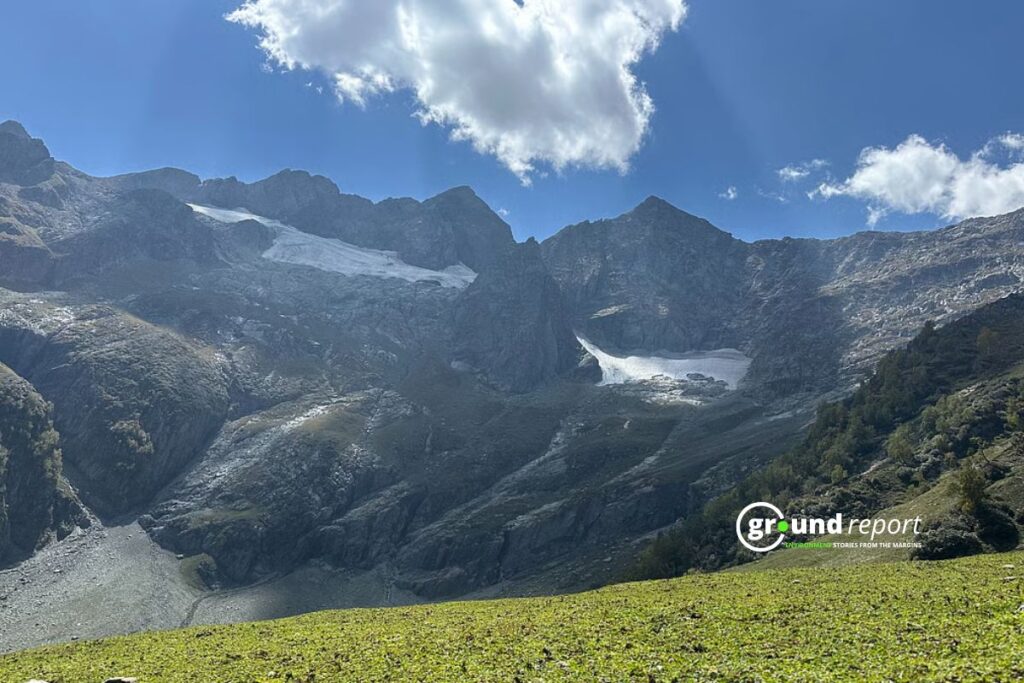
Researchers said their findings represent the elevation range they measured, not the full Himalayan range, and called for more high-altitude stations to sharpen future assessments.
What’s Driving This
The new study identifies four things as potential driving factors: how much sunlight the ground reflects, incoming sunlight, heat coming back up from the ground, and moisture in the air.
Less snow means darker ground, and dark ground soaks more heat than white snow, a process scientists call snow-albedo feedback.
Altaf pointed to the same mechanism for daytime warming.
“As snow cover declines at higher elevations, darker surfaces are exposed, absorbing more solar energy and accelerating warming,” he said, adding that the study’s clear elevation-linked signal for daytime maximum temperatures — especially in winter — matches what has been reported in other Himalayan and mountain studies elsewhere.
Daytime warming tracks closely with this effect, the study found. Nighttime warming tracks more closely with moisture and trapped heat instead.
That is why the two patterns coexist in the same mountains. One is tracking elevation, the other not, without contradicting each other.
Altaf framed the findings as part of a larger pattern. “Climate change in the Himalaya is not spatially uniform,” he said. “Elevation is an important control, but it is not the only one. Local landscape characteristics, atmospheric moisture, urbanisation, land-use change, and valley-scale meteorology can substantially modify warming patterns, particularly at night.”
He also urged caution, saying the study has some limitations. “The observational network is relatively sparse; high-altitude stations above 3,000 metres are scarce, and some of the attribution analysis remains exploratory,” he said.
Support Us To Sustain Independent Environmental Journalism In India.
More Ground Reports
He Was Married as a Child, Now Manish Dangi Helps Stop It for Others
Despite The Ban, How Gutkha Became MP’s Most Common Household Habit