
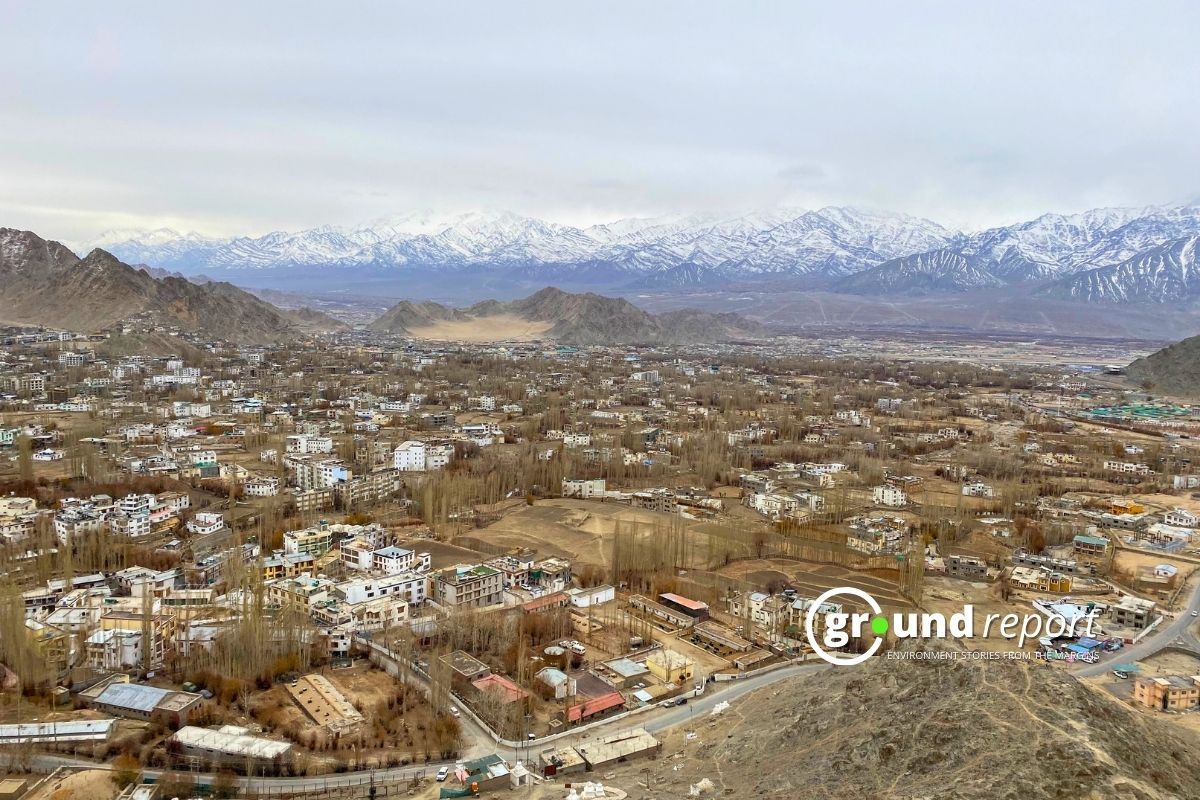
Ladakh is a desert. It should barely rain there. This monsoon, it has rained more than anywhere else in India.
The Union Territory received 65 percent more rainfall than normal between June 1 and July 15, 2026, according to the India Meteorological Department. No other state or Union Territory in the country falls into the IMD’s “large excess” category this season. Meanwhile, Meghalaya, one of the wettest places on Earth, is short by 55 percent. Kerala is short by 32 percent.
This is not a one-off. Ladakh has now recorded above-normal monsoon rain for five straight years, according to Down To Earth. Four of those five years crossed the IMD’s large-excess threshold.
Five Years, One Trend
The numbers, pulled from IMD records, tell a consistent story once a baseline shift is accounted for.
In 2021, Ladakh got 21.9 millimetres of rain, 42 percent below the old normal of 37.7 mm. In 2022, the IMD updated its long-period average, moving the reference period from 1961–2010 to 1971–2020. That cut Ladakh’s benchmark to 22.3 mm — and the region has beaten it every year since.
2022 brought a 69 percent excess. 2023 brought 103 percent. 2024 was the outlier, with a modest 17 percent excess that stayed out of the large-excess category. Then came 2025: 98.6 mm of monsoon rain, a 342 percent excess, and the region’s highest monthly rainfall since 1973 recorded that August.
Water Where It Shouldn’t Be
A cold desert is not built to handle water. Ladakh’s soil, drainage, and settlements evolved around scarcity, not surplus, and the mismatch has consequences.
Cloudbursts, flash floods, and landslides have hit the region repeatedly during the wet years, especially in 2023 and 2025. On July 22–23, 2023, a cloudburst tore through Leh town and damaged homes and shops. A 2023 study by the Manohar Parrikar Institute for Defence Studies and Analyses counted 15 cloudburst events in Ladakh between 2005 and 2023 and named climate change as a contributing factor.
Sonam Lotus, director of the Meteorological Department in Ladakh, has said the localised nature of these storms makes them almost impossible to see coming. “The Lamayuru flash floods were highly localised and difficult to predict or forecast precisely,” he said, describing a 2024 event, according to Down To Earth.
Sunetro Ghosal, an independent researcher and editor of the Ladakh-based periodical Stawa, has pointed to the region’s geography as the reason it feels climate change harder than most places. “The impacts of human-induced climate change are more severe in mountain regions like Ladakh,” he said.
Ladakh runs on its roads. Supplies, mobility, and livelihoods depend on routes that cloudbursts can block or wash out in hours, cutting off villages during the exact season they need access most.
What the shift means beyond this season is still an open question. Scientists have not yet mapped the long-term ecological toll of years of surplus water hitting an ecosystem built for near-zero rainfall — soil erosion, changed vegetation, and pressure on a water table shaped by scarcity are all plausible but, so far, unstudied outcomes.
Why It Matters Beyond Ladakh
Ladakh’s swing sits inside a wider, uneven monsoon. Rajasthan, another traditionally dry region, recorded 154 percent excess rainfall by June 10, 2026, according to Down To Earth. India’s usually wet states are running dry while its deserts flood — a redistribution pattern that researchers link to a warming atmosphere carrying more moisture into new places.
For Ladakh, the practical question is no longer whether the rain will keep coming. Five years of data suggest it will. The question is whether roads, drainage, and early-warning systems built for a dry desert can be rebuilt fast enough for a wet one.
Support Us To Sustain Independent Environmental Journalism In India.
More Ground Reports
He Was Married as a Child, Now Manish Dangi Helps Stop It for Others
Despite The Ban, How Gutkha Became MP’s Most Common Household Habit