
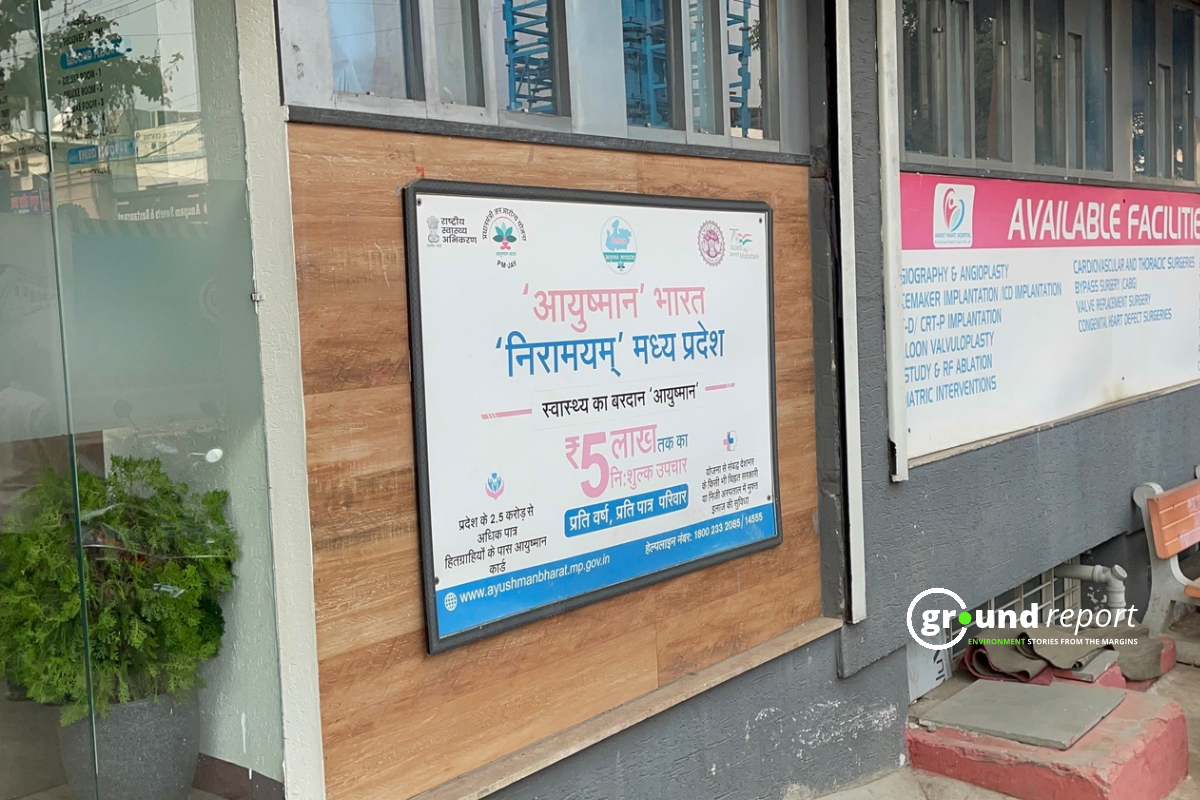
Private hospitals in Madhya Pradesh had threatened to stop treating new patients under the scheme indefinitely from October 8 and march to Delhi with around 1,000 ambulances. Now, they have put their planned boycott of the Ayushman Bharat scheme on hold following talks with the government.
However, the dispute over mandatory certification by the National Accreditation Board for Hospitals and Healthcare Providers (NABH), delays in Ayushman scheme payments and other issues remains unresolved. Dr Dhananjay Mishra, vice-president of the United Private Hospitals Doctors Association (UPHDA), said the protest could resume if the government fails to address the hospitals’ demands.
The dispute centres on the government’s insistence on mandatory NABH certification, why the requirement has become controversial, and why hospitals are opposing it. Delayed payments under the Ayushman scheme and concerns over transparency in claim scrutiny have further strained relations between the two sides.
Dispute over NABH certification
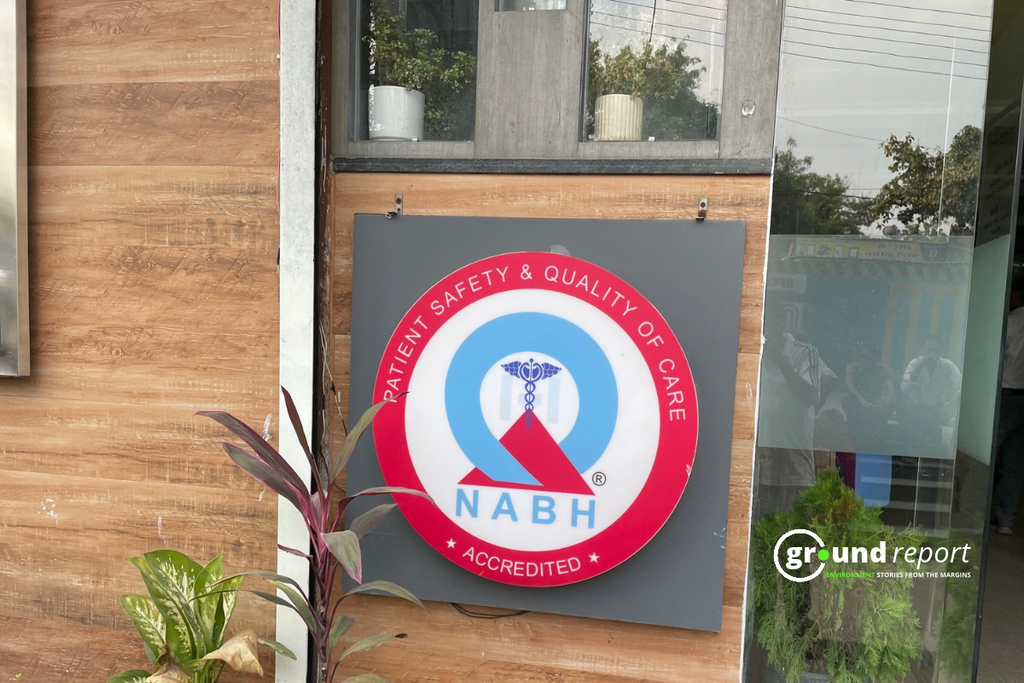
NABH, an institution under the Quality Council of India, assesses the quality of hospitals and healthcare services. It evaluates standards related to hospital infrastructure, staff qualifications, patient safety, and medical procedures. But why did the government make this certification mandatory?
Arvind Shah, chief executive officer (CEO) of the state health agency Ayushman Bharat Niramayam, said to Ground Report that private hospitals are disproportionately concentrated in metropolitan cities relative to their populations.
Shah said some hospitals had opened during the COVID-19 pandemic in buildings previously used for other purposes, such as hotels. He raised concerns about whether these hospitals met basic requirements, including fire safety standards and adequate access for ambulances. The government made NABH certification mandatory to address these concerns.
A public interest litigation filed in the Jabalpur High Court challenging the decision argued that the requirement could affect the participation of small and medium-sized hospitals in the Ayushman scheme and restrict patients’ access to treatment.
On September 23, 2025, the Jabalpur High Court issued an order requiring hospitals already empanelled under the scheme in Bhopal, Indore, Gwalior and Jabalpur, and holding entry-level certification, to obtain final-level certification by March 31, 2026. Hospitals that failed to meet the deadline risked losing their participation in the scheme. From April 1, 2026, final-level certification was also made mandatory for new hospitals seeking to join the scheme.
Some hospitals were given until October 31
Entry-level certification assesses hospitals on parameters such as patient care, medication management, infection control, patients’ rights, hospital safety, human resources and record management. Final-level certification involves a more comprehensive assessment of hospital services and systems.
Shah said the deadline was extended to September 30, 2026, because several hospitals had not completed the certification process by March. When many still failed to complete it within the extended period, the state health agency emailed 113 hospitals in September, informing them of outstanding objections and incomplete certification procedures. A new deadline of October 31 was set.
Shah said 21 of these hospitals had completed their physical inspections and were waiting for their certificates. They were given until October 31 to submit the certificates. However, they were not permitted to admit patients under the scheme during this period.
Pending payments and scrutiny of claims
Delays in payments under the Ayushman scheme are another major issue behind the protest, alongside mandatory NABH certification. Mishra said that payments to several hospitals have been pending for nearly six months.
Shah said the state government had paid around ₹1,500 crore since April 1, including approximately ₹800 crore disbursed over the preceding three months. He also acknowledged that claims worth around ₹500 crore submitted by private hospitals remained pending.
Of approximately 3.7 million claims, 150,000 were under audit or review, Shah said. A team of 40–50 doctors has been assigned to review these claims, a process that could take up to two months.
Shah said the government had flagged certain claims in which medical records or the duration of treatment appeared unusual. Examples included patients recorded as having spent unusually long periods in intensive care units (ICUs), being discharged directly from an ICU, or having inconsistent figures in their medical records.
Shah said such discrepancies could lead to the misuse of public funds and the recording of inaccurate information in patients’ electronic health records.
Hospital associations want the government to provide written reasons for rejecting claims or reducing payments. They have also asked that qualified doctors review the claims, the right to appeal against decisions, and a revision of treatment package rates.
Mishra said the government had assured the association during talks that action would be taken on pending payments. Following this assurance, the association decided to suspend its protest.
Support Us To Sustain Independent Environmental Journalism In India.
More Ground Reports
Why Has India Failed to Keep Banned Thai Mangur Off Its Markets
Smart Meter Consumers May Save on Electricity Bills With Time-of-Day Tariffs
Stay Connected With Ground Report For Underreported
Author
Support Ground Report to keep independent environmental journalism alive in India
We believe climate change should be the basis of current discourse, and our stories attempt to reflect the same.
Connect With Us
Send your feedback at greport2018@gmail.com
Newsletter
Subscribe our weekly free newsletter on Substack to get tailored content directly to your inbox.
When you pay, you ensure that we are able to produce on-ground underreported environmental stories and keep them free-to-read for those who can’t pay. In exchange, you get exclusive benefits.
Your support amplifies voices too often overlooked, thank you for being part of the movement.