The Madhya Pradesh Food Department issued the order on July 7, 2026. Clause 3 changed how the commission is calculated.
Rural shops with fewer than 200 ration cards and a full-time salesperson will now receive only ₹5,515 a month. Shops allotted after April 1, 2022 will also receive only ₹5,515, even if they have 200 or more ration cards and an independent salesperson.
Radha Chauhan, a member of the Aajeevika Mission (part of the National Rural Livelihoods Mission) in Rajgarh, said her group was paid ₹10,500 a month until 2024. In 2025, the amount dropped to ₹8,500, though the department’s figure was ₹8,900.
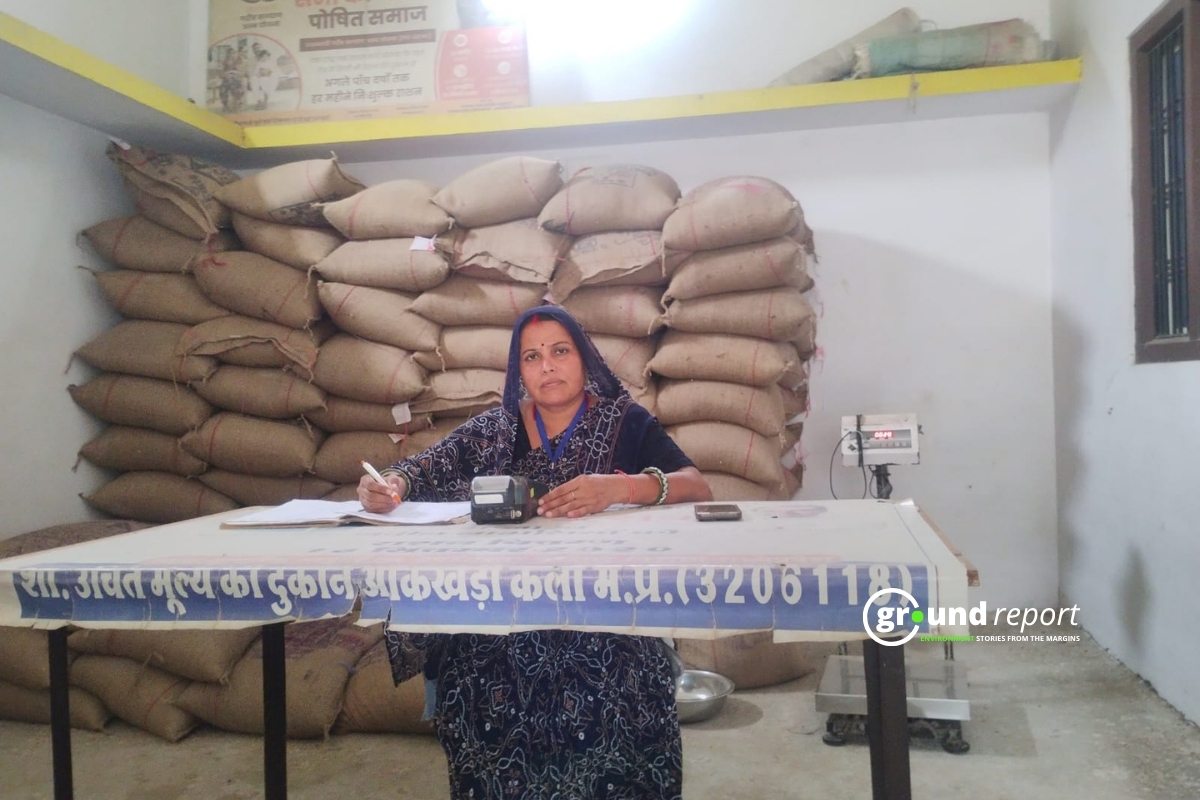
Ramshree Sharma, who runs a ration shop in Aankhkhedi Kala Gram Panchayat, described a similar pattern. She started in 2018 earning around ₹5,000. This rose to ₹8,400, then to ₹10,500 around 2022. It has since dropped back to around ₹8,400.
She serves 400 families across three villages, spending around ₹2,000 on rent and ₹4,000 on electricity and weighing costs. That leaves her with roughly ₹2,000–3,000.
When Sharma and other women raised the issue, officials told them the central government would cover the difference. Though, nothing has happened.
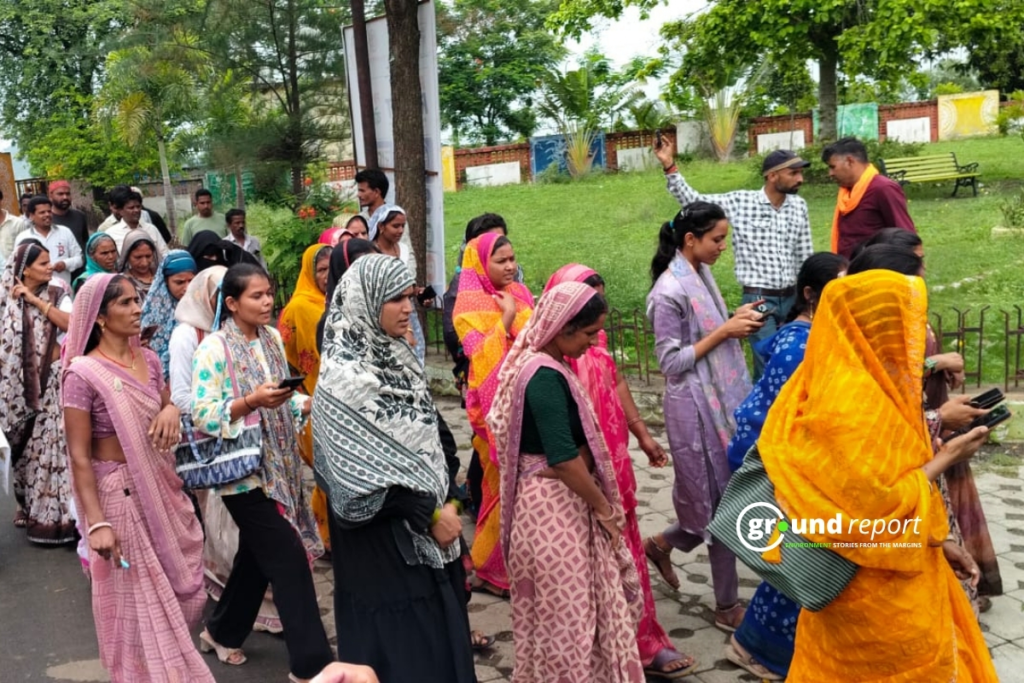
Hundreds of women running ration shops in Rajgarh, Shajapur, Dewas and Barwani districts submitted memoranda to district collectors and started protests. The protests have since been paused after talks with the administration.
“Lakhpati Didis” and Contradiction
The 2026 data from the MP Ration Mitra portal shows Madhya Pradesh has 27,377 active fair-price shops. The network serves 1.25 crore families and 5.35 crore beneficiaries statewide.
Swati Vaikar, District Supply Officer for Rajgarh, said the district has 695 fair-price shops, of which SHGs run 231. Rajgarh has around 2.96 lakh eligibility cards covering roughly 12 lakh beneficiaries across various schemes.
Only 2–5% of SHGs allotted shops after April 2022 received a government building; the rest work from rented premises. Sharma said she had to submit a rent agreement when she applied for her shop.
District Food and Supply Officer Swati Vaikar said she did not know the reasoning behind the new order. She said rent agreements exist to confirm that grain reaches the correct address, and clarified that the government will not pay shop rent.
“The objective of giving ration shops to these women is to enable rural women to become part of the mainstream and become economically stronger,” Vaikar said.
The commission cut comes as Madhya Pradesh has drawn national attention for its growth in “Lakhpati Didis” — women earning more than ₹1 lakh a year — and for promoting women’s self-reliance through SHGs. The commission cut runs counter to that push: it reduces the income women earn from running ration shops even as the state highlights their economic independence.
NRLM District Programme Manager Sandeep Soni addressed the contradiction. He said Lakhpati Didi status is based on family income, not an individual woman’s earnings alone. “The PDS shop is an additional source of income for women belonging to self-help groups. The salespersons are women themselves, and their family members support them,” he said.
Soni explained that most rural families also farm. If a family’s farm income reaches at least ₹1 lakh a year, that amount counts toward the SHG member’s family income. A woman is classified as a Lakhpati Didi once her family’s net annual income, after expenses, crosses ₹1 lakh.
Soni said the Food Department, not NRLM, sets the commission. “Our work is only to manage the self-help groups. Regarding the discrepancies in their salaries and other matters at the time of their appointment, we came to know about these issues through you [the media] itself,” he said, adding that NRLM would raise the matter with state officials.
Surbhit, personal assistant to Bhopal Division Commissioner Karmveer Sharma, said the commission cut followed instructions from the central government, and that the department was required to implement directions from higher authorities.
Weight of Grain Sacks
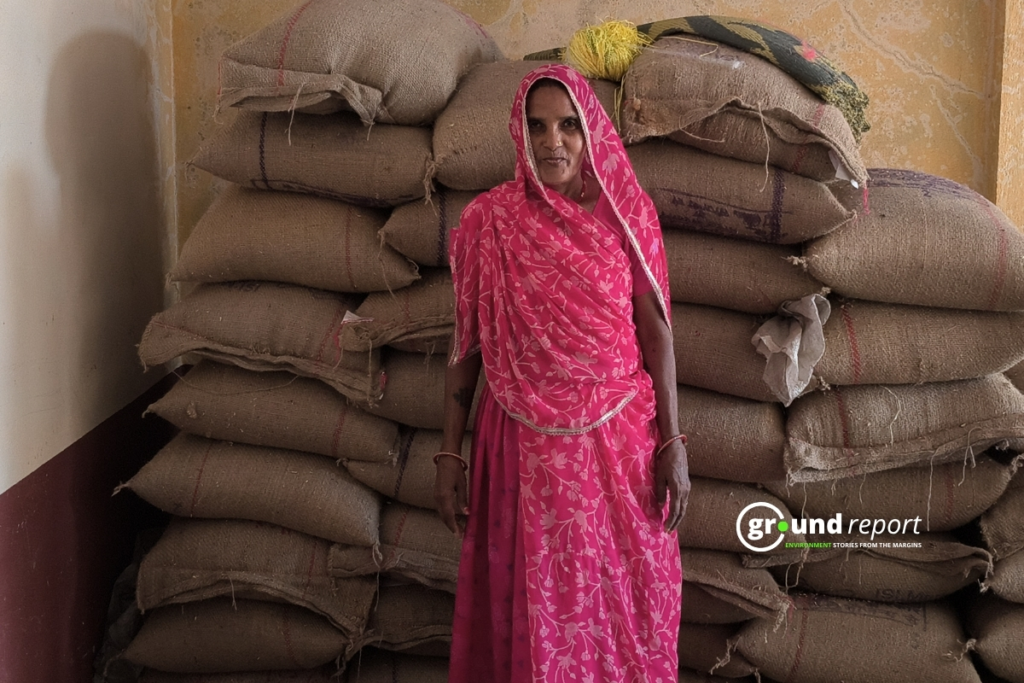
Radhika Sisodia, who has run a shop since around 2018, distributes ration to about 650 ration-card holders. “It takes me around 15 days to distribute the ration.” She hires workers to help with weighing during those 15 days, paying at least ₹400 a day.
Women sellers also alleged manipulation in the weight of grain sacks arriving from warehouses. Their memorandum stated that sacks packed at 50 kg 500 grams by the procurement committee show shortfalls of 3–5 kg by the time they reach the shop.
A shortage of up to 5 kg per quintal is currently treated as normal. The Women Sellers’ Association wants that threshold tightened to 1 kg per 50 kg.
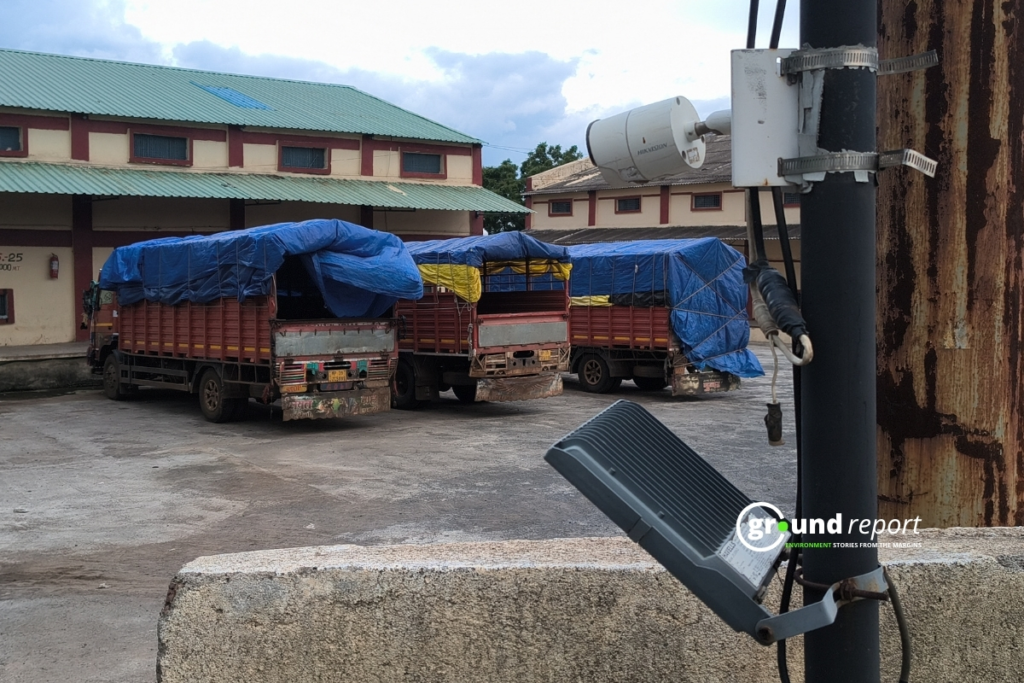
Vaikar said shop operators are instructed to weigh grain themselves before accepting delivery. Rajgarh Warehouse Centre in-charge Rashid Khan rejected the allegations and said grain allocated by the Bhopal Food Department is weighed on-site before dispatch and can be reweighed at the shop. He said cameras cover the entire premises, including the weighing scale, making manipulation “simply not possible.”
Way Forward
Clauses 8 and 9 of the Madhya Pradesh Public Distribution System (Control) Order, 2015 set strict conditions for shop operation.
At the Shri Ram Janki Self-Help Group in Jamuniya Ghata village, the shop is registered in a woman’s name, but male family members handle the day-to-day work because of purdah norms and security concerns.
Operator Kumer Singh said that the poor network connectivity also forces salespersons to go house to house, asking beneficiaries to authenticate transactions by fingerprint on e-POS machines to complete distribution records.
The state government presents SHG-run ration shops as a way to bring rural women into the economic mainstream, and promotes the Lakhpati Didi model built on rising family income. But the women running these shops describe falling income: rent, electricity, weighing costs and stationery eat into their commission, and they sometimes cover grain shortages out of pocket.
Women who received shops after April 2022 now earn about ₹5,500 a month even with roughly 200 ration cards. Many said they continue only because of their commitment to their self-help groups.
Support Us To Sustain Independent Environmental Journalism In India.
More Ground Reports
He Was Married as a Child, Now Manish Dangi Helps Stop It for Others
Despite The Ban, How Gutkha Became MP’s Most Common Household Habit