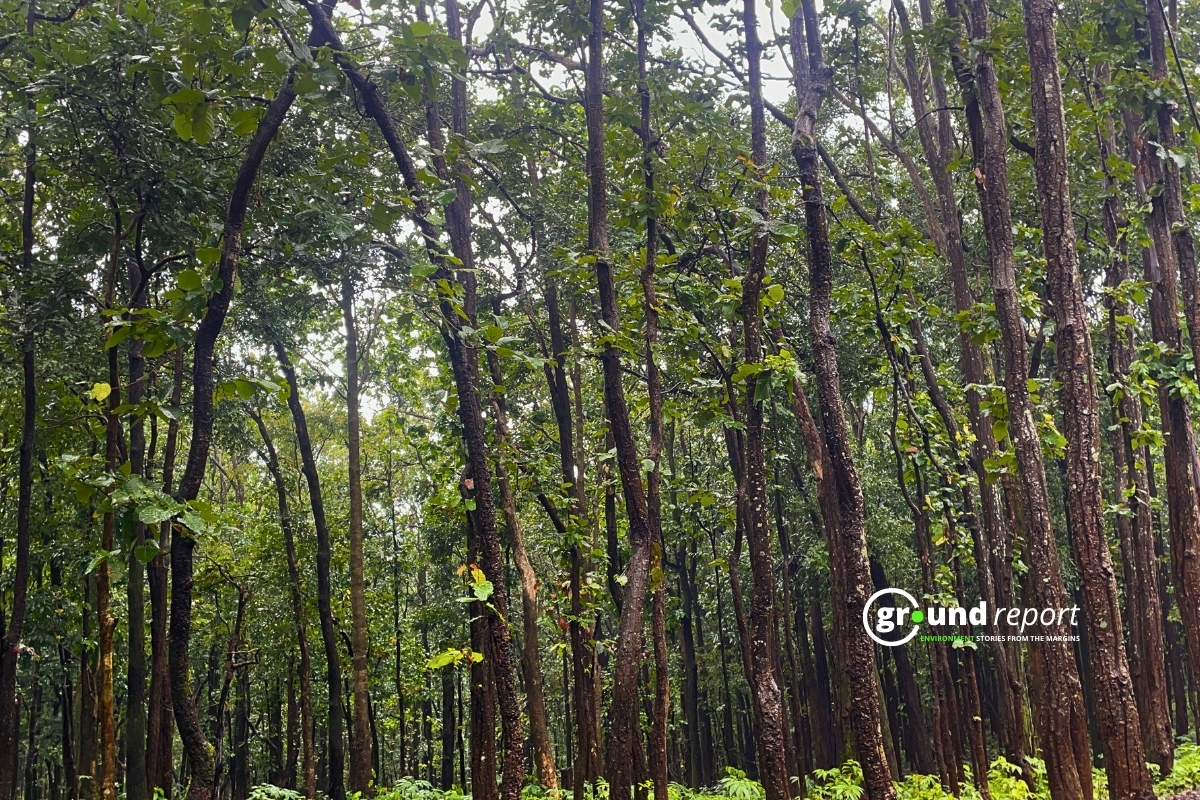
The Delhi forest department has floated a tender to use lindane, a pesticide banned in most countries, for anti-termite treatment at Central Ridge. The department is developing theme-based “special forests” on the ridge, which ecologists call one of the city’s most sensitive green zones.
Experts say the move is doubly troubling, termites are not a problem in forests, and lindane is a known carcinogen. A senior forest official, quoted by the Times of India, acknowledged an error in the tender and said a revised one would be issued soon.
What Is Lindane?
Lindane is an organochlorine pesticide used since the early 1950s to kill insects in agriculture and in pharmaceutical products such as head lice shampoos. It kills insects by stimulating their central nervous system, causing tremors, loss of coordination, and eventually death.
The World Health Organization’s International Agency for Research on Cancer (IARC) concluded in 2015 that lindane causes cancer in humans — specifically, it raises the risk of non-Hodgkin lymphoma, a rare immune cancer, by 60 per cent. Large studies of agricultural workers in the United States and Canada confirmed this link.
How Widely Is Lindane Banned?
The scale of the global ban on lindane is significant. By 2006, the pesticide was already banned in 52 countries and restricted in 33 others. When the Stockholm Convention on Persistent Organic Pollutants formally listed lindane in 2009, it effectively banned agricultural use across all 180-plus countries that are parties to the treaty.
Regional action came even earlier. The European Union banned lindane and its chemical cousin HCH in 2000. In North America, Canada phased out all agricultural use by 2004, and Mexico committed to phasing out all uses by 2005.
Today, lindane is only permitted in a narrow set of circumstances, as a second-line pharmaceutical treatment for scabies and head lice in certain countries, and even then under tight restrictions. India’s Central Insecticide Board and Registration Committee has stopped its registration entirely. Piyush Mohapatra, senior programme coordinator at Toxics Link, an environmental NGO, was unambiguous. “The registration of lindane has been stopped under the Central Insecticide Board and Registration Committee. Globally, it is banned for use as both a pesticide and in timber,” Mohapatra said.
What Does the Tender Say?
The March 17 tender, floated by the Delhi forest department, mentions the supply and spreading of anti-termite chemicals — specifically “chlorpyrifos 20% EC/lindane 20% EC”, at five millilitres per plant, one time, across new saplings at Central Ridge.
A senior forest official said that lindane would not actually be used, despite appearing in the document. “Considering environmental and health concerns, lindane will not be used. Instead, chlorpyrifos may be used, that too in limited and controlled quantities, strictly for localised application during the initial stage of plantation,” the official said. A second official added, “There was a mistake in this tender, and another one will be issued soon after removing lindane from it.”
However, experts say even chlorpyrifos carries serious risks in a forest ecosystem.
What Do Experts Say About Ecological Risk?
Termites are not forest pests. Research published in Termites and Sustainable Management shows that tropical termites consume fallen organic matter and, through their feeding and nesting, improve soil aeration, help soil absorb water, and support long-term soil fertility. Killing them with pesticides disrupts these processes.
Debadityo Sinha, senior resident fellow at Vidhi Centre for Legal Policy, was direct in his criticism. “The Central Ridge is a reserve forest, not a building. So why does the forest department want to eliminate termites? The use of toxic chemicals like chlorpyrifos and lindane can severely impact soil health by killing fungi, insects and other living organisms. These chemicals can also leach into groundwater and, during rain, flow into water bodies, posing risks to human health,” Sinha said
Prakriti Srivastava, a retired Indian Forest Service officer, warned that both chemicals can enter the water table and affect the surrounding ecosystem. She said natural forests should not be treated like constructed campuses. “Chemicals like chlorpyrifos and lindane can leach into the water table, impacting the entire ecosystem and should not be used in a natural forest,” she said.
More Ground Reports
What does Ramsar status actually change for Bihar’s wetlands?
MP Poshan Aahar Closures Put Rural Women’s Livelihoods at Risk