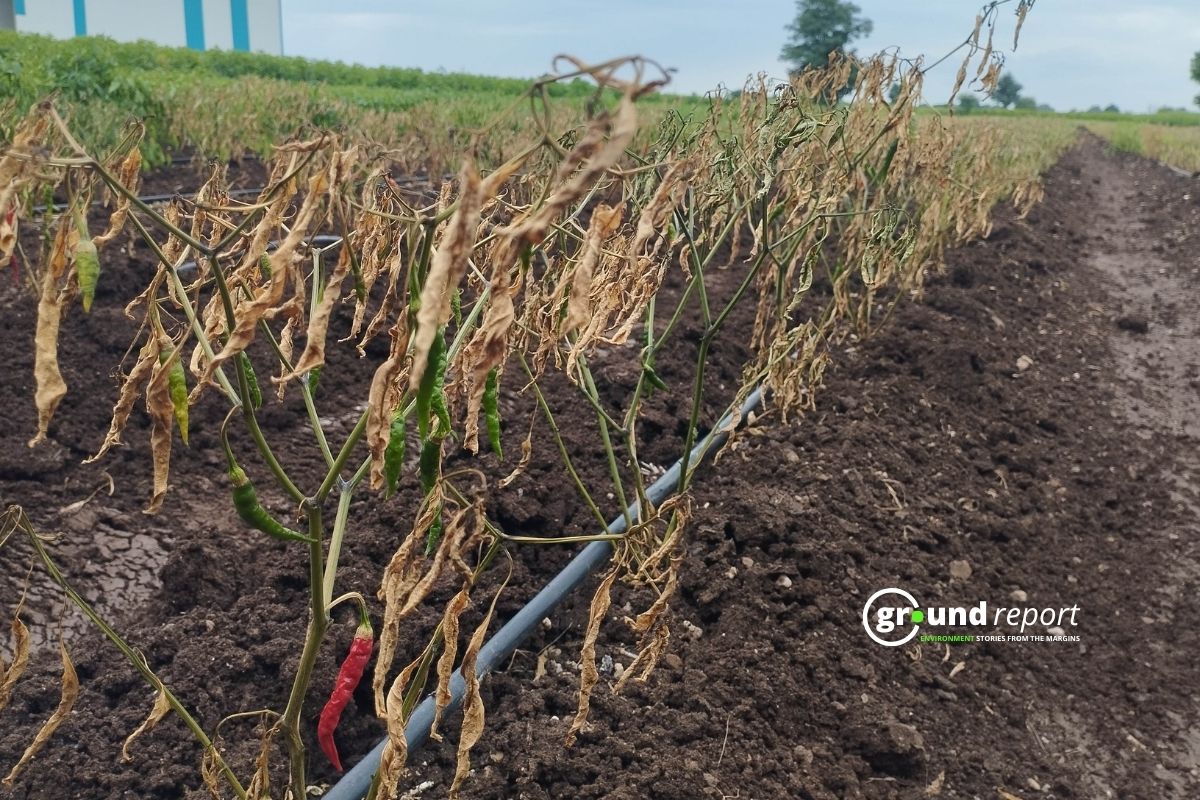
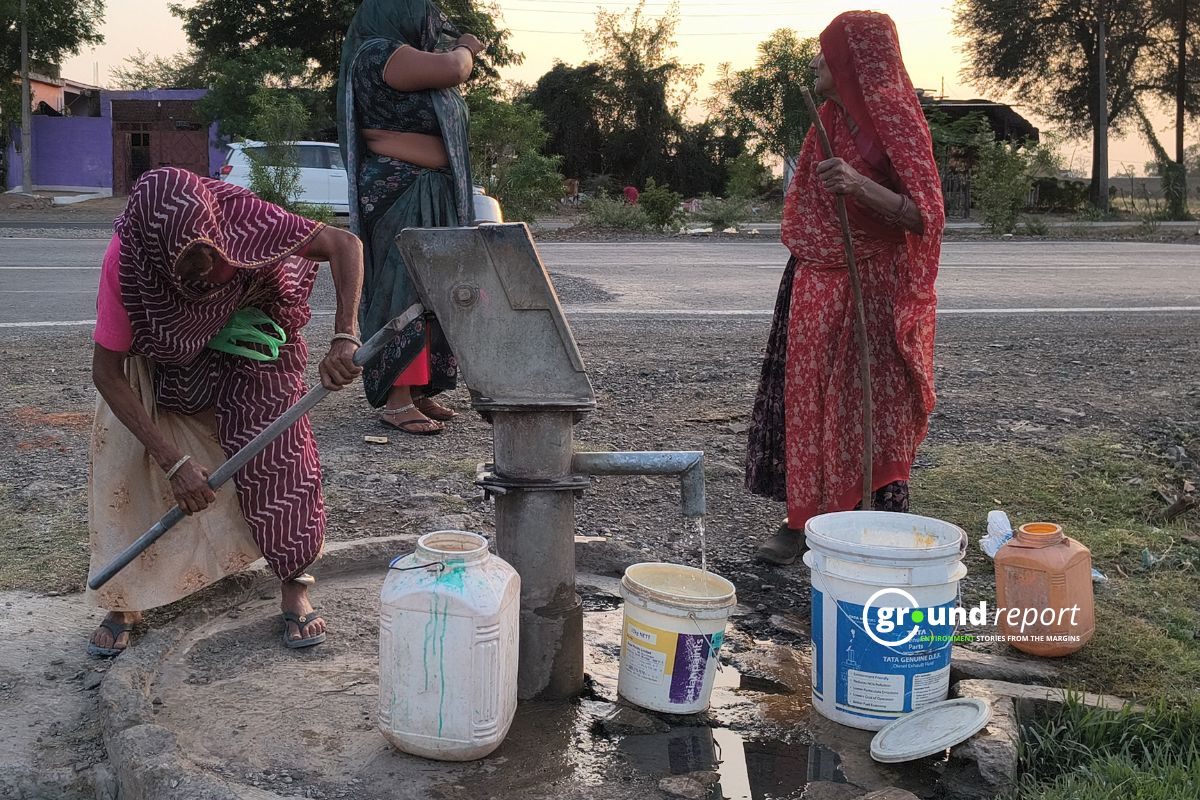
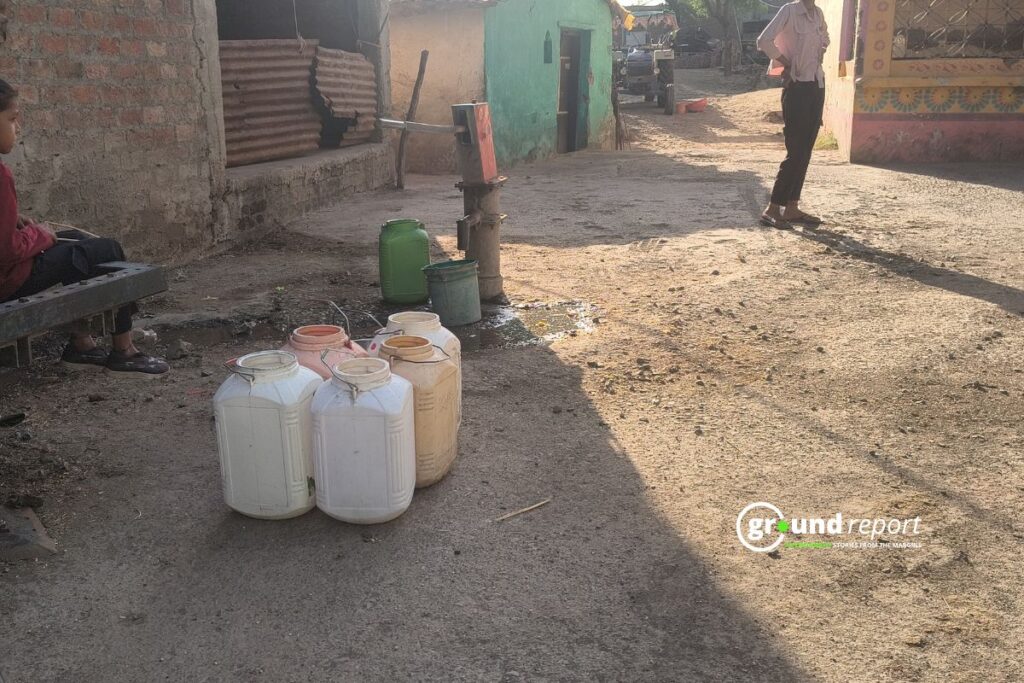
In Patelpura village, under Narsinghgarh block of Rajgarh district in Madhya Pradesh, the government installed taps, under Jal Jeevan Mission, in front of villagers’ homes. However, people still depend on the tube wells and hand pumps of relatively well-off villagers because these JJM taps have not supplied water for several years.
Nanni Bai, a laborer from Patelpura, fills water for her household every day before leaving for work. She stands in line at others’ tube wells. She says, “We get our turn after two to three hours. If we are late, farmers do not hire us.”
The government launched the Jal Jeevan Mission on 15 August 2019, aiming to supply 55 liters per capita per day (LPCD) of drinking water through taps to 18 crore rural households by 2024.
At the start of the scheme, only 3.23 crore (16.72%) rural households in India had tap water. Since then, the mission has provided connections to more than 12.55 crore additional households. As of 28 January 2026, 15.79 crore (81.57%) out of 19.36 crore rural households have tap water access.
The government did not meet the 2024 deadline for universal coverage, so it extended the scheme to 2028.
At a state-level consultation in Bhopal on 16–17 April 2025, officials acknowledged that laying pipelines alone is not enough. Under JJM 2.0, they made source sustainability mandatory. A parliamentary committee, cited in a 19 March 2026 The Hindu report warned that the ₹8.69 lakh crore mission faces risks without sustainable water sources.
The committee also warned that authorities installed taps in many places without ensuring water sources. As a result, water availability remains a major issue, and in some areas, sources dry up within one or two years.
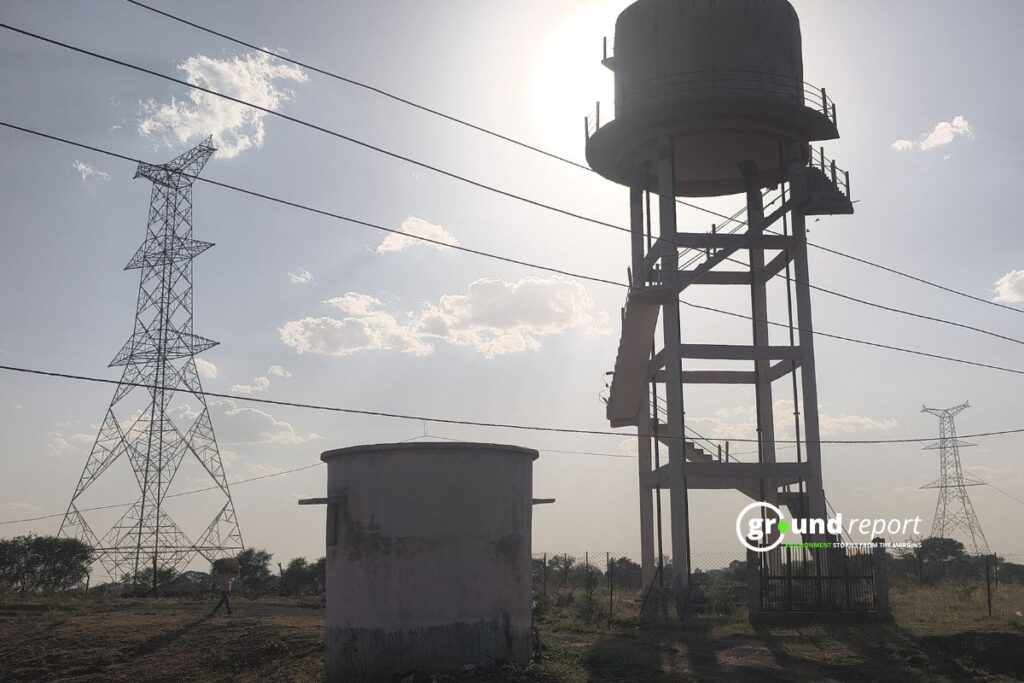
Ground reality: taps installed, but not a drop of water
In Rajgarh, authorities significantly increased tap connections under the Jal Jeevan Mission. At the start of 2019, only 30,777 (12.85%) out of 239,471 rural households had connections. After the mission began, authorities added 179,664 (86.09%) connections. Now, officials report that 210,441 (87.88%) households have tap water access.
The government dashboard shows connection percentages but does not indicate whether taps supply water regularly.
The former sarpanch of Patelpura, Madan Singh Panwar, says, “Our village has a large tank from 2018–19 and an older structure from 2010–11, but neither scheme supplied water.” Lakshmi Narayan Patel, a resident, says the new tank leaks, so workers never fill it fully. He adds that officials now avoid responsibility by citing water shortages.
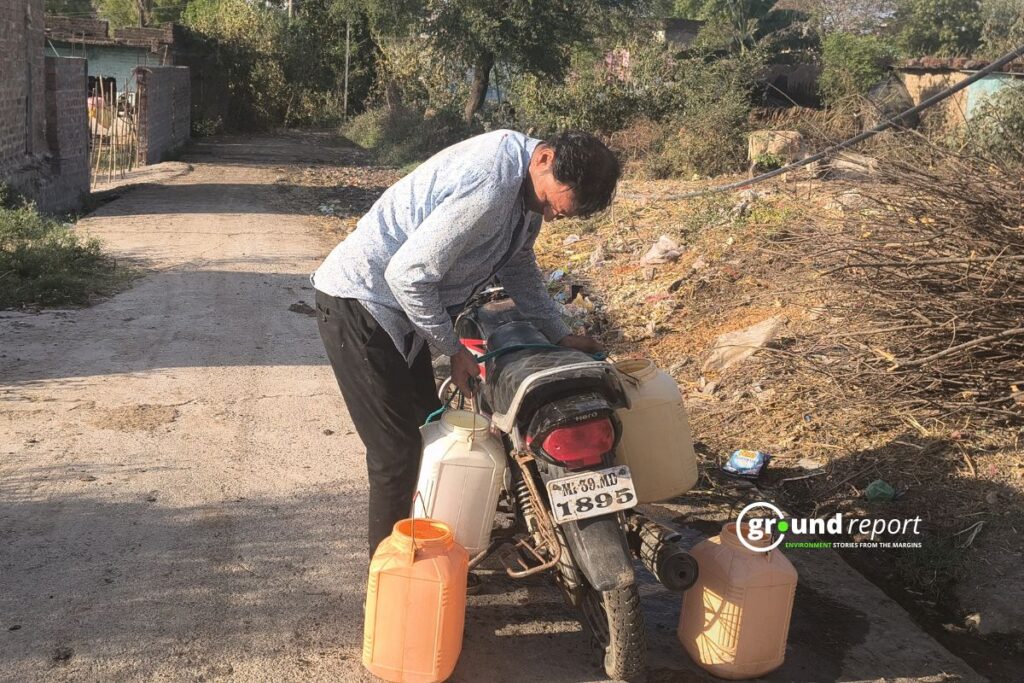
In Sonkach village, 65 to 70 kms from Patelpura, the project failed even before summer. Women now fetch water from distant places using private tankers or motorcycles. Officials tell villagers that groundwater is insufficient, so the department cannot supply water. They also admit that sources dry up during the summer.
The Assistant Engineer Devendra Singh of the Public Health Engineering (PHE) Department says authorities approved 332 drinking water schemes in Biaora and Narsinghgarh blocks and completed 95 percent of the work.
Singh says, “The groundwater issue is that it is here today and may not be there tomorrow because water from government boreholes flows into nearby private bores. What can anyone do about this?”
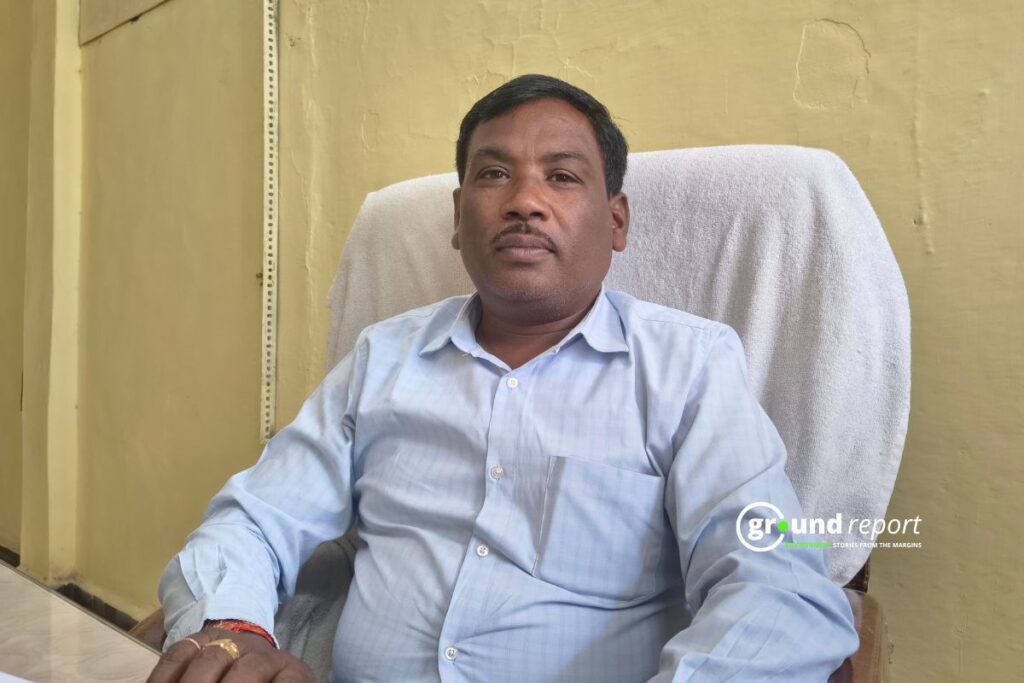
Regarding allegations of leakage in the tank built in Patelpura Gram Panchayat, Gaur says that complaints were received; he himself inspected the site, found seepage, got it waterproofed, and tested it by filling water from a private bore, after which it did not leak.
However, he admits that two borewells at the site run only for 10 to 15 minutes, so they cannot fill the tank. He acknowledges that the water sources have failed.
He further says that about 5 to 7 kilometers from Patelpura lies the Shajapur district, where water is coming from the Chillar Dam, and eight villages there have been connected to it. On the question of relying on surface water while constructing groundwater-based schemes in rural areas, he says they approved this plan later and would have connected earlier if they had known.
This statement contradicts Jal Jeevan Mission guidelines. Paragraph 9.1 requires planners to design schemes with a 30-year sustainability guarantee. Engineers must not only drill borewells but also build recharge systems like check dams and rainwater harvesting structures to stabilize groundwater levels.
Between 2020 and 2024, Madhya Pradesh improved both tap coverage and functionality. Fully functional taps increased from 24% to about 63% in ‘Har Ghar Jal’ villages. However, even in districts like Rajgarh, where 99% of households have taps, about one-fourth of families still do not receive adequate water.
Rajgarh and groundwater
A Central Ground Water Board (CGWB) report dated 18 December 2025 places Rajgarh among 39 districts moved from the safe category to ‘semi-critical.’ Narsinghgarh block is now ‘critical,’ and Sarangpur is ‘over-exploited.’
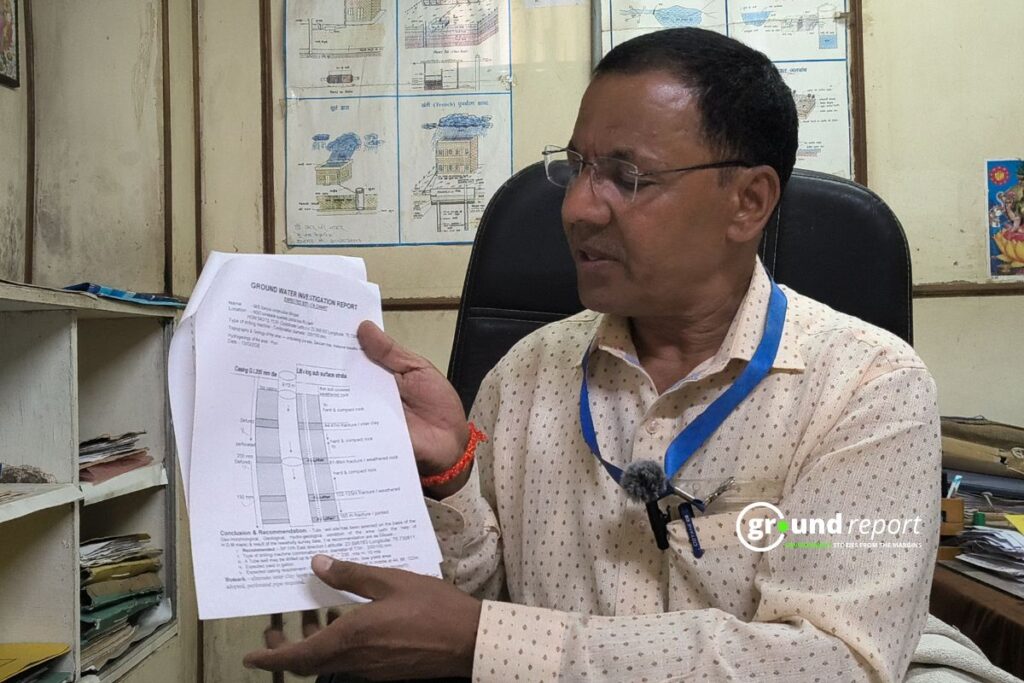
Geologist Dr. R. G. Nagar, who has done a PhD on the Malwa region’s subsurface geology, says that Rajgarh is identified geologically as a Deccan Trap basaltic rock formation. Around 7 to 8 volcanic eruptions formed this plateau. Water is available in fracture zones, and sources are identified there; recharge planning is also based on this. Source investigation is also based on recharge potential. Where there is massive rock, neither water will be found nor recharge will occur; therefore, source investigation and recharge are closely linked.
There are different layers underground, where there are shallow aquifers and deeper aquifers. Where shallow aquifers exist, they can be recharged through dug wells; where water is extracted from deeper aquifers, separate planning is needed. Technical knowledge of where and what work is being done is essential, because without geological study, recharge pits alone will not work; water will overflow and flow back into rivers and streams.
Nagar further says that if such work is being done in Rajgarh, it can only be called effective if results are seen. Instead, safe blocks were expected to remain safe and semi-critical ones to improve, but the opposite is happening, because areas that should not be recharged are being recharged.
CAG report and government action
The Comptroller and Auditor General (CAG) report (2023, Madhya Pradesh) states that 2,407 habitations have slipped back into water scarcity. Many schemes failed to supply water for 72 to 171 days and supplied inadequate water for 111 to 297 days.
Officials removed mandatory recharge conditions from 137 out of 147 contracts across districts, including Rajgarh. This negligence hit Rajgarh hardest, where 31.84% (662 habitations) fell back into a water crisis.
Jiaullah Khan, representative of the sarpanch of Tazipura Gram Panchayat, says that infrastructure was built in 2021 and roads were dug up, but water has still not reached taps.
A Single Village Scheme (SVS) is a rural water supply system where all arrangements for one village are made from a local source like a borewell, well, or pond, stored in a tank, and supplied through pipelines. This model is easy and fast to implement, but its biggest challenge is sustainability, as it depends entirely on local water sources. In many cases, this weakness has emerged—some hamlets were left out, and where connections were given, supply was affected due to drying or weakening of sources.
In November 2025, 280 agencies were blacklisted in the state, and notices were issued to 141 officials. According to a public relations press release, “Some cases emerged where certain hamlets or areas were inadvertently left out of some single village schemes, due to which complaints were received from families who did not get tap connections.”
Water is not luck; it is science
Groundwater scientist Dr. Ramgopal Nagar says that finding water underground is not a matter of ‘luck’ but entirely a science. According to him, “Drilling does not mean just digging a hole. Often, people stop digging when they find a little water, whereas the motor should be lowered to the deeper aquifer.” He emphasizes that a borehole will only be successful if water is also recharged into it.
According to Nagar, the ‘hard rock’ layer at a depth of 40 to 50 feet in Rajgarh does not allow water to seep downward. We have extracted old stored water from a 300-foot depth but have not recharged it. “The same technique used to find water must be used to recharge it.” Small trenches or pits cannot achieve this.
Amid this negligence, the Moondla Barol village of Rajgarh stands as an example. When taps began to dry, the panchayat and department adopted a ‘convergence model’. Scientific check dams and recharge structures were built through MGNREGA. As a result, taps run even in summer at 7 am. Sarpanch Ramdayal and villager Rukmini Sharma say that supply is possible because of storing and recharging water scientifically.
This ground report shows that administrative and technical failures, not just natural factors, drive the water crisis in Rajgarh. Despite clear guidelines on source sustainability, officials removed key conditions, exposing both negligence and disregard for people like Nanni Bai.
Banner Image – Women fetching water in Sonkachchh village of Rajgarh district.
More Ground Reports
What does Ramsar status actually change for Bihar’s wetlands?
MP Poshan Aahar Closures Put Rural Women’s Livelihoods at Risk