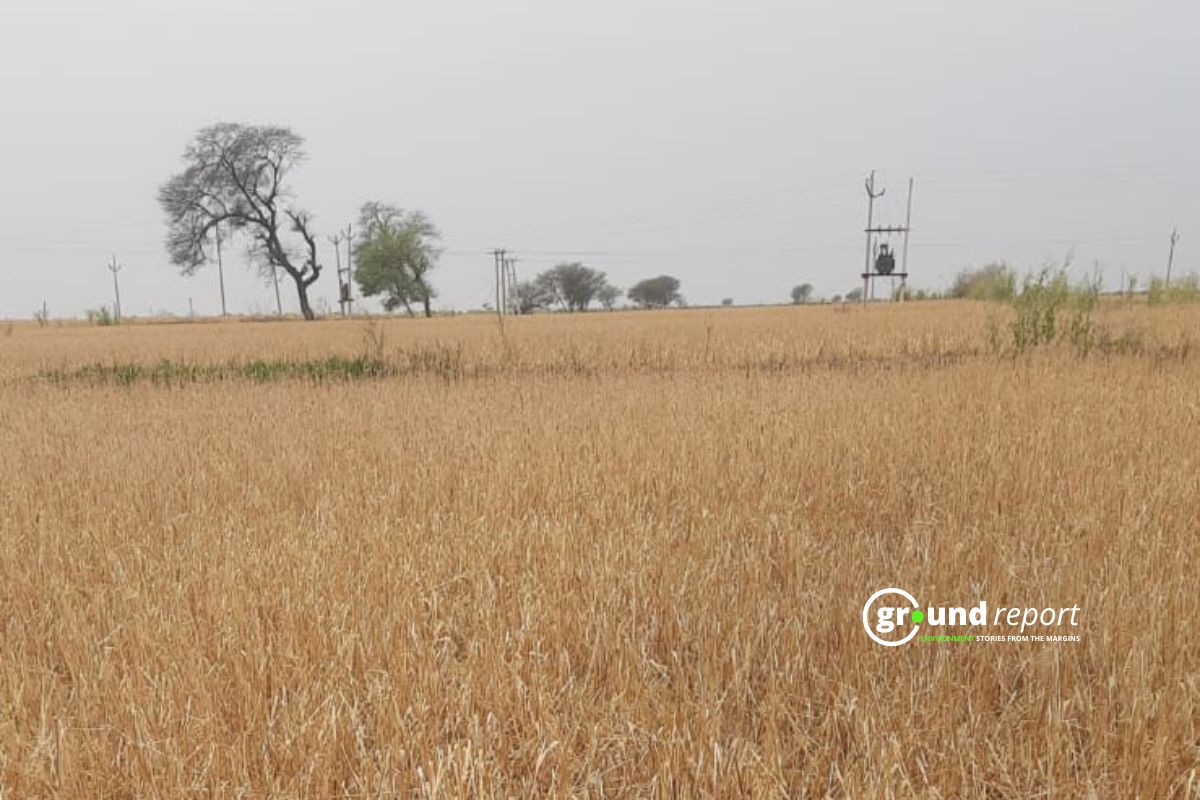
A fierce heatwave has swept across Madhya Pradesh, pushing temperatures to the highest point of the season. Khajuraho, in Chhatarpur district, recorded a peak of 43.2 degrees Celsius on Friday, the first time this year that any part of the state has crossed the 43-degree mark.
The India Meteorological Department (IMD) centre in Bhopal confirmed the reading and issued a heatwave warning for 16 districts on Saturday.
The scorching conditions were not limited to Khajuraho. Umaria recorded 42.9 degrees, while Tikamgarh and Naugaon both touched 42.8 degrees. Mandla reached 42.5 degrees, and Damoh, Guna, and Datia each crossed 42.2 degrees.
Among the state’s five major cities, Jabalpur was the hottest at 42 degrees Celsius. Bhopal and Gwalior both recorded 41.3 degrees, Indore reached 40.6 degrees, and Ujjain logged 40.5 degrees.
The IMD placed the following districts under a heatwave alert for Saturday: Alirajpur, Jhabua, Ratlam, Dhar, Raisen, Narmadapuram, Betul, Chhindwara, Pandhurna, Seoni, Mandla, Balaghat, Niwari, Tikamgarh, Chhatarpur, and Panna.
Residents in these areas are being asked to avoid going outdoors during afternoon hours, drink water regularly throughout the day, and wear light, loose-fitting cotton clothing. The department has also urged people to take extra care of children and the elderly.
Schools Change Hours to Protect Children
The extreme heat forced authorities to revise school timings across 12 districts. Children attending government and private schools had been returning home in the harshest part of the day, raising health concerns.
Bhopal Collector Priyank Mishra issued an order stating that schools in the capital will now run from 7.30 am to 12 pm. Similar changes have been applied in Narmadapuram, Gwalior, Balaghat, Maihar, Ratlam, Chhindwara, Narsinghpur, Raisen, Dindouri, Anuppur, and Umaria.
The current heatwave stands in stark contrast to the first nine days of April, when the state received unseasonal rain, hailstorms, and thunderstorms. More than 15 districts saw hail, and roughly 45 districts experienced flooding during that period.
The IMD notes that the second half of April is historically one of the hottest periods of the year in Madhya Pradesh, comparable to peak winter in December and January.
The erratic weather pattern began earlier this year. February saw four separate rounds of hail and storms, damaging crops statewide. March brought similar disruption, with hail destroying wheat, papaya, and banana crops in 17 districts. The government subsequently conducted crop damage surveys across affected areas.
The current heatwave marks a sharp turn from those cooler spells, with forecasters warning that intense heat is likely to continue through the coming days.
More Ground Reports
What does Ramsar status actually change for Bihar’s wetlands?
MP Poshan Aahar Closures Put Rural Women’s Livelihoods at Risk