
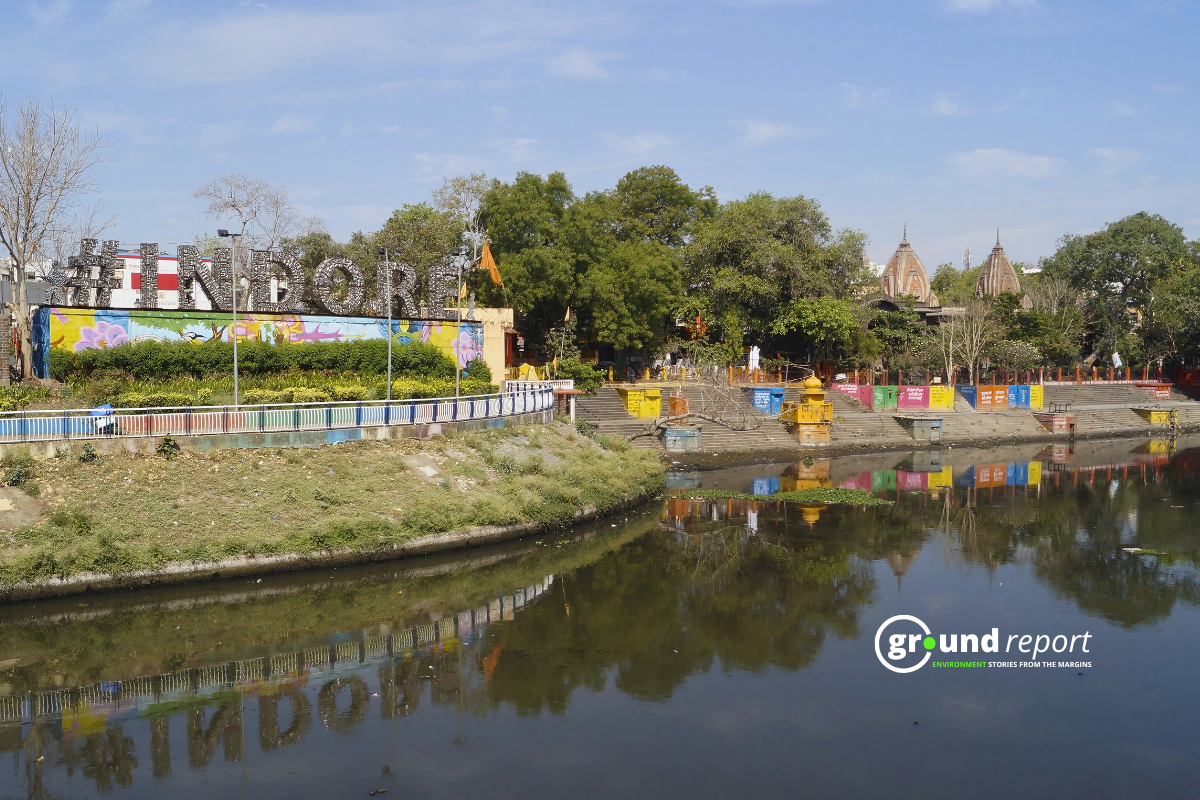
India’s cleanest city, Indore, also supplies some of India’s costliest water. Every month, the Indore Municipal Corporation (IMC) spends nearly ₹25 crore on electricity to pump water from the Narmada River to its residents.
To offset this expense, the city issued a green municipal bond in 2023, raising capital for a 60 MW solar plant whose electricity would be routed directly to power the water treatment process. The project costs roughly ₹300 crore, and investors were promised an 8.25% return.
The bond was oversubscribed nearly six times and celebrated as India’s first public green municipal bond.

By July 2026, the Madhya Pradesh Chief Minister Dr. Mohan Yadav inaugurated the 60 MW solar power plant in Jalud, near Maheshwar in Khargone district. He called it a project of national significance, describing it as an achievement not just for Madhya Pradesh but for the country.
Indore Mayor Pushyamitra Bhargava said the Indore Municipal Corporation became the first urban local body in India to complete a solar power project financed through green bonds. He also described it as the country’s first solar plant built through public participation, with involvement from 28 states.
The plant is expected to generate about 8 million units of electricity each month for Indore Municipal Corporation, significantly reducing its energy costs and helping save an estimated ₹3–5 crore monthly.
India’s municipal bond market began in 1997 when the Bangalore Municipal Corporation issued the first bond, followed by Ahmedabad in 1998. SEBI formalized issuance rules in 2015, requiring credit ratings and disclosures.
India’s evolving bond market is quite small compared to countries like Brazil, the United States, and others. Take, for instance, the US’s bond market (almost $4 trillion), which is equivalent to India’s GDP.
Since its inception, almost 50 bonds have been issued by municipalities. 27 out of the 50 issued bonds can be traced to 10 ULBs in just eight states, according to a CEEW 2025 study.
Despite these efforts, Indore—like most Indian municipalities—remains financially constrained, relying heavily on property taxes and grants from state and central governments.
This is important because governance at the city level should diversify its financial instruments, as it will house over 500 million people (approximately 36% of the population), projected to reach 600 million by 2030. With intensifying climate risks, including heatwaves, urban flooding, water scarcity, and groundwater depletion, cities should invest in becoming climate-resilient.
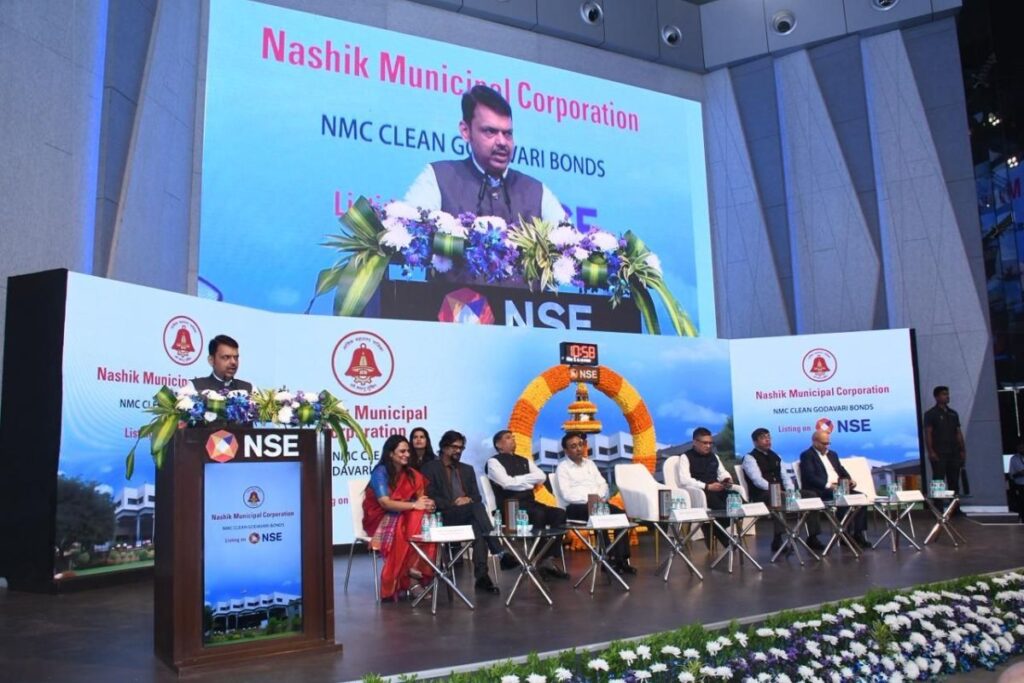
Recently, the Nashik Municipal raised a bond worth almost INR 2 billion to build a wastewater treatment plant. Yet beneath the headlines lies a more complicated question: are India’s municipalities actually ready for green bonds, or are these issuances largely symbolic?
Municipal green bonds—a bond that finances projects that directly contribute to eco-friendly outcomes—are much newer and smaller: recent data show that at least four of the last seven issuances (approx. ₹694 crore) were green-labeled, and ULBs such as Indore, Vadodara, Ghaziabad, and Pimpri Chinchwad have issued or piloted municipal green bonds.
“Green” in Green Bonds
Though the labeling of bonds as green is an ongoing conversation. There is no exact framework for certification. Sometimes, local government bodies provide certification, and even private players also certify these bonds as green, which might mean more scrutiny, explained Santosh Tiwari, who led Vadodara’s municipality’s green bond issuance in 2024.
Unlike others, his 2024 Vadodara municipality bond was India’s first “certified” green bond issuance. He feels this gives the bond additional credibility, subsequently making the ULBs more accountable. These certifications from credible organizations are used to build confidence for investments.
“In any bond, you have to submit financial statements, get audits done, take government approvals, obtain a credit rating, and create an escrow and debt-structure mechanism. All of this is mandatory. In a green bond, on top of that, you must also commit to monitoring outcomes, appoint independent verifiers, and keep reporting progress to regulators and investors,” Tiwari said.
Need For Local Financing
And Indore makes for a great case study. An urban local body often touted for its excellent local governance also faces some of the worst water crises in India during the summer. But like many fast-growing cities, Indore faces mounting climate stress. Studies suggest groundwater levels are falling at alarming rates.
In response, the municipal and smart city departments now mandate rainwater harvesting for new buildings and have begun reviving lakes and water bodies.
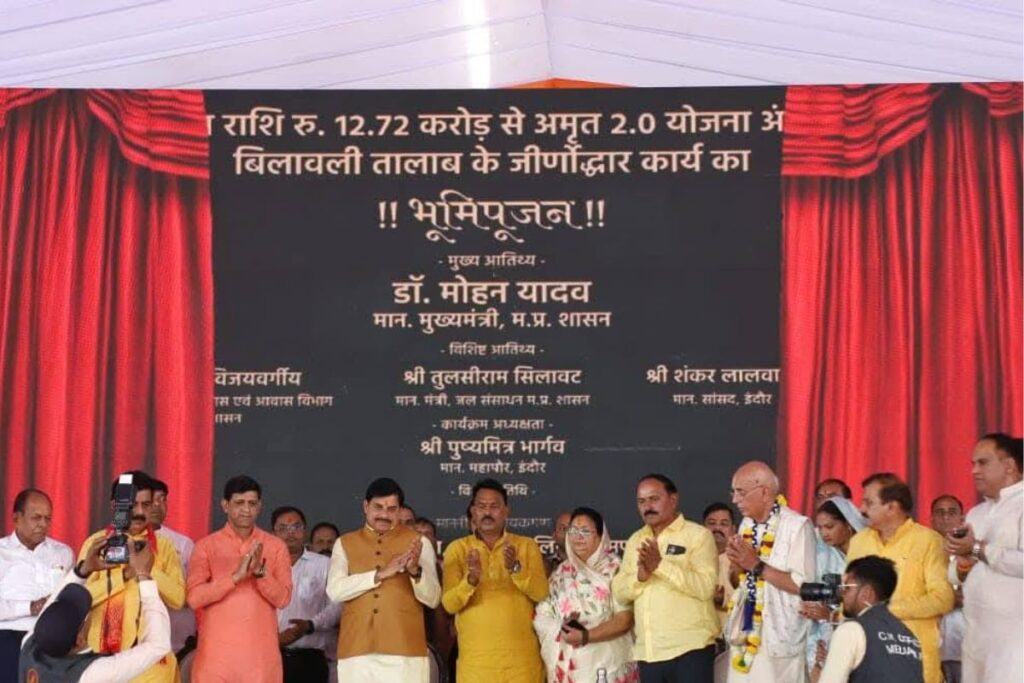
And yet they have just issued two bonds, including the one mentioned, which was a green bond.
Another municipality in Madhya Pradesh is Bhopal. The Ministry of Housing and Urban Affairs of India (MoHUA) stated in a response to an RTI that, to date, no municipal bond has ever been issued in the name of Bhopal.
Climate Resilience at the City-Level
India will need ₹8.4 lakh crore in urban infrastructure investment by 2036, according to the Climate Bonds Initiative. “Grants will not be enough for that,” says Roopa Satish, who leads Climate Bonds Initiative India.
“It’s not like there’s a dearth of money,” says Namita Aggarwal, senior project lead at the Foundation for Economic Development. “The problem is that cities are simply not good investment opportunities.”
“Bonds are not a funding source—they are a financing instrument,” urban finance expert Ravikant Joshi says. Cities can only borrow if they already generate surplus revenue. “Out of nearly 5,000 urban local bodies in India, only about 36 have investment-grade credit ratings. Without repayment capacity, borrowing simply cannot happen.”
Under the central government’s scheme, municipalities receive about ₹13 crore for every ₹100 crore raised through bonds. That becomes a factor. A push for the local bodies to find alternative financial instruments.
The Union Budget 2026 is shifting urban financing from “grant-based financing to market-linked, reform-driven, and outcome-oriented infrastructure creation.”
The idea is to push urban local bodies to raise funds—including through green bonds—while central support would be more conditional. For instance, under the Urban Challenge Fund, the Centre will fund only a quarter of project costs, requiring cities to raise at least half from markets—marking a shift toward bond-driven, market-based urban financing.
Yet, the bond market faces a very interesting dichotomy. Many experts say bonds are the way to make ULBs more accountable and improve monitoring of urban development projects.
Joshi argues, “Borrowing brings discipline, and that is exactly why cities avoid it.” While municipalities, Satish says, “don’t yet have the capacity and ability” to meet the governance standards required for a credible green bond.
Aggarwal argues that many municipal bond issuances—green or otherwise—are driven more by optics than by fiscal transformation. “They tend to be these flexes for cities to say, ‘Okay, I’ve raised a municipal bond.’
With all criticism, we should see these small issues as “cities are testing the waters,” Satish said.
For this to evolve into a serious financing pathway, India must fix the foundations Aggarwal identifies: uniform accounting systems, enforceable taxation, robust asset registers, credible DPRs (detailed project reports), and empowered urban governments.
Only then will municipal green bonds move beyond symbolism.
Bonds, particularly green bonds, present an interesting dichotomy. As Tiwari notes, “If a city truly wants to reform itself—to become disciplined, transparent, and accountable—municipal bonds are among the best tools available.”
Grants from programs like AMRUT or the Smart Cities Mission provide comfortable liquidity with limited scrutiny. Until those grant pipelines tighten, Aggarwal argues, cities feel little urgency to pursue financial autonomy.
The then municipal commissioner of the Brihanmumbai Municipal Corporation, Bhushan Varsha Ashok Gagrani, said, “We have not used green bonds so far, but we are discussing this. We have not yet reached any conclusion on it.” However, he clarified that the reason for discussing this is not that the BMC lacks funds.
Both Joshi and Agarwal stated that, without revenue reform and enforceable accountability, green bonds risk remaining symbolic gestures rather than leading to urban climate resilience.
This article was produced as part of the Smitu Kothari Fellowship 2025 (SKF).
More Ground Reports
What does Ramsar status actually change for Bihar’s wetlands?
MP Poshan Aahar Closures Put Rural Women’s Livelihoods at Risk