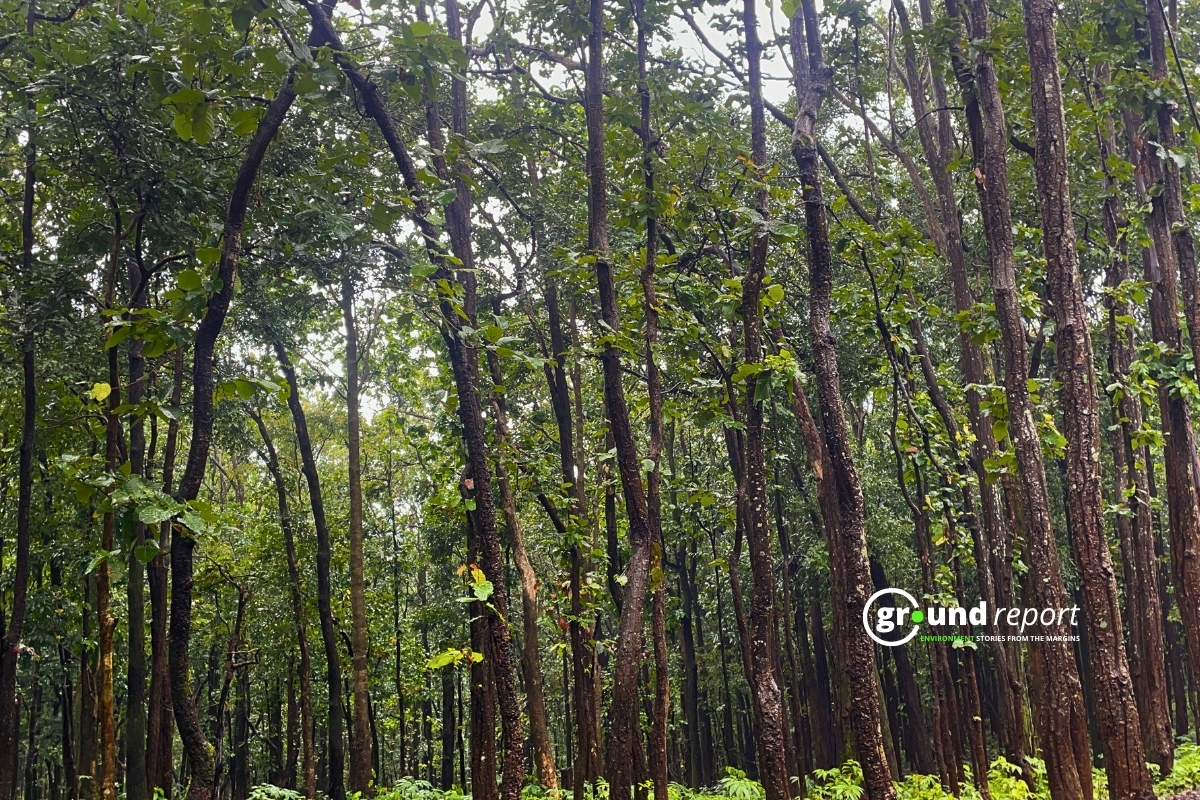
Forests are slowing down. Rising heat and drier air are stunting tree growth across Europe, and that could mean far less carbon gets pulled out of the atmosphere than climate scientists have assumed.
A new study, published in the journal Geophysical Research Letters, finds that widely used climate models overestimate how much carbon forests will absorb in the future. The gap could be as large as 30 percent.
What the Study Found
Trees absorb carbon dioxide through photosynthesis and use it to grow wood. Most climate models assume these two processes move together: if a tree is photosynthesizing, it is also growing.
The new research challenges that assumption. Researchers Brendan Clark, Daniele Visioni, Shan Kothari and Manuel Lerdau found that hot, dry conditions can stall tree growth even when photosynthesis continues normally.
The reason lies in water pressure inside the tree, known as turgor pressure. When air becomes hotter and drier, this pressure drops. Lower turgor pressure limits cell division, which slows wood formation even though the tree keeps absorbing carbon dioxide.
In other words, trees keep taking in carbon. They just cannot use it to grow.
How the Research Was Done
The team used eight years of daily growth data from 160 trees across 47 sites in Switzerland, covering seven species of broadleaf and coniferous trees. They built a statistical model from these measurements and compared it to a leading global climate model, the Community Land Model.
The comparison showed a significant gap. Under a moderate warming scenario, the existing climate model underestimated the drop in radial growth by a factor of two for broadleaf trees and by a factor of three for conifers.
When researchers adjusted the climate model to match real-world growth patterns, projected carbon storage fell by up to 30 percent, with the steepest declines expected in southern Europe, where dry conditions are projected to intensify the most.
Why It Matters
Forests and soil together absorb about 27 percent of human carbon dioxide emissions each year. Oceans absorb another 25 percent. The rest stays in the atmosphere, trapping heat.
If forests grow more slowly than expected, they will pull less carbon out of the air. That leaves more carbon dioxide in the atmosphere than current climate plans account for.
The effect will be strongest in regions where future weather is expected to turn hotter and drier — patterns already underway in parts of southern Europe.
What Comes Next
The researchers say climate models need to be rebuilt to reflect this physical limit on tree growth, not just the availability of carbon dioxide.
The study focused on European tree species using data from Switzerland, and the authors note their findings may not apply evenly across all forest types worldwide. They call for similar research in other regions, including the tropics, to determine how widespread the problem is.
For now, the study adds to a growing body of evidence that forests may offer less protection against climate change than current models suggest — a gap that could shape how governments plan their climate targets in the years ahead.
Support Us To Sustain Independent Environmental Journalism In India.
More Ground Reports
He Was Married as a Child, Now Manish Dangi Helps Stop It for Others
Despite The Ban, How Gutkha Became MP’s Most Common Household Habit