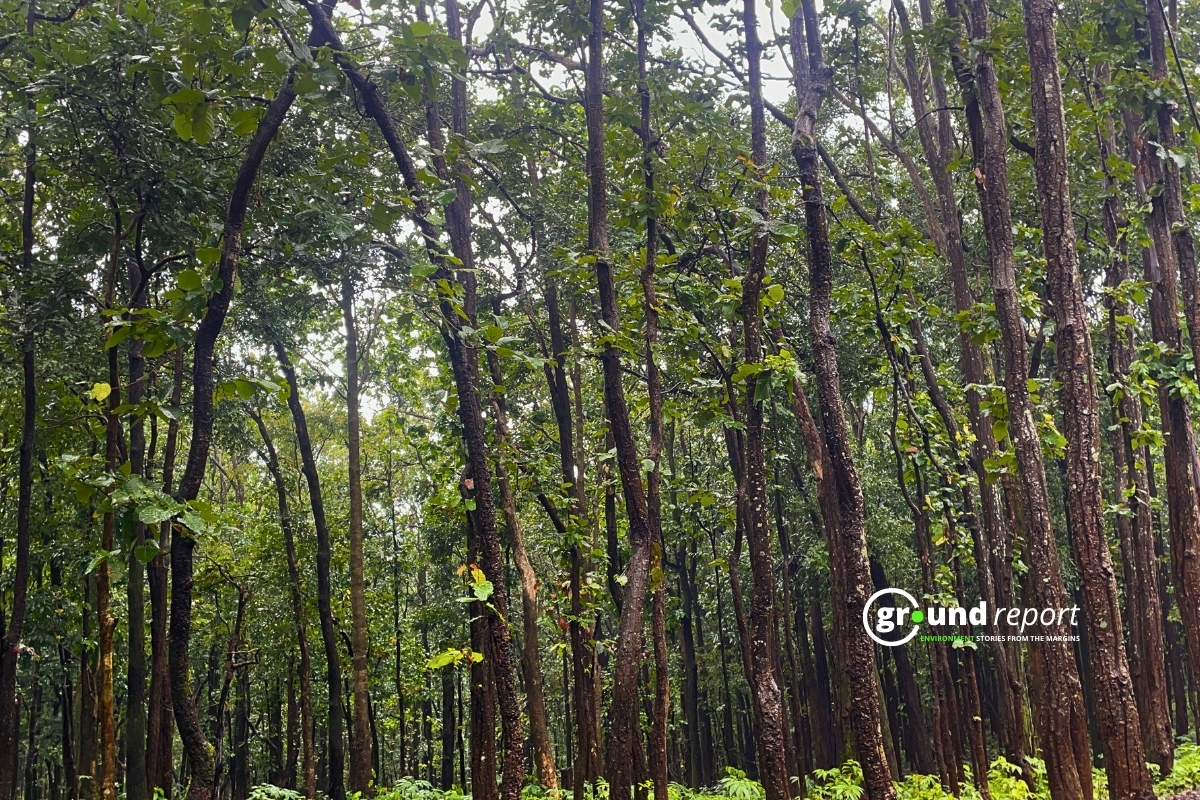
हिंदी में पढ़ें: On Saturday, the Ground Report team was present at Biaora railway station. We watched as a tempo loaded with cans of cold water arrived at the station in the blazing afternoon heat, unloaded its cargo, and drove away. Within minutes, women from the organisation and other volunteers arrived and took up positions at intervals along the platform. Each one standing ready with water cans, mugs, and ladles.
Passengers leaned half out of doors and windows, waving empty bottles in the air.
“I had two cans of water, and both had run out completely. Yet passengers kept climbing off the train and walking up to me with their empty bottles,” Anita Bhardwaj said with a heavy heart. “I sent them down the platform to another woman from our organisation.
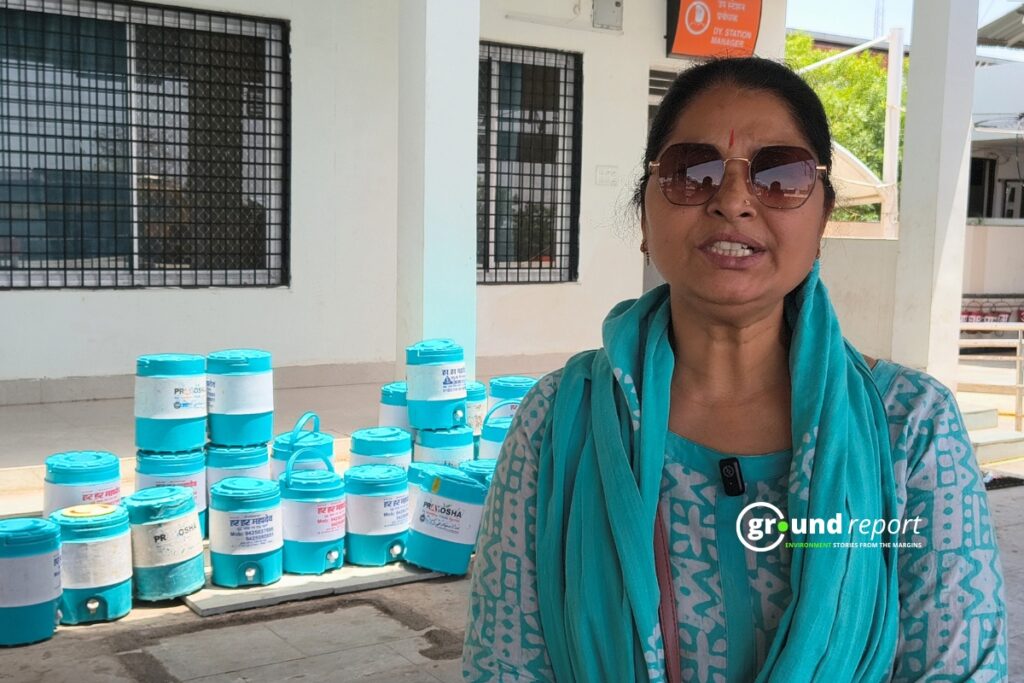
But all the while she kept thinking, “If only I had more cans, I wouldn’t let them [passengers] be thirsty.” This sympathetic intent gets her to the Biaora Rajgarh (BRRG) Railway Station every year during the summer.
Rachna Bhargava and her team from Biaora have been providing water service to train passengers through the scorching summer for the past eight years, and this is their ninth consecutive year of unbroken service.
Along the entire Guna-to-Dewas route, no station reliably supplies cold water; water coolers stand dry. On top of that, vendors openly charge ₹20 per bottle, which is an open violation of the Railway Board’s own September 2025 directive capping prices at ₹14. Bhargava and her organisation spend ₹60,000 every summer month distributing free cold water to train passengers.
At 44 degrees, the passengers with their empty bottles seek to fulfill the most basic human need: water.
From Guna to Dewas — Bone Dry
The Guna-to-Dewas railway line is nearly 300 km long, with Biaora in the Rajgarh district somewhere in the middle of the route. The journey takes close to six hours. In the peak of summer, with temperatures hitting 44 degrees inside general coaches, six hours without water, let alone cold water, can be risky for passengers. Passengers explain that there is no water available at stations. And, where coolers do exist, they stand dry; they don’t have cold water.
“When we ourselves travel by train, we face the same difficulties,” says Bhargava. “Not everyone can afford to spend ₹20 on a water bottle.”
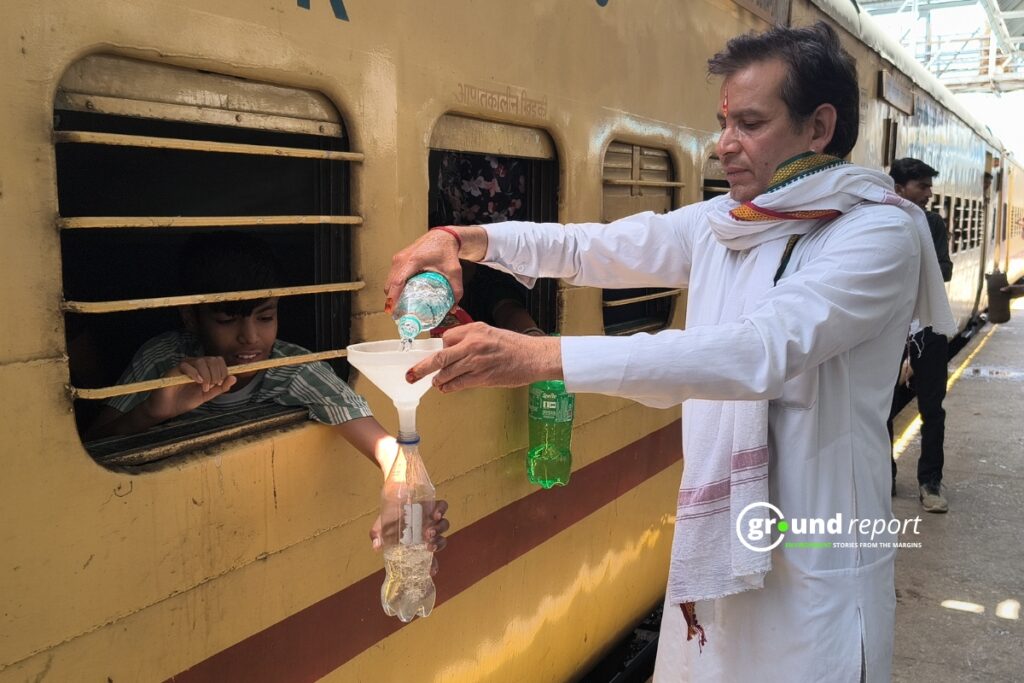
“A few days ago, I was travelling from Indore towards Biaora. From Indore all the way to Pachore… [there was] no cold water.” More than 150 kilometers into the journey, “When I reached out at Shajapur station, what came out of the tap was boiling…. completely unfit to drink,” Shrinath Gupta, who also volunteers with the organisation, recalls a recent train journey of his own.
“Today, we are giving passengers the service of cold water here at Biaora Station, and it feels like our privilege.”
Official Response: “Private People Fill the Bottles”
The deputy station manager, Satish Chandra Verma, at the Biaora station office, said that the station’s Inspector of Works (IOW) department maintains a water tank.
He explained that there is a water cooler next to the canteen, where passengers can also refill their water bottles. However, passengers complain that the train stops at stations for only a very short time (two minutes), making it difficult for them to locate and get water during the halt.
Indian Railway can hire “casual labour” during the summer months to supply water to the passengers. In a post on X (formerly Twitter), the Bhopal Division mentioned, #JalSeva Passenger convenience is paramount in the summer! The Bhopal Division is providing free chilled drinking water service to passengers at 14 major railway stations. With the support of NGOs and volunteers, clean and cold water is being made available to passengers, making travel safer and more comfortable. Bhopal Division — Always committed to passenger service.”
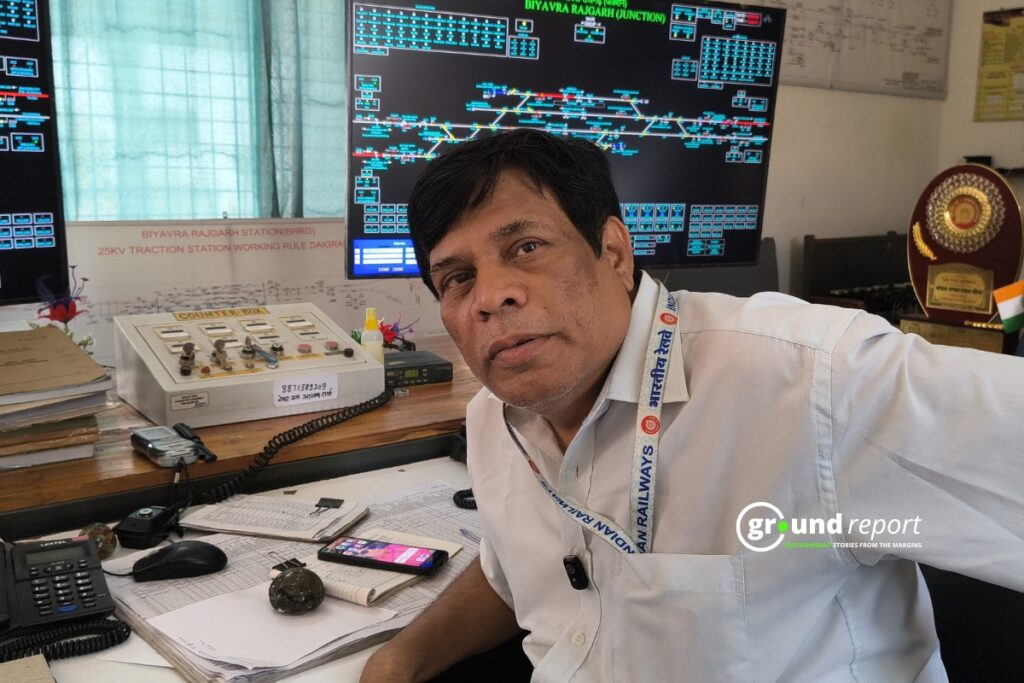
In Biaora, there are no such provisions or hires. Instead, Verma said, “They [NGOs and individuals] come on their own.” Essentially, implying that civil societies are filling the void in the station’s essential amenity infrastructure. He added, “Platform No. 2 has no water arrangement at the moment—work is ongoing there. Platform No. 1 has two water coolers. And there are vendors inside the trains selling water bottles.”
Another passenger, on his long journey from Lucknow to Ahmedabad, told us, “The water bottles being sold inside the train cost us ₹20 each, and even that water is not cold. In this terrible heat, there is no one inside the train to ask. Nobody cares.”
According to the Railway Board’s official Commercial Circular No. 18 (2025), charging any passenger ₹20 for a water bottle is a strict violation of the rules. This government order, issued by the Ministry of Railways on 20 September 2025, clearly states that the price of one-liter bottles of Rail Neer and other approved brands has been reduced to ₹14 and 500 ml bottles to ₹9.
Economic Realities, Constitutional Values, and Hard Questions
The women’s organisation runs this service primarily during the peak summer months. Through public donations, the organisation distributes around 100 cans of cold water free of charge to passengers every day, at an estimated daily cost of approximately ₹2,000. That means the people in Biaora raise roughly ₹60,000 every month during the summer season.
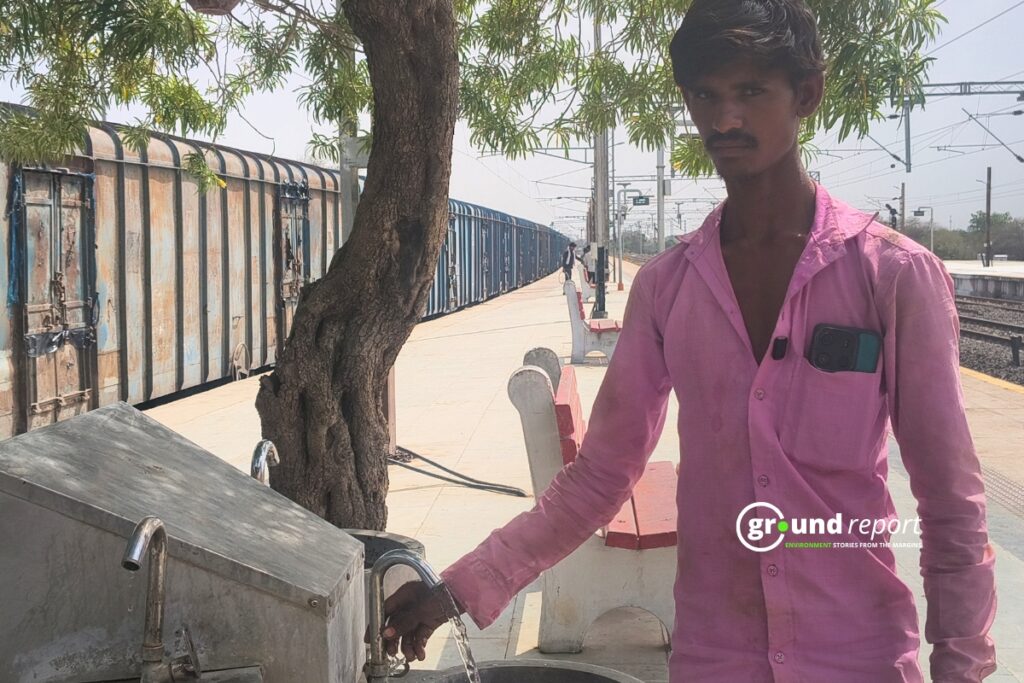
Water coolers indeed exist at Biaora railway station. But it doesn’t reach every platform, as mentioned. So, the passengers have to refill the hot water.
The question is, when crores of rupees in the budget are being sanctioned to upgrade Biaora Station, why weren’t the arrangements made to ensure cold drinking water? Many railway stations are being redeveloped during the “Amrit Bharat” initiative. People say that tiles may transform a station’s appearance, but do they transform the passenger experience?
For these reasons, many passengers praise Bhargava and her team’s work.
dependent Environmental Journalism In India.
More Ground Reports
He Was Married as a Child, Now Manish Dangi Helps Stop It for Others
Despite The Ban, How Gutkha Became MP’s Most Common Household Habit