Amid growing water shortages in Indore district, Collector Shivam Verma declared both urban and rural areas of the district water-scarce on 27 October. The declaration was made under the Madhya Pradesh Drinking Water Preservation Act, 1986, and its 2002 amendment. The order prohibits private borewell drilling in the district until further notice.
Following the order, revenue, police, and municipal corporation officials were authorised to seize machinery used for illegal borewell drilling and take action against those involved. Violations of Sections 3 or 4 of the Madhya Pradesh Drinking Water Preservation Act can attract a fine of up to Rs 2,000, imprisonment for up to two years, or both. Government borewell drilling is exempt.
If necessary, the administration can also take over private wells and other private water sources under Section 4 to ensure public drinking water supply.
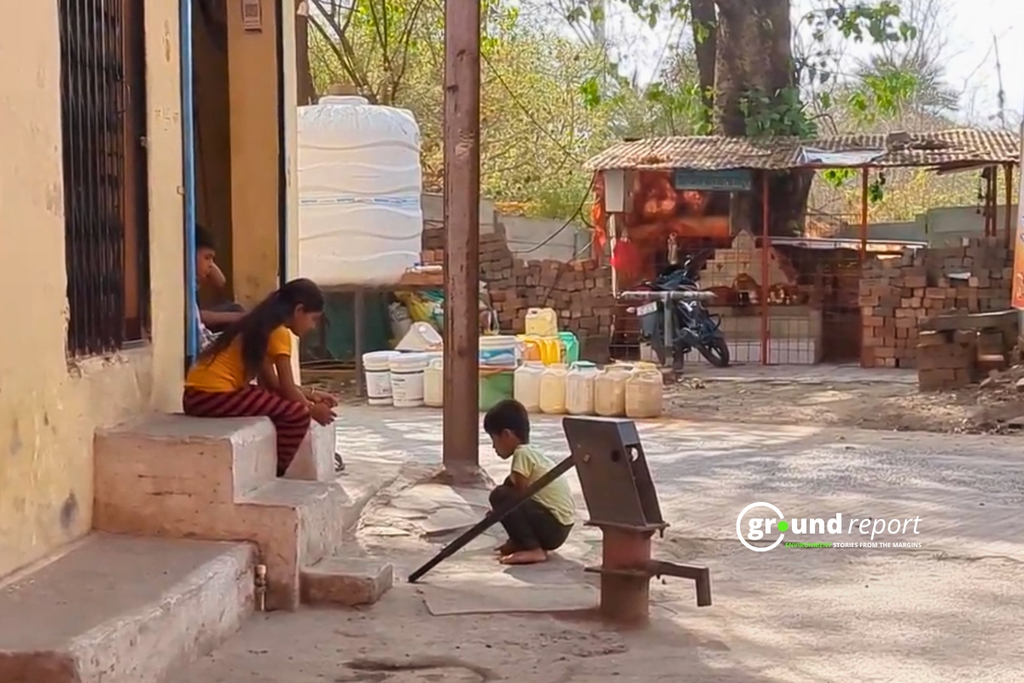
However, even as the administration takes these immediate steps, some parts of Indore continue to face a severe water crisis. Residents in these areas largely belong to economically marginalised communities, yet they remain deprived of basic water services. The fourth phase of the Narmada water supply project may offer some relief, but it is still at least three years away.
Water crisis continues to worsen
Indore district, located in western Madhya Pradesh, received 633.1 mm of rainfall between 1 June and 28 September this year. This was 27% below the normal rainfall of 863.4 mm, according to the India Meteorological Department. Indore had already faced an unusual water shortage in summers, and below-normal monsoon rainfall worsened the situation.
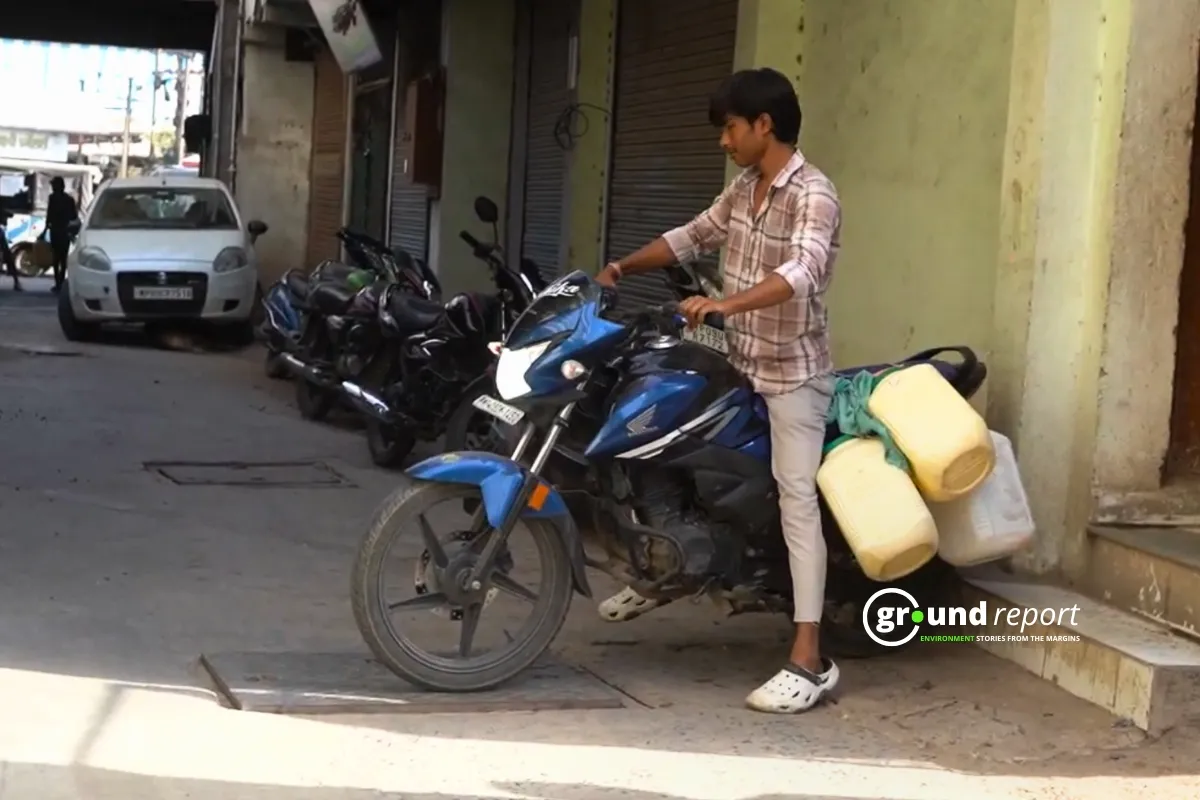
Information from the municipal corporation shows that Indore currently receives 30 million litres per day (MLD) from Yashwant Sagar and 415 MLD from the Narmada. Around 83% of the city’s water supply comes through pipelines. The remaining residents depend on borewells or water tankers.
The 29 villages added to the municipal corporation limits in 2014 are among the worst affected by the current crisis. The 2011 Census recorded a population of around 200,000 across these villages. The current population is estimated to have crossed 500,000, while the number of registered voters stands at 260,000.
Around 70% of Ward 16’s population does not receive Narmada water. The ward has 54 colonies, largely inhabited by lower-middle-income families and workers employed in the Sanwer industrial area.
“The area has a population of around 80,000, and everyone depends on government borewells for water. The Chhota Bangarda pond in the area has dried up,” Mukesh Dharkar, a representative of the ward councillor, says. “Last year, some people tried to encroach on it and dumped around 100–150 truckloads of debris there. The Collector intervened and stopped the encroachment, but the pond could not be saved because the debris was never cleared.”
Similarly, Mahesh Joshi, a representative of the councillor in Ward 37, says, “Six of the ward’s eight sectors are facing problems. Even now, half the area has no water supply, while the other half receives water at low pressure.”
Where will the Rs 50 crore be spent?
In response, the mayor has sought an additional Rs 50 crore from the Chief Minister to improve water supply across the municipal corporation area. The Indore Municipal Corporation plans to use the funds to purchase water tankers, build storage tanks, drill borewells and install hydrants, among other works.
Additional Commissioner Ashish Pathak says, “At present, we are identifying and assessing the areas where the situation could worsen during the summer.”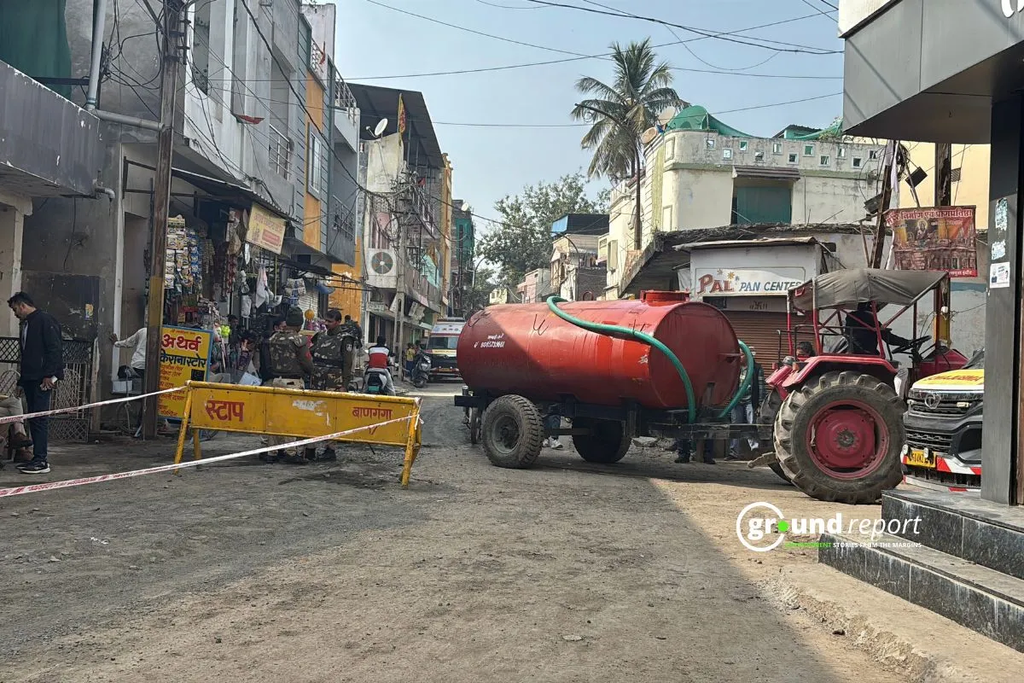
Abhishek Sharma, councillor of Ward 81 and the official in charge of water works under the fourth phase of the Narmada project, says, “The city has a total of 6,040 borewells, of which 361 are non-functional. We will drill 200 new borewells and install 71 new hydrants to improve water supply. These hydrants will provide high-capacity, high-pressure water outlets that tankers and other vehicles can use to fill up.”
Water supply through the Narmada
A municipal corporation survey found that 52,000 families do not have access to the Narmada water supply network, while 33,000 depend entirely on water tankers.
Sharma says that when the third phase of the Narmada project was implemented in 2013, Indore had a population of 2.3 million and around 300,000 households. The population has since grown to 4 million, and the number of households has increased to 800,000.
The budget for the fourth phase of the Narmada project has continued to rise, with the municipal corporation targeting 2029 to bring Narmada water to the entire city. The project, estimated to cost Rs 2,500 crore, will receive Rs 800 crore in government assistance, while the remaining amount will come through loans.
The project aims to increase the city’s water supply to 900 MLD, keeping in mind its water needs up to 2050 and the goal of ensuring 24-hour water availability. It has been designed to serve an estimated population of around 6.5 million.
Sudhindra Mohan Sharma, an expert in water resource management, says Indore’s groundwater crisis is not new. “Our concern for groundwater has been almost non-existent. We have only recently started paying attention to it. As a result, the rate of groundwater extraction has declined from 121% to 117% over the past four years,” he says.
He also points to the challenges ahead. “This year, neighbouring districts such as Barwani, Khandwa and Khargone have received less rainfall. People may move to Indore in search of work. Managing the city’s water supply will then become a challenge,” he says.
Support Us To Sustain Independent Environmental Journalism In India.
More Ground Reports
Madhya Pradesh’s e-Vikas 2.0 Fertiliser System: Why Are Farmers Still Queuing?
Smart Meter Consumers May Save on Electricity Bills With Time-of-Day Tariffs