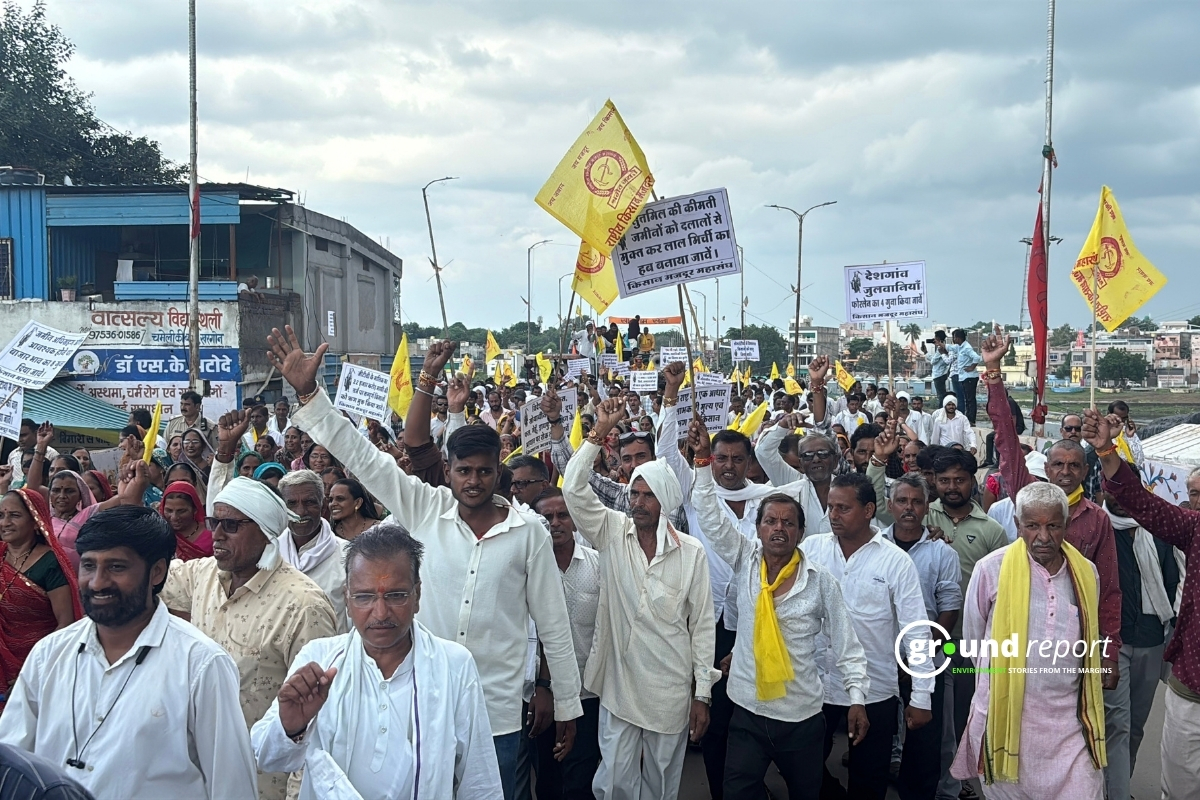
हिंदी में पढ़ें: The E-Vikas Portal, linked to AgriStack, was launched in Madhya Pradesh on April 1 to address the disorder in fertilizer distribution and the long queues of farmers. Under this new system, farmers were required to generate an online token before joining queues at distribution centres. And fertilizer was dispensed only after the verification of the one-time password (OTP) received on their mobile phones.
At the administrative level, this is hailed as a major policy transparency measure. In an interview with the Economic Times in May, the state’s agriculture secretary, Nishant Varvade, said the platform had so far benefited 1.3 crore farmers and had distributed nearly 20 lakh metric tonnes of fertilizer.
In the same interview, agriculture secretary Varvade said, “Farmers need fertilizer at specific times. When it isn’t available on time, crowds form, long queues build up, and distribution becomes unequal – which often harms small farmers the most.”
He maintained that the new system would resolve these problems.
As the Kharif season began, farmers stood in queues outside the Marketing Society warehouse in front of the Rajgarh Collectorate, 141 kilometres from the state capital. Most were staring at their mobile screens, waiting for the OTP.
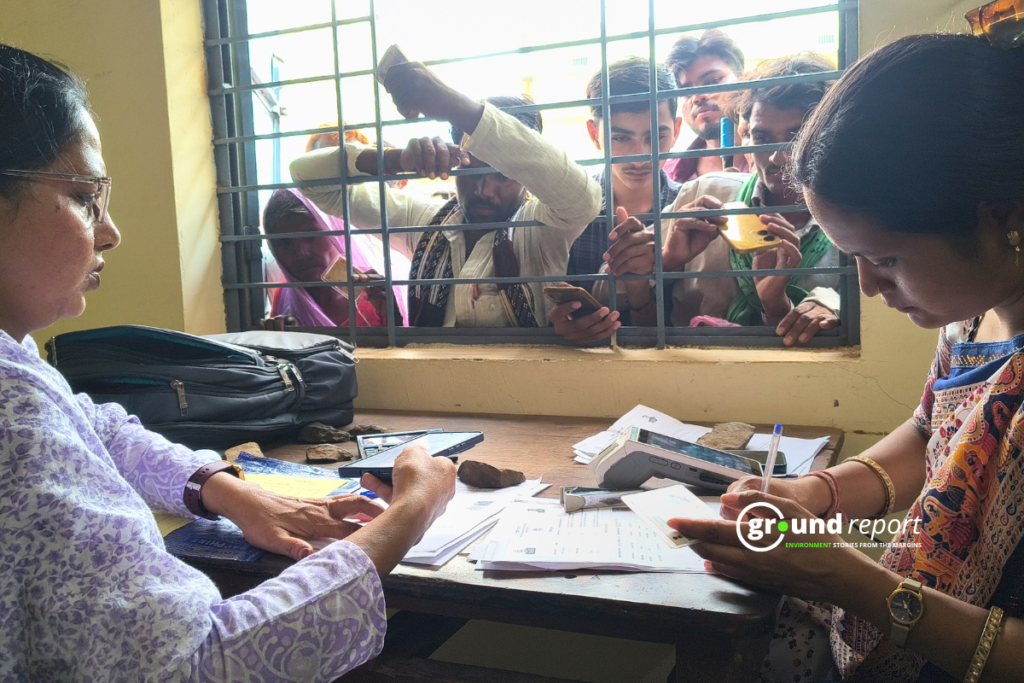
Badrilal Tanwar, a farmer from Bhenpura village, said, “Earlier, farmers could collect fertilizer just by showing their passbook and identity card. Now, farmers must first have an e-token and then come to the distribution centre with the OTP. If they hire a vehicle to get here and the OTP never arrives, they have no choice but to return empty-handed.”
Many farmers at the distribution centre complained of technical problems. While officials argued that the system increased farmers’ convenience, on the ground, farmers faced several issues, from OTP delays to price discrepancies.
On top of this, as with every season, there was a shortage of DAP (diammonium phosphate). Neither the waiting nor the queues have ended.
Technical Limitations and the Waiting Farmer
At several centres in the district headquarters, farmers waited even after receiving an e-token. The new system’s rule was that until the OTP arrived on the mobile phone from the main government server in Bhopal, the system kept the fertilizer locked.
Due to poor network connectivity in rural areas or government computer system failures, farmers waited for hours even after having a token.
Jagannath from Banskhedi knew nothing about this new digital process. He had applied for an online e-token through an employee at a nearby cyber café. But Jagannath explained, “The online person selected one centre here and another centre somewhere else.” Now he had to collect four bags of fertilizer from one centre and the rest from another.
His dilemma was whether to pay transport costs to both locations or wait for the token to be cancelled.
Another barrier in this digital system was the absence of a ‘Farmer ID’. Without this ID, an online token could not be generated. However, the agriculture department said that following strict directions from the district collector, special camps were being organized in rural areas to address this problem.
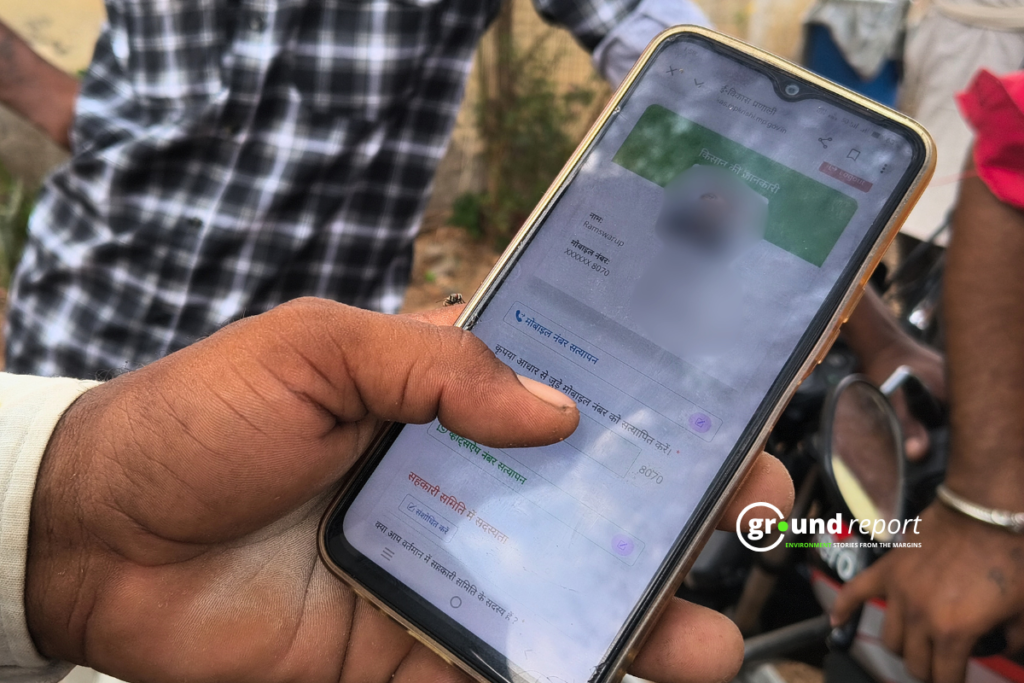
Agricultural officers said that farmers who did not yet have a Farmer ID could get one made by contacting their nearest Patwari (revenue official).
No Room for Correction
An additional limitation of this platform was that a farmer had to purchase the full quantity of fertilizer bags for which the token had been generated—all at once. A significant technical flaw was the ‘no-edit’ policy—there was no option to modify a token after it had been generated.
Warehouse in-charge Shahina Khan explained further: “If a farmer comes with a token for 10 bags but has money for only 5 at that moment, we have no option to edit the quantity in the system. The farmer must buy all 10 bags, because the moment the token is scanned, the digital stock is affected.”
As a result, farmers face immediate cash shortages and are denied fertilizer.
Same Day, Same Place, Different Prices
Jasrath from Padhiya village had come to collect DAP after getting his token. But he was leaving empty-handed. He said, “The fertilizer here is expensive; I’ll come back when the cheaper one arrives.”
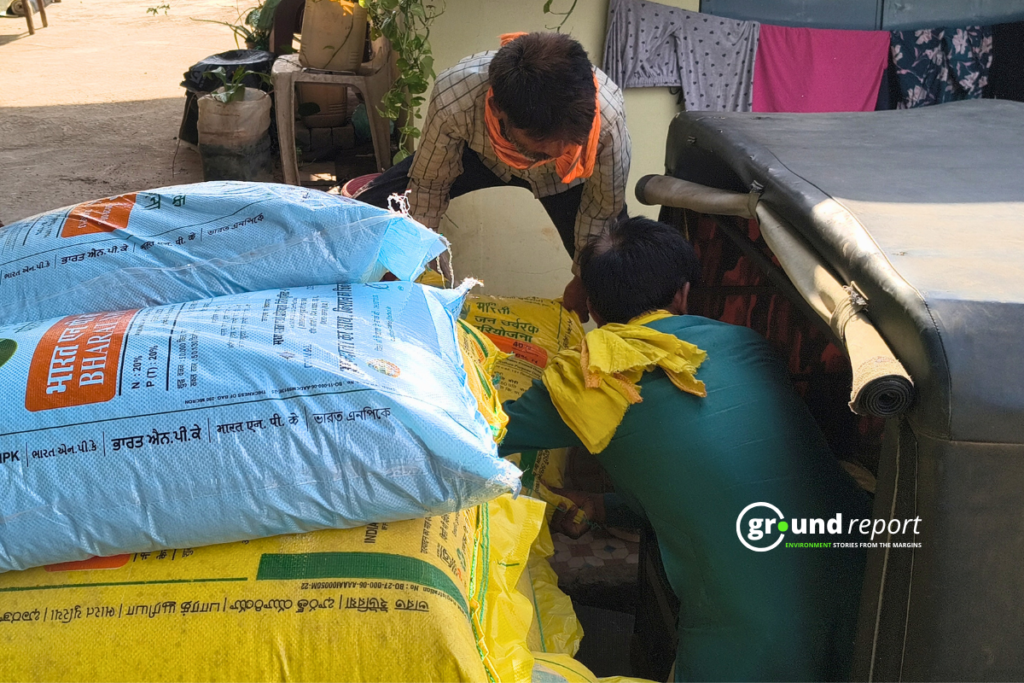
Basically, the same grade of fertilizer is sold at two different prices within the same district.
On June 18, a clear price discrepancy was visible in receipts from two different centres in the Rajgarh district. At the Peepalbe Primary Cooperative Society, farmer Bapulal was sold a 50-kg bag of Coromandel Gromor fertilizer at ₹1,900 (the government MRP).
Meanwhile, at the Marketing Federation Godown in Rajgarh, farmer Prabhulal from Dehri Thakur Village was sold a bag of the same weight and technical grade (20:20:0:13) from Madhya Bharat Agro Products Limited at ₹2,105.
According to the warehouse in charge, a technical constraint of the online portal was that the digital system showed only the fertilizer and its rate that were live in the godown’s stock at that time. Due to price differences between companies, farmers in the same district, on the same day, for the same grade of fertilizer, are charged different prices.
Fertilizer Availability in the District
According to the district’s contingency plan, crops are cultivated across 381.67 thousand hectares during the Kharif season.
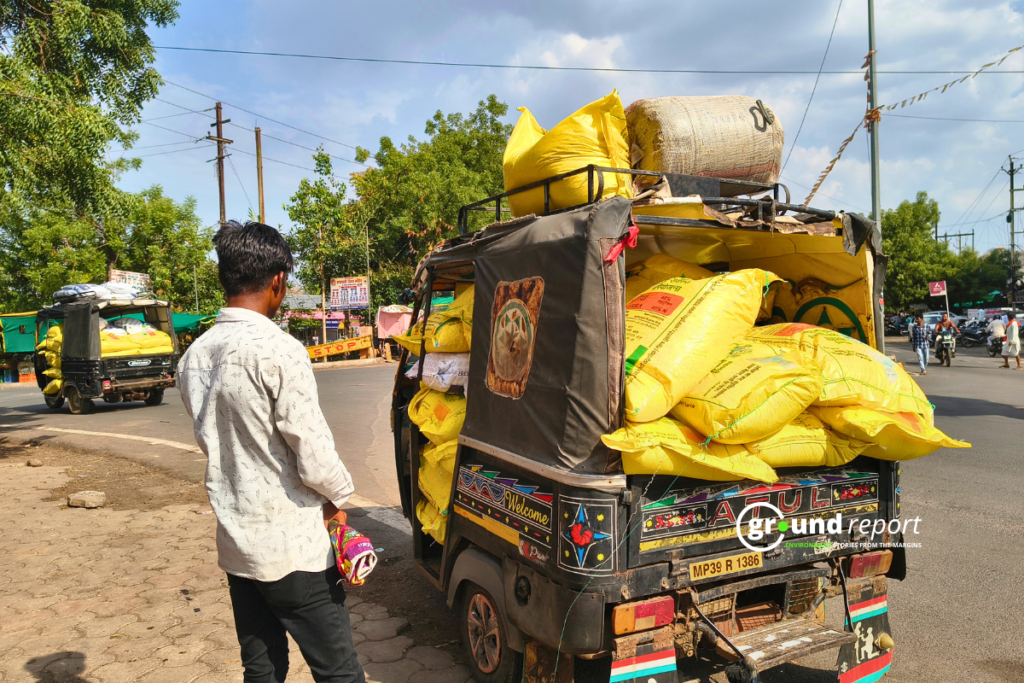
Data received from the local agriculture department showed that the fertilizer demand target for the current Kharif season was 85,026 metric tonnes. However, only 66,976 metric tons have arrived at warehouses so far, a shortfall of 18,050 metric tonnes. Of this, the total demand for DAP alone was 16,614 metric tonnes. But currently, only around half — 8,322 metric tons — is available.
According to departmental data, 76,298 farmers in the district had booked tokens so far, of whom 55,000 had collected 20,000 metric tons of fertilizer from societies.
Despite these numbers, fertilizer supply in the district remained well short of demand. Farmers continued to stand in queues outside distribution centres, waiting for their OTPs. Many remained unaware of the Farmer ID requirement and the new technology.
Despite official assurances, farmers in Rajgarh continued to face delays, confusion, and shortages under the new system.
Support Us To Sustain Independent Environmental Journalism In India.
More Ground Reports
He Was Married as a Child, Now Manish Dangi Helps Stop It for Others
Despite The Ban, How Gutkha Became MP’s Most Common Household Habit