
Varsha Beldar, from the Pardhi community, was sixteen years old when her family decided she would be married. The engagement had been made three years earlier, in 2022, when she was barely a teenager. Her mother, speaking in a mix of Hindi and her local dialect, described the circumstances of her daughter’s marriage in Rajgarh, a district on the northern edge of the Malwa plateau in Madhya Pradesh.
They had no choice; once engaged, “the marriage just had to happen.”
And it did in 2025.
Within weeks, Varsha was back in her village. The family on the other side was now demanding four to five lakh rupees to nullify the wedding as part of the Jhagda practice—breaking an engagement or child marriage arrangement can trigger demands for large monetary settlements, social retaliation, violence, or community punishment.
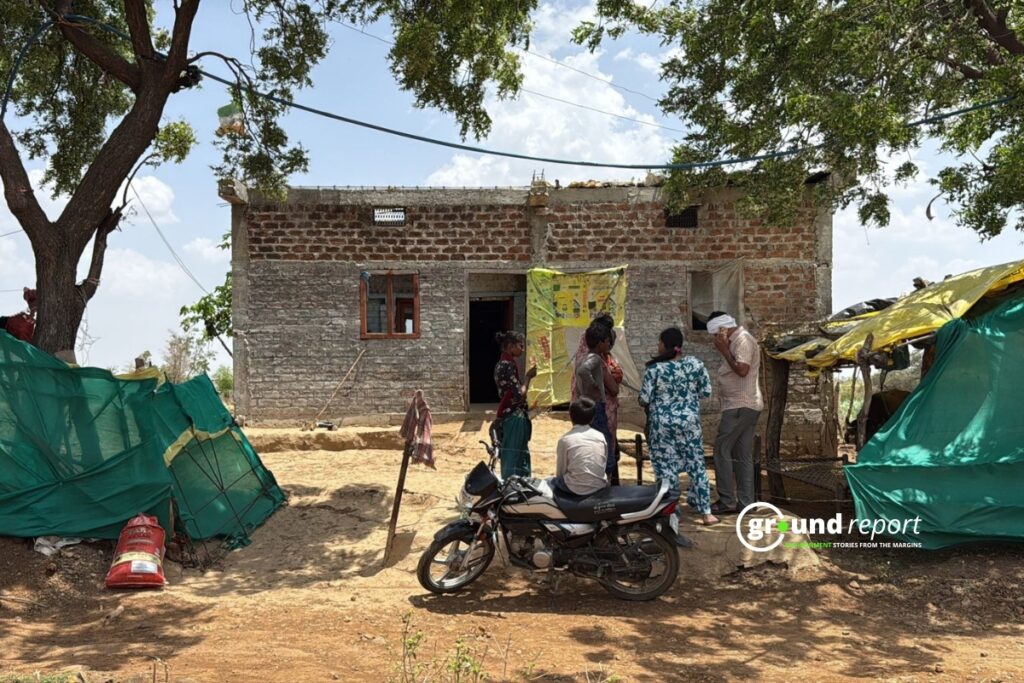
Varsha and her family live almost 50 km from Rajgarh in a small, half-built house with no roof. They have a small piece of agricultural land, which sustains their home, in addition to labour work, which the father takes on whenever circumstances allow. Considering their economic situation, they can’t afford to pay the monetary settlements as part of Jhagda, particularly after what they have spent during the wedding.
When asked what Varsha thought about child marriage, whether marrying a girl before eighteen was right or wrong, she hesitated to respond and stayed quiet.
In our previous article, we discussed child marriage and the socio-economic conditions behind the prevalence of such a practice in some regions.
Many activists and researchers have highlighted the correlation between climate change and socioeconomic conditions, which trigger child or early marriage considerations. These pressures dismantle the safeguards that would otherwise protect girls from child marriages. They worsen poverty, disrupt education, increase food insecurity, and force migration.
“… Loss of livelihood… [drop] in a borewell… climate plays a very key role in the economics of the household and sustenance and survival,” said Reetika Revathy Subramanian, senior research associate at the School of Global Development, University of East Anglia, and creator of the Climate Brides Project.
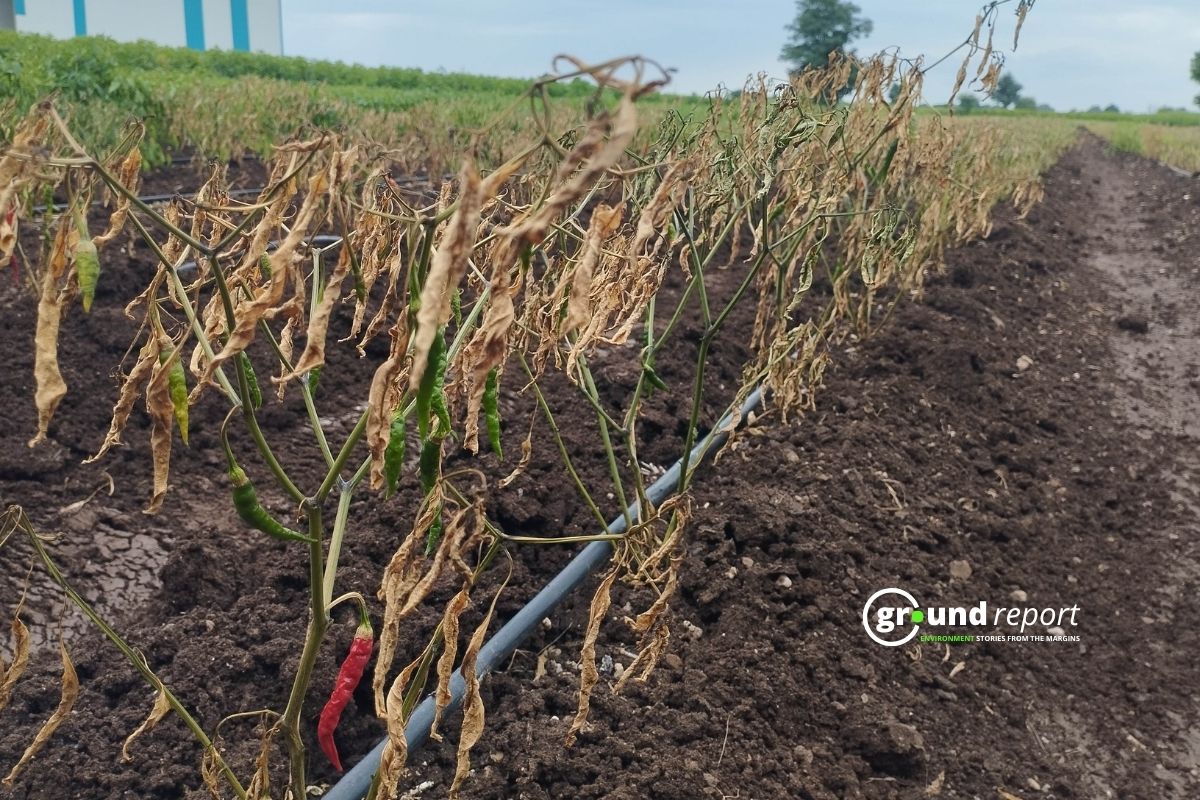
Migration to other states, particularly Rajasthan, for seasonal agricultural work is very much part of Rajgarh’s economic fabric. In Madhya Pradesh and Rajgarh, in particular, the agricultural sector is vulnerable to climate change pressures.
Globally, from drought-stricken Ethiopia to flood-ravaged Pakistan and heat-stressed Bangladesh, climate shocks are worsening poverty, disrupting education, increasing food insecurity, and forcing migration—conditions that can make girls more vulnerable to early marriage.
What Reetika Subramanian Found in the Canefields
Subramanian spent nearly a year, between October 2020 and August 2021, conducting her Ph.D. research at the University of Cambridge’s Centre for Gender Studies.
She moved between villages and sugarcane fields in Maharashtra.
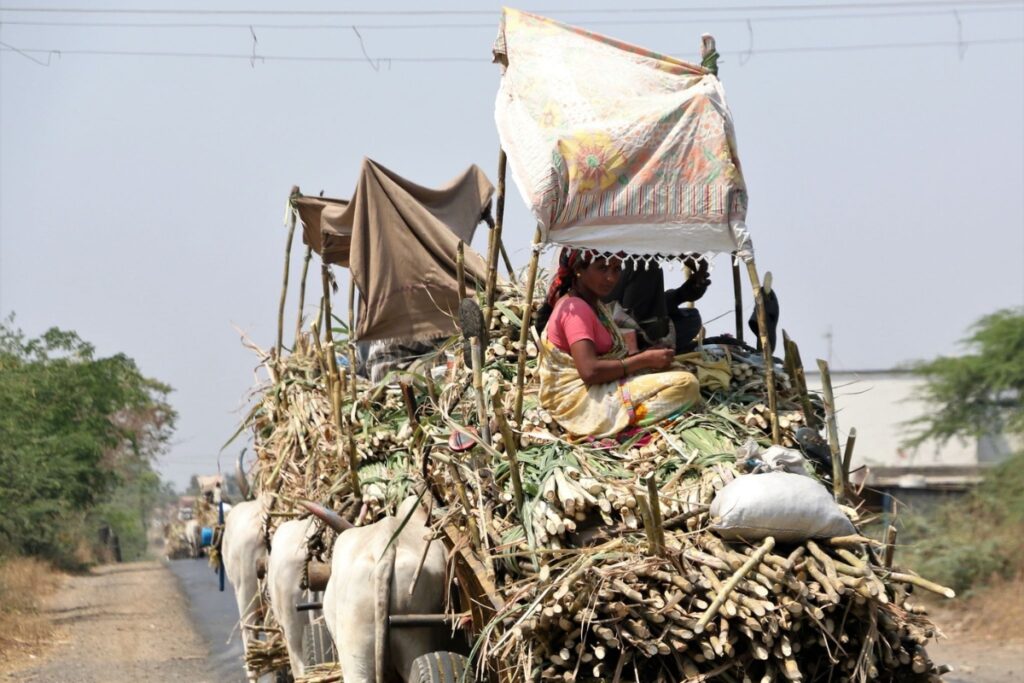
In Maharashtra’s Marathwada, the young couples are recruited in pairs to harvest sugarcane in the wetter districts to the west, in an arrangement called a “koyta,” the Marathi word for “sickle.”
“Involving the wife in the waged labour unit ensured ‘more security’ and helped with ‘cooking and cleaning’; both of these tasks were unpaid,” Subramanian explained in the paper. “If there were only men, they wouldn’t stay. They would move wherever they could find more money.”
In some situations, Subramanian found, the weddings are arranged by the hour, and within a few days of the wedding, the couple is in the sugarcane fields. She called it the gate-cane wedding.
Subramanian found that while climate change doesn’t cause child marriage, it surely multiplies the drivers of early marriage, like cyclical droughts in Marathwada, which in turn impacts the family’s economic situation. These slow, cumulative pressures are the ones that trap families into bargaining their future.
“It is a livelihood decision. It is a survival decision in some way,” Subramanian said. “A lot of people in Bangladesh want to get their daughters married not in coastal areas but in areas away from the coastal zone so that they have a better chance of life.”
Save the Children estimates that nearly 9 million girls globally are exposed each year to the dual threat of climate disasters and child marriage. And around two-thirds of child marriages occur in regions with above-average climate risks.
India accounts for 34% of the world’s child brides, and around 23% of young women aged 20–24 were married before their eighteenth birthday, according to NFHS-5. Madhya Pradesh is one of five states that together account for more than half of all childhood marriages in the country.
And, in the previous article, we mentioned that, as per the latest data presented in the Madhya Pradesh state assembly, Rajgarh has shown an increase in the cases of child marriage.
Rajgarh’s Climate Vulnerability
The Atlas of Climate Change Vulnerability (2020) ranks Madhya Pradesh as highly vulnerable to climate change, with 17 of its 52 districts, including Rajgarh, Dindori, and Shivpuri, classified as high risk. The state has an agriculture and forest-dependent population. The rising temperatures, more frequent droughts, and erratic rainfall make them vulnerable.
Rajgarh falls in, as per the composite vulnerability, the high category in the baseline scenario and “is projected to increase to very high vulnerability in the mid-century and end-century scenarios.”
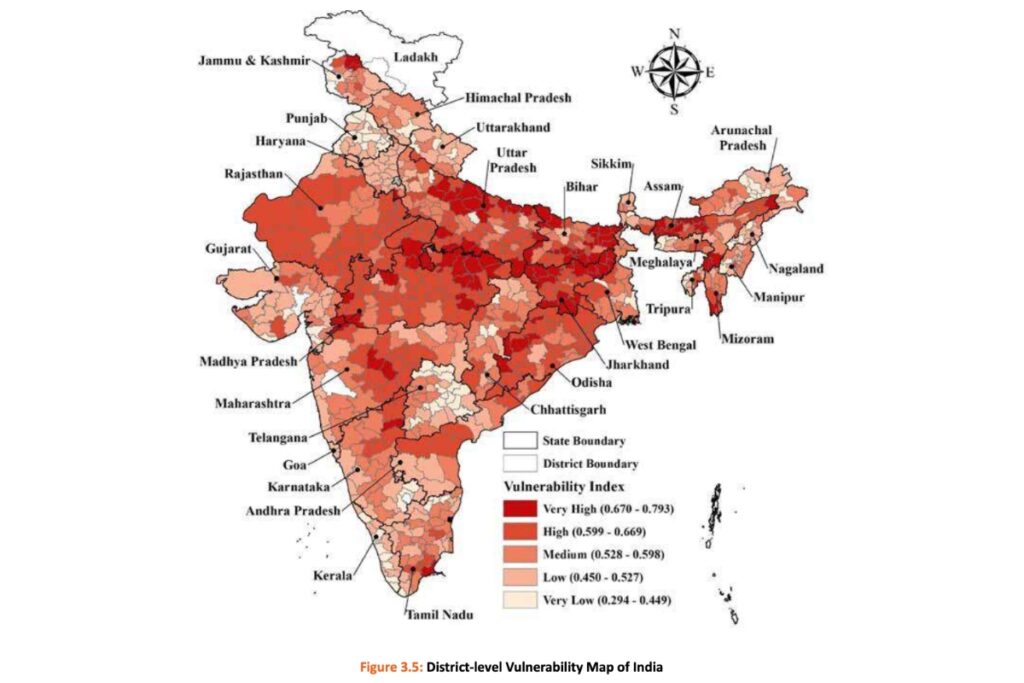
The high-vulnerability category, ranking 26th out of 52 districts, according to the 2022 State Action Plan for Climate Change, draft version. Earlier state assessments also highlighted repeated drought exposure, groundwater stress, declining rainfall, rising temperatures, low forest cover, and land degradation as key environmental pressures.
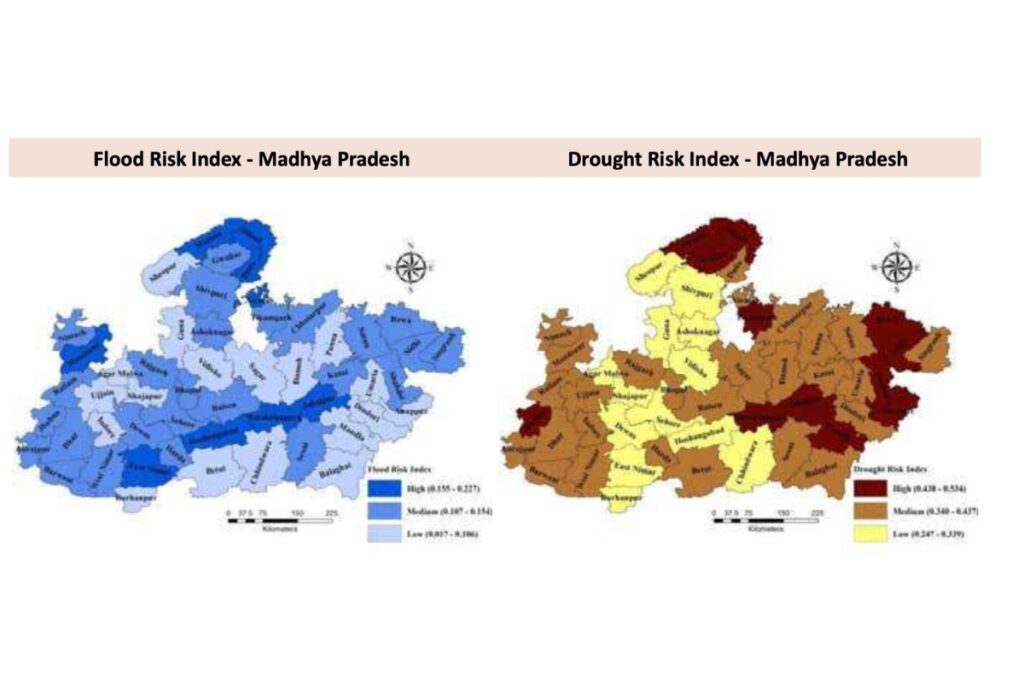
More recent district-level climate risk assessments place Rajgarh in the medium-risk category for both floods and droughts, suggesting that while the district may not be among Madhya Pradesh’s most hazard hotspots, it faces persistent climate stresses that can affect agriculture and rural livelihoods.
Here, it is important to distinguish between a climate hazard and vulnerability. A hazard is a climate-related event, such as a drought, flood, or heatwave. Vulnerability, on the other hand, refers to how severely people are affected when that event occurs. It is shaped by factors such as how dependent communities are on resources that may be disrupted by climate hazards and the financial, social, and institutional resources they have to cope with, adapt to, and recover from those impacts.
Madhya Pradesh witnessed a rise in climate- and weather-related disasters in recent years. A 2025 assessment by the Centre for Science and Environment reported that the state recorded the highest disaster-related deaths: 532.
In districts such as Rajgarh, where most households depend on agriculture, rainfall variability can have significant consequences. Farming in the district relies heavily on the southwest monsoon between July and September, making rural livelihoods sensitive to droughts, delayed rainfall, and unseasonal weather events. When crops fail or yields decline, household incomes and food security can come under pressure.
These challenges intersect with existing vulnerabilities faced by girls and women. Rajgarh has historically recorded low female literacy levels, with the Census 2011 reporting female literacy at 48.95 percent. Research by UNICEF and other organisations has noted that climate-related shocks can contribute to conditions associated with school dropout, child labour, and child marriage, particularly in already vulnerable communities.
Way Forward
Recognising these challenges, Rajgarh was included among India’s Aspirational Districts and was also part of a Climate-Smart Village initiative, which aimed to promote resilient agricultural practices. Together, these programs seek to strengthen livelihoods, improve educational outcomes, and build resilience in communities.
“The focus on child marriage is about increasing the age at marriage rather than talking about structural change itself,” Subramanian said. “Unless you don’t have a safety net, it becomes quite difficult to say that okay, we will increase the age at marriage.”
She highlighted that school is more than just access to education. It gives girl students, particularly, “access to different infrastructures like a midday meal… and a safe space to be outside home.” Though she said, considering the impacts of climate change, particularly on livelihoods, “Education has to be linked to livelihoods.”
Back in Rajgarh, Varsha’s mother is struggling to navigate a court process she barely understands while facing social ostracization from the community. At the same time, her family is trying to fend off demands for money they simply do not have. Yet her thoughts remain fixed on Varsha’s future. She worries that if another marriage is arranged, the groom’s family may demand even more money. “For now,” she said, “she [Varsha] just stays here.”
Note:
This story is part of a three-part series on child marriage, climate change, and malnutrition, focused on Rajgarh and Madhya Pradesh.
Support Us To Sustain Independent Environmental Journalism In India.
More Ground Reports
He Was Married as a Child, Now Manish Dangi Helps Stop It for Others
Despite The Ban, How Gutkha Became MP’s Most Common Household Habit