
Jharkhand plans to transform from a coal-dependent state into a manufacturing hub for clean energy technologies, according to a new report by the Institute for Energy Economics and Financial Analysis (IEEFA). The state aims to invest more than $138 billion by 2070 to build factories producing solar panels, batteries and electric vehicles.
Jharkhand’s Clean Energy Potential
The report, prepared as part of the Jharkhand government’s Task Force on Sustainable Just Transition, details how the state can capitalise on its mineral wealth. Jharkhand holds the highest concentration of 12 critical minerals among all Indian states. These minerals include lithium, cobalt, nickel, graphite and copper, all essential for manufacturing clean energy equipment.
“Jharkhand holds a unique advantage in this regard, with the highest concentration of 12 identified critical minerals among all Indian states,” the report states.
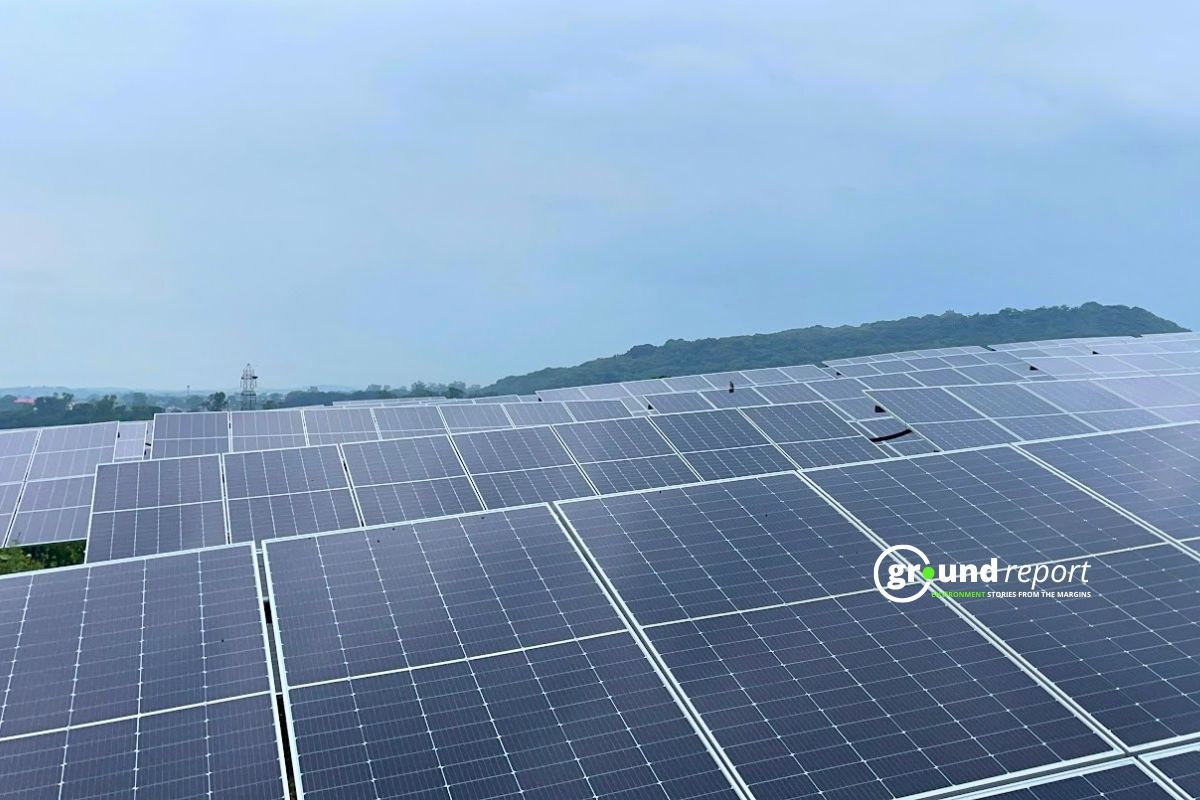
Solar panel manufacturing represents the largest investment opportunity. Jharkhand could capture 10% of India’s solar manufacturing market by 2070, requiring capital expenditure of $68.6 billion. The state would produce 375 megawatts of solar modules annually by 2070.
India currently imports most of its solar panels. The country’s solar manufacturing capacity reached 100 gigawatts in August 2025, with significant portions exported. Jharkhand’s entry into this market would reduce import dependence and create thousands of jobs.
The analysis draws on case studies from existing facilities in Tamil Nadu and Maharashtra. It assumes Jharkhand will build fully integrated manufacturing plants using the state’s silica reserves. Solar panel costs continue declining due to innovation and economies of scale.
Battery manufacturing offers another major opportunity. The state could produce 224 gigawatt-hours of battery storage systems annually by 2070. This sector needs investment of $12.4 billion over the coming decades.
Jharkhand’s Electric Vehicle Opportunity
India’s battery manufacturing capacity is projected to reach 236 gigawatt-hours by 2031 and 1,840 gigawatt-hours by 2050. Battery costs are expected to drop by 70% during this period. Jharkhand’s reserves of lithium, cobalt and nickel position it well to compete in this growing market.
The report notes that “Jharkhand, with its reserves of lithium (needs further exploration), cobalt, and nickel, is well-positioned to develop a competitive BESS manufacturing industry.”
Electric vehicle production requires the largest investment at $56.8 billion. Jharkhand could manufacture 85 million vehicles annually by 2070, capturing 10% of national capacity. The state already has advantages in this sector through its Adityapur Industrial Hub, eastern India’s largest automotive cluster.
Adityapur hosts approximately 1,500 industries, with roughly 85% manufacturing automotive components. This existing ecosystem provides ready supply chains and skilled workers for EV production.
India’s EV market is valued at $8.5 billion in 2024 and projected to grow at 40.7% annually through 2030. The government promotes EV adoption through subsidies and incentives. Jharkhand introduced its Electric Vehicle Policy in 2022 to accelerate this transition.
Financing these massive investments presents significant challenges. Solar panel manufacturing faces thin profit margins due to global competition and falling prices. Battery manufacturing requires 36 months construction time with no cash flow during that period. Most EV manufacturers remain unprofitable due to high battery costs.
The report recommends patient equity, concessional debt and targeted grants to make these industries viable. Large corporations with strong balance sheets are the most likely equity investors. State-owned development banks and public financial institutions can provide low-cost loans.
“Given the sector’s high capital requirements and prolonged periods of low or negative returns, sustained capital infusion and policy support are essential until the industry becomes self-sustaining,” the report explains.
Green Industry Roadmap
Government support remains critical. The central government already provides production-linked incentives for solar and battery manufacturing. Jharkhand must offer additional incentives including stamp duty exemptions, concessional land rates and GST relief to attract investors.
The state government plans to establish a green sector cell to facilitate investments. This single-window system would streamline land allocation, approvals and investor support. Regular investment summits would connect Jharkhand with multilateral development banks and private investors.
Critical mineral mining supports all three manufacturing sectors. Jharkhand holds proven reserves of 9 million tonnes of copper, 20 million tonnes of graphite, 9 million tonnes of nickel and 136 million tonnes of silicon. Mining these minerals requires additional investment of $1.1 billion.
The report emphasizes timing matters critically. Manufacturing facilities must be built before coal mines close. Workers need retraining to transition from mining to manufacturing jobs. The state must attract start-up EV manufacturers rather than competing with established automakers in other states.
Jharkhand introduced several policies to support this transformation. The 2021 Industrial and Investment Promotion Policy incentivises renewable sector investments. The 2022 Solar Policy targets 4,000 megawatts capacity by 2027. These frameworks provide the foundation for manufacturing growth.
Support us to keep independent environmental journalism alive in India.
Keep Reading
Elephants Are Back in MP After a Century, But Can They Stay?
Solar Energy – A Paradigm Shift in Wildlife Conservation
Stay connected with Ground Report for underreported environmental stories.