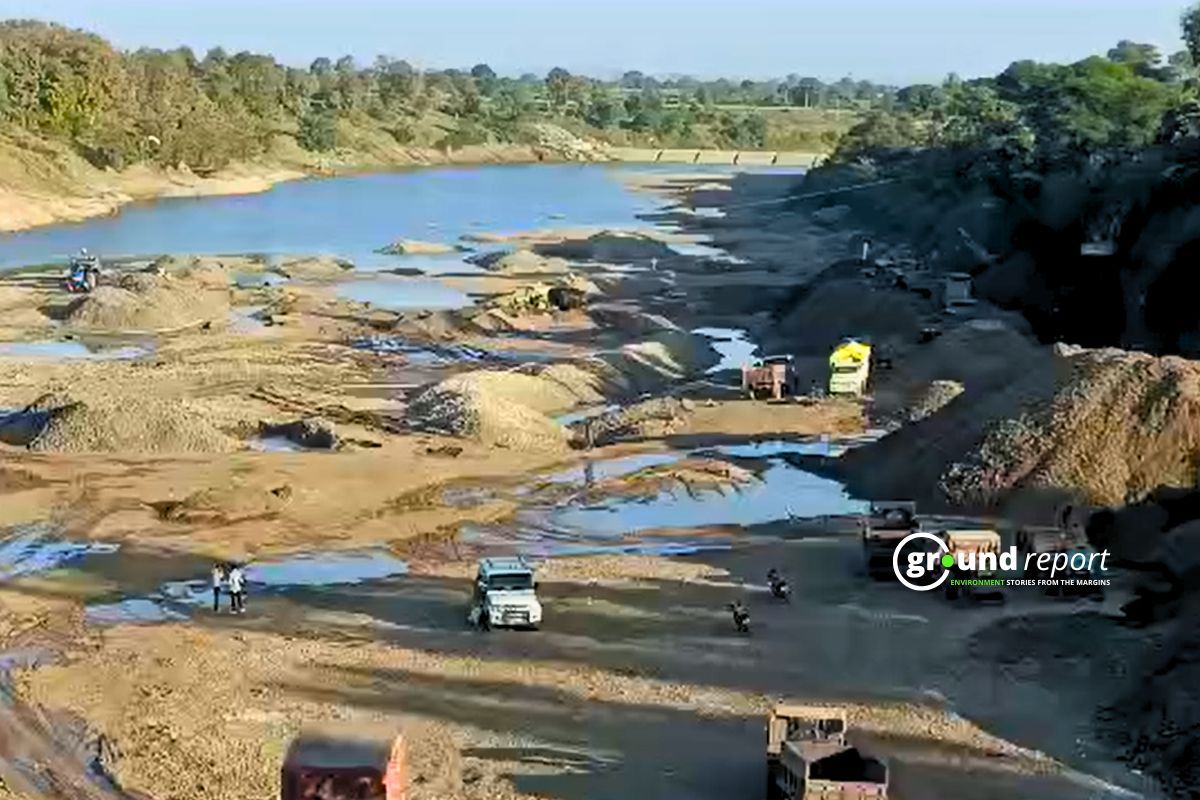
On March 13, 2026, the Supreme Court of India took suo motu cognizance of rampant illegal sand mining inside the National Chambal Gharial Wildlife Sanctuary.
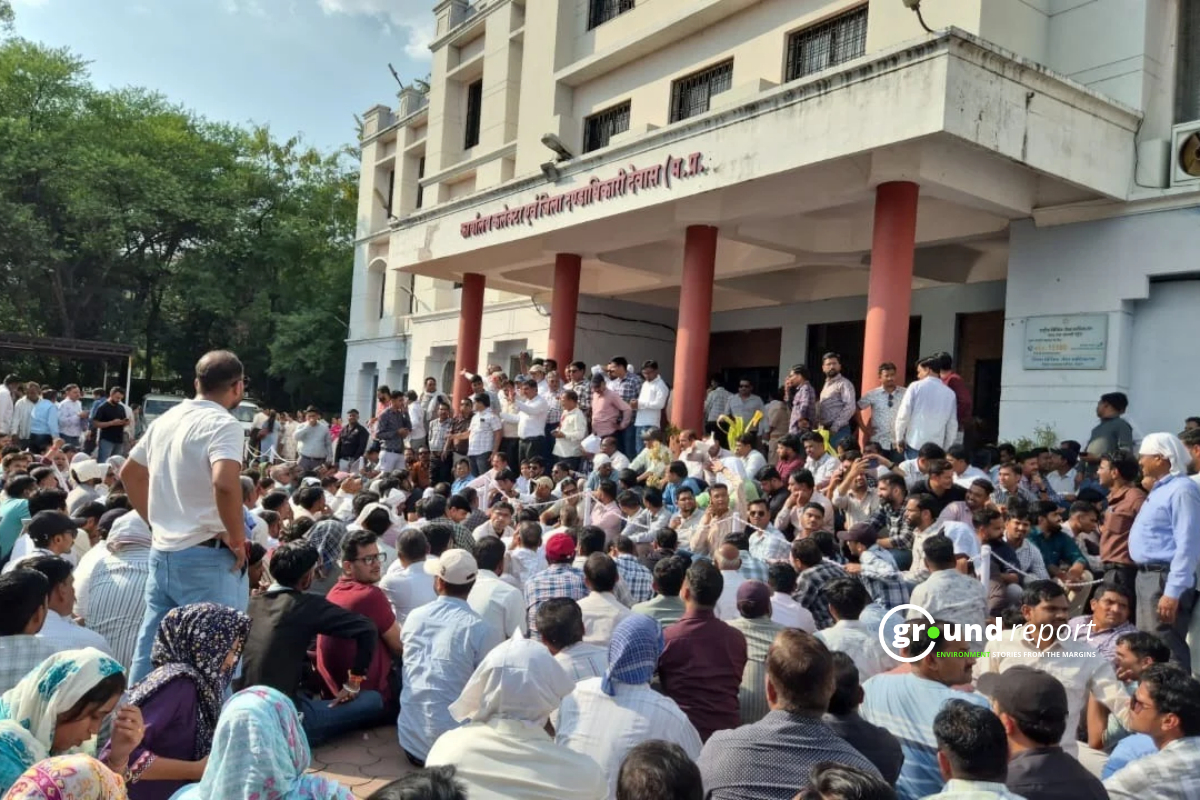
On May 14, with two court orders ignored, two forest guards dead, and a national highway bridge structurally threatened, the bench of Justices Vikram Nath, Sandeep Mehta, and Vijay Bishnoi summoned senior officials from Madhya Pradesh and Rajasthan to appear personally before the court on May 20.
The court also directed the National Highways Authority of India (NHAI) to join the proceedings as a party-respondent and explain the measures it intends to take to protect a bridge on National Highway-44 whose pillars are surrounded by illegally dug pits.
From Rajasthan, the court summoned the additional chief secretary, Home Department; the principal secretary, Department of Mining and Geology; the principal secretary, Finance Department; the principal secretary, Forest, Environment, and Climate Change Department; and the principal secretary, Transport and Road Safety Department.
And, from Madhya Pradesh, the principal secretary of the Transport and Road Safety Department was directed to appear personally.
All officers must file individual compliance affidavits on steps taken under the court’s orders of April 2 and April 17, 2026, with timelines for full implementation. Madhya Pradesh’s affidavit must specifically address enforcement against unregistered vehicles and action initiated against erring officials.
Forest Guard Killed On Duty
On April 8, 2026, forest guard Harikesh Gurjar, 35, was killed in District Morena, Madhya Pradesh, while intercepting a tractor-trolley carrying illegally mined sand near the Ranpur village intersection on National Highway 552. Between 5:30 AM and 6:00 AM, the driver deliberately accelerated. Gurjar was crushed under the vehicle and died instantly.
On January 8, 2026, forest guard Jitendra Singh Shekhawat was run over by a tractor-trolley while manning the Jhiri checkpoint in District Dholpur, Rajasthan. His leg was amputated. He died the following day.
In its April 17 order, the court recorded a disclosure Madhya Pradesh had made in an affidavit before the National Green Tribunal. The affidavit said that the forest officials do not possess adequate weaponry to deal with the sand mafia, who are reportedly armed with superior weaponry and modern vehicles.
The court stated in its order that this disclosure “exposes a shocking state of unpreparedness and a lack of institutional will.” It further recorded that the state “cannot be permitted to plead helplessness or take shelter under its own inadequacies.”
The court recorded in its April 17 order that the incidents reflect “not merely isolated lapses but a systemic and institutional failure.” The circumstances, it stated, “may even warrant an inference of tacit connivance.”
Media reports dated April 7, 2026, cited in the court’s April 17 order document, described excavation using dumpers, excavators, and tractors directly beneath and around the pillars of the National Highway-44 bridge connecting Madhya Pradesh and Rajasthan near the Morena-Dholpur border.
Pits ranging from 30 to 50 feet deep have been dug around certain pillars. Large water-filled cavities have formed beneath the structure. The bridge carries thousands of vehicles daily.
Tarun Nair, conservation biologist and lead of the Wildlife Conservation Trust’s Makara Programme, in Dholpur, Rajasthan, said the scale of the open activity makes official involvement hard to deny.
“It’s impossible that local authorities are not aware and not involved that the activity is conducted openly,” he told the Ground Report. “Good, upright forest and police officers are able to bring illegal sand-mining to a near complete halt, even if momentary, but are often transferred pre-maturely because there aren’t enough political kickbacks.”
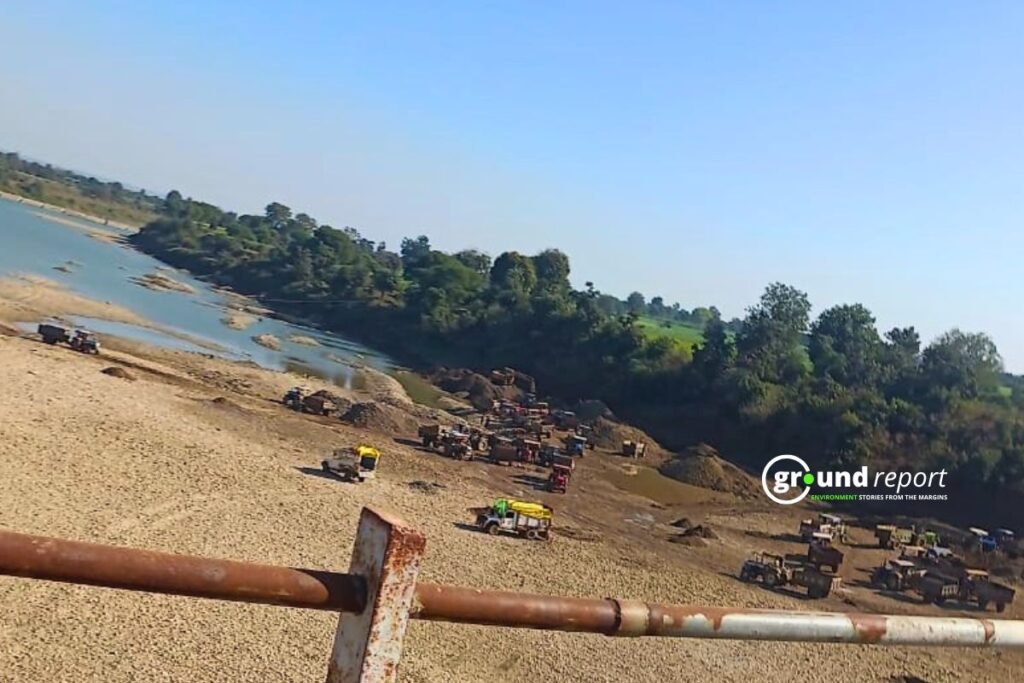
Nair said the mining networks exploit an additional legal gap. “The mining mafia often employs minors to fill and transport tractor-trolleys — they cannot be arrested immediately and must be dealt with under the Juvenile Justice Act, which is hardly a deterrent, he said. The sand mafia has made full use of that loophole”.
Court-Issued Warning
The April 17 order, issued under Article 142 of the Constitution, directed the installation of high-resolution Wi-Fi-enabled CCTV cameras on all routes used for illegal mining; mandatory GPS tracking on mining vehicles in the districts of Morena and Dholpur as a pilot; armed joint police-forest patrol teams operating round-the-clock; environmental compensation under the Polluter Pays principle; and immediate seizure and prosecution of any vehicle involved in illegal mining.
The court warned that failure to act will compel it to consider deploying the Central Reserve Police Force (CRPF), imposing a complete ban on sand mining in both states, and levying heavy financial penalties.
What The Mining Threatens
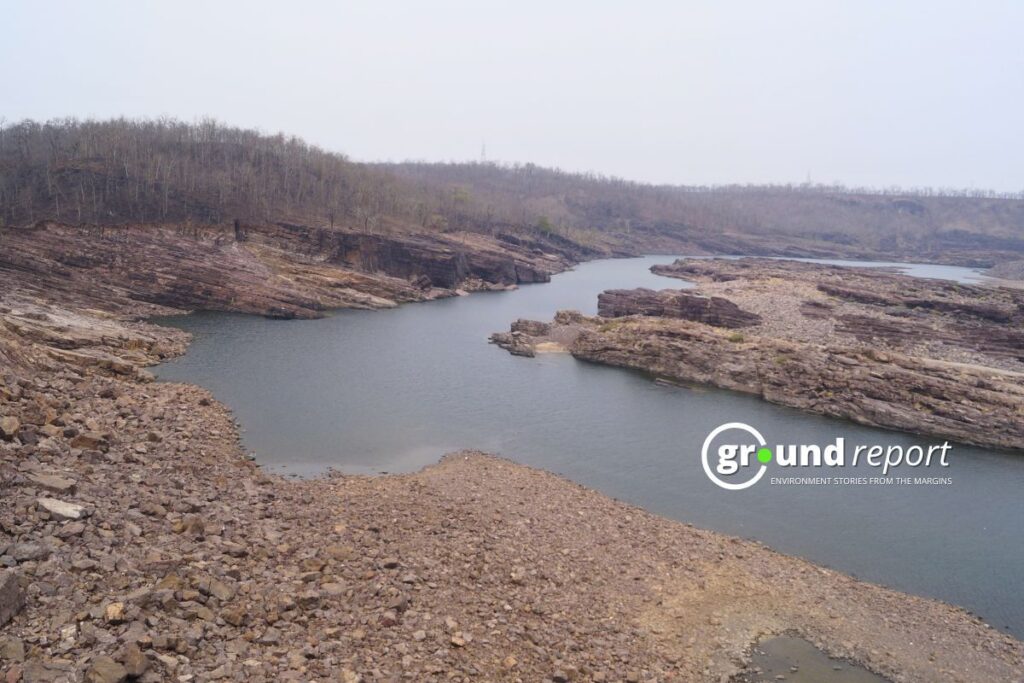
The mining threatens the already critically endangered gharial freshwater crocodile species at the National Chambal Sanctuary, which stretches across 625 km in MP, Rajasthan, and UP.
The sanctuary holds the world’s largest breeding population, ten times larger than any other surviving population. Each year, an estimated 500 nests produce more than ten thousand hatchling gharials.
The sanctuary also has the Gangetic river dolphin, the critically endangered red-crowned roofed turtle, and the Indian skimmer. The Chambal holds nearly 1000 Indian skimmers, a significant share of the species, with an entire global population of 2,000 to 2,500.
Everything depends on the river’s sandbars.
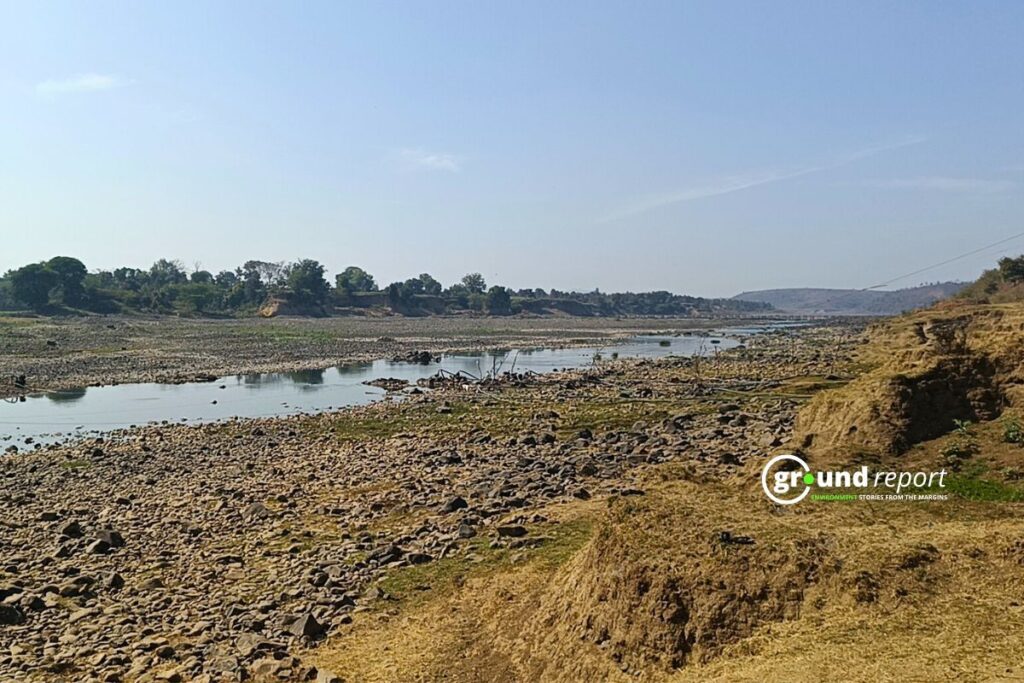
Jailabdeen A., a gharial researcher and project coordinator of the Gharial Ecology Project, said the mining directly targets the habitat that the sanctuary exists to protect. “Open, free-flowing rivers with high sandbars, like the Chambal, are crucial for breeding, nesting, incubation, and successful hatching,” he said.
Nair said enforcement tools are not the constraint. “Everyone knows where the mining is happening,” he said. “The challenge is not detection; it’s that authorities are unable or unwilling to stop it.”
The matter returns to court on May 20.
Support Us To Sustain Independent Environmental Journalism In India.
Keep Reading
How Solar Solutions Are Helping Protect Crops from Wild Animals
Pench Tiger Reserve: How a Man Survived a Tiger Attack