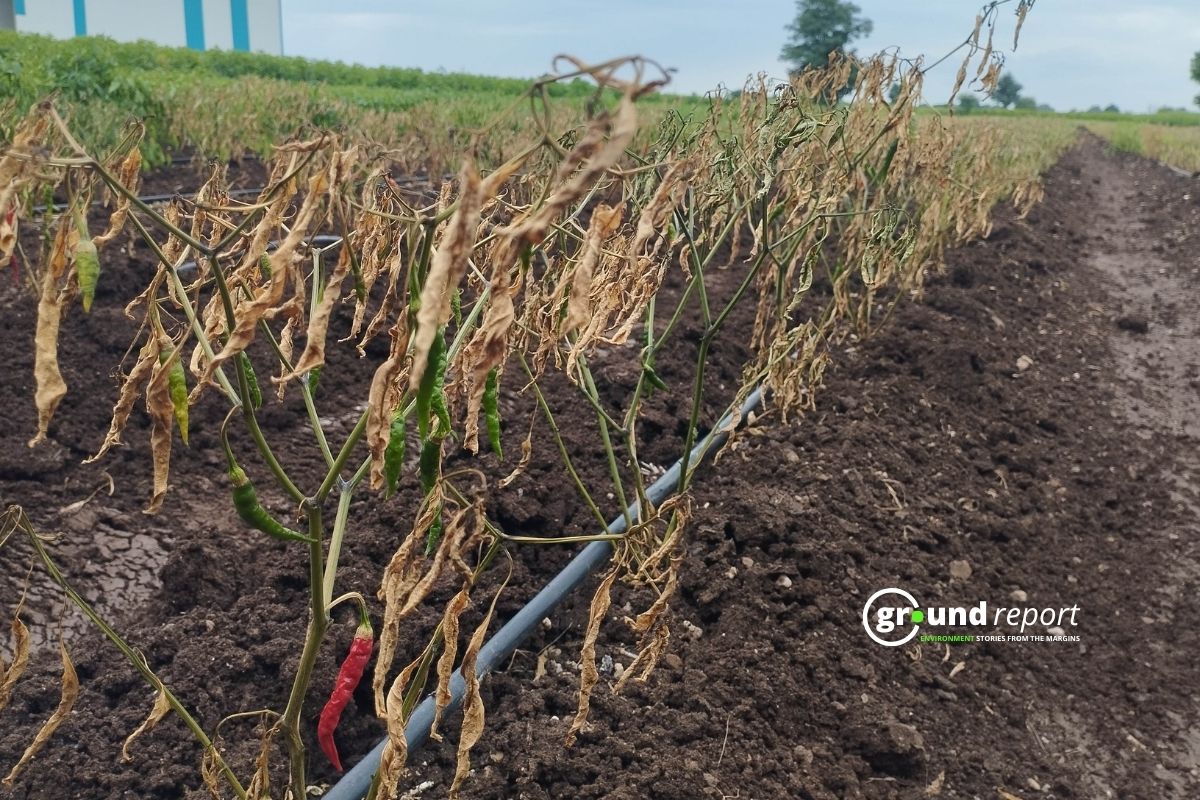

हिंदी में पढ़ें । In November 2024, the girdawari, India’s seasonal land and crop inspection record, recorded paddy on two of Amar Singh Patel’s plots, even though he had grown no paddy that season.
Patel farmed in Bamnahadi village, Ramnagar Tehsil, in the Maihar district, on roughly 2.5 acres of land where he had sown kodo millet, a crop his family had grown for generations because it needed little water, no fertiliser, and suited the water-scarce region where they lived.
On another plot he described as roughly two acres, he had sown arhar, also known as pigeon pea or red gram. But the patwari, the village accountant, recorded paddy on both plots instead.
Patel said the patwari never actually visited either field to see what was growing there. Patwaris, he said, typically filled in the girdawari from home, going by whatever the surrounding fields showed.
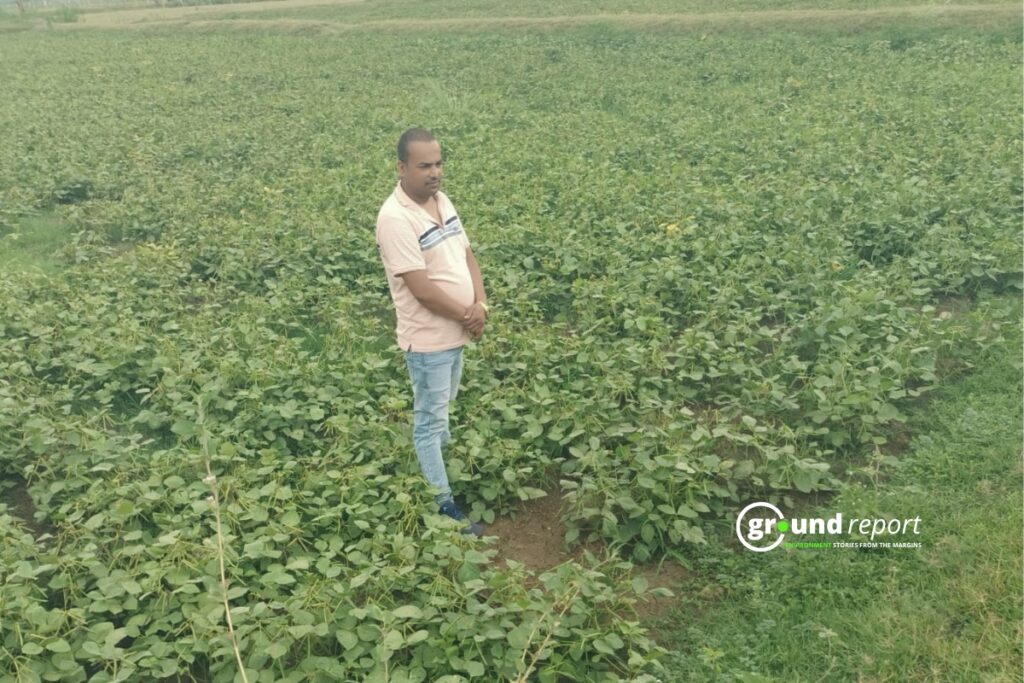
The patwari’s entry in the girdawari determines whether a farmer can sell the crop at the government’s support price or is forced to sell to private traders instead. Patel learned about the mistake only when he tried to register his kodo crop and found he couldn’t sell it to the government at all.
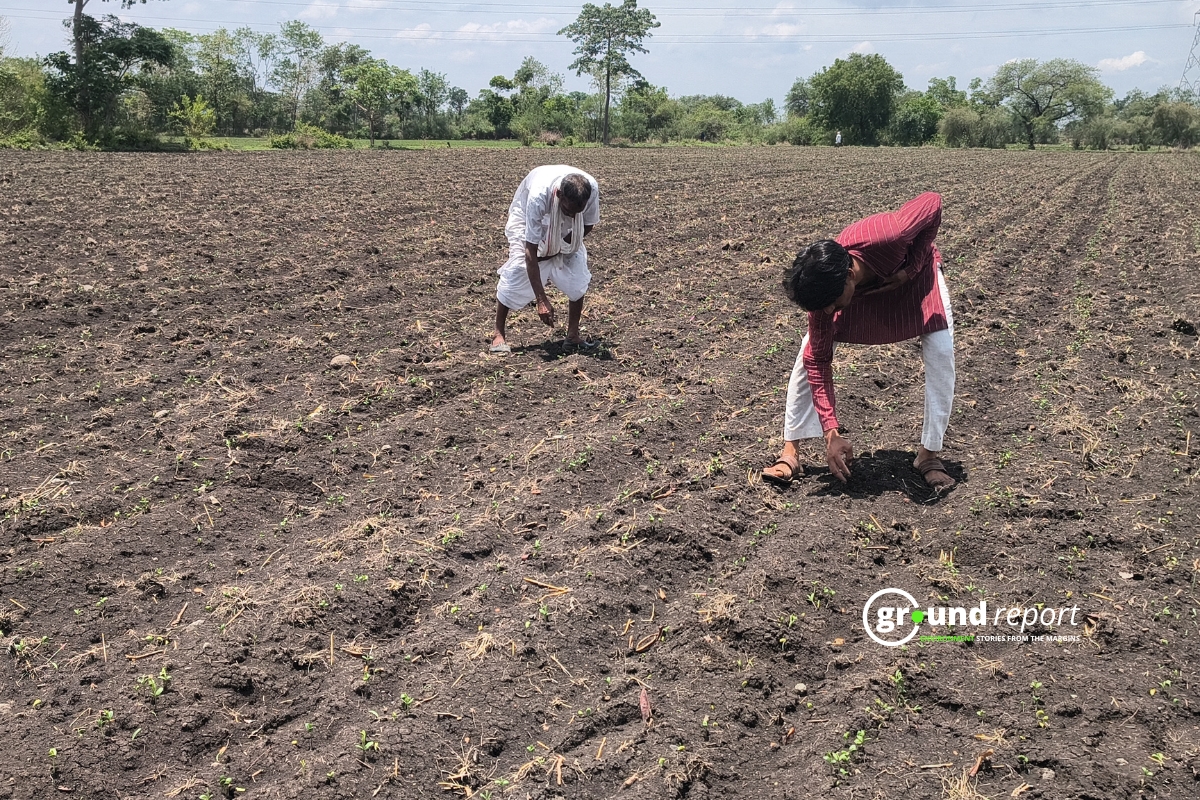
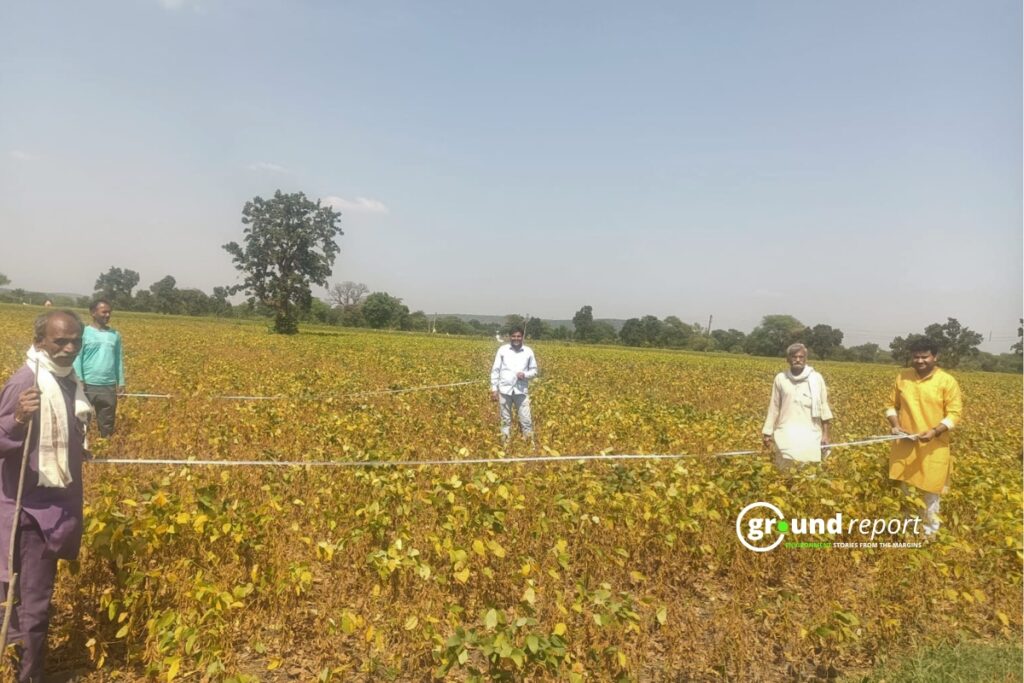
He filed a written complaint and heard nothing back, so he brought a local journalist, Sailendra Chaurasia, to the field, where labourers were present, and had the actual standing crop recorded on video in the hope that it would force some action.
The Sub-Divisional Magistrate told him the matter would be investigated, but nothing happened.
The government’s minimum support price that year was ₹2,500 per quintal, but he sold at ₹2,200; he had harvested close to 20 quintals from the one hectare, keeping two to four for his own household and selling the remaining 17-18 at the lower rate. Patel ended up selling his kodo to a private trader at a loss.
The following season, he skipped Kodo entirely.
In another case, a farmer in Chhidgaonmouji village, near Nasrullaganj in Sehore district, had his entire gram crop recorded as wheat last year. Unable to sell his harvest to the government, he too had to sell to a private vendor at a loss. His complaint was the same: patwaris don’t come to the field to note the crop.
A visit to the Sehore collectorate confirmed these are not isolated incidents: Lakhan Lal Lodhi, a revenue inspector there, said that once the allotted correction window closes, farmers do eventually write to the collectorate through the tehsil office.
While both farmers and many others like them were affected by errors in the girdawari, it would be difficult to accept that patwaris have stopped visiting fields altogether, as since 2017, Madhya Pradesh has conducted crop surveys through a mobile app, replacing the paper-based system with a digital process that still requires patwaris to visit each khasra (survey plot) to record the standing crop.
Earlier, patwaris were expected to visit every parcel of land, record the crops grown there, and note details such as irrigation and seed type. Farmers, however, often complained that patwaris never actually visited their fields.
Patwaris, on the other hand, argued that it was nearly impossible to inspect every parcel within the limited time allotted for the survey.
With time, the new system included local surveyors, geo-tagged photos, satellite checks, and three rounds of review. Even the MP Kisan app, which was meant to give farmers a way around this by letting them photograph their own fields and self-report their crops. In response, Patel said his entries simply sat pending until a patwari verified them in person.
For surveyors on the ground, the SAARA (Smart Application for Revenue Administration) app often struggles with poor mobile connectivity and technical glitches. In the summer heat, phones can freeze, overheat, or fail to keep up, making fieldwork even more difficult.
Despite the shift to a digital system, stakeholders said that the problems persist at every stage of the survey process. Senior officials, however, argue that introducing a new technology at this scale is bound to involve initial difficulties. But, as the software improves and users become more familiar with it, technical bugs and operational issues will gradually decline.
This has happened in some cases.
Lodhi said the number of such cases has reduced as the technology has become more efficient and user-friendly; the farmers still affected bear a disproportionate share of the impact of these mistakes.
Girdawari, or Crop Survey
Girdawari is an important revenue department record that documents the crop sown on agricultural land, the area under cultivation, and the person in possession of the land. The record is prepared by the village revenue official (patwari) after inspecting fields during the three cropping seasons.
The girdawari is conducted three times a year, across the Kharif, Rabi, and Zaid seasons, entirely through the SAARA (Smart Application for Revenue Administration) app, feeding directly into schemes such as crop procurement and crop insurance.
The whole process is meant to wrap up within 45 days of the order, and the next Kharif round is to start around 10 August.
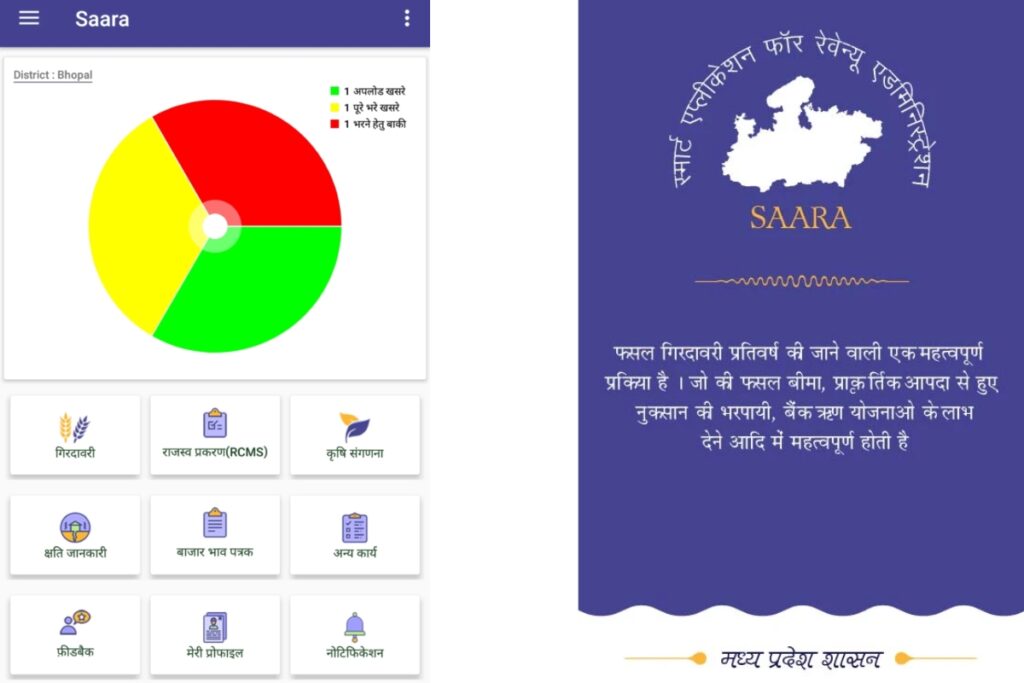
Launched in 2017, Madhya Pradesh’s e-Girdawari project was the first in India to use artificial intelligence and machine learning to digitise and streamline crop surveys. The system used optical satellite imagery during the Rabi season and Synthetic Aperture Radar (SAR) imagery during the Kharif season, when cloud cover limits optical observations; its machine learning models are trained to identify wheat, gram, mustard, cotton, and peas in the Rabi season and paddy and soybean in the Kharif season.
Sandeep Gupta, patwari at the Sehore tehsil, opened the SAARA app on his phone to show how it worked. The surveyor has to physically reach the plot in question, since the app’s distance reading only turns green, meaning zero distance, once he is actually standing there; until then, it stays red or orange and refuses to let the girdawari begin.
This season marks the first time the process has offered a second path alongside that one.
Under the Kharif 2026-27 notification, issued for the season currently underway, some survey numbers will have a shortcut built-in for the patwari alone, in place of the surveyor’s usual visit.
For those specific survey numbers, satellite imagery pre-fills a likely crop or marks the land as fallow directly into the patwari’s own view on the SAARA app before anyone has been to the field at all.
The patwari can confirm a pre-filled entry from within a 100-metre radius of the field, simply by clicking to confirm the crop type and irrigation details; no photograph is required for this route, unlike the surveyor’s. Crucially, the order keeps this satellite-based route to the patwari alone; the prefilled data is never shown to the local-youth surveyor.
If, standing in the field, the patwari finds it doesn’t match what the satellite predicted, the shortcut ends there for that survey number, and the standard process – a geo-fenced photograph taken by the surveyor and sent up for review – takes over instead.
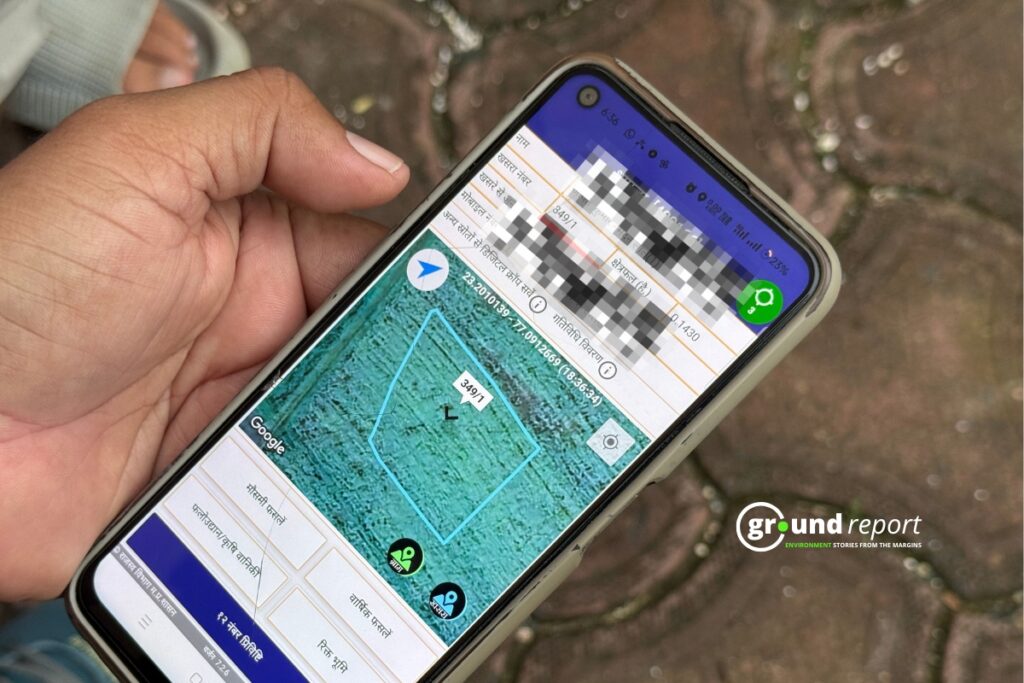
Once the surveyor submits the entry, the patwari is responsible for checking it. And if a surveyor logs wheat but the attached photo shows garlic, that’s treated as an error and sent back for correction.
The Kharif 2026–27 order also seeks to prevent a different kind of malpractice. It requires that the mandatory field photograph clearly capture the standing crop and explicitly prohibits the use of a photograph of another photograph.
Gupta said there are three ways to catch an error. He often simply knows the farmer’s crop well enough to spot a wrong entry; sometimes a surveyor catches their own mistake and flags it for reversal; and sometimes it’s the mismatch between the recorded crop name and the attached photo that gives it away.
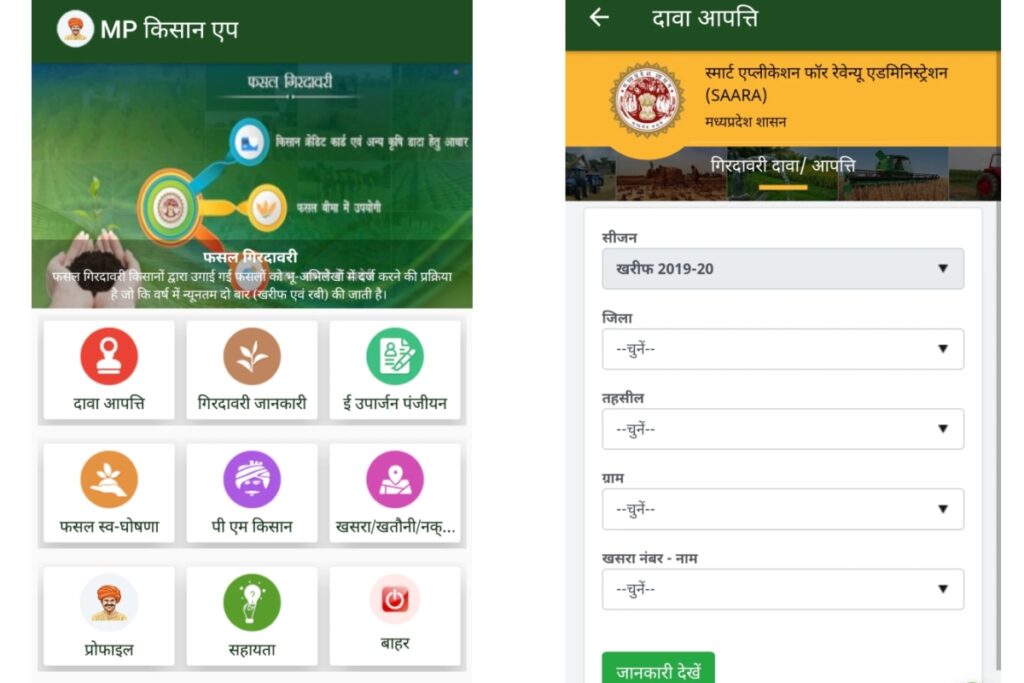
Farmers can also raise objections through the MP Kisan app during the correction window specified in the government’s notification.
The report 2023-24 found that 85% of crop entries recorded during kharif and 86% during rabi in Madhya Pradesh matched. This indicated a relatively high level of accuracy in girdawari.
The most common error was the incorrect assessment of the area under a crop, in 8% of survey numbers during Kharif and 7% during Rabi. Another 4% of errors came when standing crops were not being recorded, while 2% involved crops being recorded even though they were not actually sown.
Plight of Patwaris
For the last two years, Gupta said, patwaris have not visited fields in person for girdawari. And many see this shift in technology and the help of local youth as something that has genuinely made their work easier.
For years now, patwaris have protested against the work pressure and the extra duties piled on top of managing land records: crop-cutting experiments, the minor irrigation census, the population census, the Special Intensive Revision (SIR) of electoral rolls, and general election duty.
Many explained that because patwaris are part of the administrative department, all such work defaults to them. When we met Gupta, for instance, several other patwaris in the area had been assigned to Kubereshwar Dham, a local religious gathering, to coordinate between different agencies on health, sanitation, and similar arrangements, work for which they won’t be paid.
Needless to say, all this extra work affects their primary responsibility of managing land records with few to no mistakes.
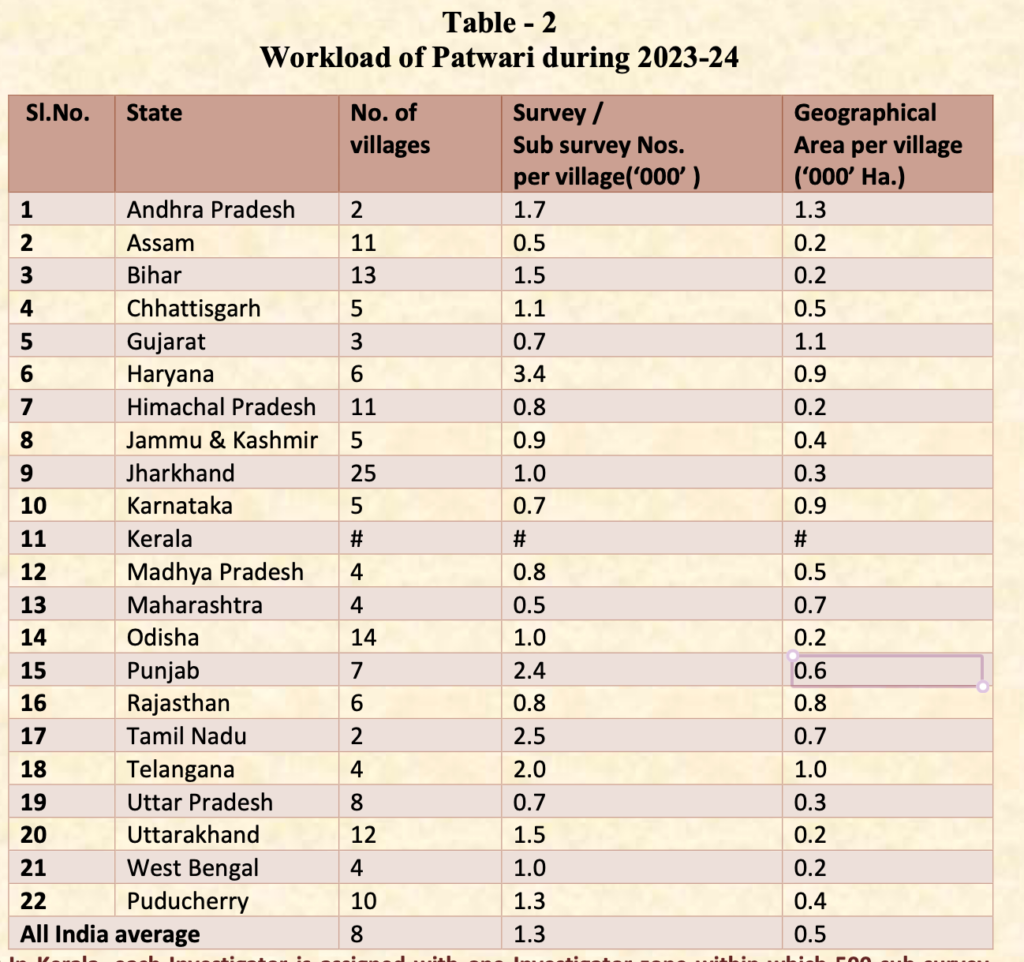
Under the Improvement of Crop Statistics Scheme, the average patwari in India during 2023-24 was responsible for eight villages, around 1,300 survey numbers, and 500 hectares of geographical area per village; in Madhya Pradesh, the average patwari was assigned four villages, around 800 survey numbers, and the same 500 hectares per village.
The report also reiterated the National Commission on Agriculture’s recommendation that a patwari’s jurisdiction be reduced wherever it is considered extensive.
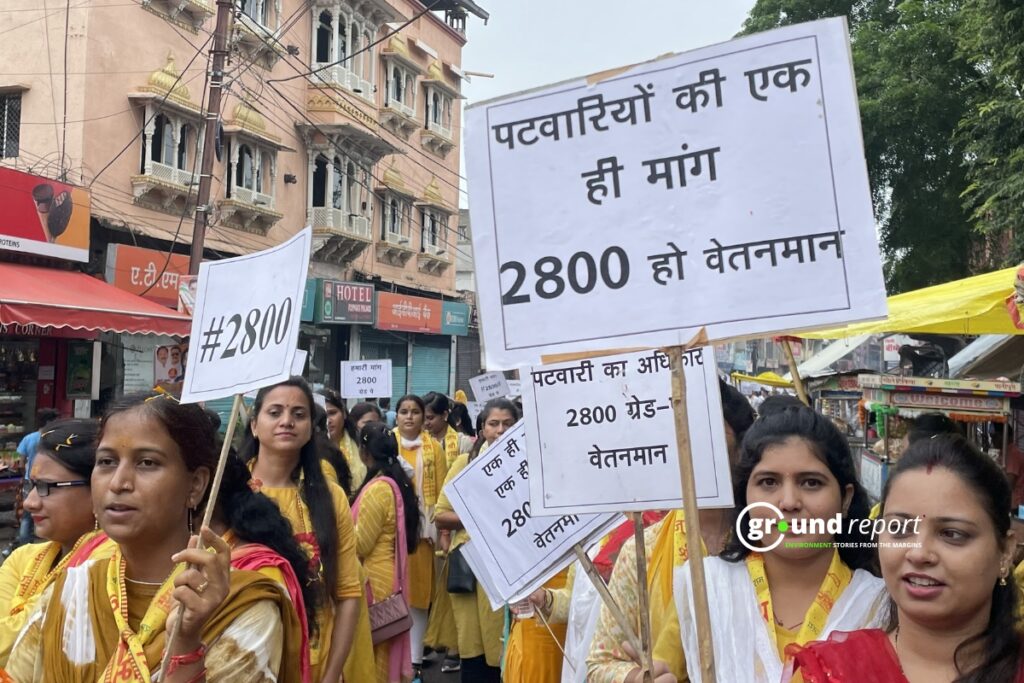
There are ongoing patwari protests in Harda, where the Madhya Pradesh Patwari Association has intensified its statewide protest over long-pending demands, saying repeated representations to the government have yielded no concrete action.
As part of the third phase of the protests, patwaris have withdrawn from official government WhatsApp groups and announced a boycott of WebGIS, SAARA, and other online government work from July 28 to August 2.
Their key demands include implementing the Patwari cadre review, granting promotions and time-bound pay scales, conducting the Naib Tehsildar departmental examination, clearing pending honourarium payments, and bringing Patwaris under the Job Protection Act. The association has warned that if the government fails to respond, it will launch an indefinite strike from August 3.
Payments Pending for Surveyors
On top of this, the government recently changed the protocol, mandating a gap of a season before the same local youth surveyor can be assigned work again, which Gupta said has made the process more difficult.
Amit Sharma worked as a surveyor covering two villages, Bijoura and Baktal. He had applied two and a half years earlier through an online recruitment process run by the Madhya Pradesh government via the local patwari and received his appointment letter once the joining process was confirmed.
The minimum criterion is an 8th-grade pass and an Android phone with Android version 9 with internet access, though there is an order of preference: a youth from the village itself first; failing that, a youth living in the gram panchayat; and failing that, one from the nearest gram panchayat. Within that pool, priority is given to women.
In the notification, training was assigned two ways: a revenue inspector at the circle level and a tehsil-level master trainer were meant to train the surveyors, with the local patwari responsible for further guidance afterwards. But Sharma and the patwari, who requested anonymity, both denied that any training was actually given to the surveyors.
The training is supposed to happen as per the protocol, the patwari said, but unfortunately none of it happens in practice, and the surveyor ends up learning the job as he goes.
Sharma handled around 1,400 khasra entries and eventually completed 1,100-1,200 of them. On a typical khasra, he said, the entry itself took only five to ten seconds, but the surrounding work, walking between fields, took considerably longer and became particularly difficult during the Kharif season, which coincides with the monsoon.
Sharma and several other surveyors said that because the location is geo-tagged, they have to be physically present in the field, which brings its own risks: insects and even snakes during the monsoon. He estimated that he could complete at least 50-60 khasras in a day, working five to seven hours, and that a full season’s survey took about one and a half to two months.
For surveyors, the work is limited to 1,000 khasras per season. But no such limitations exist for Patwaris, which a lot of them firmly highlight.
Surveyors are paid a fixed amount of ₹8 for recording the first crop or private orchard on a survey number and ₹2 for each additional crop or orchard recorded on the same survey number, up to a maximum of ₹14 per survey number.
The surveyors have to register on the SAARA app, upload their passbook, and have their details verified by the concerned patwari.
But Sharma wasn’t paid on time, and even the delayed payment came in batches. Sharma does the survey work alongside farming, calling it additional income rather than his main livelihood. Essentially, he is paid ₹10,000 spread over six months, which comes to less than ₹1,000 a month, while the fuel cost of visiting fields by motorbike alone could run to ₹3,000-4,000.
Because of this, he said, the people doing this work tend to be locals with some other primary occupation, someone connected to dairy, a shop, or work at home—people who saw the survey job as a manageable side income.
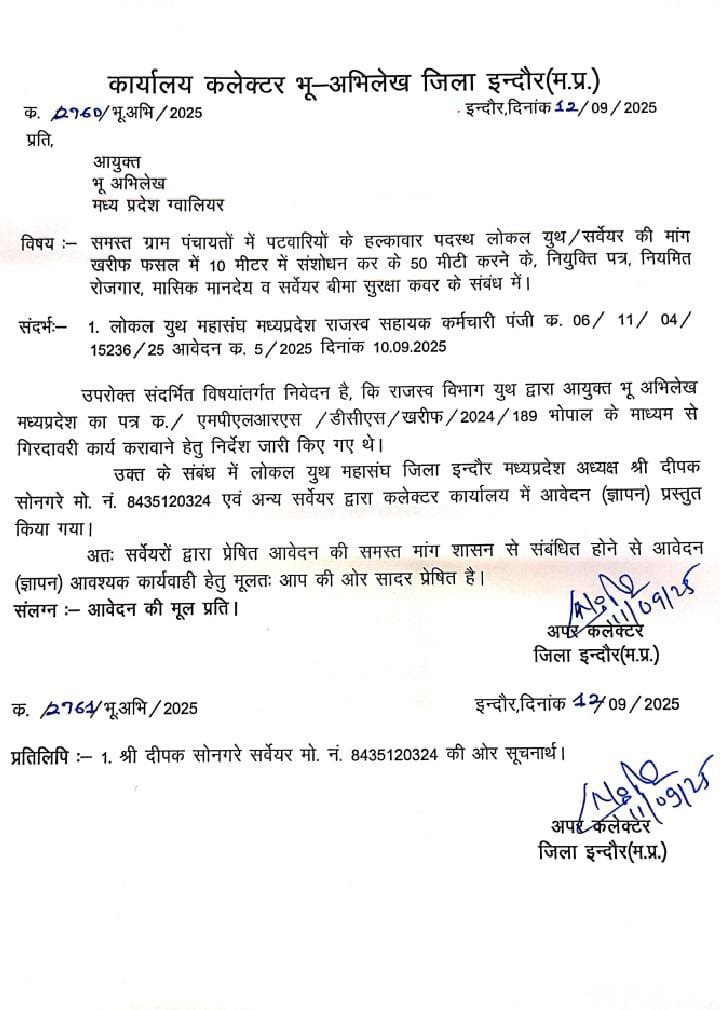
In a representation submitted to the Indore Collector’s office on 12 September 2025, the Local Youth Mahasangh Madhya Pradesh, through its Indore district president, Deepak Songare, asked for a fixed monthly honourarium and insurance cover for surveyors. The Indore Collector’s office forwarded the demand to the Commissioner, Land Resources Management, for action.
In the same letter, surveyors also demanded relaxation of the strictness of the geotag.
Even Rajya Sabha MP Digvijay Singh wrote to the government on the letterhead of the Local Youth Employees Union, alongside three other demands: a halt on new surveyor recruitment until currently working surveyors are given sustainable work; clear recruitment rules with appointment and identity cards issued by the revenue department; and minimum wage guarantees under labour law.
In the comment section of the revenue department’s post on X about girdawari, almost all mentioned the release of pending payments.
Similarly, letters from districts show that delays in paying local youth surveyors were widespread.
In the Sehore collectorate, Sanjay Singh Chouhan, technical assistant, said that often the verification process takes time, which delays the payments. We have disbursed more than 1 crore rupees since the scheme surveyors were hired two years back.
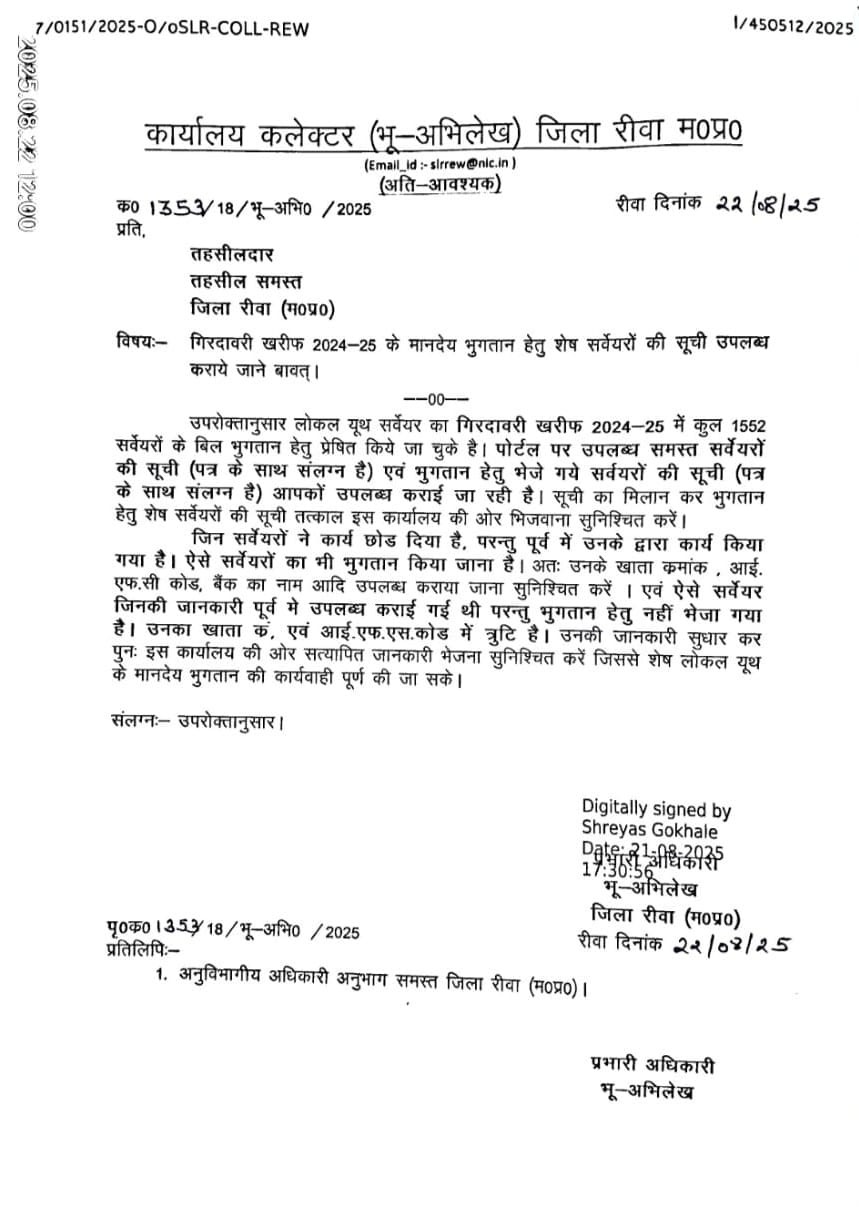
However, in Rewa, a 22 August 2025 letter said bills for 1,552 surveyors had already been sent for payment for the Kharif 2024–25 girdawari and directed officials to identify surveyors who were still missing from the payment list, including those who had left the job but were yet to be paid.
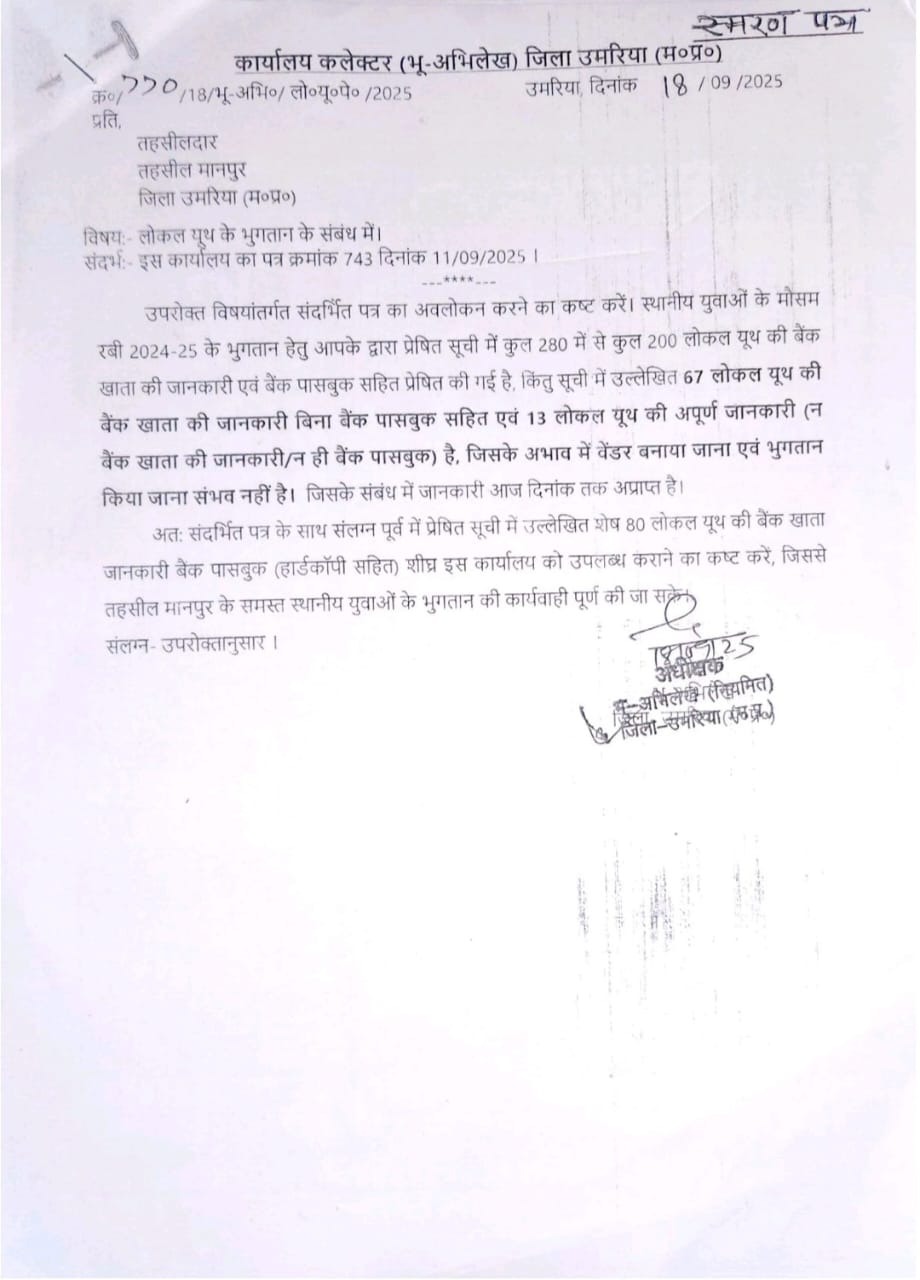
In Umaria, a reminder dated 18 September 2025 revealed that incomplete bank and passbook details had delayed payments to dozens of surveyors for the Rabi 2024–25 season, prompting officials to urgently seek the missing documents.
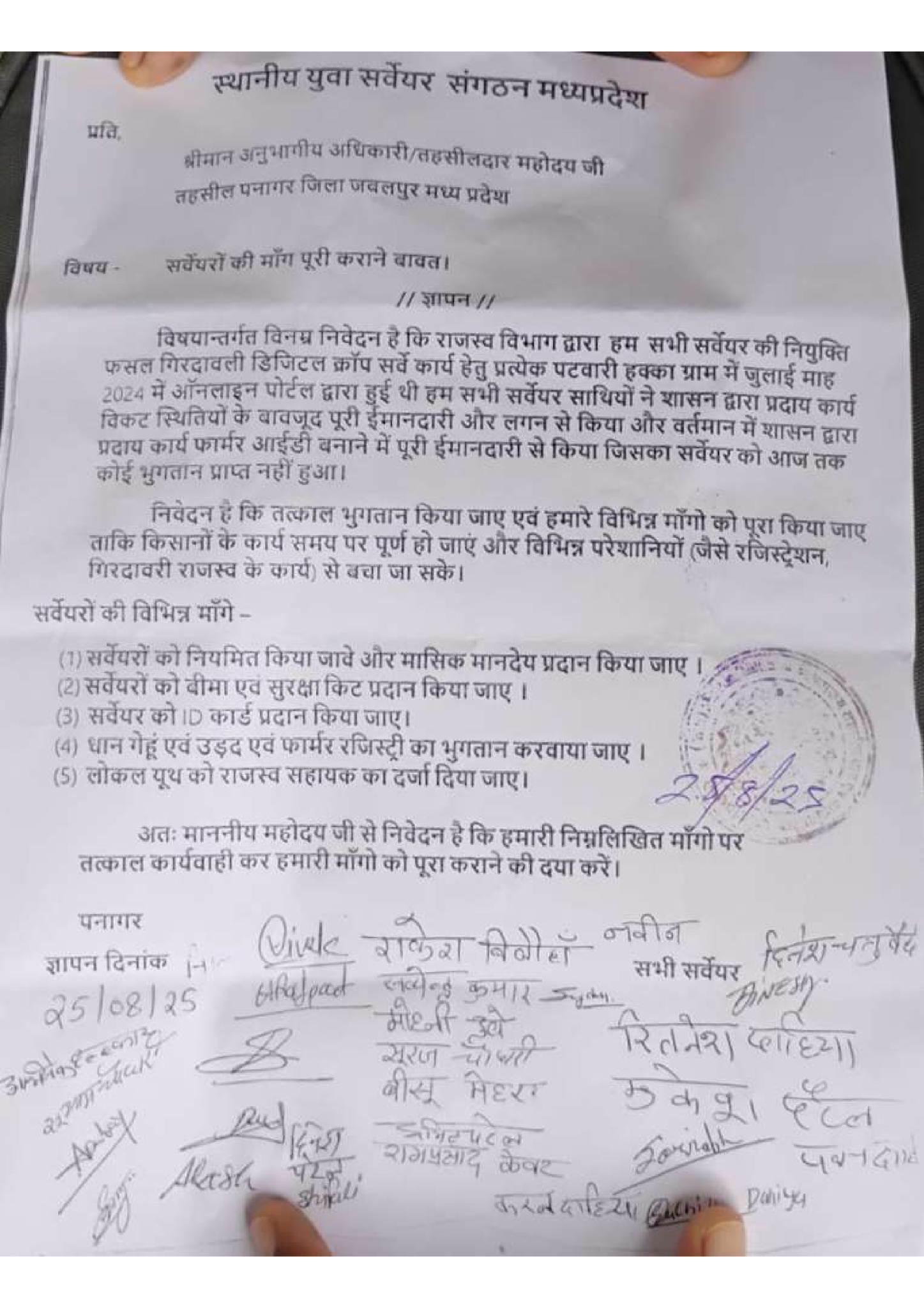
Surveyors also raised the issue publicly. A memorandum submitted by the Sthaniya Yuva Sarveyar Sangathan Madhya Pradesh in Panagar tehsil, Jabalpur, dated 25 August 2025, said members had completed both the digital crop survey and Farmer ID work but had not received pending payments.
The group demanded regular employment, a fixed monthly honorarium, insurance, identity cards, release of pending dues, and recognition as Revenue Sahayaks (Revenue Assistants).
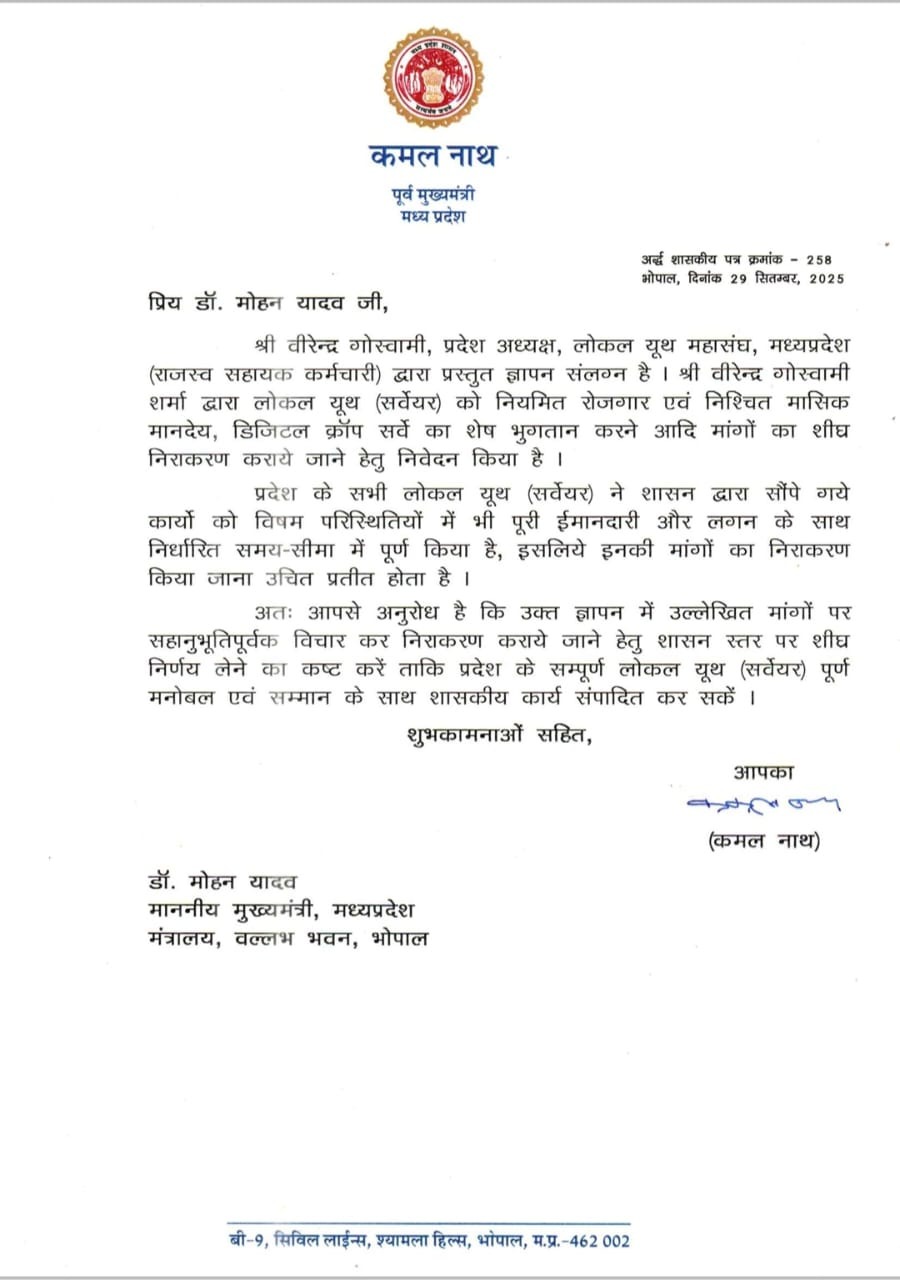
Similar concerns reached the state government through a letter from former Chief Minister Kamal Nath to Chief Minister Mohan Yadav, dated 29 September 2025, forwarding a memorandum from the Local Youth Mahasangh Madhya Pradesh (Revenue Sahayak Karmachari).
Closing
Patel farmed roughly ten acres of his own, in addition to land held by his father and uncle, growing kodo, arhar, and ragi alongside mustard, wheat, chana, and masoor in the rabi season.
He is a farmer displaced by the Bansagar reservoir, which, he said, never actually brought irrigation water to his fields, and that scarcity, more than any government campaign toward millets, was why kodo suited his land in the first place.
His household was small: his parents, his wife, and their children, with one sister already married off. Since his father’s eyesight had weakened to the point that he no longer farmed, Patel worked the land alone and said it was enough to meet his family’s needs.
He described himself, in the end, as satisfied and happy with farming.
Patel’s case is significant for another reason.
The Indian government encourages farmers to grow millets, which it calls Shree Anna. In Madhya Pradesh, the state government offers farmers an additional ₹1,000 per quintal for kodo and kutki sold under its procurement scheme. The idea is to make millet farming more profitable while promoting crops that are nutritious and can withstand drought better than rice or wheat. With this, the government hopes to increase millet production and encourage people to eat a wider variety of grains, as Indian diets are still dominated by rice and wheat.
According to the Government of India’s Improvement of Crop Statistics (ICS) report, Madhya Pradesh is one of only four states, along with Chhattisgarh, Uttar Pradesh, and Uttarakhand, that record the entire area of such fields under the predominant crop, while the minor crop is omitted from the official record.
In ‘unrecognised’ crop mixtures, fields where farmers grow two or more crops together in combinations that are not included in the state’s official crop list.
The report noted that this practice means “the area under minor constituents tends to be ignored while that under major constituents gets overestimated” and recommends revising the system.
The rule applies only to unrecognised crop mixtures, not to all mixed-cropped fields, and the report does not estimate how frequently such cases occur.
Apart from this, Patel said local youth appointed as surveyors under the government’s new policy cannot simply be assumed to identify crops correctly. He said they should be tested or interviewed by the tehsildar or subdivisional magistrate to ensure they can distinguish between standing crops such as paddy and kodo. Based on his experience, he said many cannot, and such mistakes can have real consequences for farmers.
For a patwari, the inefficiency stems from carrying multiple responsibilities, many beyond their actual job description. For the farmer, the expectation runs the other way: the patwari exists for them and should carry out that one core duty with precision before anything else competes for their time. For the surveyor, girdawari is only supplementary income, and government payments, by their nature, come late, so there is little sincerity in treating it as anything more than a side task.
And for all three, this new technology is a hassle. The app may not be user-friendly. The phone in hand may not be good enough. The signal in the field may not hold. The server may refuse the photo or fail to lock the location, stalling work that was meant to take minutes.
And beneath all of that, there is still human error, the oldest variable of all.
This digital system, in the end, is an attempt to draw the best from every stakeholder in it when none of them have quite the resources to give their best.
Support Us To Sustain Independent Environmental Journalism In India.
More Ground Reports
He Was Married as a Child, Now Manish Dangi Helps Stop It for Others
Despite The Ban, How Gutkha Became MP’s Most Common Household Habit
Stay Connected With Ground Report For Underreported
Authors
Support Ground Report to keep independent environmental journalism alive in India
We believe climate change should be the basis of current discourse, and our stories attempt to reflect the same.
Connect With Us
Send your feedback at greport2018@gmail.com
Newsletter
Subscribe our weekly free newsletter on Substack to get tailored content directly to your inbox.
When you pay, you ensure that we are able to produce on-ground underreported environmental stories and keep them free-to-read for those who can’t pay. In exchange, you get exclusive benefits.
Your support amplifies voices too often overlooked, thank you for being part of the movement.