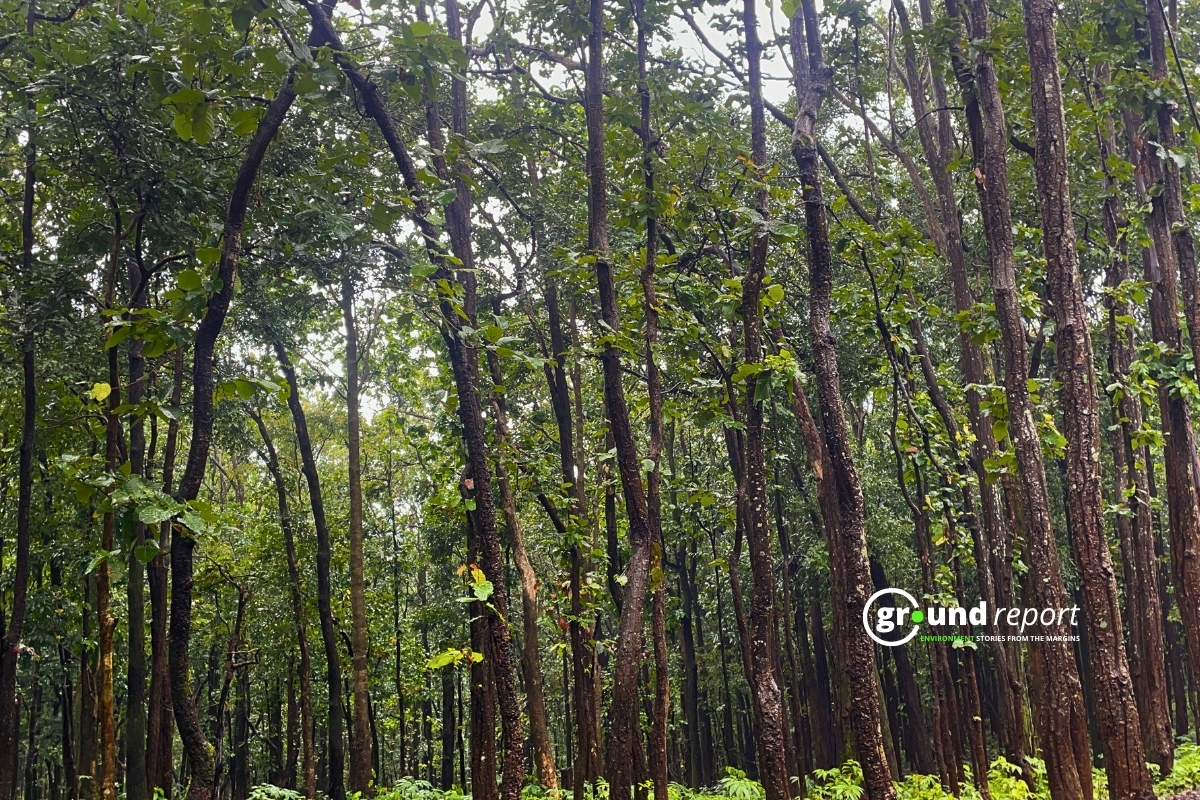
हिंदी में पढ़ें: Twenty-one-year-old Rakhi Nath’s wedding had been arranged. At her family’s home in Tekdi village in Madhya Pradesh’s Khargone district, relatives had gathered, and pre-wedding rituals were underway.
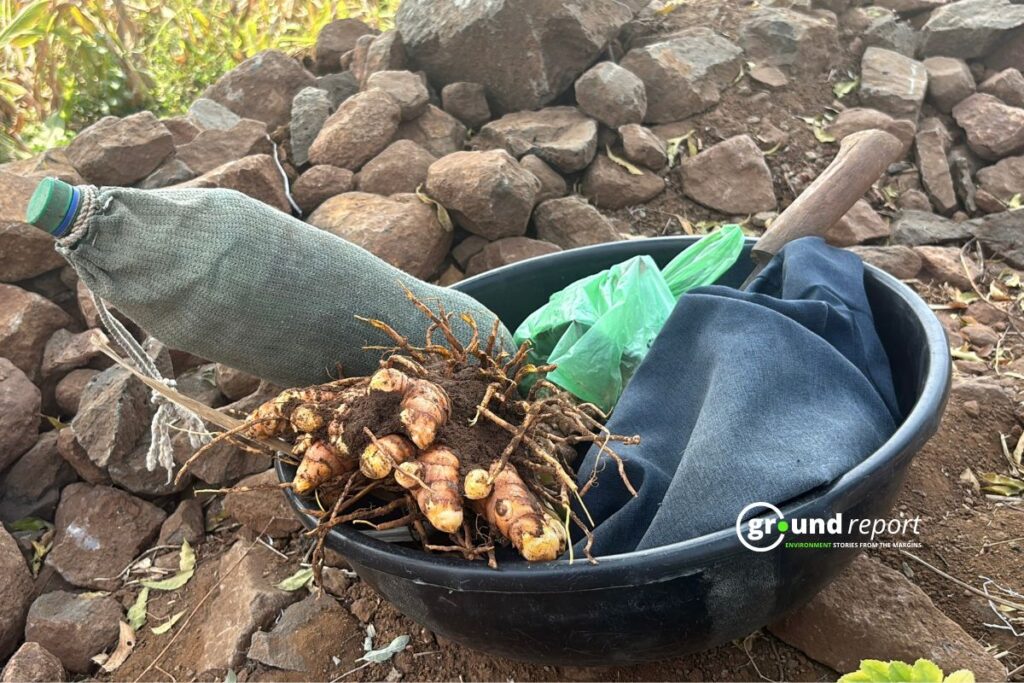
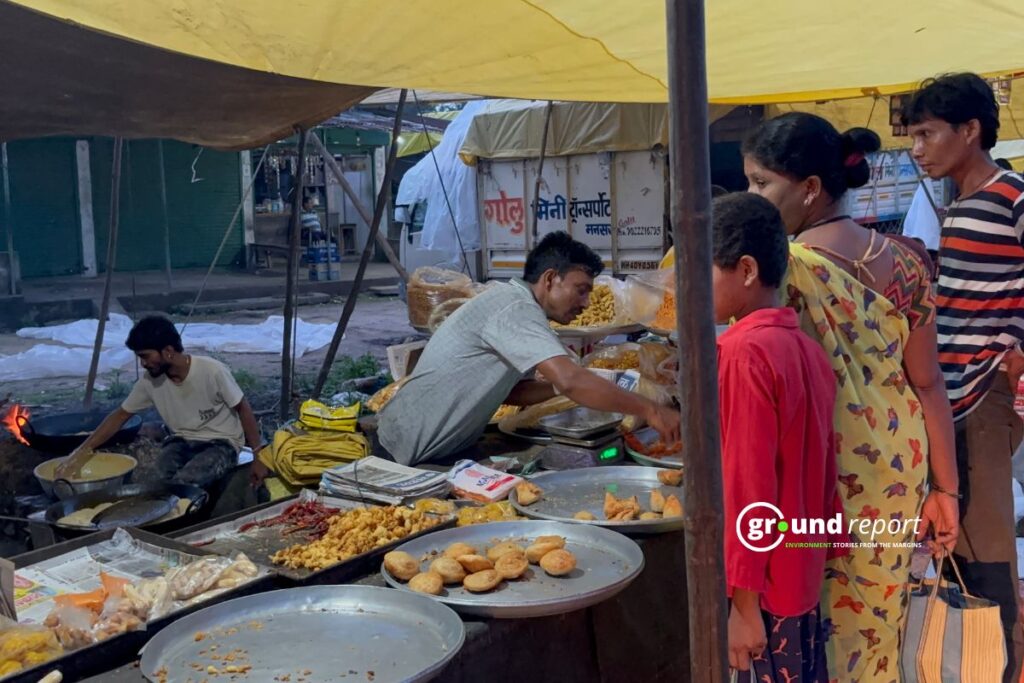
On 22 April, the haldi ceremony was held. The family had bought turmeric and chiksha from the local haat (weekly market). Chiksha is a fragrant ingredient mixed with turmeric to prepare ubtan, the paste used in pre-wedding rituals. As the turmeric and ubtan were applied to her body, Rakhi suddenly felt a sharp pain in her throat. She could not speak, and within moments, the wedding household was thrown into chaos.
Her father, Gaju Nath, recalled: “I was not at home. They immediately took Rakhi to the district hospital in Khargone. After admitting her to the ICU, the doctors told us to take her to Indore.”
There is no government ambulance available at the district hospital. So, Nath said he had no choice but to spend ₹4,000 on a private vehicle to take his daughter to Indore. “We reached MY (Maharaja Yeshwantrao) Hospital in Indore at ten o’clock,” he says. “X-rays, sonography, and other tests were done, all of which came out normal. Morning turned to evening, but the swelling on Rakhi kept rising and falling.”
The Nath family found themselves buried under a sudden mountain of misfortune.

“The family had brought the young woman to us in a critical condition… Later, the family took her to a private hospital for better treatment,” the hospital superintendent, Dr Ashok Yadav, stated
At the private hospital, the doctor told them treatment there would be expensive, and advised them that the same care was available at the government hospital.
Gaju Nath says, “We left the private hospital for MY Hospital.” But before they could reach MY hospital, Rakhi had died.”
The wedding procession from Khamkheda village was expected on the 25th, and the wedding was set for the 27th. But on the 23rd, the day the wedding canopy was to be raised, Rakhi was cremated.
The question remains: what was in the turmeric that cost Rakhi her life?
The Deadly Metanil Yellow
Rakhi’s lips had swollen, rashes had appeared on her legs, and she was struggling to breathe. So, Yadav said that initial treatment started on the suspicion of a reaction and infection caused by the turmeric.
Speaking to Dainik Bhaskar, Dr Dharmendra Jhanwar, Professor at Mahatma Gandhi Memorial (MGM) Medical College, said that synthetic dye metanil yellow is often mixed into loose turmeric sold in markets. Applying it to the body causes allergic reactions. This falls under Type-1 hypersensitivity reaction — an IgE-mediated severe allergy in which urticaria, difficulty breathing, itching, and red rashes are common symptoms.
Metanil yellow is a water-soluble synthetic dye used in the textile and paper industries. Across India, it is frequently used to enhance the yellow colour of turmeric and other yellow-coloured food items, making them hazardous. It is added to jaggery, lentils, turmeric, laddoos, and other products to deepen the yellow colour.
Metanil yellow significantly raises the risk of serious illness. It causes not only skin-related problems but also causes serious damage to the liver and urinary bladder. Jhanwar said, “Adulteration in turmeric is a grave problem. In such cases, patients sometimes have to be treated with steroids. There are instances where patients end up on ventilators.”
Metanil yellow is also used in cold drinks and sweets. It affects the nervous system — memory loss, confusion, and ataxia (loss of physical coordination) are common symptoms. Prolonged consumption of substances like metanil yellow also raises the risk of liver and kidney failure.
Metanil yellow is sometimes added to turmeric to make it appear brighter and of better quality. A report from the National Library of Medicine notes that turmeric frequently contains metanil yellow and Sudan Red, both carcinogenic and mutagenic substances capable of causing cancer over time. Studies have linked the chemical to serious health risks, which is why it is banned as a food dye in several countries.
India’s Food Safety and Standards Authority (FSSAI) also prohibits the use of metanil yellow in food products and advises consumers to report suspected cases of food adulteration to their state food safety authorities.
India’s Adulteration Market
According to an FSSAI report, over the past decade, one in every four food samples tested failed to meet safety standards. This failure is known as “non-conformity,” when a food product falls short on one or more quality parameters. The most serious category is “unsafe”, when food contains toxic or chemical substances posing a risk to life. According to the same FSSAI report, 15 percent of food samples fell into this unsafe category.
According to the World Health Organization (WHO), approximately 600 million people — one in every ten — fall ill each year from consuming contaminated food, resulting in 4,20,000 deaths annually. Children account for 40 percent of these cases, with 1,25,000 deaths every year.
Who Is Responsible?
According to media reports, four people from Indore and Khargone districts with similar complaints were admitted to MY Hospital.
On 15 April, Golu Kaushal, a factory worker from Dudhiya in Indore district, got married. He had been unwell from the day of the wedding rituals. When his condition worsened, he was admitted to MY Hospital on 22 April, where he was placed in the ICU. Along with other tests, the hospital also collected a sample of the turmeric from his family. However, as his condition improved, Golu discharged himself before completing treatment and returned to his village. He is doing well now.
After the story was published in newspapers, a team from the health department visited Rakhi’s home and prepared a panchnama— a legal document in Indian law that records observations, facts, and events exactly as they occur at a crime scene or site of dispute.
Khargone Chief Medical and Health Officer (CMHO) Dr Daulat Singh Chauhan says, “The case is being investigated from every angle. I have personally reviewed the full situation. The unavailability of a government ambulance has not been confirmed to us. We are also tracing Rakhi’s medical history. Without a post-mortem, it is not possible to say anything definitive.”
The Chief Food Officer, H.L. Awasya, states: “After the incident came to our notice, we collected spice samples from the Kasrawad-Tekdi area and sent them to Bhopal for testing. If the report reveals any irregularities, action will be taken as per the rules.”
But Rakhi’s father has little hope from the administration. Gaju says, “My daughter is gone. What is there left to say to anyone now? I only pray that from tomorrow, no one else has to go through this.”
Support Us To Sustain Independent Environmental Journalism In India.
More Ground Reports
He Was Married as a Child, Now Manish Dangi Helps Stop It for Others
Despite The Ban, How Gutkha Became MP’s Most Common Household Habit