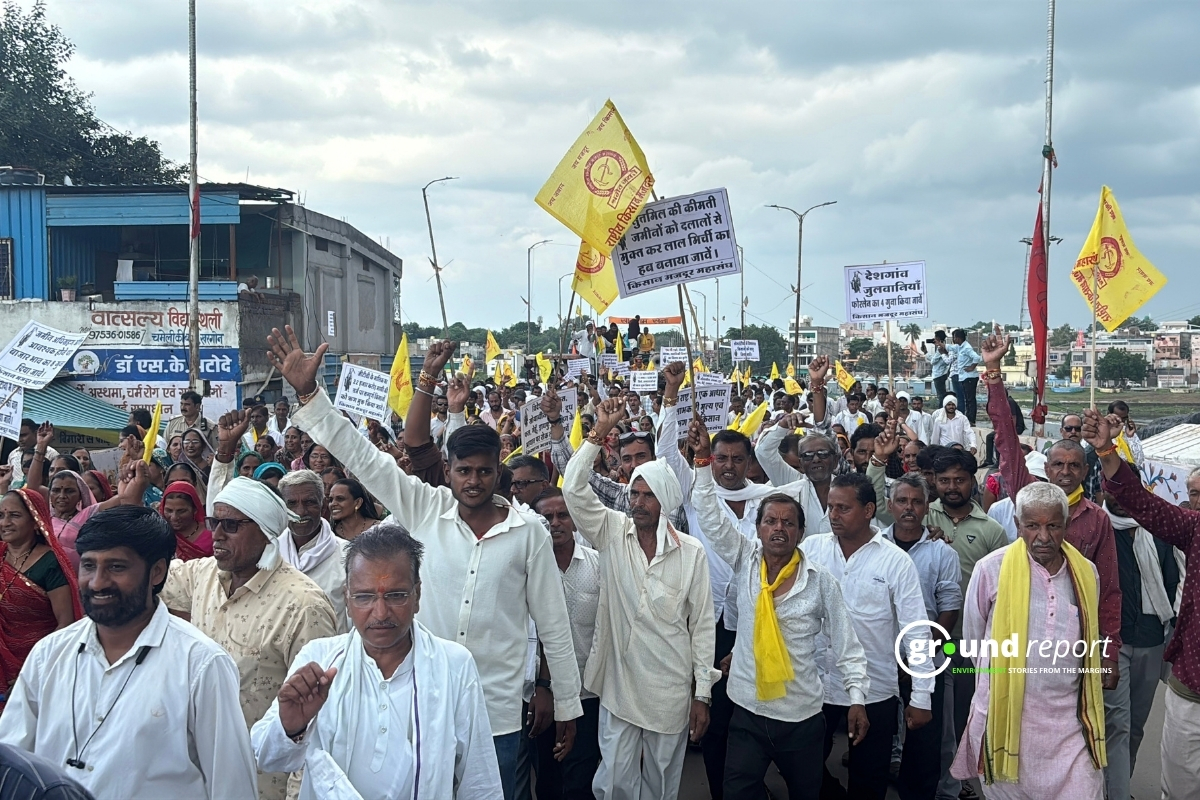

हिंदी में पढ़ें: Narayan Singh, a farmer from Bhairupura village in the Huzur tehsil of the Bhopal district, has a message, demanding that his crop loan be repaid by March 28. His wheat crop still stands green in the fields. Harvesting has not begun, and payment from sales will take time. Repaying the loan within the stipulated deadline is simply not practical for him.
And others who took crop loans from cooperative societies in the Bhopal and Sehore districts face the same anxiety and dichotomy.
Narayan’s cooperative loan runs slightly above Rs 1 lakh, and this year he borrowed roughly the same amount. Last year, too, he struggled to make the payment on time because the crop was not yet ready. He was forced to arrange money from other sources and ended up paying additional interest. “When the crop hasn’t generated any income, where is the farmer supposed to get the money from?” he asks.
Zero-Percent Interest Short-Term Crop Loans
Madhya Pradesh disburses short-term crop loans to farmers at zero percent interest through Primary Agricultural Credit Cooperative Societies (PACS). Between April 2024 and January 17, 2025, the scheme disbursed Rs 18,392 crore. Rakesh Verma, manager of PACS Tilakhedi in Bhopal, says the society sanctions loans based on the landholding area.
According to Verma, the ceiling is Rs 35,300 per acre. Of this, the society pays roughly 75 percent in cash and adjusts the remaining 25 percent as fertiliser and seed. The farmer must submit land documents — such as a loan passbook — along with the application. Farmers who repay by the stipulated deadline receive the zero-percent interest benefit. The standard deadline for crop loan repayment is March 28. Repayment after the deadline attracts around 10.5 percent interest. Prolonged non-payment can push a farmer into the defaulter category.
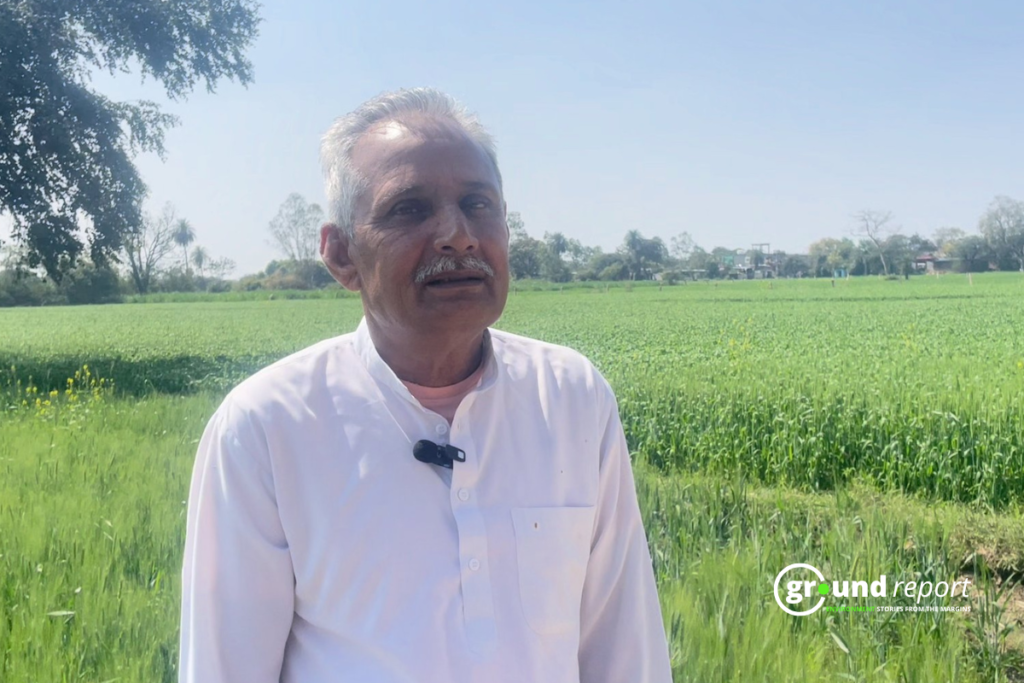
Narayan is a beneficiary of this scheme. At the ceiling of Rs 35,300 per acre, his total loan limit across 5 acres works out to approximately Rs 1,76,500. The society disburses 70 to 75 percent of the total sanctioned limit as cash — around Rs 1.25 lakh in Narayan’s case — and earmarks the remaining Rs 40,000 to 45,000 for fertiliser and seed. The cash component is released in one go. And farmers can get the fertiliser and seed components across both crop seasons as needed.
Narayan used this money in November to sow wheat. His crop will be ready for harvest in April. Assuming an average yield of 20 quintals per acre across 5 acres, he will produce 100 quintals of wheat. If he sells at the support price of roughly Rs 2,500 per quintal, his total sale proceeds will be Rs 2,50,000.
When the mandi releases payment into his account, he can instruct the society to adjust the loan amount from those proceeds. With the farmer’s consent, the society or bank settles the outstanding loan. If his total dues stood at Rs 1.76 lakh, that amount would be deducted from the mandi payment, leaving around Rs 74,000 in his account.
Once the loan is cleared, the society can issue a fresh loan up to the sanctioned limit. Within a few days of the account being cleared, the society releases new cash and restores access to fertiliser and seed.
Some dues from kharif-season fertiliser and seed can extend to June. But the core condition remains that the farmer must settle the full outstanding balance within the stipulated period. In practice, therefore, farmers clear their loans only after selling the harvest.
In summary: land determines the loan ceiling; the cash-to-fertiliser ratio is fixed in advance; repayment by March 28 means zero interest; and farmers can route mandi proceeds directly to settle the loan. Missing the deadline triggers interest charges and the risk of being declared a defaulter.
Consequences of Overdue Loans
Farmers say that delayed repayment, apart from adding the interest burden, disrupts the next season’s farming. Once a farmer is declared a defaulter, they may find it difficult to obtain fertiliser and seed from the cooperative society and are then forced to buy inputs from the private market at higher prices. That in turn would drive up production costs.
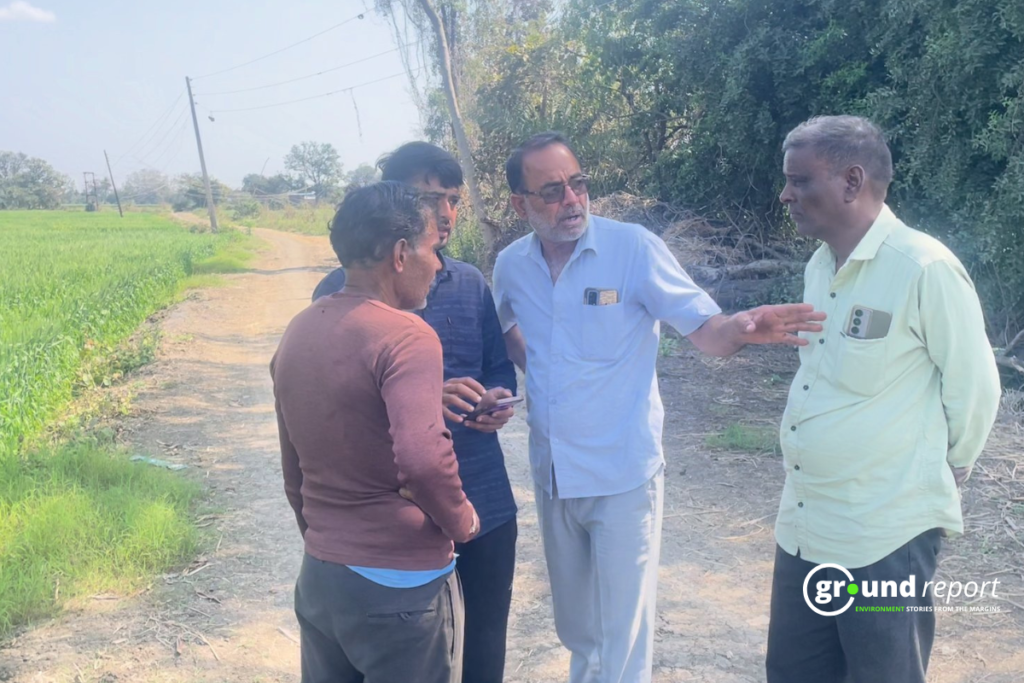
Jawhar Singh, also from Bhairupura village, carries a combined cooperative loan of approximately Rs 3.5 lakh—spread across his own name, his father’s, and his elder brother’s. The family holds around 9 acres and has borrowed a similar amount this year. He says that last year, the March 28 deadline forced him to borrow from a trader to make the payment. “If harvesting happens in April and payment comes even later, repaying in March becomes very difficult,” he says.
Akhilesh Meena, a farmer leader affiliated with the Bharatiya Kisan Sangh, says the March 31 financial-year deadline does not align with the agricultural cycle. He is demanding that the government permanently fix the repayment date in May to end the annual uncertainty.
Deadline Extensions Have Happened Before
Narayan notes that the government extended the repayment deadline several times during Shivraj Singh Chouhan’s tenure. Even in those cases, there is no clarity, as the announcement came at the last moment.
In 2025, Surendra Singh Baghel, Member of the Legislative Assembly (MLA) from the Kukshi assembly constituency in the Dhar district, wrote to the chief minister requesting that the March 28 deadline be extended to April 30.
The letter argued the same logic that Narayan and others have also highlighted. Farmers say the last-minute decision-making every year creates needless confusion.
Babloo Mehra, manager of the Gunga Cooperative Society in the Bairasia block, says the deadline is set by state government directive, and societies operate accordingly. The societies are notifying farmers via SMS to help them avoid penalties.
For now, farmers are asking the government to reconsider the repayment deadline in light of actual ground conditions — and to put in place a permanent arrangement that ends the uncertainty that returns every year.
Note: The article was originally published in February of 2026
Support Us To Sustain Independent Environmental Journalism In India.
More Ground Reports
He Was Married as a Child, Now Manish Dangi Helps Stop It for Others
Despite The Ban, How Gutkha Became MP’s Most Common Household Habit