हिंदी में पढ़ें: When temperatures crossed 40°C in April, Hoor Singh Bhabhar (56) watched his Kadaknath chickens fall ill one by one. The infection—diarrhea—started with two or three birds in Dhanpura village of Petlawad tehsil, Jhabua, but spread rapidly. For this Bhil tribal family raising more than 150 chickens and 10–12 goats, the death of even one bird is a significant loss. Bhabhar says, “If Kadaknath, weighing one kilogram, dies, that’s a direct loss of 1,500 rupees.”
Getting a veterinarian from the tehsil headquarters was not possible. So Bhabhar called Waghmal Khariya, a Pashu Mitra (animal friend) trained in the primary treatment of small animals and affiliated with Sampark Samajsevi Sanstha. The animals were treated in time.
Kamla Bhuriya of Mawdi village in Jhabua district was not as fortunate. Two years ago, in May, ten of her chickens began dying after they got diarrhea. She found neither a doctor nor a Pashu Mitra.
Reports of chicken deaths began emerging from different parts of the country. In Malkangiri, Odisha, a three-hour power outage caused suffocation and heat, which killed 5,300 chickens. In Andhra Pradesh, nearly one million birds were dying every day, prompting the state’s animal husbandry department to issue an urgent advisory.
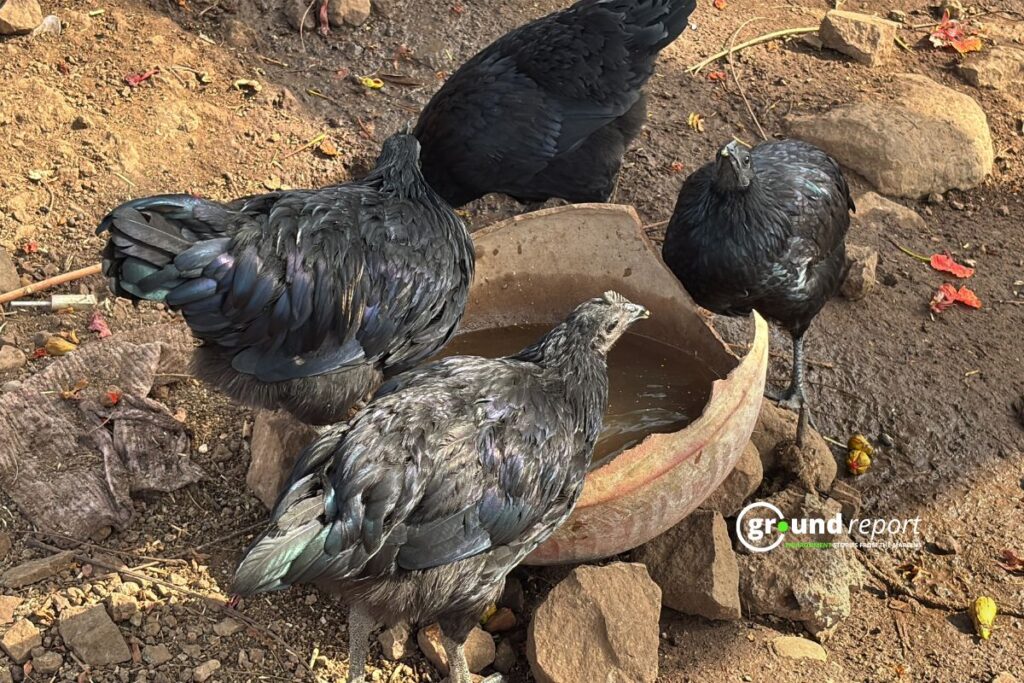
As heatwaves grow more intense across central India, livestock deaths are rising in tribal districts like Jhabua. Here, most families practice backyard poultry and goat rearing. Sometimes these livestock deaths become so severe that half their flock dies within two days.
Here, there is a structural shortage of veterinary doctors that leaves millions of animals and the families that depend on them without timely care. A small but growing group of locally trained animal health workers—Pashu Mitra/Sakhis—is emerging as the first and often only line of response.
Animals Dying from Heat Stress
At the State Veterinary Hospital in Bhopal, 350 kilometers from Jhabua, Senior Veterinary Surgeon Dr. Rakhi Singh says, “For the past month, we have been seeing only heat stress cases.” She explains that when ambient temperatures are high, the bird’s immunity begins to weaken. Diarrhea sets in, and in this condition, any disease can attack quickly. If the disease is infectious, all the birds can fall ill and die.
Normally, a chicken’s body temperature ranges between 41°C and 42°C. When temperatures rise, chickens pant rapidly to regulate body temperature. But sustained rapid breathing reduces carbon dioxide concentration in the blood, disturbing the acid-base balance. As blood pH rises, calcium levels drop, leaving eggshells thin and brittle.
A 2024 review found that seasonal temperature extremes significantly reduce layer chicken productivity in India. Summer heat can cut feed intake by 20–30% and egg production by 25–35%, and shell quality by 15–20 percent. The study also noted that improved nutrition, ventilation, and climate-smart housing can help mitigate losses.
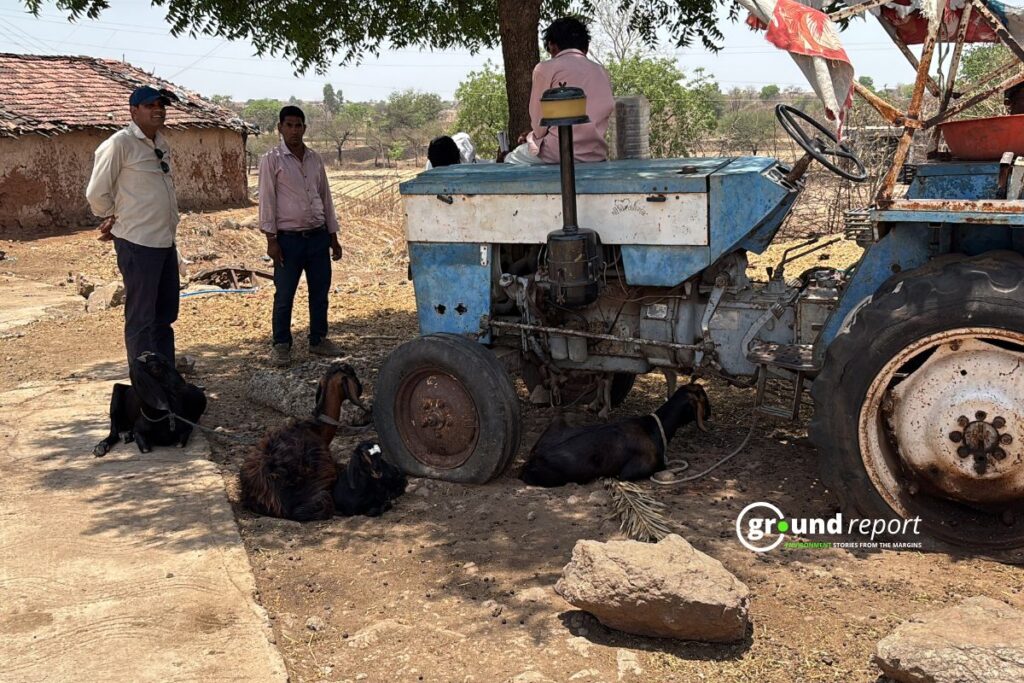
The goats are among the most heat-tolerant livestock species. And, yet a 2021 review found that when temperatures reach 38°C or above, and the Temperature-Humidity Index exceeds 75, heat stress sets in. This leads to a 12 percent reduction in growth, a 3–10 percent fall in milk output, and a 4 percent decline in meat production.
Dr. Singh adds that animals transported long distances for festivals like Eid al-Adha experience stress from motion sickness, their body temperatures already elevated, making them quick to succumb to heat stress.
A Structural Shortfall
India’s total livestock population stands at 536.76 million, 4.8 percent higher than in the 2012 Livestock Census. India is the world’s second-largest egg producer and ranks fifth globally in meat production. According to the 21st Livestock Census, the country had 148.88 million goats and 851.81 million poultry birds in 2019 — goat numbers up 10.1 percent and poultry up 16.8 percent. In Jhabua specifically, there are 469,900 goats and 4.62 million chickens.
Against this scale, India has only 65,894 veterinary doctors against an NITI Aayog estimate of approximately 107,000 needed, a shortfall of roughly 41,000.
For villagers living in isolated hill settlements, a veterinarian rarely reaches them on time. In areas where a doctor might take half a day to arrive, locally trained Pashu Mitras and Pashu Sakhis — who provide first aid and vaccinations — have become the first line of support.
Solving Their Own Problem: The Pashu Sakhi
Last April, Bhuriya received Pashu Sakhi training through Sampark Samajsevi Sanstha. Raising around 30 chickens and 10–15 goats, she can now provide timely first aid to her own animals. During the summer, she identifies heat stress symptoms and arranges for the animals to be fed onions and moved to cooler spaces.
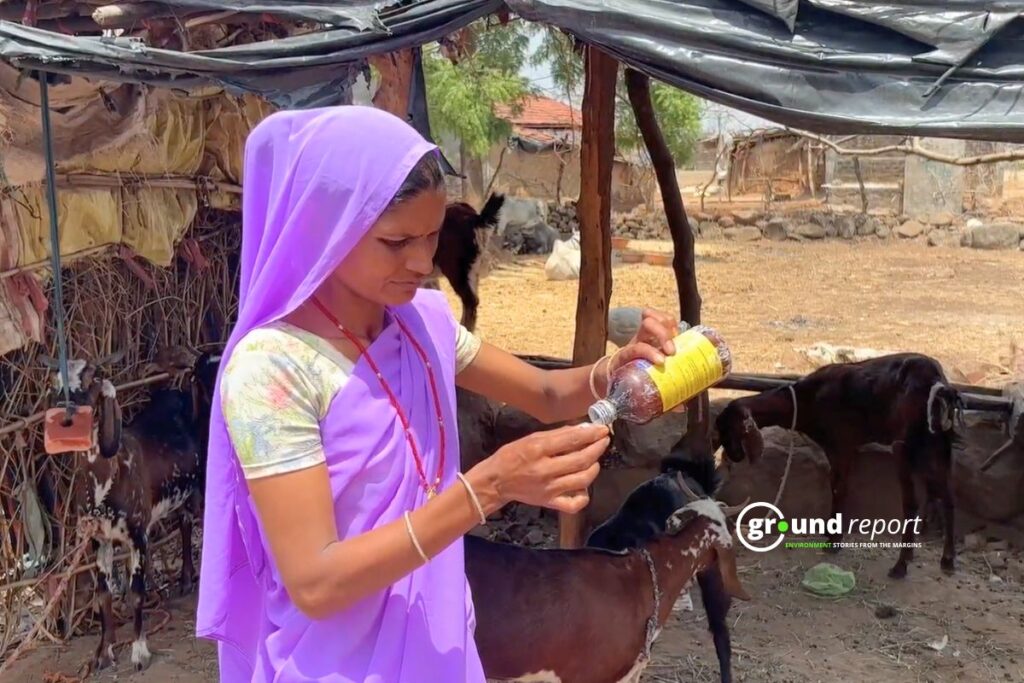
“Earlier, people believed chickens could not be treated. They would ask who had made me a doctor and where my medicines came from,” Bhuriya says. But after treating a few chickens in her village, people began to trust her. Now they call her to treat their animals.
Where a doctor charges 200–250 rupees for a vaccine or medicine, she does it for 20 rupees, with medicines supplied by the organisation at affordable rates. Bhuriya, who works as an assistant at an anganwadi, is now able to send her children to a private school and pay monthly installments on a motorcycle.
Radheshyam Patidar, Program Manager at Sampark, says the organisation supports thirty such Pashu Mitras and Pashu Sakhis, collectively connected to approximately 5,000 livestock-rearing families. These workers can reach a village quickly and, when a case looks serious, help transport the animal to a hospital without delay.
The programs like Pashu Sakhi are not a solution to the veterinarian shortage. But during extreme weather events like heatwaves, they are certainly becoming a temporary lifeline for people in this tribal region.
Support Us To Sustain Independent Environmental Journalism In India.
More Ground Reports
He Was Married as a Child, Now Manish Dangi Helps Stop It for Others
Despite The Ban, How Gutkha Became MP’s Most Common Household Habit