A new joint report from the Food and Agriculture Organization of the United Nations and the World Meteorological Organization has warned that extreme heat poses a direct and growing threat to India’s agricultural workforce and staple crop production, with conditions in key farming zones projected to deteriorate sharply by the end of the century.
Released on World Earth Day on April 22, the report, titled Extreme Heat and Agriculture, draws on the latest climate observations, crop science, and agrifood analysis to assess how rising temperatures are reshaping food production across every agricultural subsector, from crops and livestock to fisheries and forests.
India at the Centre of the Crisis
India occupies a central place in the report’s findings. The country depends heavily on rice, with 70 percent of caloric intake coming from the crop. Summer monsoon rainfall supplies up to 80 percent of annual precipitation, and compound hot and dry conditions have already disrupted the monsoon’s most severe years, 1972, 1987, 2002, 2009, 2014, and 2015.
The 2002 monsoon deficit of 20 percent resulted in billions of dollars in economic losses and affected more than a billion people, the report notes.
Despite achieving grain self-sufficiency, Indian farming remains deeply exposed to weather extremes. The report states that March and April 2022 were the warmest months on record in India. Temperatures during that period ran 8 to 10.8 degrees Celsius above normal, while rainfall fell 60 to 99 percent below normal across 10 of 36 meteorological subdivisions.
That year’s heatwave affected crops, fruits, vegetables, livestock, and poultry in over one-third of Indian states, including Punjab, Haryana, Rajasthan, Jammu and Kashmir, Himachal Pradesh, Uttar Pradesh, Madhya Pradesh, Bihar, and Maharashtra. Wheat yields fell by 9 to 34 percent. Tomato yields dropped 40 to 50 percent. Cabbage and cauliflower production declined by up to 50 percent. Dairy cows saw milk yields fall by up to 15 percent, and poultry mortality rates climbed to 3.5 to 4 percent per month, against a normal rate of 0.5 percent.
Workers on the Front Line
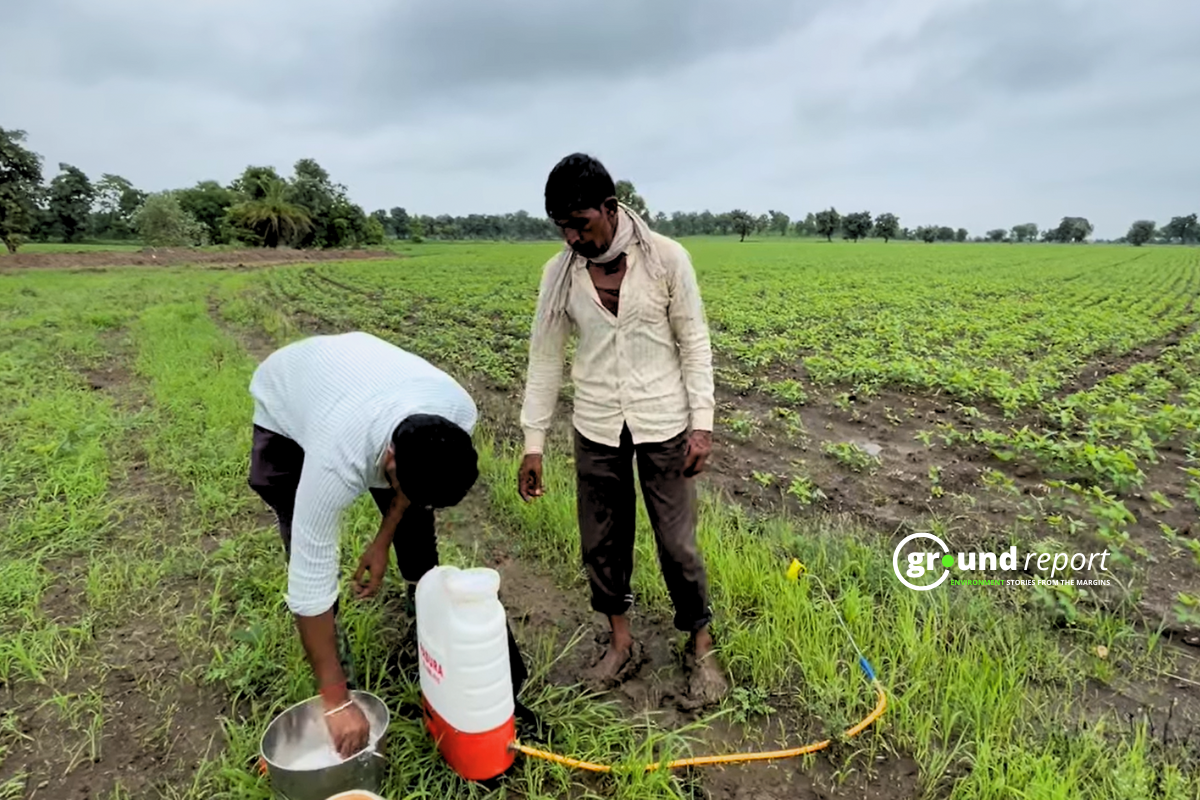
The report directs particular attention to agricultural workers, who face direct and compounding exposure to extreme heat. In South Asia, the combination of high temperatures and humidity makes sweating, the body’s primary cooling mechanism, far less effective.
The report projects that by the end of the century under high-emission scenarios, average growing season physical work capacity in the worst-affected areas, such as the Indo-Gangetic plains, could fall below 40 percent. The Indo-Gangetic plains span the densely populated farming regions of the Ganges and Indus river basins, where rice farming is concentrated and largely non-mechanised.
“Based on an ensemble of high-resolution climate change simulations, extremes of wet-bulb temperature in South Asia are likely to approach and, in some locations, exceed critical thresholds for worker safety by the late twenty-first century under high-emission scenarios,” the report states. “Without further mitigation, heatwaves will become a major threat to Indian agricultural workers and rice production.”
FAO Director-General Qu Dongyu described extreme heat as a systemic risk that goes well beyond individual farms. “This work highlights how extreme heat is a major risk multiplier, exerting mounting pressure on crops, livestock, fisheries and forests, and on the communities and economies that depend upon them,” he said.
Heat, Drought, and Compound Damage
The report identifies a critical two-way relationship between extreme heat and drought. Heatwaves accelerate soil moisture loss through evaporation and plant transpiration. As soil dries out, more solar energy is radiated back as heat rather than being absorbed through evaporation, which intensifies both the heatwave and the drought. Crop yield losses from combined heatwaves and low rainfall were observed to be nearly triple those from high temperatures alone.
For rice, which is most sensitive to heat during reproduction and grain filling, extreme temperatures cause flower abortion, poor grain formation, and reduced yields. Strategies being explored include cultivars that flower early in the morning, adjusted sowing dates, and heat-tolerant breeds. Irrigation has also shown potential to reduce canopy temperatures at local to subnational scales.
WMO Secretary-General Celeste Saulo described the scale of the challenge clearly. “More than simply an isolated climatic hazard, it acts as a compounding risk factor that magnifies existing weaknesses across agricultural systems. Early warnings and climate services like seasonal outlooks are vital to help us adapt to the new reality,” she said.
Path Forward
The report calls for a transition from reactive crisis management toward structured, forecast-based action. It identifies early warning systems as a critical first line of defence, allowing farmers to adjust planting times, protect livestock, and reduce heat exposure before extreme events arrive.
Access to financial services, including insurance, credit, and social protection, is identified as a prerequisite for farmers to implement adaptation measures. The report also calls for updating building codes, water infrastructure, and occupational health standards to reflect new climate realities.
At the same time, it is explicit that adaptation has limits. “Protecting the future of agriculture and ensuring global food security will require not only building on-farm resilience but also exercising international solidarity and collective political will for risk sharing, and a decisive transition away from a high-emissions future,” the report concludes.
With India forecasting a below-normal monsoon season this year, and El Niño conditions expected to establish around July, the warnings in this report carry immediate relevance for the country’s 2026 agricultural season.
More Ground Reports
What does Ramsar status actually change for Bihar’s wetlands?
MP Poshan Aahar Closures Put Rural Women’s Livelihoods at Risk