The smell came before the sunrise. Every morning, Abdul Rahim, now 58, would wake to it, a sour, heavy stench drifting through his window long before the call for prayer. He had lived by Khushal Sar all his life, and for years the lake had been his clock. Its ripples told him when it was dawn; its silence told him when winter came.
Over the years, Rahim watched that rhythm fade. The water slowed, the colour changed, and the lake began to choke.
Khushal Sar, once reduced to a dumping ground, is now showing signs of recovery after years of neglect. Residents, volunteers, and government agencies have worked together to clean the lake and restore its flow. The change is visible, but the lake still faces pressure from waste and encroachments.
The decline began half a century ago, with a single decision that changed Srinagar’s geography. In the 1970s, the Nallah Mar canal, which once fed Khushal Sar, was filled to build a road. It cut off the lake’s inflow and turned it into a stagnant basin.
“We could row from here to Dal without stepping out,” says local resident Ghulam Hassan. “The water was clear enough to see fish.”
As we were speaking with locals near the lake, a man on a bike stopped beside us. Introducing himself as Mohammad Shafi Malik, 58, he said he had lived by the lake all his life. “What used to be blue water turned black,” he recalled. “The smell made life unbearable. Dogs and flies covered the surface.” After sharing his thoughts, he smiled at his young grandson sitting behind him and rode away.
Srinagar generates 500 tonnes of waste every day, with nearly 62% organic and around 7% plastic. A large portion of this waste ends up in its lakes. Officials estimate that about 465 million litres of untreated sewage flow into the city’s water bodies daily, including Dal Lake, Anchar Lake, and Khushal Sar.
By 2018, Khushal Sar’s depth had dropped to two feet. Solid waste buried its natural springs. The lake’s total area shrank from 0.96 square kilometres in 1965 to 0.6 square kilometres, a 40 percent loss. “It had become a dead zone,” says Professor Shakil Romshoo, Head of Earth Sciences at the University of Kashmir. “Urban wetlands act as sponges that absorb floodwaters. When they disappear, flooding becomes inevitable, as we saw in 2014.”

Across Srinagar, nearly 9,000 hectares of wetlands have vanished since 1911. “Concrete replaced floodplains,” says Professor Irfan Rashid, who studies land-use change. “The result is more silt, less water, and higher flood risk.”
The day the lake breathed
In early winter 2020, Rahim heard something he had not heard in decades. A faint cry of a coot cut through the mist. He stepped outside with his stick, walked past a drain spilling grey water, and stopped at the bank. Between floating bottles and weeds, a small patch of clear water glimmered in weak light.
He stood still for a long time. “I thought maybe I was dreaming,” he says. “I hadn’t seen water like that since I was a boy.”
A few days later, he saw young men in shikaras pulling garbage from that same patch. One of them waved and asked if he wanted to help. Rahim hesitated, then waded in. The water was cold and thick with silt. He picked up a rusted tin can and dropped it into a sack. “It was strange,” he says. “For the first time, the lake felt alive again.”
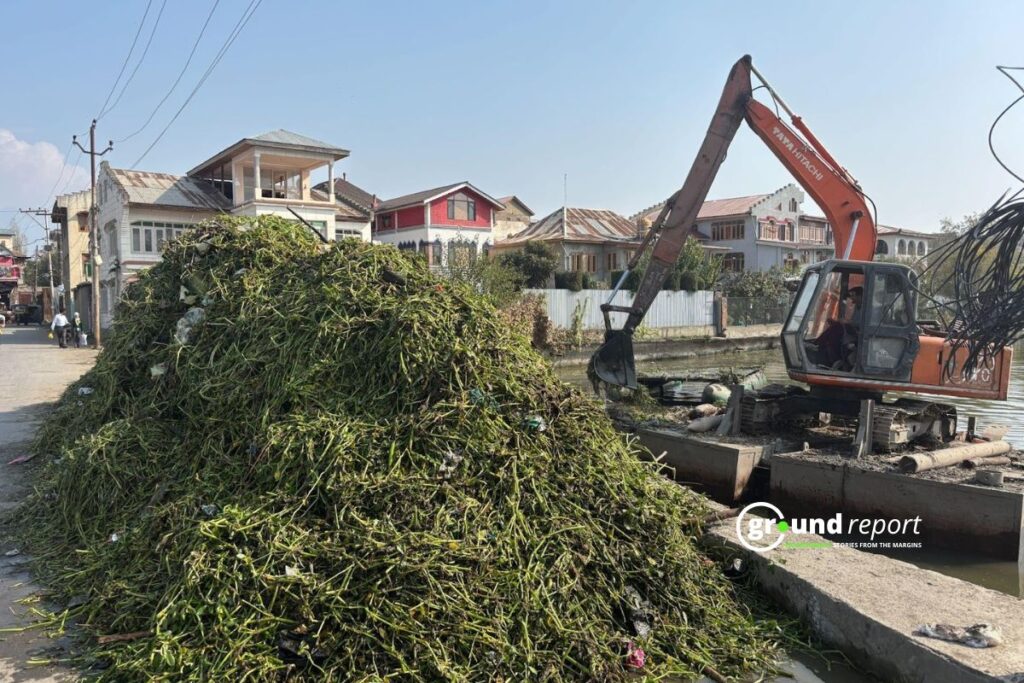
Around the same time, residents began clearing waste on their own. They came with shovels, boats, and sacks. “The lake looked like a landfill,” says Mushtaq Ahmad, one of the first volunteers. “The surface was so choked with waste it barely looked like water.”
During a television debate that winter, businessman and environmentalist Manzoor Ahmad Wangnoo was asked what could save Srinagar’s lakes. His answer was simple. “We need Ehsaas, a sense of responsibility.”
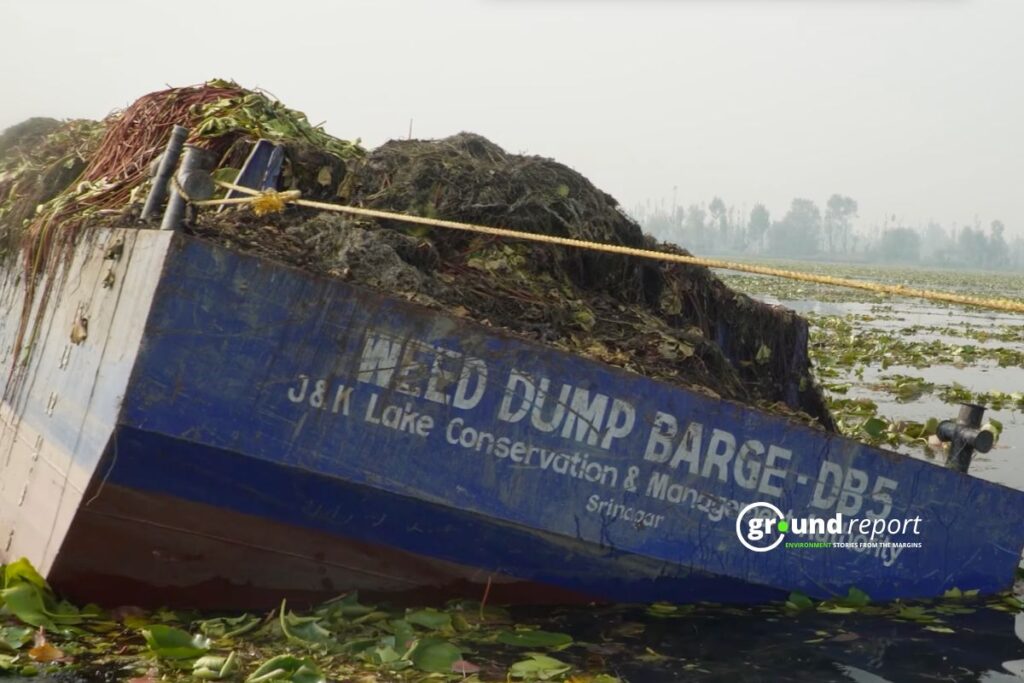
Students, shopkeepers, and boatmen joined the cleanup. Over months, they removed more than a thousand truckloads of plastic, silt, and debris. Men dragged sacks from the shallows. Children collected bottles from the banks.
The effort, later known as Mission Ehsaas, began to draw attention. The Srinagar Municipal Corporation started lifting waste. The Lakes and Waterways Development Authority sent dredging machines. Barriers were installed to stop fresh inflow.
The change also came from within the community. Mosques asked people not to litter. Teachers spoke about the lake in schools. Families living nearby began guarding the banks at night. “It became a shared responsibility,” says Mushtaq. “We stopped blaming the government and started fixing what we had ruined.”
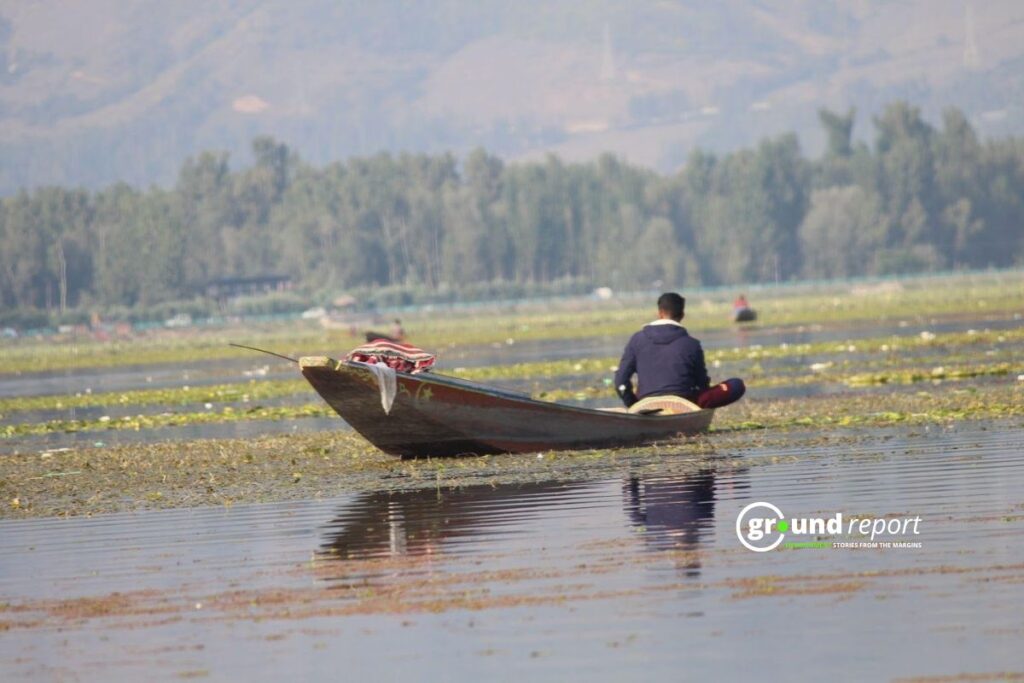
By 2022, its depth reached six feet. The water cleared. The smell faded. Lotus stems, nadru, returned. Fishermen like Hassan rowed through open water again. “The oar moves freely now,” he says. “It feels like a lake again.”
Signs of return
Rahim, who once thought the lake was gone forever, began visiting the banks each morning. He would sit quietly and watch children pull bottles from the shallows. “When I see them,” he says, “I feel like the lake is teaching us how to start again.”
One winter morning, Sahil Wani, a 25-year-old birdwatcher, stood on Gil Kadal bridge. He raised his binoculars and froze. “I saw a flock of pintails land,” he says. “My father told me he last saw them here in the 1980s.”
The birds had returned. Mallards, teals, and gadwalls appeared again after decades of silence.
For Wani, the change is clear. “When they came back, people began looking at the lake differently,” he says. “The birds made us believe the change was real.”
At dusk, shikaras move slowly across the water. The hum of flies that once hung over the lake has faded. The sound now comes from birds.
The fight is not over
Even as the cleanup gathered pace, another struggle began along the lake’s edge. In November 2021, the district administration started demolishing illegal houses built on reclaimed land. Bulldozers moved in before dawn. In the first phase, 25 houses were removed and 1.2 hectares of land retrieved. By mid-2022, officials said more than 95 structures had been cleared.
The then Deputy Commissioner Mohammad Aijaz Asad called the drive necessary. “We have to restore the lake in public interest,” he said. “Encroachments have suffocated the water body.”
Khushal Sar’s recovery has also raised a larger concern. A century ago, Kashmir had more than twenty major wetlands that worked as a natural flood system. Today, many have shrunk or disappeared under roads, housing, and waste.
On a calm morning, Hassan rows through open water while Sahil stands on the shore with his camera. “This is my new classroom,” Sahil says. “Every bird that lands here proves something has changed.”
The lake has returned. Residents say keeping it clean will depend on stopping waste inflow. The question now is whether it can be protected.
This story is produced as part of the India Water Portal Regional Story Fellowship 2025
Support Us To Sustain Independent Environmental Journalism In India.
Keep Reading
Highway Halt Puts Kashmir’s Fruit Economy at Risk
Railway line expansion plan put Kashmir’s apple orchards at risk
Warmer winters in Kashmir raise concerns over apple and crop yields
Stay Connected With Ground Report For Underreported Environmental Stories.