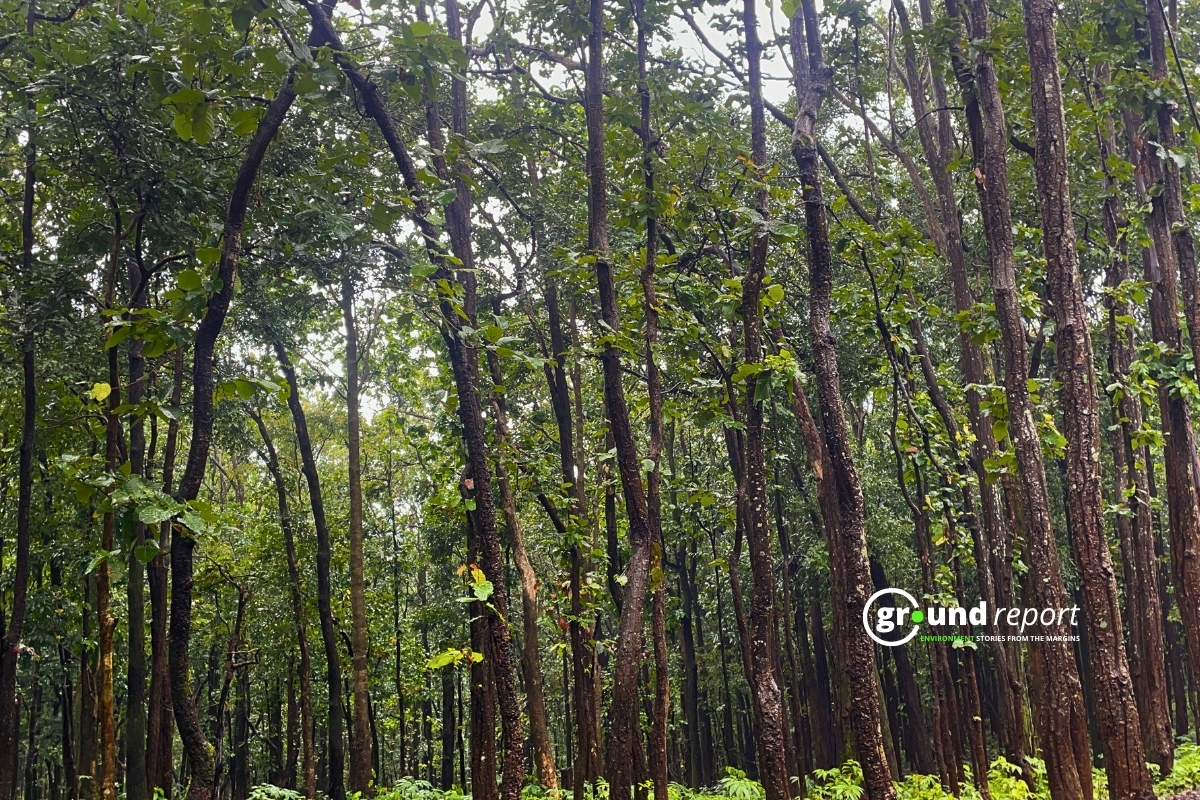
A recent study finds tropical plants are blooming weeks, even months, off their historic schedule, with cascading consequences for the ecosystems that depend on them. Tropical forests are shifting their flowering seasons, and the pace is accelerating. A new study published in the journal PLOS One has found that tropical plants are changing their flowering time by an average of two days per decade. Over a century or two, that adds up to weeks and in some cases, months.
The research was conducted by scientists Skyler Graves and Erin Manjito-Tripp from the University of Colorado Boulder. Their team examined 8,225 preserved flower specimens collected between 1794 and 2024 from museums and herbaria, archives of dried plants, across the globe. They analysed 33 tropical species with distinct, measurable flowering periods.
The findings overturn a long-held assumption: that tropical regions, with their stable year-round temperatures, are largely insulated from the effects of climate change.
How Far Have Flowers Shifted?
Some of the changes are dramatic. In Brazil, Peltogyne recifensis, a purple-heartwood tree listed as Near Threatened on the IUCN Red List, now flowers nearly 80 days later than it did in 1951. That is nearly three months of drift within six decades.
Another Brazilian species, Barnebya harleyi, found in Catimbau National Park, has shifted its flowering date nearly 30 days later over 51 years. In Ghana’s Bia National Park, the rattlepod shrub Crotalaria mortonii now flowers about 17 days earlier than it did in the 1950s.
Not all species shifted in the same direction. About two-thirds of the 33 species studied, 23 in total, are now flowering later in the year. The remaining 10 are flowering earlier. This lack of uniformity is itself a warning sign.
Why the Direction of Change Matters
In non-tropical regions, most plants respond to the same cues, rising temperatures and longer days, so their flowering tends to shift in a consistent direction. But in the tropics, plants respond to a wider mix of triggers: rainfall patterns, solar availability, temperature fluctuations, and even pollinator behaviour. That means neighbouring plants can shift their flowering in opposite directions, pulling apart ecological relationships that took millennia to form.
When a plant blooms at a time when its pollinators are not active, seeds are not formed. Fruit becomes scarce. The birds, bats, and animals that depend on that fruit go without. The insects that miss their food source face their own cascading losses.
All 33 species in the study depend on animal pollinators. Eleven of them also rely on animals to disperse their seeds. Many of those animals are primates, already among the world’s most at-risk groups of species.
When Did This Begin, And How Was It Measured?
The scientists traced changes all the way back to 1794, using dried plant specimens preserved in museum collections. A single flower collected in 1820 carries a date stamp that tells researchers when it was in bloom, effectively a historical clock.
Digital technology now allows researchers to analyse thousands of such records at scale through repositories like the Global Biodiversity Information Facility, a publicly available database of natural history collections. The team used it to access specimen data from eight tropical locations across South America, Africa, and Southeast Asia.
To account for data bias, such as collectors visiting a site more frequently during one season — the scientists used average flowering dates rather than first or peak flowering. This method has been validated in multiple prior studies and yields results comparable to direct field observation.
Tropical Regions: Not the Safe Zones Scientists Once Thought
For decades, the prevailing assumption was that tropical ecosystems would be less sensitive to climate change than temperate or polar regions. This study directly challenges that view.
The average shift found in tropical plants, 2.04 days per decade, is comparable to documented changes in British, Swedish, Norwegian, and North American flora. In some cases, the tropical shifts are more severe than those recorded in boreal regions of northern Canada, where average changes have been measured at around 1.2 days per decade.
Tropical latitudes hold approximately 57 percent of the world’s vascular plant diversity and 62 percent of global vertebrate biodiversity, according to figures cited in the study. Despite this, they have received comparatively little attention in climate phenology research. The authors describe this as a large blind spot in the global understanding of climate impact.
The Indian Connection: Mangoes, Pines, and Shifting Tree Lines
The changes documented in tropical plant behaviour are not confined to distant rainforests. India is seeing similar disruptions.
In December 2022, mango trees in Telangana and Odisha began flowering as early as the third week of December — at least a month ahead of their usual schedule. Experts attributed the early bloom to unseasonal rains and warmer-than-normal winters. A 2016 study in the journal Ecology Environment and Conservation found that climate change is causing mango trees across India to blossom both earlier and later, depending on region.
Elsewhere, research on the Hindu Kush Himalaya region has linked rising temperatures to a 38 percent decline in pine trees. Scientists note that this range is warming significantly faster than the global average. Across Indian mountain ranges, tree lines are creeping upward — a sign that forests are literally moving to survive.
What This Means for the Future
The consequences of these shifts extend beyond individual species. Tropical ecosystems form the base of global nutrient cycles. Changes in how they absorb and release carbon, and how their river systems carry nutrients to the ocean, affect ecosystems far beyond their borders.
The 33 species analysed were selected specifically because they have discrete, measurable flowering periods, meaning the true scale of change across the tropics is likely much broader. Species with continuous flowering periods, which make up a large proportion of tropical flora, were excluded from this analysis and warrant urgent further study.
The message from this research is direct: tropical forests, long considered the planet’s most stable and productive ecosystems, are already changing in ways that compound existing threats to biodiversity and food security. The flowers are telling us something. The question now is whether we are listening.
Support Us To Sustain Independent Environmental Journalism In India.
Keep Reading
Highway Halt Puts Kashmir’s Fruit Economy at Risk
Railway line expansion plan put Kashmir’s apple orchards at risk
Warmer winters in Kashmir raise concerns over apple and crop yields
Stay Connected With Ground Report For Underreported Environmental Stories.