
After two consecutive years of surplus rain, Madhya Pradesh is heading into a difficult monsoon season. The Indian Meteorological Department forecasts below-normal rainfall across 47 of the state’s districts — including its three largest cities — raising early alarms about crops, drinking water, and irrigation.
The state is expected to receive 30 to 32 inches of rainfall this season, against a normal average of 37.3 inches — a shortfall of nearly 15 percent.
Only eight districts, spread across the Indore, Ujjain, Sagar, and Chambal divisions, are expected to receive normal rainfall. The remaining districts face below-average totals, with many likely to receive no more than 90 percent of their normal share.
June is expected to be the weakest month. The monsoon may perform better in July, but forecasters warn that uncertainty remains high.
Monsoon Arrival Delayed
The monsoon has not yet reached Kerala. It typically arrives in Madhya Pradesh 15 days after reaching Kerala, placing the state’s normal entry date around June 15.
This year, the IMD expects a delay of five to seven days, pushing the likely arrival to between June 20 and 22.
Pre-monsoon storms have already swept several districts. In Sehore, temperatures dropped from 44 degrees Celsius to 27 degrees within 24 hours after pre-monsoon rains hit on Monday. Trees fell, electricity poles bent, and traffic was disrupted across multiple areas.
El Niño Is the Key Driver
Forecasters point to El Niño as the primary reason behind the weak outlook. When El Niño is active, abnormally warm ocean water disrupts wind patterns globally. For India, it weakens the monsoon winds that carry rainfall inland from the Arabian Sea.
The IMD expects a weak to moderate El Niño to persist through July and August, keeping pressure on rainfall through the heart of the season.
What’s at Stake: Crops and Water
The concern is not just agricultural — it is existential for millions who depend on a single seasonal rain.
In 2024 and 2025, above-normal rainfall pushed soybean yields up by two quintals per hectare. Wheat production was strong enough that the government procured more than 104 tonnes at the support price. A lean monsoon this year would reverse those gains.
Drinking water is already under strain. Despite last year’s surplus, water protests have broken out in Indore and Gwalior. A below-normal monsoon would deepen that crisis across dozens of districts.
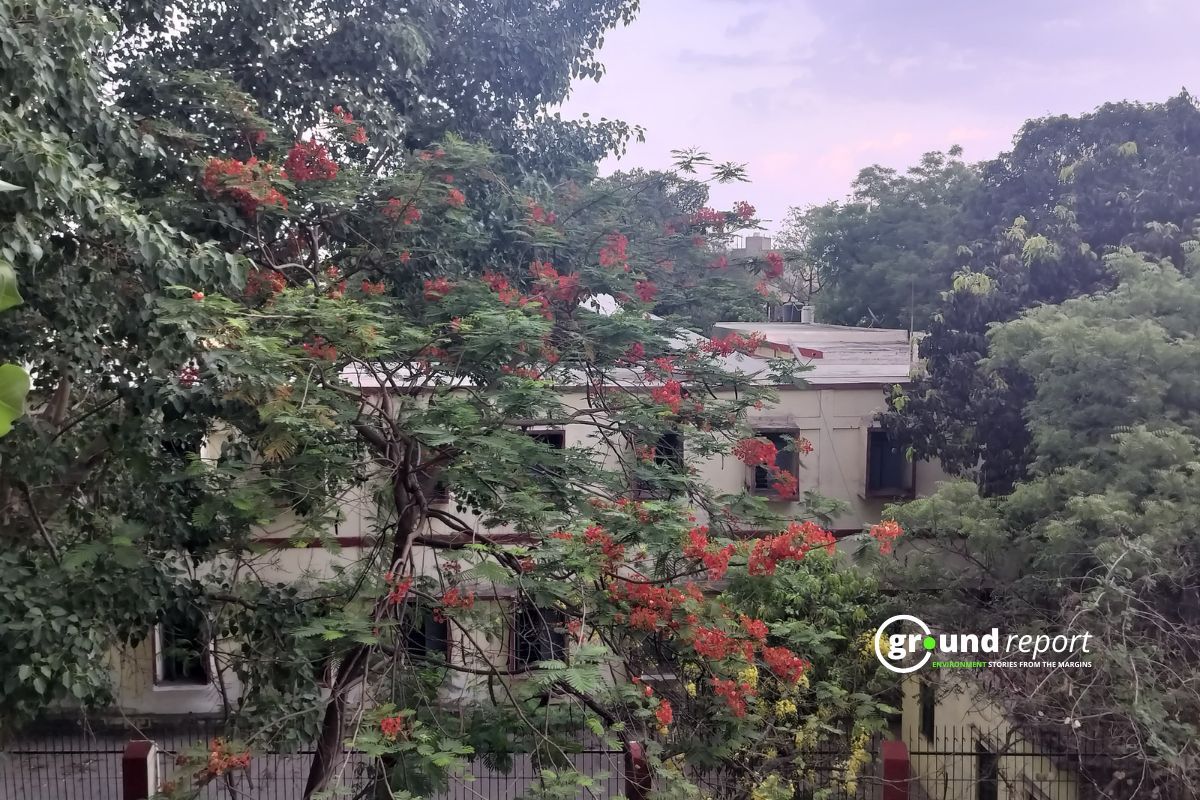
Storms have battered the state for eight consecutive days during Nautapa, the traditional nine-day heat period. Hailstorms, strong winds, and heavy rain have knocked out power, downed trees, and caused structural damage in districts including Dewas, Shajapur, and Mhow.
Temperatures have dropped sharply as a result. Khandwa recorded the state’s lowest maximum temperature on Monday at 32.9 degrees Celsius. Bhopal recorded 37.6 degrees, Indore 38.1 degrees.
The IMD has issued heavy rain and hailstorm warnings for Dhar and Barwani on Tuesday, with winds forecast to reach 60 kilometres per hour.
Ten Years of Rain — and Why 2026 Feels Different
The last time Madhya Pradesh recorded its lowest rainfall was 2017, when the state received just 29.9 inches against a normal of 37.3. Since then, the state has seen seven largely favourable monsoon years — including 53 inches in 2019 and 45.2 inches in 2025.
That streak may be ending. Forecasters expect total monsoon rainfall to reach only 90 percent of the seasonal average — the weakest projection in nearly a decade.
For farmers watching the sky and families already lining up at dry taps, the numbers land hard.
Support Us To Sustain Independent Environmental Journalism In India.
More Ground Reports
He Was Married as a Child, Now Manish Dangi Helps Stop It for Others
Despite The Ban, How Gutkha Became MP’s Most Common Household Habit