
In Govindgarh, in Rewa district, farmer Saurabh Singh Baghel pulled loaded crates of mangoes from his three-acre orchard. His orchard grows Sundarja, a mango variety synonymous with Rewa. Even Baghel’s grandfather planted the same variety about 40 years ago.
In 2023-24, the mango received a Geographical Indication (GI)—a certification mark used on products from a specific geographic origin that possess qualities or a reputation tied to that region—tag.
With that recognition, hope grew that Govindgarh’s mango would gain global recognition. Two years later, the picture looks different. Prices at government auctions have increased, but the local farmers find themselves pushed to the margins.
A mango with an unusual sweetness
Baghel said that the sundarja variety originated in Govindgarh, as Maharaja Venkat Raman Singh of Rewa was fond of mangoes.
Around 1925, during his reign, a local horticulturist named Beni Madhav was sent to Uttar Pradesh to learn modern budding and grafting techniques. Beni Madhav returned and developed this variety.
When the first batch was presented to the royal court, the Maharaja reportedly said, “Yeh bahut sundar hai”—this is very beautiful. Baghel said that is how the mango got its name, Sundarja.
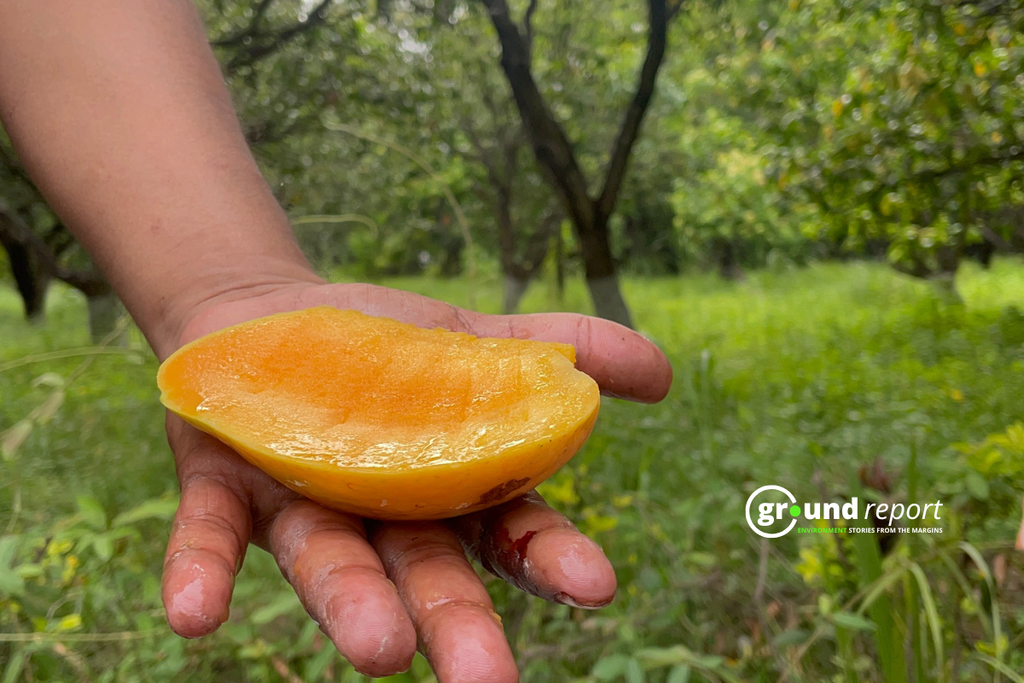
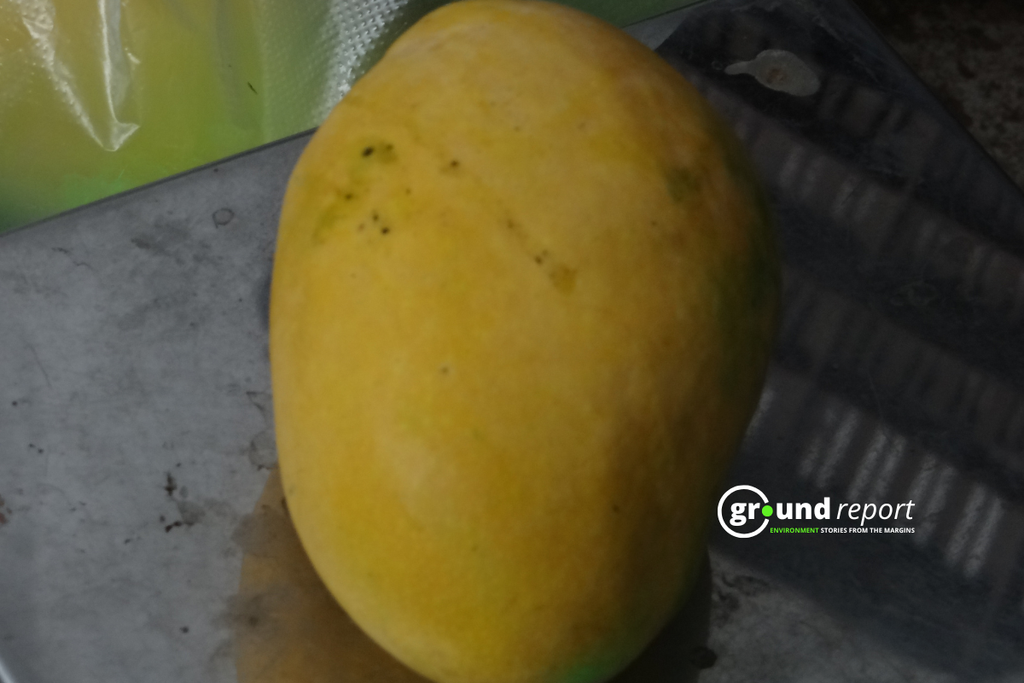
Dr Tapan Kumar Singh, fruit scientist at the College of Agriculture, Rewa, said that when ripe, this mango turns a bright yellow with faint red streaks on its upper surface.
A single fruit weighs between 250 and 450 grams, with pulp making up about 76% of that weight. Its fragrance is strong enough to remain on the hands for 40 to 60 minutes after eating. At room temperature, the fruit stays fresh for up to nine days, and in a freezer, for about a month.
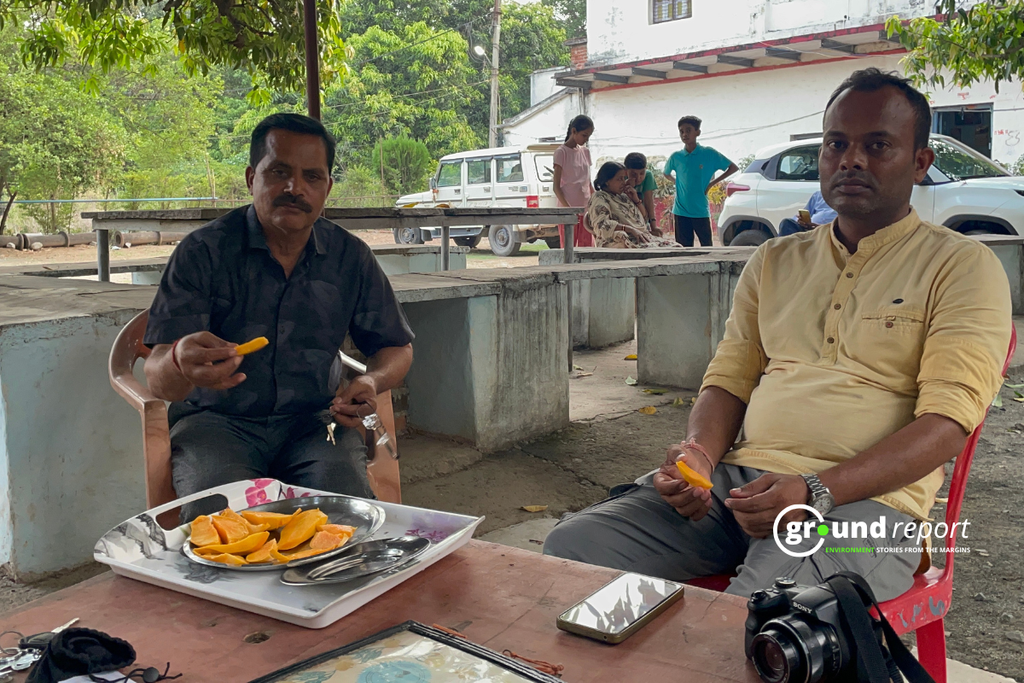
Local fruit seller Shailendra Kumar Mishra credited the mango’s flavour to the nearby Govindgarh pond. “Yahan ka pani meetha hai, isliye yahan ka aam meetha hai,” he said—the water here is sweet, so the mango here is sweet.
Singh said his own observations have shown that Sundarja’s flavour grew weaker with distance from the Govindgarh pond. He said more research was still needed to understand why. With adequate research, he said, the geographical range and production of Sundarja could also be expanded.
A common claim in local conversation held that Sundarja was a sugar-free mango, which drove higher demand among diabetics. Singh rejected this.
He said no scientific study had found evidence that Sundarja is sugar-free. He said the total soluble solids, or Brix level, measured 19.8 degrees, which counted as quite sweet. He advised that diabetic patients should eat it only in limited amounts and only on a doctor’s advice.
Farmers left behind
Sundarja trees today are largely confined to government land and a handful of private orchards. According to data from local departments, around 1,200 trees were bearing fruit at the Horticulture Department’s Govindgarh centre.
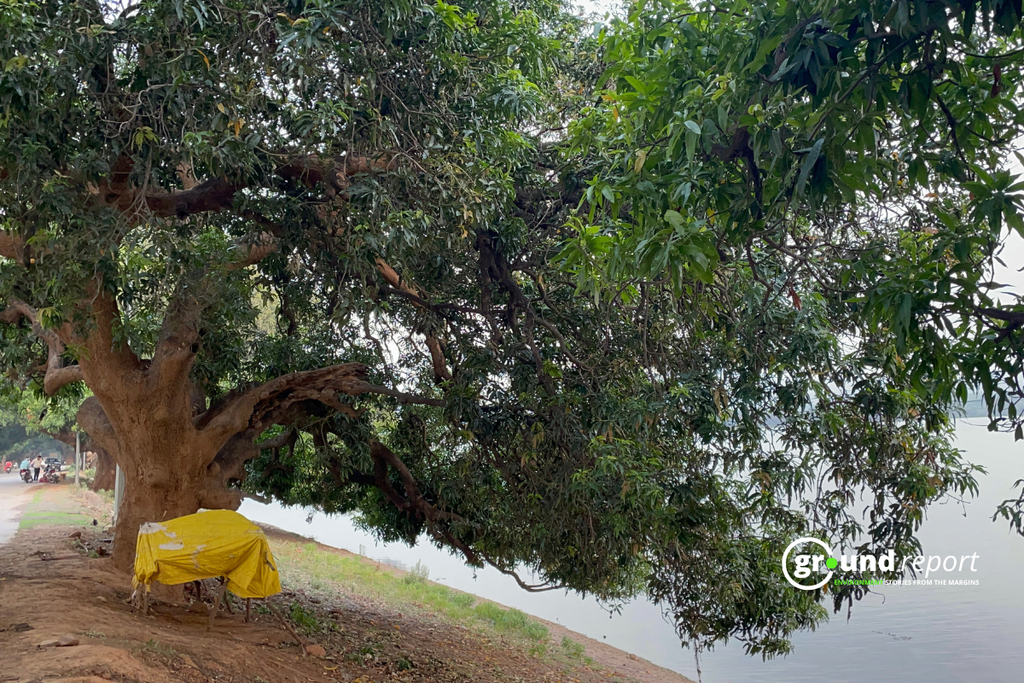
Jawaharlal Nehru Agricultural University’s Kuthulia farm had about 2,500 trees, with roughly 100 more spread across other parts of the university. Trees also grew along the Govindgarh pond and inside the Tridandi Math complex, both under the Revenue Department. But a lack of upkeep had left them in poor condition.
The government has no official count of registered farmers who grew Sundarja.
Local farmers were paying the price for this neglect.
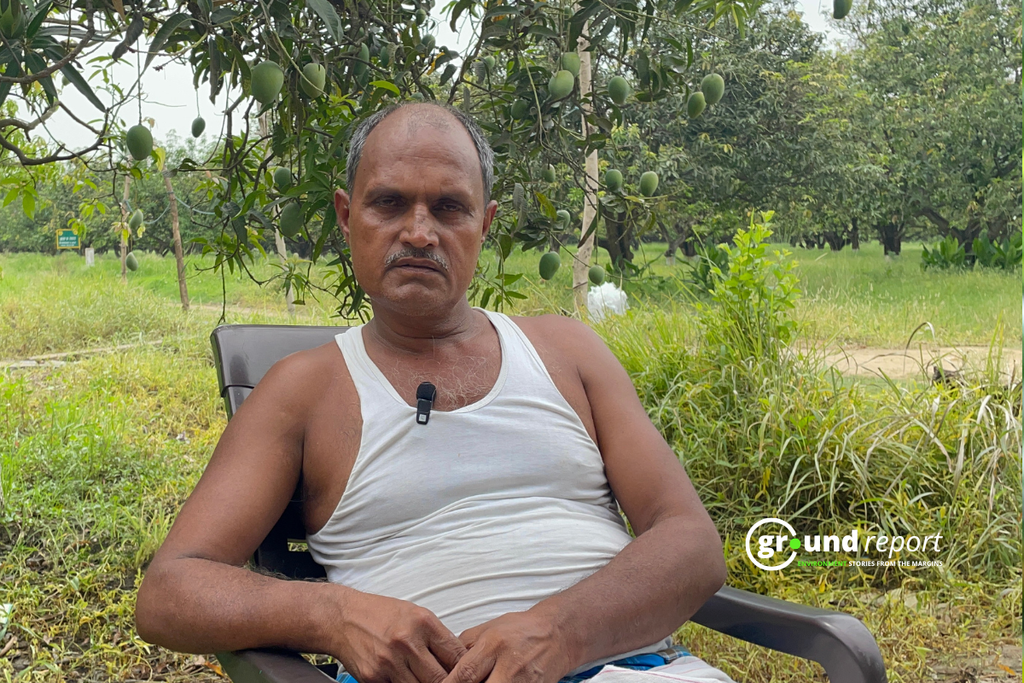
Baghel said that when the government shows no interest in preserving old trees, farmers have no incentive to plant new ones. He said there is no special subsidy scheme for farmers. He emphasised that Rewa’s farmers lagged in agricultural technology, like drip irrigation and modern sensor-based pumps.
He said smart technology, if available, would make both cultivation and upkeep easier. Local farmers had no training in
Singh said local farmers lacked awareness about Sundarja cultivation, which had allowed farmers and traders from outside the region to take a greater interest in it.
That outside interest showed clearly in recent auctions.
A farmer from Bihar won the contract for the 2,500 trees at Kuthulia Farm with the highest bid of Rs 20 lakh. A trader from Vyohari in Shahdol district won the contract for the Govindgarh Horticulture Department’s orchard for Rs 18 lakh. Meanwhile, poor upkeep left the Revenue Department’s trees with a bid of just Rs 3.31 lakh.
Weather takes its toll
Beyond upkeep, weather posed Sundarja’s biggest challenge.
Singh said the Sundarja tree is environmentally sensitive and grows slowly, naturally, compared to other mango varieties.
Once a plant turned three years old, thick, raised spots began appearing on its canopy—a symptom of mango malformation disease. Singh said that if clouds lasted for three to five straight days during fruit ripening, flies would be drawn to the trees and pest attacks would increase.
Cloudy conditions, he said, can lead to crop losses of up to 50% by creating ideal conditions for pest outbreaks. This year, orchards around Govindgarh suffered the worst infestations, and repeated pesticide sprays failed to control them. When temperatures later crossed 44°C, the extreme heat further reduced fruit quality.
To guard against heat and pests, Singh recommended fruit bagging—covering fruits in special bags—which he said could protect at least 20% of the crop.
Tangled Market
The mango sold locally for Rs 100 per kilogram early in the season, and its price climbed to Rs 500-600 per kilogram by late July.
Despite this, Govindgarh had no organised market to sell it.
Mishra called on the administration to build a proper fruit market in Govindgarh, with permanent stalls for trading Sundarja and other fruits. He said traders and vendors were ready to take up stalls at any rate the administration set, whether Rs 200 or Rs 2,000.
Fruit scientists said the GI tag and government auctions may have boosted departmental revenue. But the real benefit of this legacy would reach people only once local farmers gained the economic and technical capacity.
Sundarja saplings should be planted in different locations, such as Lucknow and Jabalpur, to study their adaptability. Farmers also needed crop insurance, drip irrigation training, and subsidies on modern equipment.
No digital database of Sundarja farmers existed yet, and without one, government schemes would struggle to reach the farmers who actually grew the fruit.
For now, Sundarja trees in Govindgarh’s orchards continued to bear fruit. But the farmers who grew them remained unsure about their future.
Support Us To Sustain Independent Environmental Journalism In India.
More Ground Reports
He Was Married as a Child, Now Manish Dangi Helps Stop It for Others
Despite The Ban, How Gutkha Became MP’s Most Common Household Habit