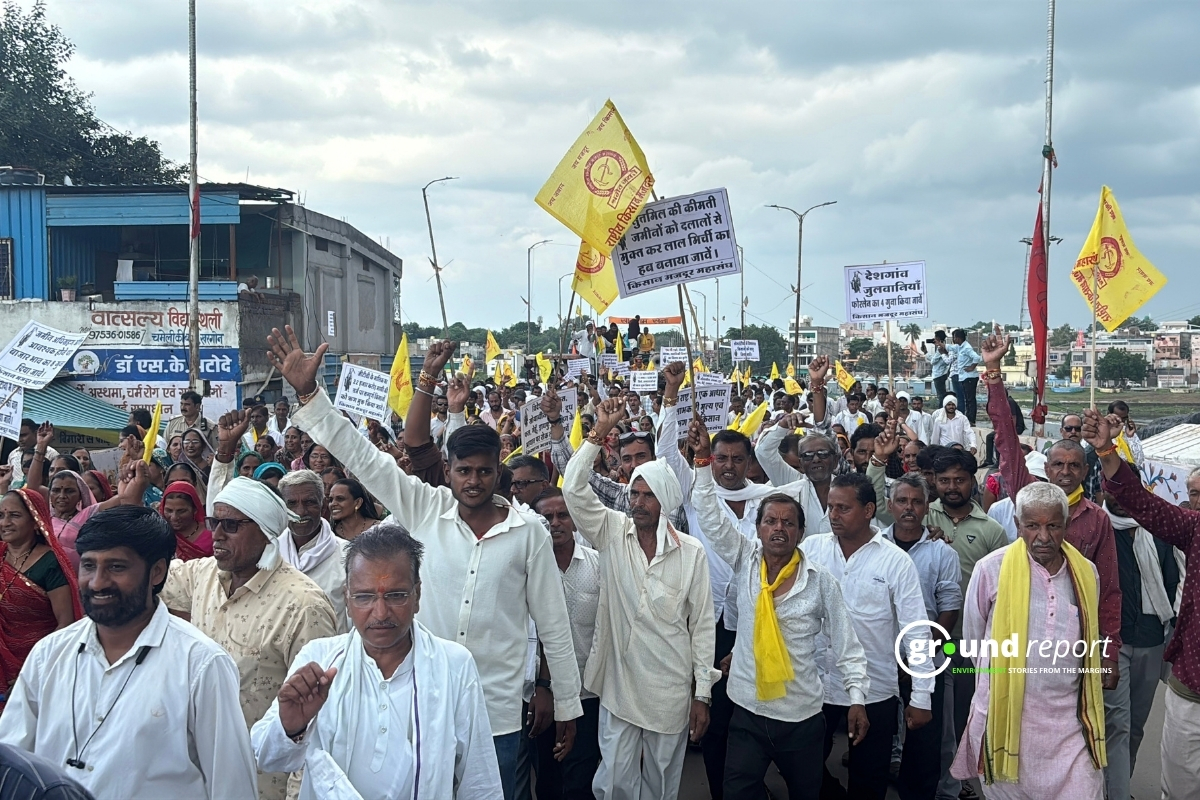

In Madhya Pradesh’s Rewa, rainfall this monsoon was around 30% below normal. Yet, floods in August caused extensive damage in the city and surrounding areas. Similar conditions were reported in Satna and Shahdol districts of eastern Madhya Pradesh. Meanwhile, after visiting flood-affected areas in Chitrakoot, Chief Minister Mohan Yadav directed officials to investigate the role of construction and encroachment in worsening the situation.
However, the Rewa Municipal Corporation had already begun taking action on August 25, before the chief minister’s instructions.
Rewa Municipal Commissioner Akshat Jain and Rewa Collector Narendra Suryavanshi also acknowledged that several factors contributed to the flooding, including encroachment, illegal construction and construction within the green belts of rivers. These include residential colonies as well as large resorts such as ‘Rewa Eco Park’.
“People have constructed buildings in several low-lying areas where water has traditionally accumulated,” Jain told Ground Report. “Ultimately, we believe these are some of the reasons behind the problem.”
According to Jain, action has so far included the demolition of one farmhouse, while more than 100 buildings have been served notices. But the question is: if construction was prohibited along the Bihhar and Bichhiya rivers under Rewa’s master plan, how did these settlements and buildings come up there?
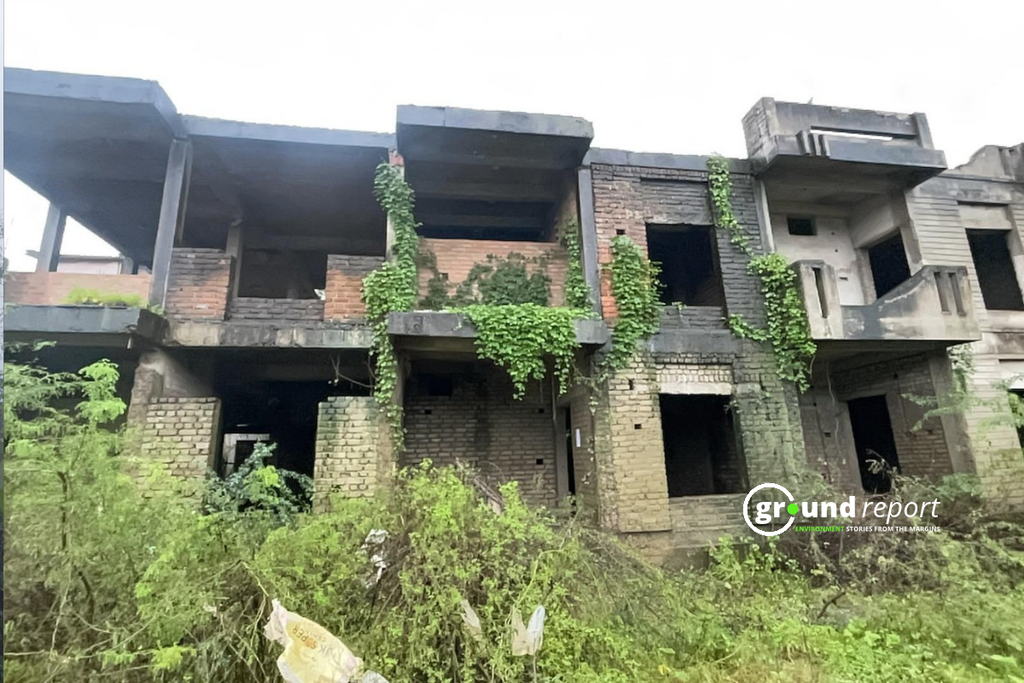
We examined the provisions of the master plan, government approvals and the situation on the ground. And found that although regulations prohibiting construction in the river’s green belt were in place, permanent structures continued to come up in these areas.
Illegal construction in Rewa’s river green belt
Flooding occurred in Rewa after heavy rainfall during the last week of August 2026. Following this, action was taken against Badrika Farm, which was demolished. The farmhouse was located around 17 metres from the bank of the Bihhar River.
Shivdham Colony is located roughly a mile from Badrika Farm. Several completed and partly constructed houses in the colony have been served notices by the Rewa Municipal Commissioner. The municipal commissioner told Ground Report that action was being taken against illegal encroachments in the green belt.
“We have taken action against Badrika Farm, which was built on the riverbank. We have also issued notices regarding other encroachments. We are conducting surveys using GIS and field reports to identify constructions within 50 metres of the river,” he said.
The Rewa Municipal Corporation had also directed officials to remove encroachments over drains and take strict action against illegal colonies and construction carried out contrary to approved building plans.
Kantima Singh, a resident of Shivdham Colony, also has a notice pasted on her door. The notice, issued on August 27, gave her three days to provide an explanation. It stated that if a satisfactory explanation was not submitted, the construction could be “removed/demolished”.
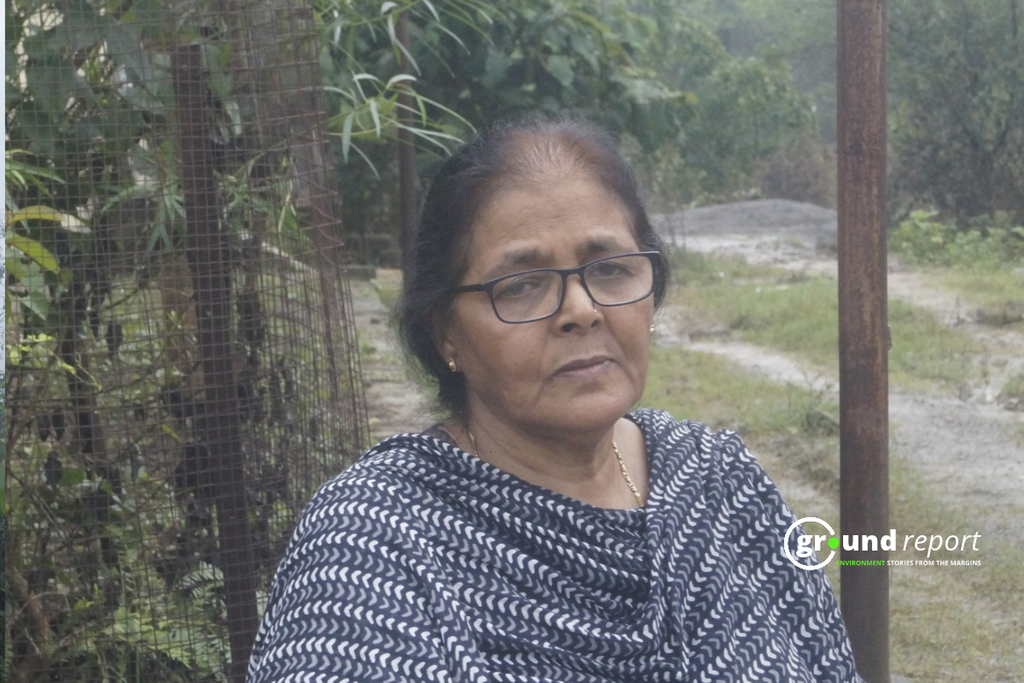
When the Ground Report team visited the area on September 3, her house had not been demolished. Singh, however, was still living with the fear of losing her home.
Singh said she bought the house from a builder in 2015. She has the property registry, electricity bills and records of property-tax payments. She questioned how the registry and building permission could have been granted if construction on the site was prohibited. She is now planning to approach the court over the matter.
Her house is not the only one in Shivdham Colony to have received such a notice. Several completed and partly constructed houses in the colony had similar notices pasted on them.
Apart from Shivdham Colony, settlements such as Nipania, Hamidia Colony and Bansghat Colony have also come up along the Bihhar River.
Deputy Director of Town and Country Planning (TNCP), Rewa, Sankalp Shukla, told Ground Report that “if land is located along the river, that is, within the river’s green belt, no permanent construction is permitted on it.”
Rewa is currently governed by the 2021 Development Plan/Master Plan. Under the plan, a 50-metre stretch along the Bihhar and Bichhiya rivers can be used only for “environmental forestry”.
Shukla added that the restriction is not uniformly limited to 50 metres.
“People believe that the distance from the river in Rewa is only 50 metres, whereas in many places it extends to 200 to 250 metres,” he said. In the case of drains, the restricted zone is nine metres.
But the reality on the ground appears different.
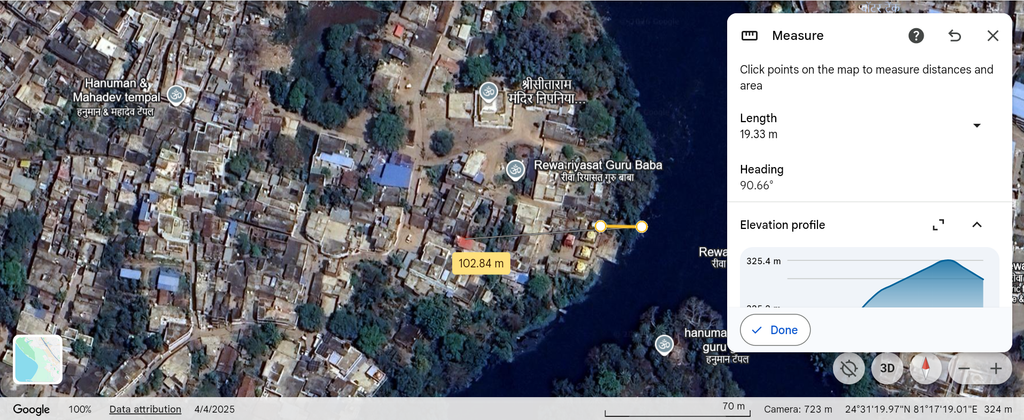
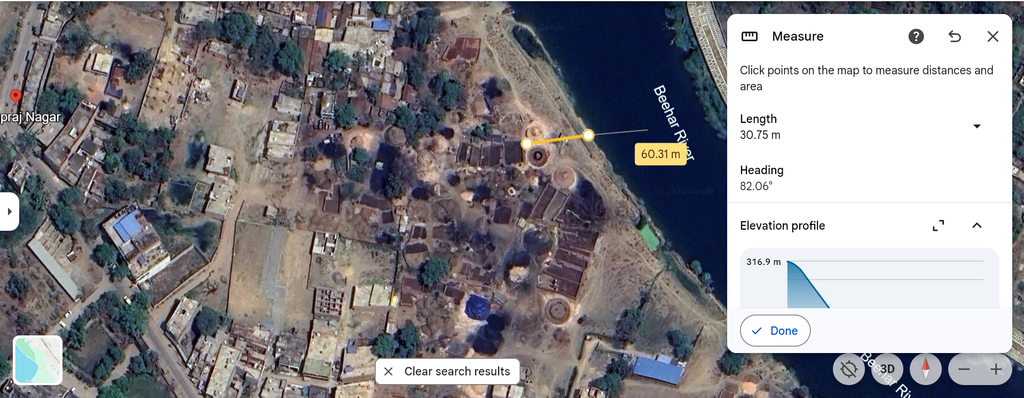
Satellite imagery from Google Earth shows that Pushpraj Nagar, located along one bank of the Bihhar River, begins within roughly 30 metres of the river. On the opposite bank is a religious site called Panchmathadham, located around 44 metres from the river.
Rewa Eco Park
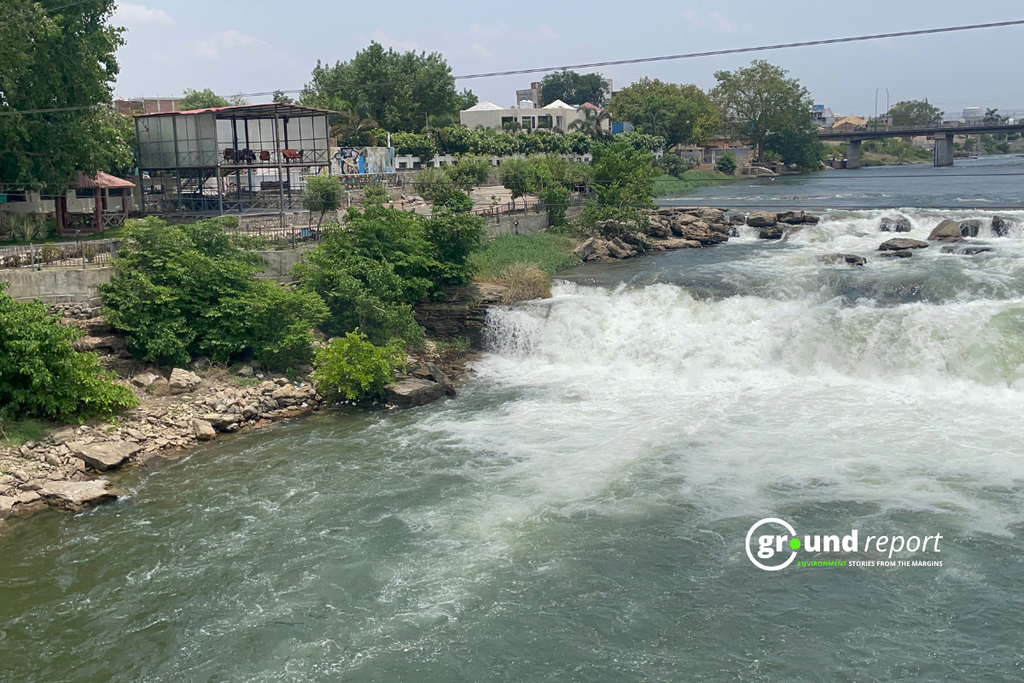
Another prominent construction along the Bihhar River is the ‘Rewa Eco Park’ resort, which is located within the river’s green belt.
According to the approved land-use and site plan, the green belt was designated only for “environmental forestry” and “recreation”. Permanent construction was not permitted.
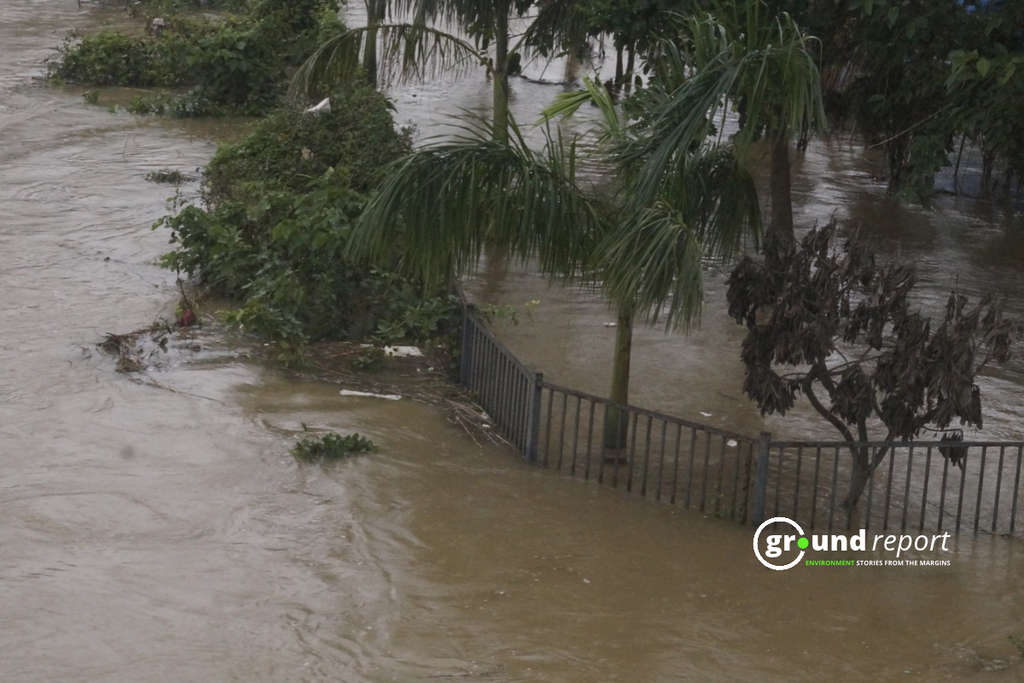
Yet the Rewa Eco Park now has permanent structures adjacent to the river. These structures were submerged during the August-September rains.
As of now, Rewa Eco Park has not been issued a notice, according to the information available.
Ground Report’s earlier reporting had found a mismatch between the approved land use of Rewa Eco Park, located in the Bihhar River’s green belt, and the permanent structures present at the site. The section of the park adjacent to the river was also submerged during the rains, raising questions over construction and regulatory enforcement.
On the legality of the construction at Rewa Eco Park, Shukla said the construction was legal because TNCP had approved the site for “environmental forestry” and “recreation”.
Responding to the permanent structures at the park, he said, “If someone obtains permission for X and then builds Y, what can we do? We are only a regulatory agency.”
However, Nityanand Mishra, an advocate at the Jabalpur High Court, said that if TNCP permits one type of land use or development and a different type of construction subsequently takes place, the department has the power to withdraw that permission.
In 2019, Mishra had filed a petition before the National Green Tribunal (NGT) concerning encroachment in the green belts of the Bihhar and Bichhiya rivers. In its order, the NGT directed authorities to take steps to prevent encroachment along the riverbanks.
The 1973 Act also gives the director of TNCP powers to take action against development carried out contrary to an approved permission.
Under Section 37, the director can, under specified circumstances, order land to be restored to its previous condition. If the order is not complied with, authorities can remove or modify the construction.
Similarly, Section 307 of the Madhya Pradesh Municipal Corporation Act, 1956, empowers the municipal commissioner to issue notices and order the removal, alteration or demolition of construction carried out without permission or contrary to an approved plan.
This provision has been invoked in Rewa following the floods and waterlogging.
Jain said, “No construction of any kind in the green belt will be tolerated.” He added, “We are not taking action against the houses that have received notices because of the rains, as they currently have no alternative accommodation. Action will begin soon after the rains.”
Construction Despite Restrictions
According to Mishra, an important link in understanding the issue lies between the registration of land and the subsequent permissions required for development and construction. Under the Madhya Pradesh Registration Rules, 1939, the fact that a property’s registered land use does not conform to the master plan does not, by itself, constitute grounds for refusing its registration.
Mishra said, “Permanent construction cannot be carried out in the green belt, but there is no restriction on ownership of land within the green belt.”
After registration, permission for land use or development is required under the Madhya Pradesh Town and Country Planning Act, 1973, followed by building permission from the local authority. According to Mishra, before granting building permission, authorities must verify how far the proposed construction is from a river or drain.
He alleged that in some cases, permissions were obtained by showing a greater distance from the river than the actual distance, making construction within the green belt possible.
When asked why electricity connections were issued despite such construction, Rewa Collector Narendra Suryavanshi said, “We cannot keep anyone in the dark.”
What is the safer option?
Singh said that if the administration considers her house to be within the river’s green belt, “Then compensate us and rehabilitate us. We are ready to leave our homes.”
Shukla advised people to obtain a land-use certificate for the relevant khasra number before purchasing land. According to him, the certificate can be obtained online through the TNCP portal for a fee of ₹500. It indicates the designated land use of a particular parcel.
If the designated use is agriculture or environmental forestry rather than residential, buyers should exercise caution before purchasing the land for construction of a house.
Shukla said a new development plan is now being prepared with a vision for 2047. In January 2026, Rewa’s planning area was expanded to include 80 villages along with the municipal corporation.
According to Shukla, the department is currently waiting for satellite imagery from Hyderabad’s National Remote Sensing Centre for the newly added areas. The process of preparing the new plan will move forward after the imagery is received.
For now, action has begun following the severe flooding in Rewa. But how effective these measures will be in curbing encroachments and reducing the risk of flooding will become clear over time.
Lavkush Pandey, an independent journalist, contributed to this reporting.
Support Us To Sustain Independent Environmental Journalism In India.
More Ground Reports
He Was Married as a Child, Now Manish Dangi Helps Stop It for Others
Despite The Ban, How Gutkha Became MP’s Most Common Household Habit