Ishwar Singh, from Devkhedi, is one of the progressive and innovative farmers in the area. In 2016, he learned about a new soybean variety, ‘JS 95-60’, from an agricultural service centre near his village—a shop that sells agricultural chemicals and seeds.
He planted the variety on 20 of his 60 bighas, spending around ₹4,500 per bigha. He expected the variety to increase his yield. However, after yellow mosaic disease attacked the crop, he struggled to recover his input costs.
He replanted the variety in 2017 and 2018 but faced losses each time.
Developed as a short-duration soybean variety
Jawahar Soybean (JS) 95-60 is a short-duration soybean variety developed by Rajmata Vijayaraje Scindia Krishi Vishwa Vidyalaya (RVSKVV), Gwalior. According to Krishi Vigyan Kendra (KVK), Ujjain, the variety is particularly suitable for farmers following a soybean-potato-onion/garlic cropping system.
The variety was promoted for its better productivity than JS-335, as it requires less water and produces larger soybean seeds.
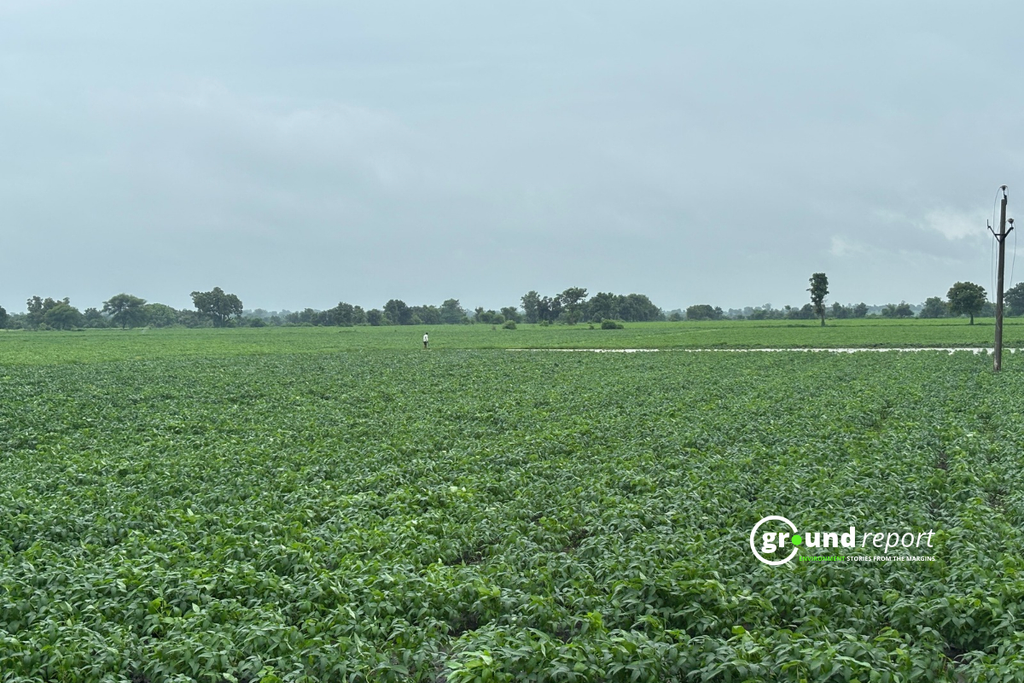
Most farmers in Ujjain confirm that the variety can produce higher yields. Scientific research has also established its ability to mature in a shorter period. However, scientists at KVK acknowledge that the variety does not protect crops against excessive rainfall or yellow mosaic disease.
How was the variety developed?
JS 95-60 was notified for cultivation across India on July 20, 2007. Dr Manoj Kumar Srivastava, who was part of RVSKVV at the time and now a professor in the Department of Plant Breeding and Genetics at Jawaharlal Nehru Krishi Vishwa Vidyalaya, Jabalpur, led the team that developed the variety.
He said the variety was developed from JS-7322 through a method known as secondary selection.
Under this method, plants from a particular variety are grown experimentally in fields. During their development, seeds from plants displaying different traits are separated. This process is repeated for four to five years. Each year, plants showing a distinct set of traits from the parent plants are selected and eventually recognised as a separate variety.
According to the ICAR-National Soybean Research Institute (ICAR-NSRI), JS 95-60 is also used to meet the country’s seed requirements. The institute said JS 95-60 is part of more than 30 seed chains across the country used for seed production.
Claims of higher productivity
According to KVK Ujjain, soybean farmers previously faced major productivity problems because of inadequate moisture during the pod-filling stage and the limited adoption of improved technologies.
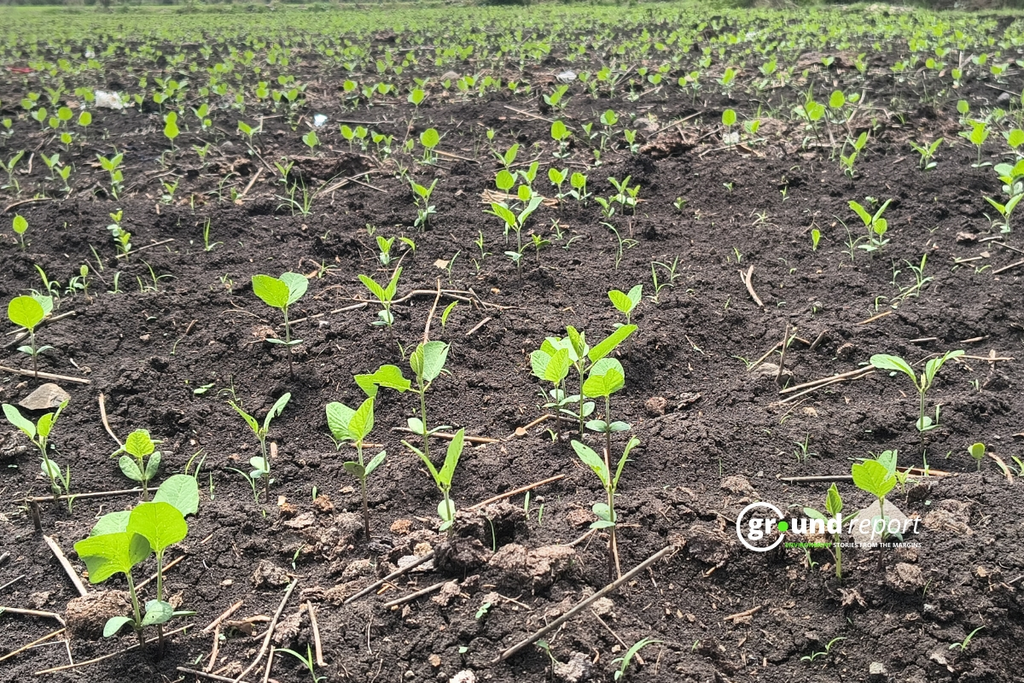
The variety is now producing higher yields than the traditional soybean variety JS-335. During Front Line Demonstrations (FLDs) conducted between 2007 and 2010, JS 95-60 recorded a maximum yield of 31.25 quintals per hectare, or roughly five quintals per bigha.
However, Rais Patel, a farmer from Byavra village, said this level of productivity is possible only if farmers continuously remove weeds from the field. Two years ago, his field produced 3.5 quintals per bigha using JS 95-60, lower than the five quintals per bigha he gets from the variety he currently uses, 1135.
Rais has now stopped growing JS 95-60 altogether. Instead, he grows JS 2303, JS 2433 and Black Bold varieties. According to him, Black Bold gives him the highest yield, so he no longer sees a need for JS 95-60.
A short-duration crop
According to a 2018 study conducted at the College of Agriculture in Nagpur, JS 95-60 took 102–107 days to mature, compared with 114–127 days for AMS-1001 and 113–121 days for JS-335. For farmers growing potatoes after soybeans, this difference of around two weeks can be important.
Dara Singh, who grows soybean on 60 bighas in Devkhedi, said the shorter duration allows him to plant potatoes earlier. “If we plant potatoes by the last week of September, the crop gets one to two weeks of rainwater,” Dara said.
Dr AK Dixit, principal scientist at KVK Ujjain, believes this is one of the reasons the variety expanded significantly in Ujjain over the past decade.
He said the variety is suitable for fields located at slightly higher elevations and areas where water availability is limited. But two years ago, Dara Singh’s crop was also attacked by yellow mosaic disease, causing him significant losses. He has now switched to JS 2433, which matures in around 90–95 days.
He said JS 95-60 does not protect against yellow mosaic disease, making it risky to grow.
Yellow mosaic and other diseases pose a problem
Singh grows only soybean during the kharif season. He then grows potatoes, onions and wheat. Recalling his experience during the 2016 kharif season, he said he was looking for a variety that could produce good yields with less water because of low rainfall that year. This led him to choose JS 95-60.
When yellow mosaic symptoms began appearing in his crop, Singh sprayed several types of pesticides to control the disease. He spent at least another ₹3,000 per bigha on these treatments.
Despite this, he was unable to control the disease and struggled even to recover the cost of the seed.
Yellow mosaic disease in soybean is caused by two begomoviruses—the Mungbean Yellow Mosaic India Virus (MYMIV) and Mungbean Yellow Mosaic Virus (MYMV). The disease stunts plants and reduces leaf size, resulting in fewer flowers and pods.
Dixit said high humidity of around 80% combined with high temperatures creates favourable conditions for the whitefly (Bemisia tabaci), which transmits yellow mosaic disease in soybean.
Last year, at least 494,605 soybean farmers in Madhya Pradesh were affected by yellow mosaic disease and insect attacks. The state government paid ₹322 crore in compensation to affected farmers.
Srivastava also said that because the variety is now more than a decade old, it should no longer be promoted. He said anthracnose, caused by Colletotrichum truncatum, has been reported in some parts of Madhya Pradesh, while a problem of poor pod formation has also been observed in Jabalpur.
He recommends that farmers now grow JS 23-03, JS 23-09 and the latest varieties developed by the National Research Centre.
According to ICAR-NSRI, PS 1670, NRCSL 3, SL 958 and SL 955 are varieties resistant to yellow mosaic virus. In areas where yellow mosaic has previously been reported, these varieties may be more suitable.
For farmers in Ujjain, yellow mosaic has emerged as one of the biggest threats to their soybean crop. As a result, the farmers we spoke to are moving away from JS 95-60 and choosing varieties that offer greater resistance to yellow mosaic disease.
Support Us To Sustain Independent Environmental Journalism In India.
More Ground Reports
He Was Married as a Child, Now Manish Dangi Helps Stop It for Others
Despite The Ban, How Gutkha Became MP’s Most Common Household Habit